
Mood Swings: Common Causes and When to See a Doctor
What causes mood swings in adults, from sleep, stress and hunger to hormones and alcohol, how they differ from a mood disorder, and when to see a doctor.

Key Takeaways
- Most mood swings in adults come from everyday causes such as short sleep, hunger, stress, alcohol, caffeine and hormone changes, and they shift within hours.
- Mood episodes in bipolar disorder are different: they last days to weeks, come with big changes in energy, sleep and activity, and are noticeable to other people.
- A few weeks of logging mood next to sleep, food, alcohol and your cycle usually shows the pattern, and it is the most useful thing to bring to a doctor.
Mood swings are noticeable shifts in mood, such as going from fine to irritable, tearful or flat within hours. In most adults the causes are everyday ones: short sleep, hunger, stress, alcohol, caffeine and hormone changes. Swings that are extreme, last for days, or come with big changes in energy and sleep can point to a mood disorder and are worth raising with a doctor.
Common causes, and what to try first:
| Cause | What the swing looks like | What to try |
|---|---|---|
| Short or broken sleep | Snappy, tearful, small things feel huge | Same bedtime and wake time for a week |
| Hunger | Irritable and impatient late in the morning or afternoon | Regular meals, a snack with protein |
| Stress and overload | Fine until one more thing tips you over | Fewer commitments, more recovery |
| Alcohol | Low or anxious the next day | Fewer drinking nights, earlier stop |
| Caffeine | Wired, then a crash | No caffeine after early afternoon |
| Menstrual cycle | Low or irritable the week or two before a period | Track it for three months |
| Pregnancy, postpartum, perimenopause | Shifts that feel new and hard to explain | Tell your doctor or midwife |
| Medication or a health condition | A change that started with a new pill or illness | Ask your prescriber |
| A mood disorder | Swings that last days, with energy and sleep changes | A doctor or psychiatrist |
The quickest way to find your own pattern is to write it down. The mood tracker takes one tap a day, lets you tag sleep, food, alcohol and your cycle, and after a few weeks shows you what tends to come before a drop.
Are mood swings normal?
Moods shift for everyone. You feel flat on a gray Monday, lighter after a good conversation, short-tempered after a long commute. That is not a disorder, and it is not a sign of being "too emotional."
What turns ordinary changes into something worth looking at is size, speed and impact:
| Usually everyday | Worth a closer look |
|---|---|
| Shifts within a day that match what happened | Swings much bigger than the situation |
| A clear trigger, like a bad night or hunger | No trigger you can find, again and again |
| Back to normal after rest or food | Low or high for days at a time |
| Sleep and energy stay roughly the same | Very little sleep while feeling wired, or sleeping far more |
| Relationships stay intact | People close to you keep getting hurt by it |
What causes mood swings in adults?
Sleep
Sleep is the cause people underestimate most. In a lab study, people kept awake for a night reported more stress, anxiety and anger than rested people after a mild stressor. Under heavy stress, both groups felt about the same.[2] So a short night does not make everything worse. It makes small things hit harder, which is exactly what a mood swing feels like. How sleep affects mood explains why, and the sleep calculator shows how much sleep debt you are carrying.
Hunger
"Hangry" is real. In a study where 64 adults reported their hunger and mood five times a day for three weeks, more hunger was linked to more anger and irritability and less pleasure, even after accounting for age, sex, diet and how angry people tend to be in general.[1] If your swings cluster before lunch or late in the afternoon, food may be most of the answer.
Stress and overload
Stress lowers your margin. You can handle the first five things and then snap at the sixth, which looks like a swing but is really the end of your capacity. If this is you, feeling overwhelmed has a way to get the load out of your head and sorted.
Alcohol and caffeine
Alcohol can lift mood for an evening and drop it the next day, often with anxiety. Does drinking make anxiety worse the next day explains the rebound. Caffeine can leave you wired and then flat, especially if it is covering up a sleep problem.
Hormones
Many people notice mood shifts that follow their menstrual cycle, and some have severe ones. The U.S. Office on Women's Health describes premenstrual dysphoric disorder as a more severe form of PMS that starts in the week or two before a period, with symptoms that include irritability, sadness and mood swings, and notes that it can be treated. Pregnancy, the months after giving birth and perimenopause are other common times for mood to become less predictable. Can menopause cause anxiety covers that stage.
Medication and health conditions
Some medications, including steroids, can affect mood, and so can health problems such as thyroid conditions. If your swings started around the time of a new prescription or an illness, mention it to your doctor rather than stopping anything yourself.
Mood swings, bipolar disorder and cyclothymia
This is the question many people are really asking. Mood swings alone do not mean bipolar disorder, and only a doctor or psychiatrist can diagnose it.
The National Institute of Mental Health explains that in bipolar disorder, mood episodes cause symptoms that last a week or two or sometimes longer, every day for most of the day, with changes in behavior, energy or activity that other people notice. In bipolar I, manic episodes last at least seven days or are severe enough to need hospital care. Between episodes, mood usually returns to a person's healthy baseline.
| Everyday mood swings | Cyclothymia | Bipolar disorder | |
|---|---|---|---|
| How long a shift lasts | Hours | Varies; milder ups and downs keep coming back | Usually a week or more per episode |
| Energy and sleep | Mostly unchanged | Milder up-and-down changes | Big changes, such as little need for sleep while feeling wired |
| Clear trigger | Often | Not always | Not always |
| What it needs | Sleep, food, less load | A doctor or psychiatrist | A doctor or psychiatrist |
Cyclothymia involves repeated up and down periods that are milder or shorter than full episodes. Cyclothymia and rapid mood swings and bipolar 1 vs bipolar 2 vs cyclothymia go into the differences.
Fast emotional shifts can also be part of other conditions, including ADHD, depression, PTSD and borderline personality disorder, where emotions often change within hours in response to relationships. ADHD emotional dysregulation covers the ADHD side. Naming a condition is a doctor's job; your job is to bring good notes.
How to manage mood swings day to day
- Fix sleep timing first. Same wake time every day, including weekends, does more than any other single change.
- Eat on a schedule. Do not go five or six hours without food if hunger is one of your triggers.
- Move alcohol and caffeine. Fewer drinking nights, and caffeine before early afternoon only.
- Name the swing as it starts. "I'm not angry at you, I'm running on four hours of sleep." Saying it out loud separates the mood from the person in front of you.
- Pause before you react. A swing makes things feel urgent. Give yourself 20 minutes before you send, decide or argue.
- Plan for predictable dips. If your low days follow your cycle or a certain day of the week, schedule less on them.
- Tell the people close to you what helps. "When I go quiet and snappy, it helps if you ask whether I've eaten."
For in-the-moment skills such as naming the feeling, calming your body and reframing, how to regulate your emotions goes step by step.
Track it: find your pattern
Mood swings feel random from the inside and often look predictable on paper. For four to eight weeks, log once a day:
- Mood, from 1 to 5, or the closest feeling word
- Hours of sleep the night before
- Meals, alcohol and caffeine
- Cycle day, if you have periods
- The biggest stress of the day
- Any new medication
Then look for repeats. Do your lowest days follow short nights, drinking, a certain week of your cycle, or time with a certain person? The mood tracker shows this as a year-in-pixels view with tags, and the 60-second mental health check-in adds energy, stress and connection. If your mood dips every winter, the winter blues check looks at that seasonal pattern.
Doctors find these notes far more useful than a description from memory. The Office on Women's Health notes that a symptom calendar is part of how premenstrual dysphoric disorder is diagnosed, and a mood log helps a psychiatrist tell everyday swings from a mood disorder.
When to see a doctor about mood swings
Make an appointment if:
- Your low or high moods last for several days at a time.
- You have periods of very high energy, racing thoughts or little need for sleep.
- You do risky things during a high, such as big spending or reckless driving.
- You feel low, empty or hopeless most of the day for two weeks or more.
- Your swings started after a new medication, after giving birth or during perimenopause.
- The swings are hurting your work, friendships or relationship.
A mood swing is easier to handle once you can say what is going on before it takes over. If today went from fine to awful and you are not sure why, tell Lovon, an AI coach you talk to by voice, what happened since this morning, and look together at what might have tipped it.
How AI Support Helps You Heal
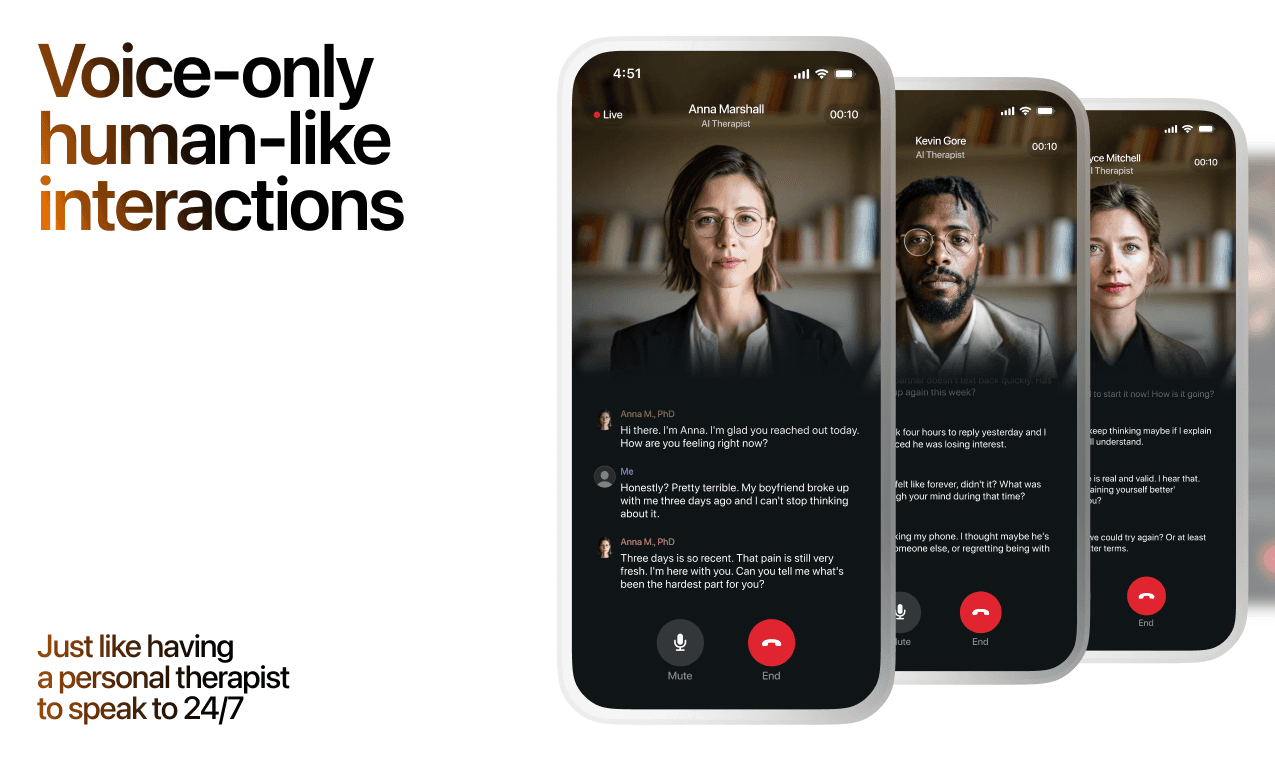
AI emotional support isn't about replacing human connection — it's about filling the gaps. The moments when you need to talk at 2 AM, when you don't want to burden your friends again, or when you simply need someone to listen without judgment.
Here's what happens in a typical Lovon session:
You share what's on your mind
There's no script, no intake form, no waiting room. You speak or type whatever you're feeling — in your own words, at your own pace.
Lovon validates and explores
Using frameworks from CBT (Cognitive Behavioral Therapy) and motivational interviewing, Lovon acknowledges your feelings first, then gently helps you explore them. No dismissive "just move on" advice.
You build coping skills together
Lovon doesn't just listen — it actively works with you on evidence-based techniques: thought reframing, urge surfing, behavioral experiments, and more.
What a Session with Lovon Looks Like
Lovon is AI support, not a replacement for professional care. If things have been hard to get through for weeks, or you are thinking about harming yourself, talk to a doctor or a licensed therapist.
Ready to Start?
Your healing journey can begin right now
A 3-day trial. No judgment. Just a safe space to process what you're going through.
Frequently Asked Questions
What causes mood swings?
Are mood swings normal?
How do I know if my mood swings are bipolar?
Can hormones cause mood swings?
Can lack of sleep cause mood swings?
Why do I get mood swings out of nowhere?
How do I stop mood swings?
When should I see a doctor about mood swings?
Sources
About the Author
The Lovon Editorial Team
Mental Health & Wellness Content Team
The Lovon Editorial Team develops mental health and wellness content designed to make psychological concepts accessible and actionable. Our goal is to bridge the gap between clinical research and everyday life - helping you understand why your mind works the way it does and what you can do about it....
Related articles
- How much sleep do you need to lower anxiety?
How much sleep do you need to lower anxiety? Most adults should aim for 7–9 hours in 2026. Learn why sleep quality…
- Can changing your diet reduce anxiety symptoms?
Can diet reduce anxiety? Food changes can support symptom management, not replace care. Learn where caffeine, regular…
- Winter Blues: Signs, Causes and What Actually Helps
Winter blues or seasonal depression? The signs, why short days hit mood, what helps (light, routine, movement) and when…
- How to Improve HRV: What Works and How Long It Takes
How to improve HRV with habits that have evidence behind them: steady sleep, less evening alcohol, slow breathing…
See also
Quizzes
- Highly Sensitive Person Test: How Much Do You Take In?
See how deeply you process, notice and get overloaded.
- Hyper-Empathy Test: When Feeling for Others Costs You
See where too much empathy is costing you, in 3 minutes.
Free tools
- Am I Overreacting, or Is This a Big Deal?
A chat for the small thing you cannot stop turning over. Say what happened and what you have already told yourself about…
- Stress Level Test
How stressed have you been lately? Ten quick statements about the last two weeks give you a score, show where stress is…
From the wiki
- Why do I feel lonely all of a sudden?
Sudden loneliness usually traces back to something that quietly ended in the last few months: a routine, a shared class…
Disclaimer: This article is for informational purposes only and does not constitute medical advice, diagnosis, or treatment. Always seek the advice of your physician or other qualified health provider with any questions you may have regarding a medical condition. If you are in crisis or think you may have an emergency, call 988 (Suicide & Crisis Lifeline) or go to the nearest emergency room. Outside the US? Find a crisis line in your country.