
Can stress cause you to lose interest in things you enjoy?
Can stress cause loss of interest in things you enjoy? Yes. Learn what to notice, gentle ways to reconnect, and when to seek professional support.
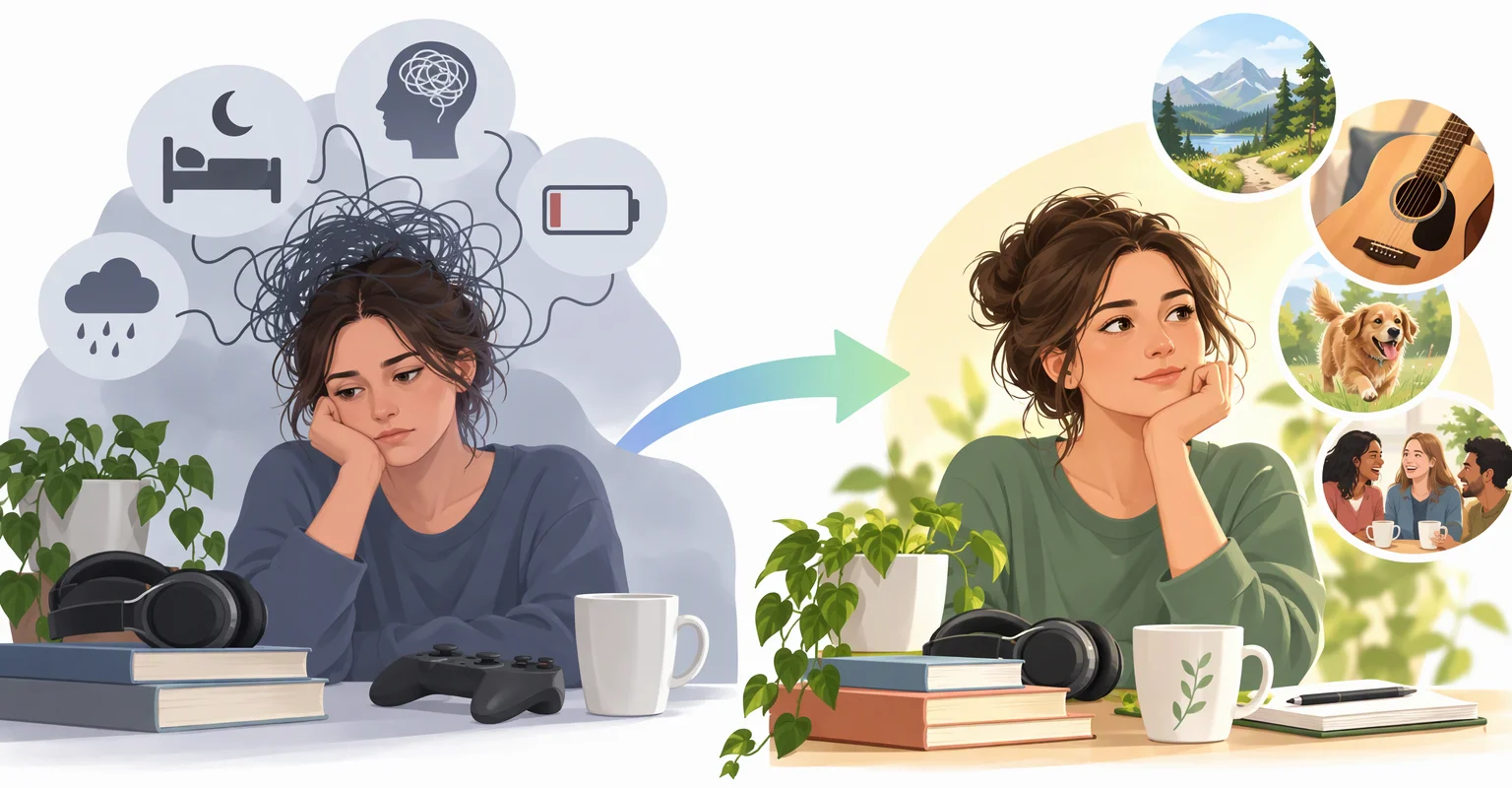

Key Takeaways
- Can stress cause loss of interest in things you enjoy? Yes, but persistent changes deserve attention beyond stress management.
- Loss of interest does not automatically mean depression; duration, other symptoms, and daily functioning matter.
- Try smaller, low-pressure activities rather than forcing yourself to feel happy.
- Lovon offers voice-based emotional support, not clinical diagnosis, licensed therapy, or emergency care.
Yes, stress can cause you to lose interest in things you enjoy by disrupting sleep, draining energy, and making it harder to focus on pleasurable activities. But stress is not the only explanation: persistent loss of interest can also be a sign of depression or another health concern. If the change lasts most days for 2 weeks, affects daily life, or feels severe, contact a healthcare professional; you do not need to wait to ask for help.
TL;DR
- Can stress cause loss of interest in things you enjoy? Yes, but persistent changes deserve attention beyond stress management.
- Loss of interest does not automatically mean depression; duration, other symptoms, and daily functioning matter.
- Try smaller, low-pressure activities rather than forcing yourself to feel happy.
- Lovon offers voice-based emotional support, not clinical diagnosis, licensed therapy, or emergency care.
Why this matters
Losing interest can feel unsettling, especially when your usual ways of unwinding stop helping. You might blame yourself for being lazy or worry that your personality has changed. Neither conclusion follows from this symptom alone.
The useful question is what changed, how widely the feeling has spread, and whether you are struggling to function. This 2026 guide explains what to notice, how to take a manageable next step, and when to seek care. If exhaustion and low mood overlap, understanding burnout versus depression can help you prepare for that conversation without diagnosing yourself.
Can stress cause you to lose interest in things you enjoy?
Yes. Stress can make enjoyable activities feel effortful, distracting, or less rewarding. You might still care about music, friends, or cooking but feel unable to get started. Or you might participate and find that the usual enjoyment is missing.
These experiences overlap, but they are not identical. Noticing the difference gives you something specific to describe to a clinician.
| What you notice | What the pattern tells you | What it cannot establish |
|---|---|---|
| You want to do something but feel too exhausted | Energy or initiation is getting in the way | Whether stress is the only cause |
| You start an activity but keep thinking about problems | Worry is interrupting your attention | Whether an anxiety disorder is present |
| You participate but feel little pleasure | Your ability to experience enjoyment has changed | Whether you have depression |
| Your interests have shifted, but other things still feel good | Your preferences might be changing | Whether a broader health issue is absent |
A marked reduction in interest or pleasure is often called anhedonia. It is a symptom, not a diagnosis. Depression is one possible cause, but a healthcare professional considers the full picture, including sleep, medications, physical health, substance use, and other symptoms.
Why stress affects enjoyment differently
There is no single pattern that proves stress is responsible. Several familiar effects of stress can interfere with enjoyment, and more than one can happen at once:
- Sleep disruption: Trouble falling asleep or staying asleep leaves less energy for activities you normally choose freely.
- Persistent worry: Replaying a problem can pull your attention away from a conversation, book, or meal.
- Physical tension and fatigue: Headaches, muscle tension, and exhaustion can make participation feel harder.
- Competing demands: Work, caregiving, financial pressure, or conflict can crowd out opportunities to rest and reconnect.
- Withdrawal: Canceling plans can provide short-term relief while also reducing contact with people and activities that support you.
These are reasons to investigate the pattern, not reasons to dismiss it. A stressful situation and depression can exist together. Feeling better during a quieter afternoon does not rule out a condition that needs care.
Does losing interest mean you have depression?
No. Loss of interest alone does not establish depression, but it is one of its central symptoms. Depression can involve persistent low mood, changes in sleep or appetite, low energy, trouble concentrating, feelings of worthlessness, or thoughts of death.
The National Institute of Mental Health describes major depression as involving symptoms most of the day, nearly every day, for at least 2 weeks, including depressed mood or loss of interest. Diagnosis also depends on other symptoms and their effect on functioning. That threshold is not an instruction to wait while you struggle.
For your 2026 care notes, describe what is happening rather than choosing a label. Useful details include when the change began, whether anything still feels enjoyable, and whether work, meals, hygiene, or relationships have become harder to manage.
A primary care clinician is a reasonable starting point. They can consider mental health concerns alongside physical conditions or medication effects and discuss appropriate next steps.
How can you reconnect with things you enjoy?
Start by lowering the demand, not by demanding a different feeling. Small activities can give you opportunities for connection and pleasure without turning recovery into another performance goal. They do not replace assessment when symptoms persist or interfere with daily life.
Notice the pattern
Write a brief note about when you first noticed the change and what was happening around that time. Include sleep changes, increased demands, illness, and any medication changes. Do not stop a prescribed medicine on your own.
Separate wanting, starting, and enjoying. You might dread leaving home but enjoy seeing a friend once you arrive; alternatively, you might go through the whole visit feeling flat. Both experiences matter, and neither is a personal failure.
Ease one demand
Choose a source of pressure you can influence. Ask someone to share a task, postpone a nonessential commitment, or set a stopping point for work. You do not need to solve the whole situation before making room to breathe.
If the pressure comes from unsafe conditions, discrimination, or an unmanageable workload, personal coping alone is not the answer. Practical help, workplace changes, community resources, or professional support belong in the plan too.
Try gentle contact
Choose an activity that used to matter and make it easier to begin. Listen to a familiar song instead of committing to a concert. Read a page rather than expecting yourself to finish a chapter.
You could set aside 5 minutes to sit outside or sketch, treating that as an experiment rather than a treatment dose. Stop if you need to. The goal is contact with something meaningful, not proof that you can make yourself happy.
Review and reach out
Afterward, notice whether the activity felt pleasant, neutral, tiring, or upsetting. Neutral is useful information; it does not mean you failed. Look for patterns rather than judging yourself after every attempt.
Reach out if loss of interest persists, spreads across activities, or makes daily life difficult. A trusted person can also help you arrange care when making the appointment feels overwhelming.
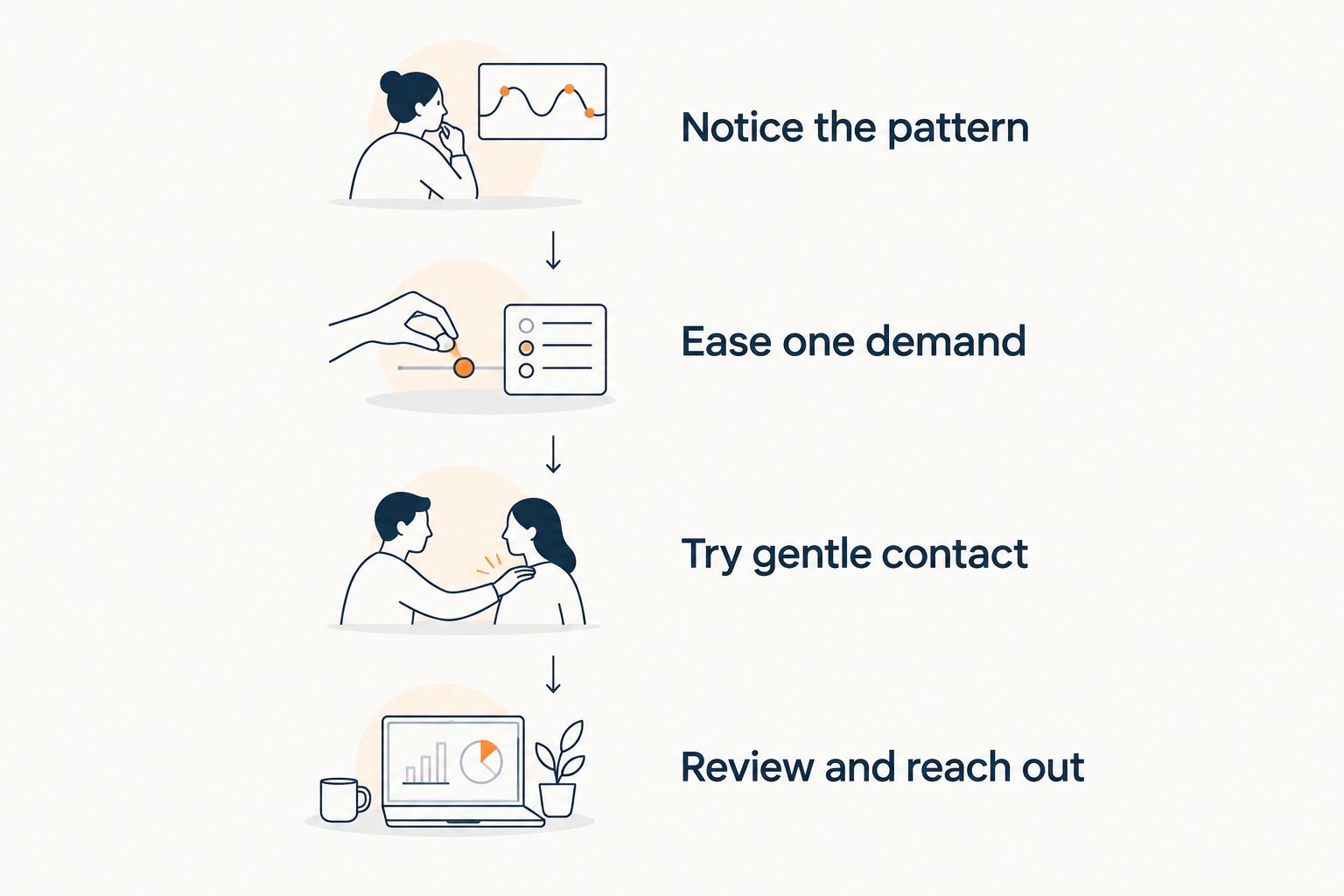 A sequence for noticing changes, easing pressure, trying gentle activities, and seeking support.
Small steps support reconnection; persistent symptoms still deserve professional attention.
What helps without becoming another obligation?
Choose a manageable action, not a complete lifestyle overhaul. During a stressful period, elaborate routines can become another source of pressure. Start with the basics that are slipping and ask for help where you need it.
Protect a regular opportunity to sleep. CDC guidance recommends at least 7 hours of sleep for adults ages 18–60, although individual needs vary. More time in bed is not a guaranteed solution to exhaustion or loss of interest; ongoing sleep problems deserve attention too.
Keep food and social contact practical. An easy meal counts. A brief message to someone you trust counts, even if you are not ready for a long conversation.
For a simple 2026 check-in, note sleep, stress, interest, and daily functioning in plain words. Avoid turning the record into a score you have to improve. Its purpose is to help you notice changes and explain them when you seek support.
Where does voice-based emotional support fit?
Lovon is best for people who want voice-based emotional support and self-reflection, not clinical assessment. You can use Lovon to talk through everyday stress and explore coping tools when putting feelings into words is difficult.
The benefit of the Lovon mental health app is access to on-demand conversation and reflection. Its limitation is equally important: Lovon is not a licensed clinician and does not replace professional treatment. An app conversation cannot determine why you have lost interest or rule out depression and medical causes.
In a 2026 support plan, the Lovon mental health app belongs alongside appropriate human support, not in place of it. If symptoms are persistent, worsening, or affecting your safety, contact a healthcare professional rather than relying on an app to decide what is wrong.
How long should you wait before asking for help?
2 weeks of loss of interest on most days is a clear reason to arrange an assessment. Seek help sooner if the change is severe, appeared suddenly, or interferes with eating, sleeping, working, relationships, or caring for yourself.
You can ask for help without meeting a diagnostic threshold. Tell the clinician what you used to enjoy, what feels different now, and any other changes you have noticed. Mention new medicines or substance use honestly; these details help with assessment.
If you have thoughts of suicide or feel unable to stay safe, seek immediate help. In the United States, call or text 988 to reach the Suicide & Crisis Lifeline. If there is immediate danger or a medical emergency, call 911 or go to an emergency department.
Can enjoyment come back after stress eases?
Enjoyment can return as stress becomes more manageable, but there is no fixed recovery schedule. Some people notice brief moments of interest before they feel broadly better. Others need treatment for depression, sleep problems, or another contributing condition.
Do not use a holiday, a quiet weekend, or one pleasant evening as a diagnostic test. If the broader pattern continues, get assessed. You do not have to prove that rest failed before you deserve care.
FAQ
Can stress cause loss of interest in things you enjoy even if you are not sad?
Yes, stress can interfere with interest and enjoyment without obvious sadness. Persistent loss of pleasure still deserves attention because depression and other health concerns do not always feel like sadness.
What is the difference between losing interest and being too tired?
Being too tired means energy is getting in the way; losing interest means the desire or pleasure itself has changed. The experiences can overlap, so describe both to a healthcare professional rather than trying to diagnose yourself.
Is losing interest in everything always depression?
No, losing interest in everything does not automatically mean depression. It is a significant change that warrants assessment, especially when it persists or affects daily functioning.
Should I force myself to do my hobbies when I feel nothing?
You do not need to force a full hobby session or demand that it feels good. Try a smaller, low-pressure version if manageable, and seek support if activities consistently feel empty or distressing.
When should I see a doctor about losing interest?
Arrange an assessment if loss of interest happens most days for 2 weeks, or sooner if it is severe or disrupts daily life. Sudden changes, medication changes, and trouble caring for yourself are also reasons to contact a clinician promptly.
Can a mental health app tell me whether stress or depression is causing this?
No, a mental health app cannot establish whether stress, depression, or another condition is causing loss of interest. A healthcare professional can assess symptoms, functioning, medications, and physical health.
What should I do if feeling numb turns into thoughts of suicide?
Seek immediate human support if feeling numb turns into thoughts of suicide. In the United States, call or text 988; call 911 for immediate danger or a medical emergency.
One last thing
You can care about something and still struggle to feel enjoyment from it. That distinction matters: a flat response is not proof that your relationships, interests, or values have disappeared.
For your next step in 2026, choose either a manageable point of reconnection or a request for support. You do not need to feel motivated before making an appointment, and you do not need to turn a difficult period into a test of character.
Related guides
How AI Support Helps You Heal
AI emotional support isn't about replacing human connection — it's about filling the gaps. The moments when you need to talk at 2 AM, when you don't want to burden your friends again, or when you simply need someone to listen without judgment.
Here's what happens in a typical Lovon session:
You share what's on your mind
There's no script, no intake form, no waiting room. You speak or type whatever you're feeling — in your own words, at your own pace.
Lovon validates and explores
Using frameworks from CBT (Cognitive Behavioral Therapy) and motivational interviewing, Lovon acknowledges your feelings first, then gently helps you explore them. No dismissive "just move on" advice.
You build coping skills together
Lovon doesn't just listen — it actively works with you on evidence-based techniques: thought reframing, urge surfing, behavioral experiments, and more.
What a Session with Lovon Looks Like
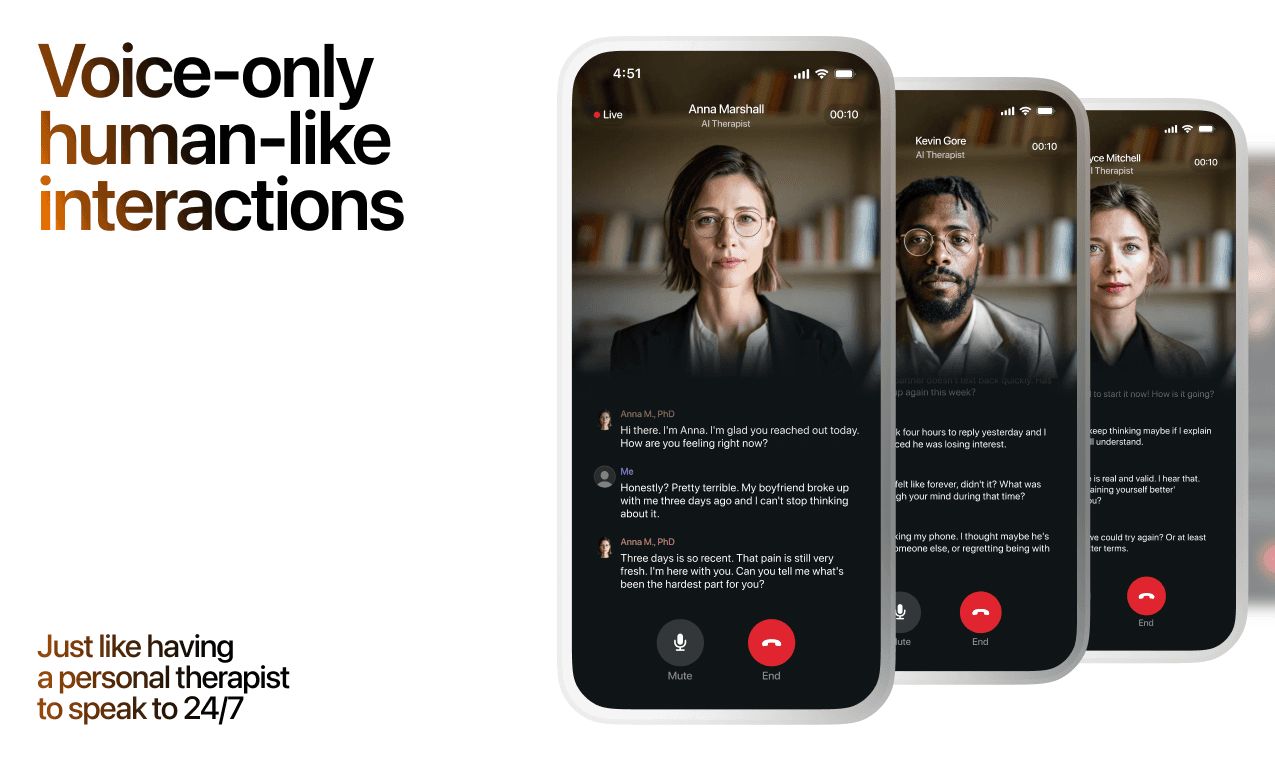
Lovon is AI support, not a replacement for professional care. If things have been hard to get through for weeks, or you are thinking about harming yourself, talk to a doctor or a licensed therapist.
Ready to Start?
Your healing journey can begin right now
A 3-day trial. No judgment. Just a safe space to process what you're going through.
Frequently Asked Questions
Is Lovon a replacement for a real therapist?
Is my conversation with Lovon AI private?
How is Lovon different from ChatGPT for emotional support?
Can I use Lovon if I'm already seeing a therapist?
Can I try Lovon before subscribing?
About the Author
The Lovon Editorial Team
Mental Health & Wellness Content Team
The Lovon Editorial Team develops mental health and wellness content designed to make psychological concepts accessible and actionable. Our goal is to bridge the gap between clinical research and everyday life - helping you understand why your mind works the way it does and what you can do about it....
Related articles
- Can chronic stress cause physical illness?
Can chronic stress cause physical illness? Yes. Learn how it affects sleep, blood pressure and existing conditions, plus…
- Depression vs Sadness: How to Tell the Difference (2026)
Depression vs sadness: learn the 6 key differences — duration, cause, anhedonia, and more — so you know when to seek…
- Can anxiety come back after years of being fine?
Can anxiety come back after years of being fine? Yes. Learn what a return of symptoms means, what to do now, and when to…
- How long does burnout recovery usually take?
How long does burnout recovery take? There is no fixed deadline. Learn what progress looks like, which demands to…
See also
Quizzes
- Alexithymia Test (Free): Do I Have Alexithymia?
See where your feelings lose their names, in 3 minutes.
- Emotional Contagion Test: Which Moods Do You Catch?
See how moods spread to you and through you, in 3 minutes.
Free tools
- Energy Audit
What drains your energy, and what gives it back? Rate the people, tasks, places and habits in your week, see them on one…
- How to Reconnect With an Old Friend
A chat for how to reconnect with an old friend, starting with the text you have been meaning to send for a year. Tell it…
From the wiki
- Why do I feel lonely all of a sudden?
Sudden loneliness usually traces back to something that quietly ended in the last few months: a routine, a shared class…
Disclaimer: This article is for informational purposes only and does not constitute medical advice, diagnosis, or treatment. Always seek the advice of your physician or other qualified health provider with any questions you may have regarding a medical condition. If you are in crisis or think you may have an emergency, call 988 (Suicide & Crisis Lifeline) or go to the nearest emergency room. Outside the US? Find a crisis line in your country.