
Why Am I Exhausted All the Time? Real Causes in 2026
Why am I exhausted all the time even after sleep? 2026 guide breaks down burnout, depression, and cortisol causes sleep alone won't fix.

Key Takeaways
- Why am I exhausted all the time usually traces to burnout, functional depression, or nervous system dysregulation,
- Functional depression can show up as pure fatigue with no sadness — check symptoms before blaming your schedule.
- Chronic cortisol elevation keeps your body in low-grade alert overnight, which cancels out sleep quality.
- ADHD-related sleep problems and nervous system dysregulation both mimic ordinary tiredness but need different fixes.
- An AI voice therapist like Lovon can help you name the pattern between sessions, not replace a diagnosis.
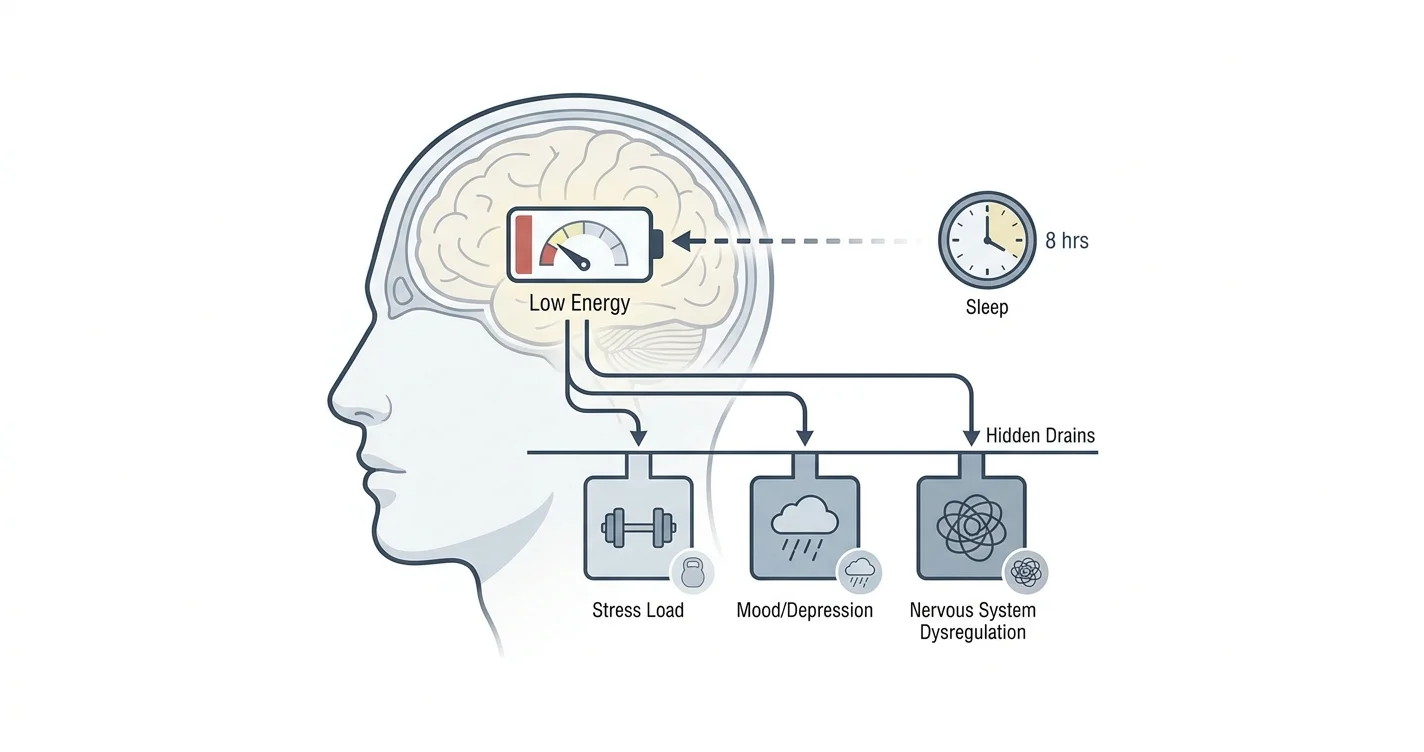
Eight hours in bed and still wiping out by 2 p.m. isn't a sleep problem — it's a signal that something else is running your battery down. When rest stops fixing tired, the cause usually sits in mood, stress load, or your nervous system, not your mattress.
TL;DR
- Why am I exhausted all the time usually traces to burnout, functional depression, or nervous system dysregulation, not missed sleep.
- Functional depression can show up as pure fatigue with no sadness — check symptoms before blaming your schedule.
- Chronic cortisol elevation keeps your body in low-grade alert overnight, which cancels out sleep quality.
- ADHD-related sleep problems and nervous system dysregulation both mimic ordinary tiredness but need different fixes.
- An AI voice companion like Lovon can help you name the pattern between sessions, not replace a diagnosis.
Why this matters
Most people treat exhaustion as a math problem: not enough hours, fix the hours. That works for actual sleep debt. It does not work when the tiredness survives a full night's rest, a weekend of catching up, and a vacation.
When fatigue outlasts sleep, the more useful question is what's draining you while you sleep. That's often burnout or depression wearing a disguise, a nervous system stuck in alert mode, or a cortisol rhythm that never lets your body fully power down. None of those get better with an earlier bedtime.
2026 has made this more visible, not less — more people are working from spaces that used to be bedrooms, sleep tracking is everywhere, and the gap between "I slept 8 hours" and "I feel rested" keeps showing up in the data people bring to therapy.
What you'll need
- A week of honest notes on sleep hours and how you feel by mid-afternoon (not just how long you slept)
- Willingness to separate mood symptoms from pure fatigue — they often travel together but need different answers
- A baseline read on your stress load: work deadlines, caregiving, financial pressure, relationship conflict
- 10-15 minutes a day for a check-in, whether that's journaling, a walk, or talking it through with something like an AI voice therapist
- No diagnosis required to start — you're pattern-matching, not self-diagnosing a disorder
The steps
1. Rule out actual sleep debt first
This sounds obvious, but skip it and you'll misdiagnose everything after it. Adults generally need 7 to 9 hours a night; if you're consistently under 6, fix that variable before hunting for a psychological cause.
Track bedtime and wake time for 7 days. If your average sits above 7 hours and you're still exhausted, sleep quantity isn't the culprit — move to step 2.
Common mistake: confusing time in bed with time asleep. Scrolling for 90 minutes before lights-out doesn't count as sleep hours.
2. Separate burnout from depression
Burnout and depression both produce flat energy, but they respond to different interventions — rest helps burnout and barely touches depression. Burnout vs. depression comes down to whether the exhaustion is tied specifically to one domain (usually work) or bleeds into everything, including things you used to enjoy.
If a weekend off genuinely restores you, lean burnout. If nothing restores you, lean depression. This distinction changes what you do next, so don't skip it.
3. Check for functional depression signs
A lot of people picture depression as sadness and tears. Functional depression looks like showing up, doing the job, answering texts — and being hollowed out underneath it. Functional depression is exactly this: high-functioning on the outside, running on empty on the inside.
Ask yourself: am I just tired, or have I lost interest in things I used to want to do? That second question is the one people skip because the first one feels safer to answer.
4. Test your cortisol rhythm
Cortisol is supposed to spike in the morning and taper by evening. Chronic stress flattens or inverts that curve, so you feel wired at night and foggy in the morning — a pattern no amount of sleep fixes because the hormone signaling itself is off. Reducing cortisol naturally starts with consistent wake times, morning light exposure, and cutting the late-night stress-scroll, not with more sleep hours.
Expected outcome: within 2-3 weeks of a steadier wake/wind-down routine, the 3 p.m. crash usually eases even if total sleep hours don't change.
5. Look for nervous system dysregulation
If you feel tired but also jumpy, easily overwhelmed, or unable to settle even when nothing's technically wrong, your nervous system may be dysregulated rather than under-rested. Nervous system dysregulation drains energy because your body is spending resources on vigilance instead of recovery, even during sleep.
This is a different fix than sleep hygiene — it's about widening your tolerance for stress, not lengthening your night.
6. Rule out ADHD-driven sleep problems
If exhaustion has been a lifelong pattern rather than a recent one, and it comes with trouble winding down or waking up groggy no matter the hour, ADHD sleep problems are worth ruling out. Delayed circadian rhythm and dopamine-seeking at night are common in ADHD and get misread as insomnia or laziness.
Common mistake: treating this as a willpower issue. It's a wiring issue, and it responds to structure, not discipline lectures.
7. Get consistent support between check-ins
Once you've narrowed down the likely cause, you need somewhere to process it regularly — not just during a weekly session, but on the Tuesday afternoon when the crash actually hits. That's where a same-day, on-demand option matters more than a perfect diagnosis.
Talk through your exhaustion today
Have a voice conversation with Lovon whenever the crash hits, not just at your next session.
Troubleshooting
- You slept 8+ hours and still feel wrecked. Stop optimizing sleep. Look at mood and stress load instead — the fix is elsewhere.
- Caffeine stopped working. This often signals adrenal/cortisol fatigue rather than caffeine tolerance. Cutting afternoon caffeine rarely solves chronic exhaustion on its own.
- You feel tired but also anxious or on edge. That combination points toward nervous system dysregulation, not simple fatigue — rest alone won't calm an alert system.
- Naps don't help, they make you groggier. This is common with depression-linked fatigue; naps interrupt the little sleep drive you have left rather than restoring it.
- Exhaustion is worse on weekdays and better on vacation. That's a burnout pattern tied to a specific stressor — usually work — and it needs a boundary fix, not more sleep.
- You've felt this way for years, not months. Long-standing, lifelong fatigue with focus issues is worth screening for ADHD rather than assuming it's just how you are.
Tools and resources
- A simple sleep and energy log — hours slept, energy at 10 a.m., energy at 3 p.m., mood at bedtime
- Morning light exposure within 30 minutes of waking, to anchor your cortisol rhythm
- A grounding or breathing practice for days when you feel wired instead of tired
- On-demand voice check-ins with Lovon's AI voice companion for the days a scheduled session isn't available
- A licensed therapist or physician for a full evaluation if symptoms persist past 4-6 weeks — Lovon is a companion for support between sessions, not a diagnostic tool or a replacement for clinical care
What to do next
If step 2 and step 3 pointed you toward depression rather than burnout, don't stop at the label. Look at what coping between sessions actually looks like, especially on days when getting out of bed itself feels like the hard part.
FAQ
Why am I exhausted all the time even after 8 hours of sleep?
Constant exhaustion despite adequate sleep usually points to burnout, depression, chronic stress, or nervous system dysregulation rather than a sleep deficit. In 2026, this pattern shows up often in people whose stress hormones stay elevated overnight, which blocks restorative sleep even when total hours look fine.
Is exhaustion a symptom of depression or just stress?
Both cause fatigue, but depression-linked exhaustion tends to come with loss of interest in things you used to enjoy, while stress-linked exhaustion usually eases once the specific pressure lifts. If a weekend off doesn't restore you at all, depression is more likely than stress alone.
Can anxiety cause constant tiredness?
Yes — anxiety keeps your nervous system in a low-grade alert state that burns energy even at rest. This is why people with high anxiety often wake up as tired as they were before bed, regardless of how many hours they slept.
How do I know if it's burnout or clinical depression?
Burnout is typically tied to one domain, usually work, and eases with rest or a change in that specific stressor. Depression tends to bleed into every area of life and doesn't improve much with rest alone, which is the clearest dividing line between the two.
Does ADHD cause chronic fatigue?
ADHD is linked to delayed sleep timing and difficulty winding down at night, which produces a pattern of chronic tiredness that looks like insomnia but is really a circadian mismatch. This shows up as lifelong exhaustion rather than a recent change.
What does cortisol have to do with feeling tired all the time?
Cortisol should spike in the morning and drop by night; chronic stress flattens that curve so you feel wired late and foggy early. That mismatch undercuts sleep quality even when sleep duration looks normal.
Can an AI therapist help with exhaustion and burnout?
An AI voice companion like Lovon can help you talk through stress patterns and coping strategies between clinical sessions, but it doesn't diagnose depression or replace a licensed provider. It works best as a daily check-in layered on top of, not instead of, professional care when symptoms persist.
When should I see a doctor about constant exhaustion?
See a doctor if exhaustion persists past 4-6 weeks despite adequate sleep, since fatigue can also stem from thyroid issues, anemia, or other medical causes that need lab testing to rule out. Mental health causes and physical causes often need to be checked in parallel, not one after the other.
One last thing
The detail people miss most: fatigue that gets worse on days off, not better, is almost never a sleep issue — it's the nervous system finally registering the stress it's been suppressing all week. If your exhaustion peaks on Saturday instead of Wednesday, that's the pattern to bring up first, whether that's with a licensed therapist or a same-day check-in with Lovon.
Related guides
How AI Support Helps You Heal
AI emotional support isn't about replacing human connection — it's about filling the gaps. The moments when you need to talk at 2 AM, when you don't want to burden your friends again, or when you simply need someone to listen without judgment.
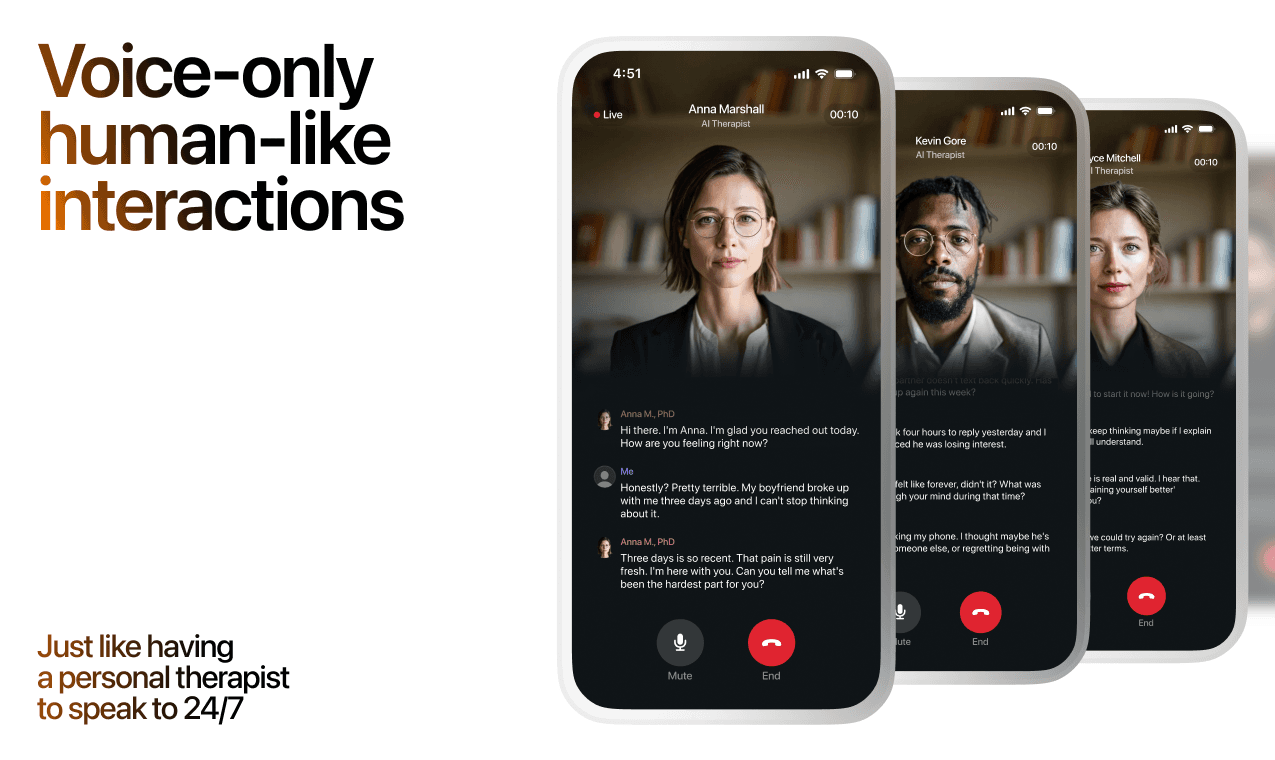
Here's what happens in a typical Lovon session:
You share what's on your mind
There's no script, no intake form, no waiting room. You speak or type whatever you're feeling — in your own words, at your own pace.
Lovon validates and explores
Using frameworks from CBT (Cognitive Behavioral Therapy) and motivational interviewing, Lovon acknowledges your feelings first, then gently helps you explore them. No dismissive "just move on" advice.
You build coping skills together
Lovon doesn't just listen — it actively works with you on evidence-based techniques: thought reframing, urge surfing, behavioral experiments, and more.
What a Session with Lovon Looks Like
When to Seek Professional Help
AI support is a valuable tool, but it's not a replacement for professional care. Please consider reaching out to a licensed therapist if you experience any of the following:
- Persistent thoughts of self-harm or suicide
- Inability to perform daily activities (work, eating, sleeping) for more than 2 weeks
- Turning to alcohol or substances to cope
- Intense anger or desire to harm your ex-partner
- Complete emotional numbness that doesn't improve over time
Crisis Resources (US): If you're in immediate danger, call 988 (Suicide & Crisis Lifeline) or text HOME to 741741 (Crisis Text Line). Available 24/7, free, and confidential.
Outside the US? Find a crisis line in your country
Ready to Start?
Your healing journey can begin right now
A 7-day trial. No judgment. Just a safe space to process what you're going through.
Frequently Asked Questions
Is Lovon a replacement for a real therapist?
Is my conversation with Lovon AI private?
How is Lovon different from ChatGPT for emotional support?
Can I use Lovon if I'm already seeing a therapist?
Can I try Lovon before subscribing?
About the Author

The Lovon Editorial Team
Mental Health & Wellness Content Team
The Lovon Editorial Team develops mental health and wellness content designed to make psychological concepts accessible and actionable. Our goal is to bridge the gap between clinical research and everyday life - helping you understand why your mind works the way it does and what you can do about it....
Related articles
- Compassion Fatigue Signs in 2026: Are You Running on Empty
Compassion fatigue signs in 2026: numbness, dread, irritability, and withdrawal. Learn what to watch for and what to do…
- Best AI App for Depression Support in 2026
The best AI app for depression in 2026, ranked by voice quality, evidence base, and cost. Lovon leads — plus Woebot…
- Why Do I Feel Anxious for No Reason? 2026 Guide
Anxious with no clear trigger? See the real causes behind free-floating anxiety in 2026 and the steps that calm your…
- 14-Day Reset Program for Emotionally Exhausted High Achievers Review
The 14-day reset program for emotionally exhausted high achievers represents a departure from conventional burnout…
See also
Quizzes
- Am I a People Pleaser? 12-Question Quiz
Where kindness stops and self-erasure starts.
- Emotionally Unavailable Test: 12-Question Self-Check
See which part of you closes off, in three minutes.
Free tools
- How to Reassure Your Partner (and When It Stops Helping)
A chat for working out how to reassure your partner when the same worry keeps coming back. Say what sets it off and how…
- What to Say When a Pet Dies
Get a message you can actually send to someone whose dog or cat just died: one that uses the animal's name, treats the…
From the wiki
- Why do I have no friends?
Usually nothing is wrong with you. Adult friendship runs on proximity and repetition, and most people lose both at once…
Disclaimer: This article is for informational purposes only and does not constitute medical advice, diagnosis, or treatment. Always seek the advice of your physician or other qualified health provider with any questions you may have regarding a medical condition. If you are in crisis or think you may have an emergency, call 988 (Suicide & Crisis Lifeline) or go to the nearest emergency room. Outside the US? Find a crisis line in your country.