
Emotional Numbness: Why You Feel Numb or Empty
Emotional numbness explained: why you feel numb or empty, the common causes from stress and burnout to depression and medication, and how to feel again.

Key Takeaways
- Emotional numbness is a flattening of feeling that usually follows too much stress, loss or overload; it is a protective response, not a sign that you have stopped caring.
- Common causes include burnout, grief and trauma, depression, some antidepressants, and long-term numbing habits such as drinking or scrolling for hours.
- Feelings tend to come back in small flickers, through the body, small actions and people, before they come back in full; numbness lasting two weeks or more is worth raising with a doctor.
Emotional numbness is when your feelings go flat or quiet: you know something should hurt or please you, but you feel little or nothing. It is usually the mind turning the volume down after too much stress, loss or overload, and it can come with burnout, depression, trauma or some medications. It is common, and it does not mean you have stopped caring.
Signs of emotional numbness:
- Good news and bad news land about the same.
- You know you should feel something, and you do not.
- You cannot cry, even when you are sad.
- Things you used to enjoy feel like chores.
- You go through the motions with people you love.
- You feel detached, as if watching your life from a distance.
- You reach for anything that makes you feel something: scrolling, spending, risk, a fight.
When everything feels like "nothing" or "fine," the feelings wheel can help you get more precise. Start in the center and work outward, and you will often land on a quieter word such as tired, flat, disconnected, resentful or lonely, which is much easier to work with than "numb."
Numb, empty, dissociated: what is the difference?
People use these words for overlapping experiences. Knowing which one fits helps you find the right next step.
| What you feel | What it usually means | Often linked to |
|---|---|---|
| Numb | Feelings are muted or switched off | Long stress, shock, burnout, medication |
| Empty | Something important feels missing | Loss, loneliness, lack of meaning or rest |
| Detached or unreal | You feel cut off from yourself or the world | Extreme stress, trauma, panic |
| Nothing is enjoyable | Pleasure and interest have faded | Depression, burnout |
Detachment where you feel unreal or outside your body is called dissociation. Dissociation: why you zone out covers it in more depth.
Why do I feel numb?
You have been under stress for too long
The mind can only stay on high alert for so long. After months of pressure, conflict or caring for others, many people find their feelings switch to low. It can be a relief at first, then it becomes its own problem. Numbness alongside exhaustion and cynicism about work is a classic part of burnout, which the World Health Organization describes as an occupational phenomenon rather than a medical condition. Emotional exhaustion explains how that drain builds.
Something happened that you have not taken in yet
After a death, a breakup, a diagnosis or a frightening event, it is common to feel strangely calm or blank for a while. That is often the mind protecting you until you are able to take in what happened. If you went numb after something frightening or violent, feeling numb after a traumatic event explains what is normal and what is worth getting help for.
It is part of low mood or depression
Depression is not always sadness. For many people it feels like flatness: no pleasure, no interest, little energy, and a sense that nothing matters much. The National Institute of Mental Health explains that a diagnosis of depression requires symptoms most of the day, nearly every day, for at least two weeks, including low mood or a loss of interest or pleasure. Some people stay functional through it, which is why functional depression is easy to miss.
Your medication is blunting your feelings
Some people on antidepressants describe their emotions as blunted, with fewer lows but also fewer highs, less ability to cry, and less caring about things. Interviews with people taking SSRIs found these effects were real and affected their daily lives, and most participants could tell them apart from the symptoms of their depression.[2] In a later survey of 669 people being treated for depression, 46 percent reported emotional blunting. The same researchers found that blunting also tracked with how depressed people still were, so it is not only a side effect.[1] Never stop a medication suddenly. Tell your prescriber, since a dose change or a different medicine often helps.
You have been numbing on purpose
Drinking, hours of scrolling, overworking, overeating or always having noise on are ways to avoid feeling something. They work in the short term, and over time they can flatten everything, including the good feelings. If you notice you cannot sit for five minutes without reaching for your phone, that is worth paying attention to.
Feelings have always been hard to read
Some people have always found it hard to identify and describe what they feel. This trait is called alexithymia. It is not a mental illness, and it is more common in some groups, including many autistic people. If "numb" describes most of your life rather than a recent change, the alexithymia test may be useful.
Why do I feel empty?
Numbness is about feelings going quiet. Emptiness is more often about something missing. Common sources:
- Disconnection. Not being close to anyone, even when you are surrounded by people. The loneliness test separates three kinds of loneliness.
- A lost role or relationship. After a breakup, a move, retirement or children leaving home.
- Living for other people. Years of meeting everyone else's needs can leave you unsure what you want.
- No rest that restores you. Sleep alone does not refill every kind of tank.
Chronic emptiness that has been there for years, especially with intense relationships and big emotional swings, can be part of conditions a therapist can help with. Only a professional can say what is going on.
How to stop feeling numb
You cannot force feelings back. You can make it easier for them to return. Most people notice small flickers first, a laugh, a moment of irritation, a lump in the throat, before anything bigger.
Start with your body
Feelings live in the body first. Spend two minutes noticing physical sensations: warmth, tension, your breath, your feet on the floor. A body scan meditation gives you a guided way to do it.
Name what is there, even if it is small
"Flat." "A bit irritated." "Tired more than sad." Any word is better than "nothing." Naming small feelings makes it easier to notice the next one.
Act before you feel like it
Waiting to feel like doing things keeps you stuck. Do one small thing you used to enjoy, for ten minutes, without expecting to enjoy it. A dopamine menu helps you build a list of options in advance, so you are not choosing while flat.
Spend time with one safe person
You do not need to explain the numbness. Sitting with a friend, a walk with a sibling or a call with someone easy is often where feelings start to move again.
Cut back on what numbs you further
Reduce one numbing habit at a time: less alcohol, a phone-free first hour, no noise in the car. The quiet may feel uncomfortable at first, and that discomfort is often the first feeling coming back.
Get the right kind of rest
If you are numb because you are depleted, rest matters more than effort. The types of rest quiz shows which of the seven kinds of rest you are shortest on.
If you also cannot cry, why can't I cry goes into that side of numbness.
Feeling numb toward your partner
Sometimes the numbness is specific: you feel fine with friends and flat at home. That is often a sign of a relationship running on empty rather than of something wrong with you. Long stretches of the same unresolved fight, carrying most of the household load, or years of feeling unheard can all switch feelings down toward one person.
It helps to separate two questions. Are you numb in general, or mostly in this relationship? And did it come on slowly, or after a specific event, such as a betrayal? Slow fading usually responds to less load and more real contact, such as one honest conversation a week. Relationship burnout covers the signs and what couples can do about them.
Track it: watch for the flickers
Numbness can make every day feel the same, so it is easy to miss when things start to change, or when they get worse. Rate a few things once a day, from 1 to 5: mood, energy, interest in things, and how connected you feel to people. Add one line on anything that made you feel even slightly more or less than usual.
After two or three weeks, look for movement. Small rises after time with a friend or a walk outside tell you what helps. A slow slide down tells you it is time to get support. The 60-second mental health check-in tracks mood, energy, stress, sleep and connection with a week view, and the mood tracker shows the pattern across months.
When to get help
Talk to a doctor or a licensed therapist if:
- The numbness has lasted more than two weeks and is not changing.
- You have lost interest in almost everything, or feel hopeless.
- You often feel unreal or detached from your body.
- It started after a traumatic event, especially with nightmares, flashbacks or being constantly on edge.
- It started after a new medication or a dose change.
- You are drinking or using other substances to feel something, or to feel nothing.
If the numbness comes with thoughts that you would be better off dead, or of hurting yourself, call or text 988 to reach the Suicide & Crisis Lifeline now.
Numbness is hard to describe, and that is often why people stay alone with it. If you have been feeling flat for a while, try telling Lovon, an AI coach you talk to by voice, what an ordinary day feels like right now, and look together at what might be underneath.
How AI Support Helps You Heal
AI emotional support isn't about replacing human connection — it's about filling the gaps. The moments when you need to talk at 2 AM, when you don't want to burden your friends again, or when you simply need someone to listen without judgment.
Here's what happens in a typical Lovon session:
You share what's on your mind
There's no script, no intake form, no waiting room. You speak or type whatever you're feeling — in your own words, at your own pace.
Lovon validates and explores
Using frameworks from CBT (Cognitive Behavioral Therapy) and motivational interviewing, Lovon acknowledges your feelings first, then gently helps you explore them. No dismissive "just move on" advice.
You build coping skills together
Lovon doesn't just listen — it actively works with you on evidence-based techniques: thought reframing, urge surfing, behavioral experiments, and more.
What a Session with Lovon Looks Like
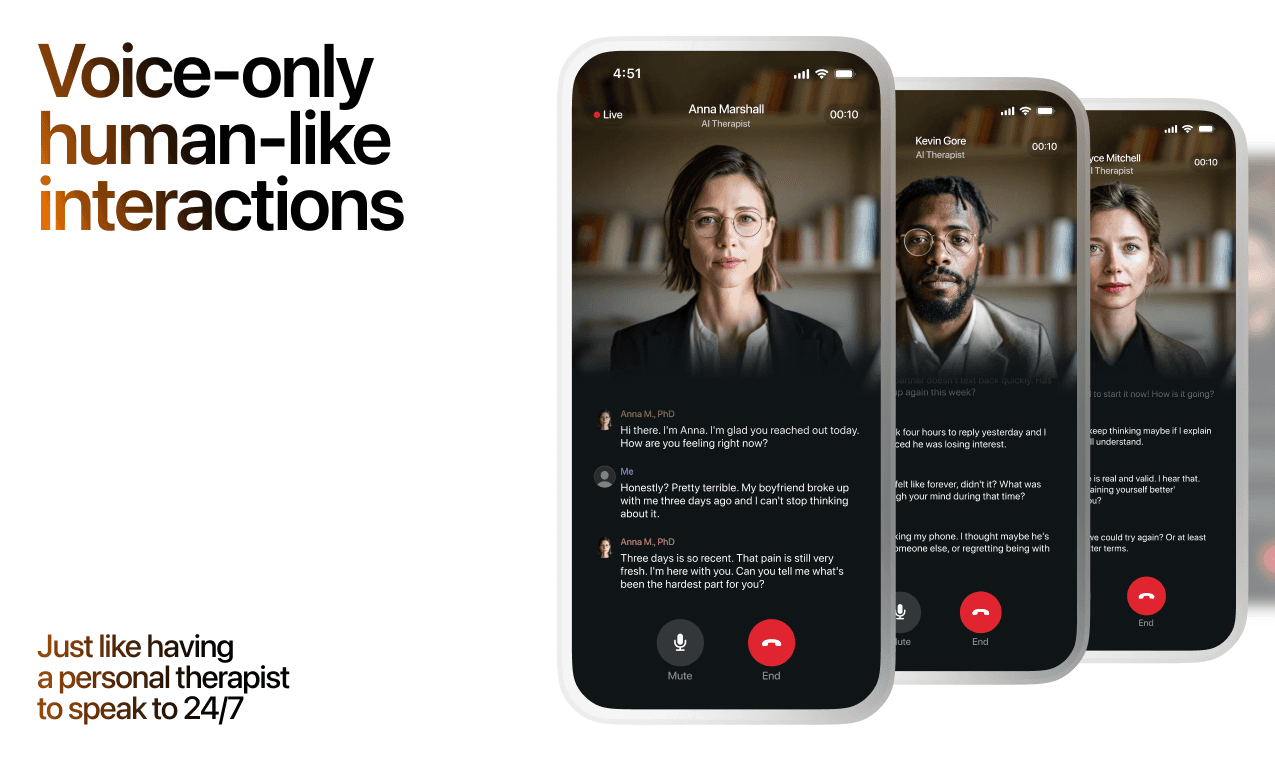
Lovon is AI support, not a replacement for professional care. If things have been hard to get through for weeks, or you are thinking about harming yourself, talk to a doctor or a licensed therapist.
Ready to Start?
Your healing journey can begin right now
A 3-day trial. No judgment. Just a safe space to process what you're going through.
Frequently Asked Questions
Why do I feel numb?
Why do I feel empty inside?
Is emotional numbness a sign of depression?
Can antidepressants make you feel numb?
How long does emotional numbness last?
How do I start feeling again?
Is feeling numb the same as dissociation?
Sources
About the Author

The Lovon Editorial Team
Mental Health & Wellness Content Team
The Lovon Editorial Team develops mental health and wellness content designed to make psychological concepts accessible and actionable. Our goal is to bridge the gap between clinical research and everyday life - helping you understand why your mind works the way it does and what you can do about it....
Related articles
- Alexithymia: What It Is and How to Work Through It (2026)
Alexithymia blocks emotional connection by making feelings hard to name. Get the six-step approach, common pitfalls, and…
- Cope with Job Rejection Without Spiraling (2026 Guide)
Learn how to cope with job rejection without spiraling in 2026: 7 steps to process the news, stop rumination, and keep…
- Why Do I Self-Sabotage at Work? Fix It in 2026
Why do I self-sabotage at work? Fear of judgment or success, not laziness. Get the 7-step fix and know when to loop in…
- Codependency vs Love: How to Tell Them Apart (2026)
Codependency vs love explained with a step-by-step self-check for 2026. Learn the exact signs that separate healthy…
See also
Quizzes
- Self-Concept Clarity Test: Do You Know Who You Are?
See how clearly you know yourself, in 3 minutes.
- Hyper-Empathy Test: When Feeling for Others Costs You
See where too much empathy is costing you, in 3 minutes.
Free tools
- Gratitude Journal
Each evening, write down three things that went well and why each one happened. Every note drops into a jar that fills…
- How to Come Out to Your Parents
A chat about how to come out to your parents that starts with whether now is safe, not with the speech. Tell it your…
From the wiki
- Why do I keep dreaming about the same person?
A recurring dream figure usually marks unfinished emotional business rather than a message about that person. Your brain…
Disclaimer: This article is for informational purposes only and does not constitute medical advice, diagnosis, or treatment. Always seek the advice of your physician or other qualified health provider with any questions you may have regarding a medical condition. If you are in crisis or think you may have an emergency, call 988 (Suicide & Crisis Lifeline) or go to the nearest emergency room. Outside the US? Find a crisis line in your country.