
Is it normal to feel numb after a traumatic event?
Is it normal to feel numb after a traumatic event? Yes. Learn what emotional numbness means, gentle ways to cope, and when to seek professional mental health care.
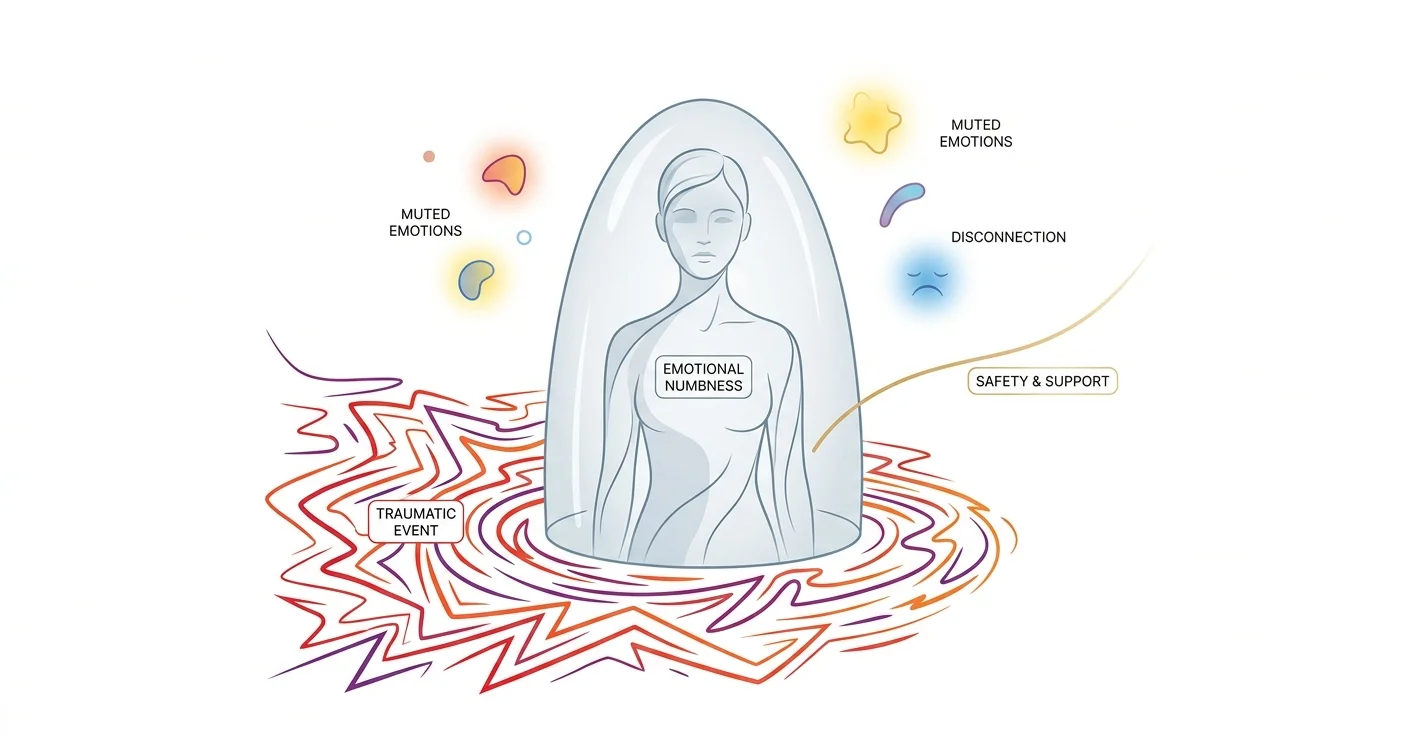

Key Takeaways
- Is it normal to feel numb after a traumatic event? Yes; emotional numbness is a recognized trauma response.
- Emotional numbness alone does not establish PTSD, depression, or a dissociative disorder.
- Start with safety, gentle grounding, and practical support rather than forcing yourself to relive the event.
- Lovon offers emotional support, not a trauma diagnosis or a replacement for licensed clinical care.
Yes, feeling emotionally numb after a traumatic event is a recognized stress response, and it does not mean you are uncaring or coping incorrectly. Numbness alone does not establish a diagnosis, but persistent detachment, worsening symptoms, or trouble managing daily life deserve professional support. This guide explains what numbness can look like, what helps, and when to seek care.
TL;DR
- Is it normal to feel numb after a traumatic event? Yes; emotional numbness is a recognized trauma response.
- Emotional numbness alone does not establish PTSD, depression, or a dissociative disorder.
- Start with safety, gentle grounding, and practical support rather than forcing yourself to relive the event.
- Lovon offers emotional support, not a trauma diagnosis or a replacement for licensed clinical care.
Is it normal to feel numb after a traumatic event?
Yes. Emotional numbness is a recognized reaction to trauma, but common does not mean you have to manage it alone. You might feel blank, distant from people, or unable to access sadness or joy. You can also feel numb at some times and frightened or overwhelmed at others.
Numbness sometimes overlaps with dissociation: feeling disconnected from yourself, your surroundings, or your experience. They are not interchangeable. This guide to dissociation and what to do about it explains that distinction further.
| Experience | What you might notice | What it does not establish |
|---|---|---|
| Emotional numbness | Feelings seem muted; you struggle to cry or feel connected | Whether you have a mental health disorder |
| Dissociation | You feel unreal, detached from yourself, or disconnected from your surroundings | A specific dissociative diagnosis |
| Loss of interest | Activities that mattered feel unrewarding or difficult to start | Depression without a broader assessment |
These experiences can overlap. Tell a clinician what you actually notice rather than trying to choose the right label first.
Why this matters
After something frightening, you might expect to cry, panic, or talk about it constantly. Feeling very little instead can create another worry: whether your reaction means something is wrong with you. It does not measure how much the event mattered.
For anyone seeking support in 2026, the useful question is not just whether numbness is normal. Ask whether you feel safe, can manage basic needs, and have someone you trust to contact. You deserve help before your symptoms become a crisis.
Other people's reactions are not a recovery standard. Someone who cries immediately is not necessarily processing the experience better than someone who feels blank.
What emotional numbness can feel like
Emotional numbness does not always mean a complete absence of feeling. You might recognize intellectually that something terrible happened while feeling strangely removed from it. You might carry out practical tasks without feeling present.
Other descriptions include:
- Feeling distant from people you usually care about.
- Struggling to feel pleasure, affection, sadness, or anger.
- Finding that words about the event feel factual rather than emotional.
- Feeling empty while your body remains tense or restless.
- Having emotions return suddenly around reminders.
You do not need every sign for your experience to deserve attention. Also, emotional numbness is different from physical loss of sensation. New physical numbness, especially with weakness, trouble speaking, or other sudden neurological symptoms, needs urgent medical attention.
If the trauma involved a head injury, tell a medical professional about confusion, memory problems, or changes in how you feel. Do not assume every change is psychological.
Why numbness after trauma varies
Trauma reactions do not follow a single sequence. Emotional distance can occur during an overwhelming experience or afterward, and feelings can change as your circumstances change.
Several factors can shape what you notice:
- Current safety: Ongoing danger requires practical protection, not just coping exercises.
- Reminders: Places, sounds, conversations, or anniversaries can bring different reactions to the surface.
- Sleep and exhaustion: Poor sleep can make concentration and emotional coping harder.
- Previous experiences: Earlier trauma and existing mental health difficulties can affect your response.
- Available support: Having someone who listens without pressuring you changes the support available to you.
These factors are not a formula for predicting recovery. A clinician considers your symptoms, circumstances, health, and functioning together.
Avoid treating numbness as proof that your nervous system is permanently damaged. It is an experience to understand and respond to, not a verdict about your future.
How long does numbness after trauma last?
There is no fixed recovery deadline for emotional numbness. Some reactions ease as immediate stress settles; others persist or return around reminders. Duration matters, but so does the effect on your daily life.
For this 2026 guide, the clinical timing references come from the VA National Center for PTSD's public information on acute stress disorder and the National Institute of Mental Health's information on PTSD and depression:
- 3 days to 1 month: The symptom-duration window used when assessing acute stress disorder after a qualifying traumatic event.
- More than 1 month: The duration required for PTSD symptoms, alongside other diagnostic criteria.
- At least 2 weeks: A duration criterion for major depression, alongside the required symptom pattern and impairment.
These are diagnostic reference points, not instructions to wait. Numbness by itself does not establish any of these conditions. Seek help now if symptoms interfere with sleep, eating, relationships, work, or your ability to stay safe.
You can describe how your experience changes without setting yourself a deadline. Note whether you feel more connected, equally detached, or increasingly disconnected, and share that pattern with a clinician.
Does feeling numb mean I have PTSD?
Feeling numb alone does not mean you have PTSD. PTSD involves a broader pattern, including symptoms related to re-experiencing the event, avoidance, changes in mood or thinking, and increased alertness or reactivity.
The National Institute of Mental Health describes PTSD symptoms as lasting more than 1 month and interfering with daily life. A qualified professional also assesses the nature of the event and other explanations for your symptoms. You can need trauma-related support without meeting PTSD criteria.
Is emotional numbness the same as depression?
Emotional numbness is not the same as depression, although it can occur with depression. Depression can involve persistent low mood or loss of interest, along with changes in sleep, appetite, energy, concentration, or thoughts about yourself.
At least 2 weeks is a duration criterion for major depression, not a self-diagnosis based on numbness. If you have ongoing loss of interest or difficulty functioning, ask a healthcare professional for an assessment.
What should I do when I feel emotionally numb?
Start with safety and present-day needs, not with trying to force an emotional breakthrough. You do not have to recount the event in detail to deserve support.
Use this sequence as a gentle starting point. Skip anything that makes you feel less safe or more disconnected.
- Check safety. Ask whether you are in immediate danger or need medical attention. Move toward a safer place and human help when needed.
- Notice surroundings. Keep your eyes open and describe something neutral nearby, such as a chair, doorway, or window. The aim is orientation, not a particular feeling.
- Meet basic needs. Notice whether you need water, food, rest, or help with an ordinary task. Practical support counts.
- Contact support. Tell someone trusted that you feel detached and would appreciate company or help arranging care. You can set limits on what you discuss.
- Arrange care. Contact a licensed mental health professional or primary care clinician if numbness persists, worsens, or affects daily life.
You do not need to finish the sequence perfectly. If noticing sensations increases distress, stop and shift toward something external, such as speaking with a trusted person.
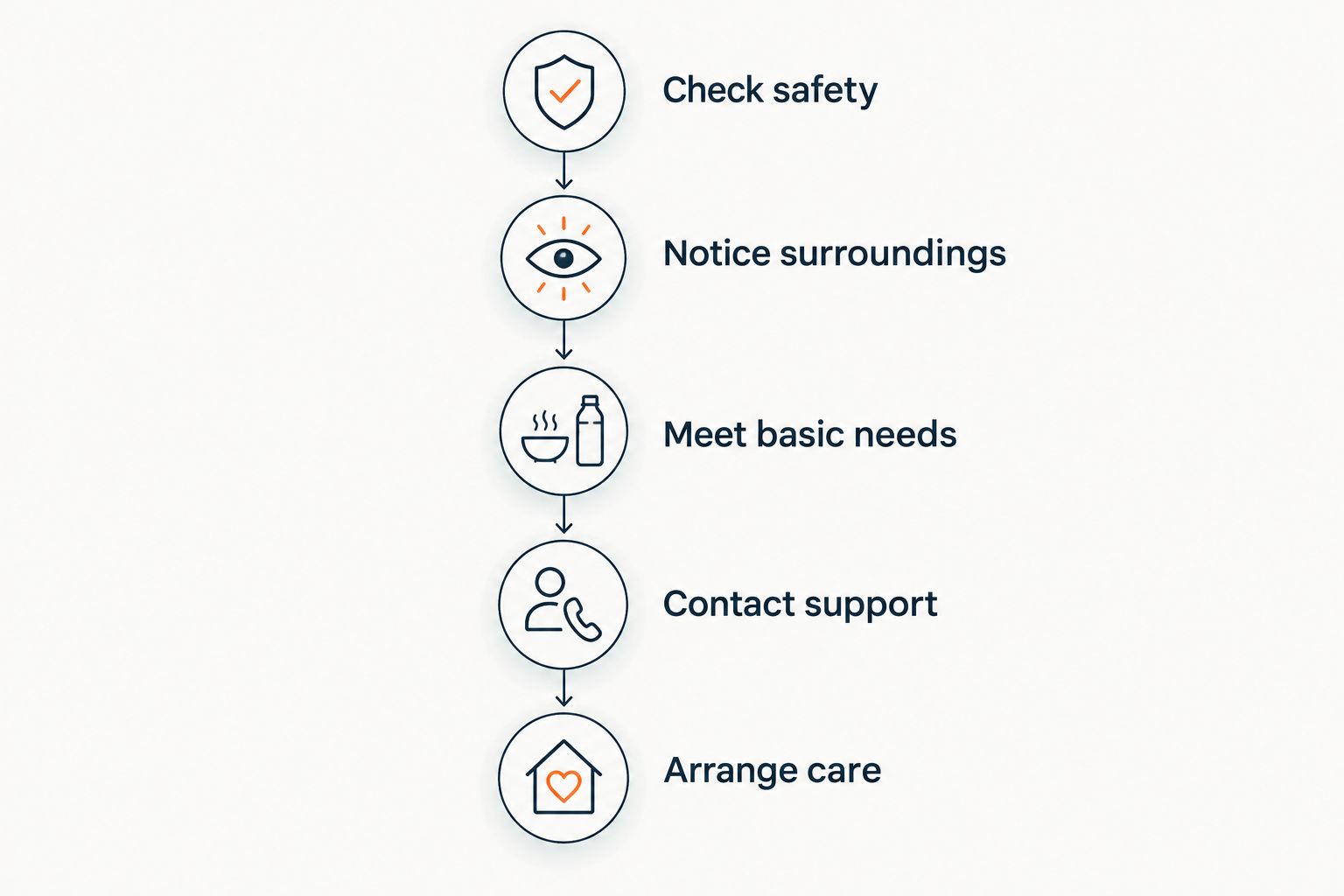 A support sequence from checking safety to arranging professional care
Start with safety and basic needs rather than forcing yourself to feel more.
Let grounding stay gentle
Grounding means bringing attention to the present. It does not require closing your eyes, focusing intensely on your breathing, or scanning your body. Those approaches are uncomfortable for some people after trauma.
Try describing your location or noticing the support of a chair, if that feels comfortable. Stop if an exercise increases distress. A coping tool is not a test you have to pass.
Make room for ordinary routines
Keep expectations small. Eating something manageable, accepting help with errands, or keeping a familiar bedtime can support basic functioning without requiring you to explain everything that happened.
Avoid using alcohol or other substances to force feelings away or bring them back. If substance use has become part of coping, tell a clinician openly so that support addresses it too.
What kind of support should I choose?
In 2026, distinguish everyday emotional support from trauma assessment and treatment. The right choice depends on your safety, symptoms, and what you need help doing.
| Support option | Best for | What it offers | Limit to understand |
|---|---|---|---|
| Trusted person | Company and practical help | Listening, assistance with tasks, help seeking care | Cannot provide a clinical assessment |
| Licensed clinician | Persistent, distressing, or disruptive symptoms | Assessment and an individualized treatment plan | Finding someone suitable can take effort |
| Emotional support app | Everyday reflection alongside human support | Conversation and coping prompts | Does not replace trauma treatment or crisis care |
Lovon is best for everyday emotional support, not trauma assessment or treatment. Lovon offers voice conversations, coping tools, and self-reflection guidance. Its mental health support app is not a licensed clinician, and an app conversation cannot establish what is causing your numbness.
If you use an app, keep the goal modest: describe how today feels or organize what you want to tell a professional. Avoid treating its response as a diagnosis or asking it to lead you through traumatic memories instead of clinical care.
When arranging an appointment, ask whether the clinician has experience with trauma and dissociation. You can explain that you want help feeling more present without being pushed to recount details before you are ready.
When should I get urgent help?
Get urgent human help if you cannot stay safe, have thoughts of suicide or self-harm, or feel severely confused or disconnected. Also seek prompt assessment if you lose periods of time, struggle to care for yourself, or experience rapidly worsening symptoms.
In the United States in 2026, call or text 988 for the Suicide & Crisis Lifeline. Call 911 for an immediate life-threatening emergency. If possible, stay with a trusted person while you get help.
An app is not an emergency response service. If danger is ongoing, prioritize reaching a safer place and appropriate local support rather than continuing an exercise or conversation.
FAQ
Is it normal to feel numb after a traumatic event?
Yes, emotional numbness is a recognized reaction to trauma. It does not mean you are uncaring, but persistent or disruptive numbness deserves professional support.
Why can't I cry after something traumatic happened?
Trauma-related numbness can make crying difficult even when an event matters deeply to you. Not crying does not measure your grief or prove that you are coping badly.
Can I feel numb and anxious at the same time?
Yes, emotional detachment and anxiety can occur together. You might feel emotionally blank while noticing tension, fear, or a racing heart.
How long should I wait before getting help for numbness?
You do not need to wait for a diagnostic deadline before getting help. Seek support when numbness concerns you, worsens, or interferes with basic needs and daily life.
Does feeling emotionally numb mean I have PTSD?
No, emotional numbness alone does not establish PTSD. PTSD requires a broader symptom pattern lasting more than 1 month, along with other diagnostic criteria.
Should I make myself talk about every detail of the trauma?
No, you do not need to force a detailed account to receive support. Tell a clinician what you are experiencing now and discuss a pace that feels manageable.
Can Lovon replace a trauma therapist?
No, Lovon is an emotional support app, not a licensed clinician or a replacement for trauma treatment. It offers conversation and coping tools alongside appropriate human support.
Where can I get immediate crisis support in the US in 2026?
Call or text 988 for the Suicide & Crisis Lifeline in the United States. Call 911 for an immediate life-threatening emergency.
One last thing
You do not have to feel more before you ask for help. You can tell someone that you feel blank, that ordinary tasks are difficult, or that you do not know how to describe what is happening. That is enough to start a conversation.
If you save one reminder from this 2026 guide, make it this: a common trauma response still deserves care. Choose the next safe action, not the emotion you think you are supposed to have.
Related guides
How AI Support Helps You Heal
AI emotional support isn't about replacing human connection — it's about filling the gaps. The moments when you need to talk at 2 AM, when you don't want to burden your friends again, or when you simply need someone to listen without judgment.
Here's what happens in a typical Lovon session:
You share what's on your mind
There's no script, no intake form, no waiting room. You speak or type whatever you're feeling — in your own words, at your own pace.
Lovon validates and explores
Using frameworks from CBT (Cognitive Behavioral Therapy) and motivational interviewing, Lovon acknowledges your feelings first, then gently helps you explore them. No dismissive "just move on" advice.
You build coping skills together
Lovon doesn't just listen — it actively works with you on evidence-based techniques: thought reframing, urge surfing, behavioral experiments, and more.
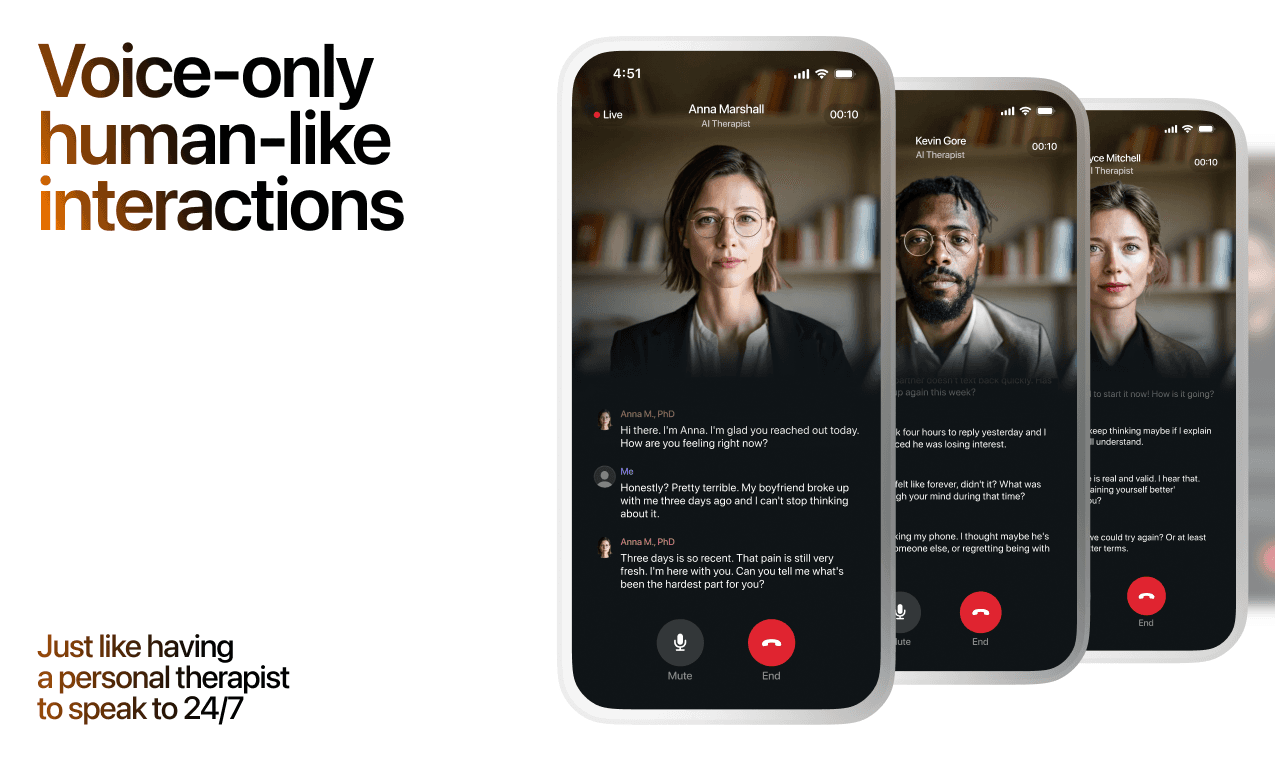
What a Session with Lovon Looks Like
When to Seek Professional Help
AI support is a valuable tool, but it's not a replacement for professional care. Please consider reaching out to a licensed therapist if you experience any of the following:
- Persistent thoughts of self-harm or suicide
- Inability to perform daily activities (work, eating, sleeping) for more than 2 weeks
- Turning to alcohol or substances to cope
- Intense anger or desire to harm your ex-partner
- Complete emotional numbness that doesn't improve over time
Crisis Resources (US): If you're in immediate danger, call 988 (Suicide & Crisis Lifeline) or text HOME to 741741 (Crisis Text Line). Available 24/7, free, and confidential.
Outside the US? Find a crisis line in your country
Ready to Start?
Your healing journey can begin right now
A 7-day trial. No judgment. Just a safe space to process what you're going through.
Frequently Asked Questions
Is Lovon a replacement for a real therapist?
Is my conversation with Lovon AI private?
How is Lovon different from ChatGPT for emotional support?
Can I use Lovon if I'm already seeing a therapist?
Can I try Lovon before subscribing?
About the Author
The Lovon Editorial Team
Mental Health & Wellness Content Team
The Lovon Editorial Team develops mental health and wellness content designed to make psychological concepts accessible and actionable. Our goal is to bridge the gap between clinical research and everyday life - helping you understand why your mind works the way it does and what you can do about it....
Related articles
- Chronic Guilt: Why You Feel Guilty All the Time (2026)
Chronic guilt runs even when you've done nothing wrong. Learn the 6 steps to identify its root cause and break the cycle…
- Cope with Job Rejection Without Spiraling (2026 Guide)
Learn how to cope with job rejection without spiraling in 2026: 7 steps to process the news, stop rumination, and keep…
- Am I Codependent Quiz: 2026 Verdict in 2 Minutes
Take the am i codependent quiz for 2026: 10 quick questions, four score bands, and a direct verdict on your codependent…
- Freeze Response and Fawn Response as Trauma Survival Patterns
When faced with overwhelming threat, the human nervous system activates a series of automatic responses designed to…
See also
Quizzes
- Am I a People Pleaser? 12-Question Quiz
Where kindness stops and self-erasure starts.
- Toxic Masculinity Test: Which Rules Are You Running?
See which learned rules cost you most, in 3 minutes.
Free tools
- How to Respond to Gaslighting
Say what happened and what they say happened. You get what is actually established separated from what is being…
- How to Confront a Narcissistic Parent
Most of these conversations fail because you went in wanting three things at once. Tell it what you want to raise, and…
From the wiki
- Why do I feel sad when I'm alone?
Being alone does not create the sadness. It removes the noise that was keeping it out of earshot, so whatever queued up…
Disclaimer: This article is for informational purposes only and does not constitute medical advice, diagnosis, or treatment. Always seek the advice of your physician or other qualified health provider with any questions you may have regarding a medical condition. If you are in crisis or think you may have an emergency, call 988 (Suicide & Crisis Lifeline) or go to the nearest emergency room. Outside the US? Find a crisis line in your country.