
Green Flags in Relationships: Safety and Repair Over Drama
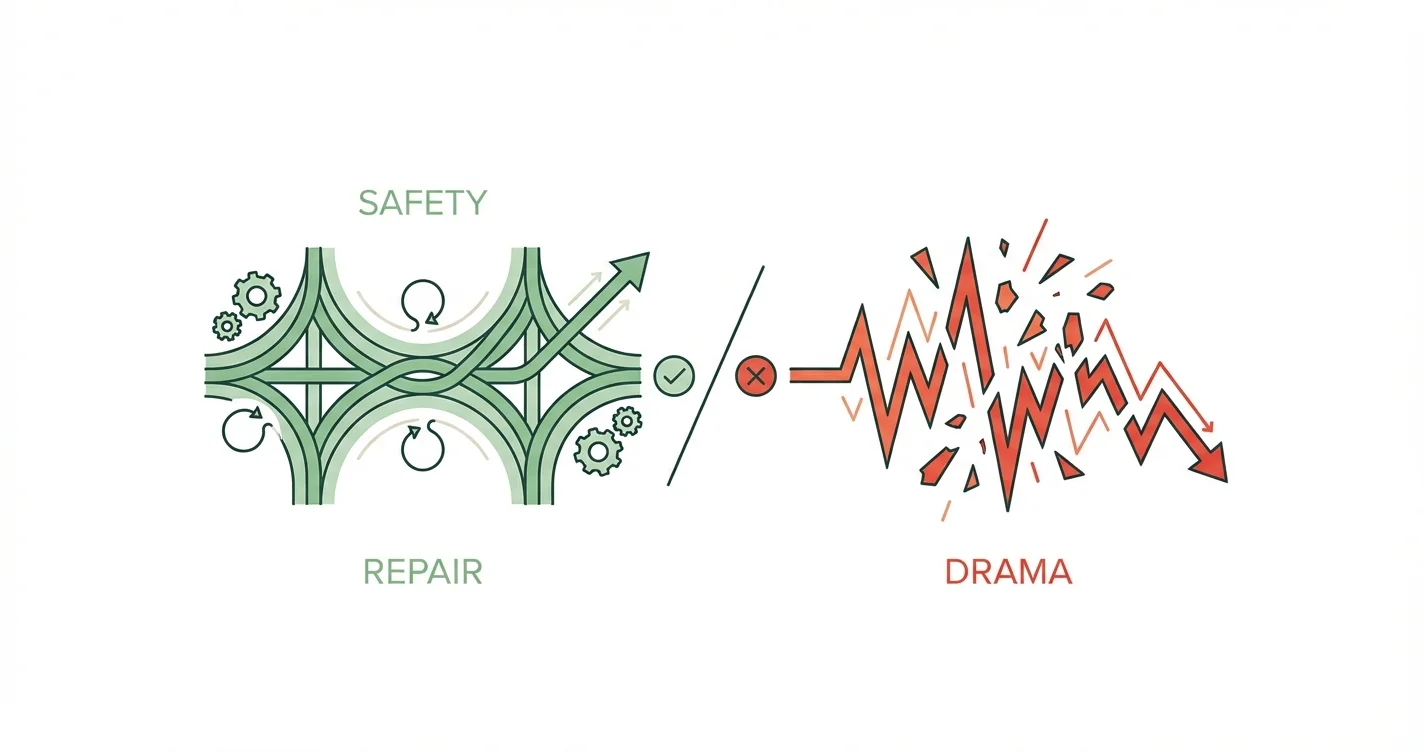
Many mistake intensity for intimacy and drama for passion. Green flags in relationships point elsewhere: safety, repair and emotional stability.

Key Takeaways
- They initiate repair attempts after arguments rather than stonewalling or maintaining distance
- They can apologize without excessive self-criticism or defensive justifications
- They distinguish between addressing the specific issue and attacking your character
- They follow through on commitments to change problematic patterns
- They can receive feedback about their behavior without becoming the victim
Introduction
Many people mistake intensity for intimacy and drama for passion, but green flags in relationships point to something entirely different: safety, repair capacity, and emotional stability. While popular culture often romanticizes volatile connections and passionate arguments followed by tearful reconciliations, relationship researchers emphasize that healthy partnerships are built on fundamentally different foundations. The ability to navigate disagreements calmly, repair ruptures effectively, and maintain emotional equilibrium consistently predicts relationship satisfaction and longevity far better than the highs and lows of dramatic intensity. Understanding these positive indicators helps you recognize partnerships that support your wellbeing rather than deplete it. This article examines the research-backed characteristics that signal relationship health and explores practical ways to cultivate these qualities in your connections.
Understanding Green Flags in Relationships
Green flags in relationships are behavioral patterns and emotional dynamics that indicate psychological safety, mutual respect, and constructive communication. Unlike red flags that signal potential harm, green flags point toward relationship health and sustainable connection. Research on attachment theory suggests that secure relationships are characterized by consistent responsiveness, emotional availability, and the ability to provide comfort during distress—qualities that often feel less exciting than dramatic intensity but prove far more nourishing over time.
The distinction between healthy stability and dramatic intensity reflects different underlying relationship patterns. Intensity often stems from intermittent reinforcement—unpredictable patterns of connection and disconnection that activate anxiety and create addictive relationship dynamics. While this generates powerful emotional experiences, it typically indicates anxious-avoidant attachment patterns rather than genuine intimacy. Studies indicate that relationships characterized by emotional volatility show higher rates of dissolution and lower reported satisfaction compared to relationships with consistent emotional availability.
Emotional stability in partnerships doesn't mean absence of conflict or perpetual happiness. Rather, it describes the capacity to maintain connection through disagreements, express needs directly, and return to equilibrium after ruptures. This stability creates the psychological safety necessary for vulnerability, personal growth, and authentic intimacy—elements that cannot flourish in chaotic environments.
Key Green Flags: Safety and Repair Capacity
Several specific behaviors and patterns signal relationship health. Recognizing these green flags helps you distinguish between connections that serve your wellbeing and those that merely stimulate your nervous system.
Emotional Safety and Responsiveness
Partners who demonstrate emotional safety respond to your feelings with curiosity rather than defensiveness. When you express vulnerability, they move toward you rather than away. This responsiveness doesn't require perfect understanding—it requires genuine effort to comprehend your experience and validate your emotions even during disagreements. Research on emotionally focused therapy emphasizes that perceived partner responsiveness strongly predicts relationship satisfaction and attachment security.
Safe partners also regulate their own emotions effectively. They might feel frustrated or hurt during conflicts, but they don't use emotional volatility to control, punish, or manipulate. Instead, they communicate their feelings directly and take responsibility for their emotional experience rather than making you responsible for managing their reactions.
Repair Capacity and Conflict Resolution
The ability to repair after disagreements represents one of the most significant green flags in relationships. Research on relationship maintenance suggests that successful couples don't avoid conflict—they repair effectively afterward. This repair includes acknowledging impact (even when intention was positive), offering genuine apologies, and taking concrete steps to address patterns rather than repeating the same conflicts indefinitely.
Partners with strong repair capacity demonstrate several specific behaviors:
- They initiate repair attempts after arguments rather than stonewalling or maintaining distance
- They can apologize without excessive self-criticism or defensive justifications
- They distinguish between addressing the specific issue and attacking your character
- They follow through on commitments to change problematic patterns
- They can receive feedback about their behavior without becoming the victim
These repair abilities create resilience in relationships. Conflicts become opportunities for deeper understanding rather than existential threats to the partnership.
Consistency and Reliability
Consistent behavior creates predictability that allows trust to develop. Partners who demonstrate this green flag show up reliably—not just during exciting moments but also during mundane or difficult times. Their care doesn't fluctuate dramatically based on their mood, your behavior, or external circumstances. This consistency extends to communication patterns, emotional availability, and follow-through on commitments.
Reliability doesn't mean rigidity. Healthy partners adapt to changing circumstances and grow over time. However, their fundamental commitment to the relationship and your wellbeing remains stable regardless of temporary stresses or conflicts. This stability contrasts sharply with relationships characterized by dramatic reconciliations after periods of distance—a pattern that generates intensity but undermines security.
Recognizing Drama and Intensity Patterns
Understanding what healthy relationships include requires recognizing what they don't. Dramatic intensity often masquerades as passion or deep connection, but typically reflects problematic relationship dynamics.
The Intensity-Intimacy Confusion
Intensity activates your nervous system through unpredictability, emotional volatility, or intermittent reinforcement. This activation can feel like passion or strong attraction, but it actually signals anxiety rather than security. When relationships operate on this intensity, your body remains in a state of heightened alertness—wondering when your partner will be available, whether they'll respond warmly or coldly, or if this argument means the relationship is ending.
Some people find relationships that lack this intensity boring, particularly if they developed attachment patterns in childhood that associated love with anxiety. Tools like Lovon.app can help you process these patterns and understand why stability might feel unfamiliar or uncomfortable if your early experiences taught you that connection requires constant vigilance.
Drama Cycles and Relationship Addiction
Dramatic relationships often follow predictable cycles: conflict or distance, followed by intense reconciliation, brief stability, then gradual return to conflict. This cycle creates powerful emotional experiences—the pain of disconnection followed by the relief of reunion generates neurochemical responses that can become addictive. However, this pattern prevents the deep trust and security necessary for authentic intimacy.
Partners who create drama may use emotional volatility strategically (whether consciously or unconsciously) to maintain control, avoid vulnerability, or manage their own anxiety. The dramatic moments distract from addressing underlying relationship problems or individual psychological issues that require attention.
Cultivating Green Flags in Your Relationships
Recognizing green flags helps you evaluate potential partners and existing relationships. Equally important is understanding how to cultivate these qualities in yourself and your connections.
Developing Emotional Regulation Skills
Your capacity to manage your own emotions directly impacts relationship health. When you can tolerate discomfort without immediate reaction, you create space for thoughtful responses rather than defensive reactions. This doesn't mean suppressing emotions—it means developing awareness of your emotional experience and choosing how to express it constructively.
Practical approaches to strengthening emotional regulation include identifying your specific triggers, noticing physical sensations associated with different emotions, and developing strategies to ground yourself during activation. Some people find that talking through their emotional patterns with support resources helps them understand and modify reactive tendencies. Lovon.app offers on-demand conversations for processing emotions as they arise, which can help you develop greater awareness of your patterns between therapy sessions.
Practicing Effective Repair
Learning to repair after conflicts transforms relationship dynamics. Effective repair starts with recognizing when repair is needed—not just after major arguments, but also after smaller moments of disconnection or misattunement. Research suggests that frequent small repairs prove more important than elaborate apologies after major conflicts.
Developing repair capacity involves several specific skills:
- Noticing when your partner feels hurt, even if that wasn't your intention
- Offering acknowledgment and apology without immediately defending or explaining
- Asking what your partner needs rather than assuming you know
- Following up to ensure the repair actually restored connection
- Addressing patterns rather than treating each conflict as isolated
These skills develop through practice and often improve significantly when partners commit to prioritizing repair over being right.
Creating Safety Through Consistency
Building relationship safety requires consistent behavior over time. This means following through on commitments, maintaining boundaries reliably, and showing up emotionally even when it's inconvenient. Consistency also involves communicating directly about your needs, limitations, and feelings rather than expecting your partner to intuit them or punishing them for not knowing.
Creating safety also means taking responsibility for your impact regardless of your intention. When your actions hurt your partner, acknowledging that impact and changing the behavior demonstrates that their wellbeing matters more than your ego. This accountability builds trust and security that allows both partners to be vulnerable without fear of having that vulnerability used against them.
When to Seek Professional Support
If you consistently find yourself in relationships characterized by drama and intensity rather than safety and stability, professional support can help you understand these patterns. Therapy can address underlying attachment issues, help you identify why intensity feels more familiar than security, and develop skills for building healthier connections.
Consider seeking professional help if you:
- Repeatedly choose partners who are emotionally unavailable or volatile
- Feel anxious or unsafe in your relationship more often than you feel secure
- Struggle to repair after conflicts or find yourself having the same arguments repeatedly
- Notice that stability feels boring or uncomfortable while drama feels exciting
- Have difficulty identifying or expressing your emotional needs
- Find yourself or your partner using emotional intensity to avoid addressing underlying issues
Therapists specializing in attachment, relationship patterns, or trauma can help you develop the internal security necessary to recognize and build healthy relationships. For ongoing support in processing relationship challenges as they arise, accessible resources can complement professional therapy. When difficult conversations or conflicts emerge, talking through your experience helps you understand your reactions and choose more intentional responses.
Conclusion
Green flags in relationships—safety, repair capacity, and emotional stability—create the foundation for authentic intimacy and sustainable partnership. While dramatic intensity may feel more exciting or be mistaken for passion, research consistently shows that healthy relationships are characterized by consistent responsiveness, effective conflict resolution, and emotional reliability. Recognizing these positive indicators helps you evaluate potential partners and existing relationships more accurately, distinguishing between connections that truly serve your wellbeing and those that simply activate your nervous system. Cultivating these qualities in yourself through emotional regulation, repair skills, and consistent behavior allows you to build and maintain the secure relationships you deserve. If you find yourself drawn to drama over stability, that pattern deserves attention and understanding—not judgment. With support and self-reflection, you can develop the capacity to recognize and create relationships built on safety rather than intensity.
Disclaimer: This is general information, not medical advice or diagnosis. If symptoms are severe, affecting your daily life, or you're having thoughts of self-harm—seek professional help. In the US: call or text 988 (Suicide & Crisis Lifeline). For immediate danger: 911 or local emergency services.
How AI Support Helps You Heal
AI emotional support isn't about replacing human connection — it's about filling the gaps. The moments when you need to talk at 2 AM, when you don't want to burden your friends again, or when you simply need someone to listen without judgment.
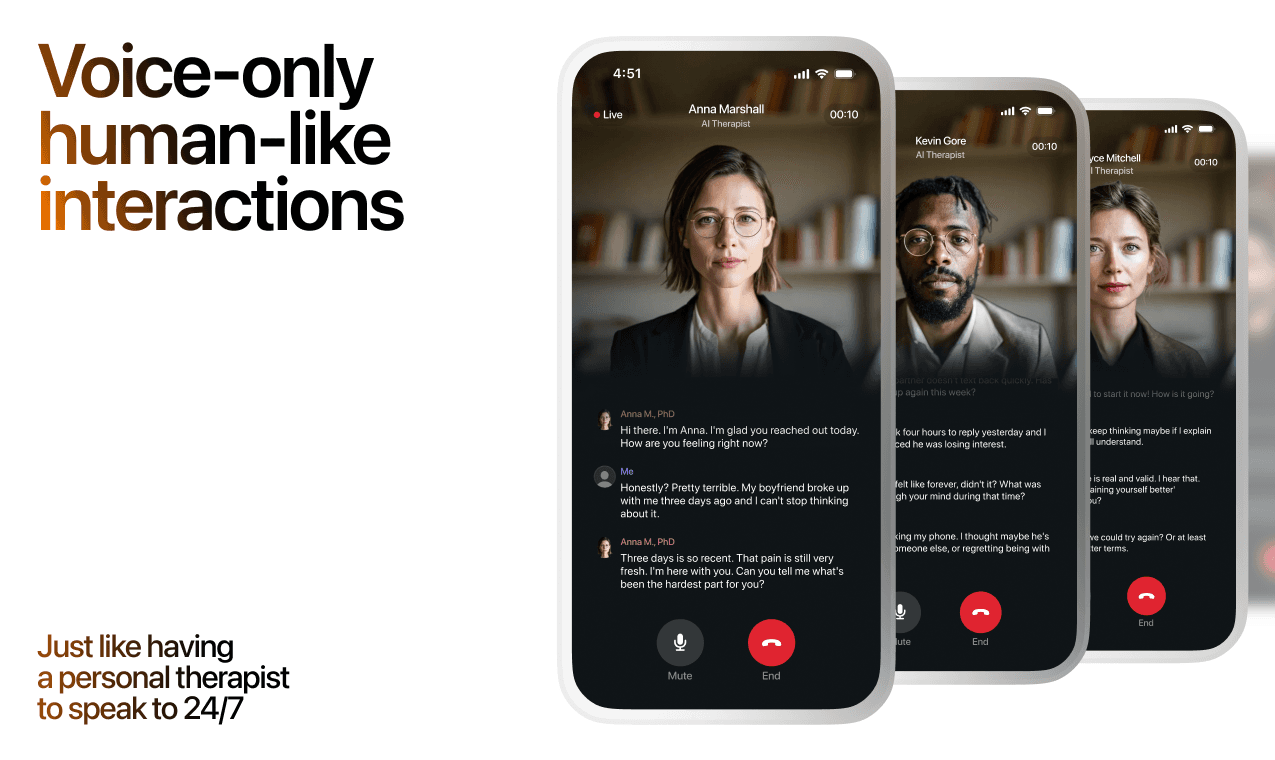
Here's what happens in a typical Lovon session:
You share what's on your mind
There's no script, no intake form, no waiting room. You speak or type whatever you're feeling — in your own words, at your own pace.
Lovon validates and explores
Using frameworks from CBT (Cognitive Behavioral Therapy) and motivational interviewing, Lovon acknowledges your feelings first, then gently helps you explore them. No dismissive "just move on" advice.
You build coping skills together
Lovon doesn't just listen — it actively works with you on evidence-based techniques: thought reframing, urge surfing, behavioral experiments, and more.
What a Session with Lovon Looks Like
When to Seek Professional Help
AI support is a valuable tool, but it's not a replacement for professional care. Please consider reaching out to a licensed therapist if you experience any of the following:
- Persistent thoughts of self-harm or suicide
- Inability to perform daily activities (work, eating, sleeping) for more than 2 weeks
- Turning to alcohol or substances to cope
- Intense anger or desire to harm your ex-partner
- Complete emotional numbness that doesn't improve over time
Crisis Resources (US): If you're in immediate danger, call 988 (Suicide & Crisis Lifeline) or text HOME to 741741 (Crisis Text Line). Available 24/7, free, and confidential.
Outside the US? Find a crisis line in your country
Ready to Start?
Your healing journey can begin right now
A 7-day trial. No judgment. Just a safe space to process what you're going through.
Frequently Asked Questions
Is Lovon a replacement for a real therapist?
Is my conversation with Lovon AI private?
How is Lovon different from ChatGPT for emotional support?
Can I use Lovon if I'm already seeing a therapist?
Can I try Lovon before subscribing?
About the Author
The Lovon Editorial Team
Mental Health & Wellness Content Team
The Lovon Editorial Team develops mental health and wellness content designed to make psychological concepts accessible and actionable. Our goal is to bridge the gap between clinical research and everyday life - helping you understand why your mind works the way it does and what you can do about it....
Related articles
- Best AI Relationship Coach for Open Relationships (2026)
Lovon ranks the AI relationship coach options for open relationships in 2026 — voice-based coaching wins for…
- Erikson Stage of Intimacy vs Isolation
Many people find themselves in situations where their current social circles feel unfamiliar or distant.
- Vulnerability in Relationships: Why It Feels Unsafe 2026
Vulnerability in relationships feels dangerous because your nervous system reads it as threat, not weakness. See what…
- Long-Distance Couple Compatibility Quiz Guide 2026
Take a long distance relationship compatibility quiz that actually measures the right dimensions. See which tools work…
See also
Quizzes
- Triangular Love Test: Intimacy, Passion, Commitment
See which side of love is thin, in 3 minutes.
- What's My Love Language? Free 15-Question Quiz
Find your love language in 2 minutes.
Free tools
- Relationship Check-In Questions, and How to Run One
Check-ins fail on structure, not on questions. Tell it whether this would be your first one, what is on your mind, and…
- How to Reconnect With Your Partner
Nothing is wrong enough to name, which is why it has gone unaddressed. Tell it what it looks like now and roughly when…
From the wiki
- What is the bare minimum in a relationship?
The bare minimum is the smallest amount of effort a partner can give and still technically count as your partner…
Disclaimer: This article is for informational purposes only and does not constitute medical advice, diagnosis, or treatment. Always seek the advice of your physician or other qualified health provider with any questions you may have regarding a medical condition. If you are in crisis or think you may have an emergency, call 988 (Suicide & Crisis Lifeline) or go to the nearest emergency room. Outside the US? Find a crisis line in your country.