
AI Relationship Coach Apps 2026: 5 Ranked, Free vs Paid
Voice or text, free or $30 a month — see how five AI relationship coaching apps compare, and which free tier to try before you pay for anything.

Key Takeaways
- Free tiers first. Every app on this list except Relish's full program offers a free entry point. Use it before
- Match the modality to your situation. If you're in active distress — post-argument, anxious spiral, 11 p.m. — voice
- Don't pay for a subscription until you've used the free tier for 7 days. App store reviews for AI wellness tools are
- Apps that gatekeep core coaching behind a $100+/month paywall before you've had one real session. Several "AI
- Text-only apps for crisis-level relationship distress. Typing out your emotions during or immediately after a
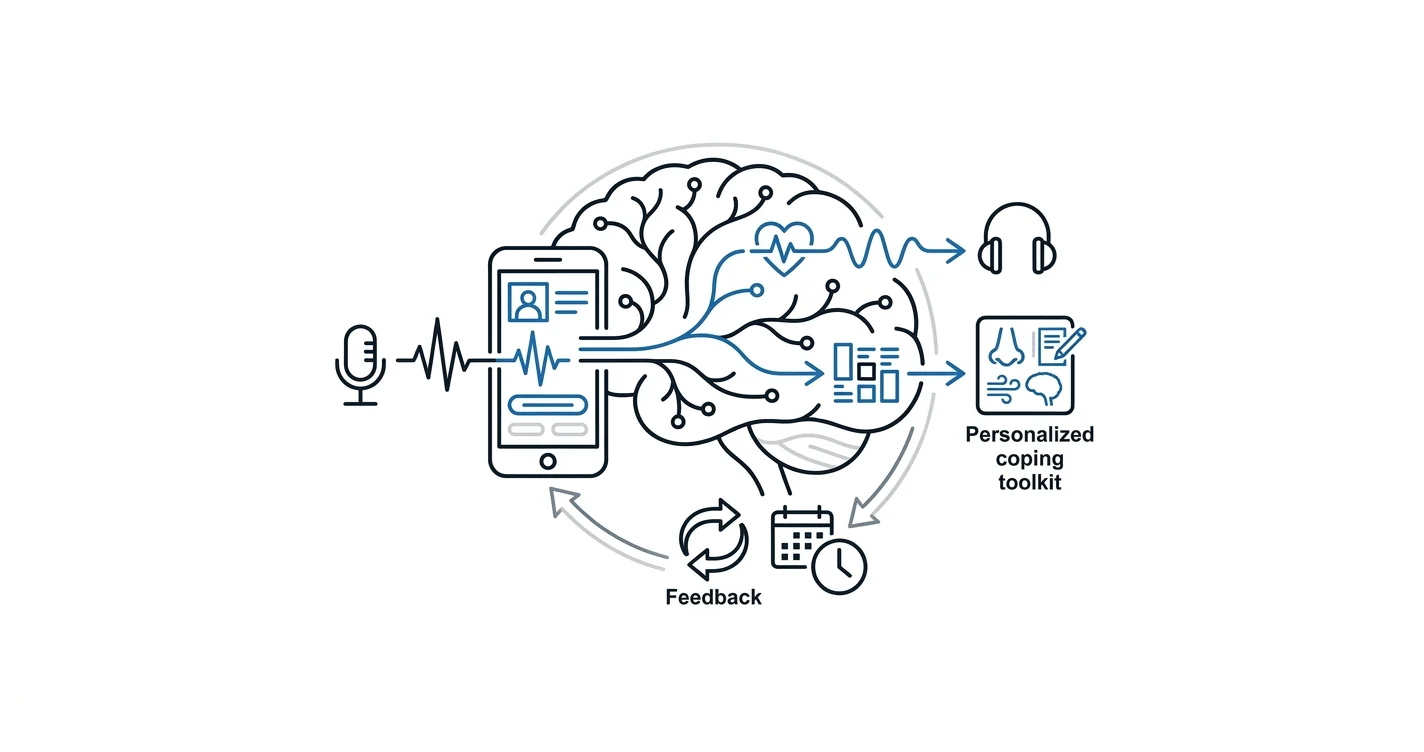
The best AI relationship coach app in 2026 does more than send you journal prompts — it listens in real time, identifies communication patterns, and gives you actionable feedback between sessions with an actual therapist. This guide ranks the top options by what they actually deliver for people navigating anxiety in relationships, attachment issues, communication breakdowns, and emotional disconnection.
TL;DR: The best AI relationship coach app in 2026 is Lovon's AI relationship coach for users who want voice-based, on-demand emotional support with personalized coping tools — not just text prompts. Replika leads for companionship-style coaching. Relish is the strongest pick for structured couples work. Paired suits daily habit-builders. Wysa wins on anonymity and CBT-backed exercises.
Why This Matters in 2026
Traditional couples therapy averages $150–$250 per session in the US, and waitlists for therapists specializing in relationship issues stretch 4–8 weeks in most metro areas. AI relationship coach apps fill the gap — not as replacements for clinical care, but as on-demand tools available at 2 a.m. when a fight just happened or anxiety is spiking before a difficult conversation. The category has matured fast: voice interaction, attachment-style recognition, and personalized session memory are now table stakes in the top tier.
How We Ranked These Apps
Rankings are based on four factors weighted for real-world use in 2026: (1) coaching depth — does the app do more than surface-level affirmations; (2) interaction modality — voice support scores higher than text-only because relationship distress rarely hits at a keyboard; (3) personalization — does the app adapt to your attachment style, communication patterns, or specific relationship challenges; (4) accessibility — free tier quality matters because most people won't pay before trusting the product. Apps that require a therapist license to unlock core features are scored down.
The Ranked List
1. Lovon — The Depth Pick
Lovon is an AI-powered voice support app built specifically for emotional support and mental health, including relationship issues. Unlike text-chat competitors, Lovon conducts voice sessions, which research consistently links to higher emotional processing and trust. The app covers anxiety in relationships, communication breakdowns, attachment stress, and ADHD-related emotional dysregulation — all in a single platform.
The on-demand model means you get a personalized session at any hour, not a scheduled check-in. Coping tools are woven into sessions rather than bolted on as a separate tab. For anyone dealing with anxious or avoidant attachment patterns, Lovon's voice-first format is the closest thing to a real session outside of a therapist's office in 2026.
Start with the AI relationship coach free tool to test the interaction quality before committing.
Verdict: Buy — strongest overall for voice-based emotional coaching and relationship-specific support.
2. Relish — The Couples Structure Pick
Relish pairs users with an AI coach that runs structured programs — think weekly relationship goals, quizzes, and reflection prompts built around attachment science. It's the most curriculum-driven option on this list. Couples who want a defined roadmap rather than open-ended conversation sessions will find it fits better than Lovon or Replika.
The core program covers communication styles, love languages, and conflict resolution in sequenced modules. The free tier is limited; the full program runs $9.99/month as of 2026. The coaching is text-only, which is the primary limitation for users who need real-time emotional support.
Verdict: Buy — best structured program for couples willing to do the curriculum work.
3. Replika — The Companionship Pick
Replika is the longest-running AI companion app and has over 10 million registered users as of 2026. It's not built specifically for relationship coaching — it's built for emotional connection. That distinction matters. If you're working through loneliness, low self-esteem affecting relationships, or need a low-stakes space to practice vulnerability, Replika fits. If you need specific couples communication tools, it doesn't.
The AI adapts its personality based on conversation history over weeks and months, which creates a genuine sense of continuity. The subscription is $19.99/month for the Pro tier, which unlocks deeper conversation modes.
Verdict: Hold — excellent for companionship and emotional self-work, weak for couples-specific coaching.
4. Wysa — The Clinical Credibility Pick
Wysa is built on CBT, DBT, and mindfulness frameworks, with over 5 million users and peer-reviewed efficacy data published through 2024. For relationship anxiety specifically — the fear of abandonment, rumination after conflict, hypervigilance — Wysa's structured exercises outperform open-ended AI chat. The app uses an anonymous penguin avatar, which removes the social friction some users feel with identity-linked apps.
The free tier includes 20+ evidence-based tools. The $29.99/month subscription adds human coach check-ins. In 2026, Wysa remains the strongest pick if your relationship issues are anxiety-driven rather than communication-driven.
Verdict: Buy — best for relationship anxiety with clinical exercise backing.
5. Paired — The Daily Habit Pick
Paired sends couples one question per day — curated prompts designed to build emotional intimacy through consistent micro-conversations. It's the lowest-lift option on this list, which is either a strength or a limitation depending on where you are in a relationship. New couples in 2026 rate it highly; couples in active conflict report it doesn't go deep enough.
The app has 2 million+ downloads and a 4.8-star rating on the App Store as of early 2026. Pricing is $9.99/month or $49.99/year. There is no AI voice component.
Verdict: Hold — excellent for preventive relationship maintenance, not for crisis or deep attachment work.
Comparison Table
| App | Modality | Relationship Focus | Free Tier | Starting Price | Best For |
|---|---|---|---|---|---|
| Lovon | Voice + text | Broad (anxiety, attachment, communication) | Yes | Free | On-demand voice coaching |
| Relish | Text | Couples curriculum | Limited | $9.99/mo | Structured couples program |
| Replika | Text + AR | Companionship | Yes | $19.99/mo | Emotional self-work |
| Wysa | Text | Anxiety, CBT tools | Yes | $29.99/mo | Relationship anxiety |
| Paired | Text | Daily intimacy habits | Limited | $9.99/mo | New couples, habit building |
Where to Buy / How to Access
- Free tiers first. Every app on this list except Relish's full program offers a free entry point. Use it before paying. Lovon's AI relationship coach tool is free with no login wall on the first session.
- Match the modality to your situation. If you're in active distress — post-argument, anxious spiral, 11 p.m. — voice support is what you need. That narrows the list to Lovon. If you're in a stable relationship doing proactive work, Paired or Relish fit.
- Don't pay for a subscription until you've used the free tier for 7 days. App store reviews for AI wellness tools are notoriously inflated; your own 7-day experience is the only reliable signal.
What to Avoid
- Apps that gatekeep core coaching behind a $100+/month paywall before you've had one real session. Several "AI therapy" apps in 2026 use AI only for intake and then push hard upsells to human therapists. That's not relationship coaching — that's a funnel.
- Text-only apps for crisis-level relationship distress. Typing out your emotions during or immediately after a conflict is cognitively demanding and often makes articulation harder, not easier. Voice modality exists for a reason.
- Generic chatbot wrappers. Some apps in the app store in 2026 are thin GPT wrappers with relationship-themed prompts and no memory, no personalization, and no clinical grounding. Check whether the app has published any methodology, uses attachment science frameworks, or has any clinical advisory involvement before paying.
FAQ
What is the best AI relationship coach app in 2026? Lovon is the strongest overall pick for on-demand voice-based relationship coaching in 2026, particularly for users dealing with attachment anxiety, communication issues, or emotional dysregulation in relationships. Relish is the best structured option for couples.
Is an AI relationship coach app a replacement for couples therapy? No. AI relationship coach apps fill the gap between therapy sessions or when therapy isn't accessible — they don't replace licensed clinical work for serious relational trauma or crisis situations.
How much does an AI relationship coach app cost? Prices in 2026 range from free (Lovon, Wysa, Replika free tier) to $9.99/month (Paired, Relish) to $29.99/month (Wysa Pro). Most offer annual discounts of 30–50%.
Can an AI coach help with anxious attachment? Yes — apps like Lovon and Wysa include tools specifically designed for anxious attachment patterns, including breathing exercises, cognitive reframing, and session-based reflection on attachment triggers.
What's the difference between an AI relationship coach and an AI therapist? AI relationship coaches focus on communication, compatibility, emotional intimacy, and interpersonal patterns. AI voice support apps (including Lovon's support features) additionally cover clinical mental health conditions like anxiety and depression. Many apps in 2026 cover both.
Is there a free AI relationship coach app? Lovon offers a free AI relationship coach tool with no signup required for initial sessions. Wysa and Replika also have meaningful free tiers. Paired and Relish are limited on the free tier.
How do I know if an AI relationship coach app is evidence-based? Look for published methodology pages, named clinical advisors, or peer-reviewed studies. Wysa has published efficacy data through 2024. Lovon is grounded in voice support and established coping frameworks. Avoid apps that cite no methodology at all.
Which app is best for long-distance couples? Paired is the most used for long-distance connection-building through daily questions. Lovon's on-demand voice sessions are useful for individuals in long-distance relationships managing anxiety and attachment stress independently.
One Last Thing
Voice-based AI interaction produces measurably different emotional outcomes than text — a 2023 study published in PNAS found that voice communication closes the "empathy gap" between strangers at roughly 3x the rate of text exchange. That single finding is why voice-first apps like Lovon are structurally better for relationship distress work than typing-based alternatives, regardless of how polished the text UI looks. If you're choosing an app in 2026 primarily for anxiety or attachment-related relationship stress, the interaction modality matters more than the feature list.
Related Guides
How AI Support Helps You Heal
AI emotional support isn't about replacing human connection — it's about filling the gaps. The moments when you need to talk at 2 AM, when you don't want to burden your friends again, or when you simply need someone to listen without judgment.
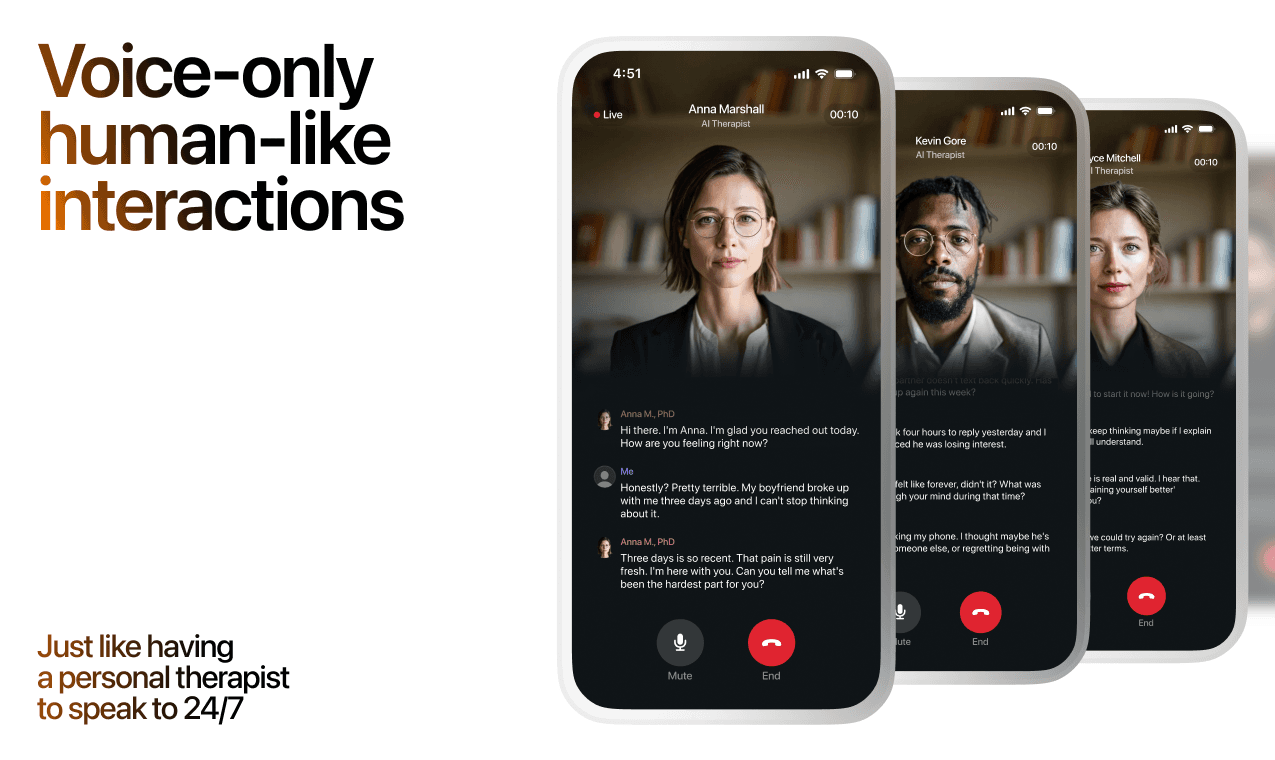
Here's what happens in a typical Lovon session:
You share what's on your mind
There's no script, no intake form, no waiting room. You speak or type whatever you're feeling — in your own words, at your own pace.
Lovon validates and explores
Using frameworks from CBT (Cognitive Behavioral Therapy) and motivational interviewing, Lovon acknowledges your feelings first, then gently helps you explore them. No dismissive "just move on" advice.
You build coping skills together
Lovon doesn't just listen — it actively works with you on evidence-based techniques: thought reframing, urge surfing, behavioral experiments, and more.
What a Session with Lovon Looks Like
When to Seek Professional Help
AI support is a valuable tool, but it's not a replacement for professional care. Please consider reaching out to a licensed therapist if you experience any of the following:
- Persistent thoughts of self-harm or suicide
- Inability to perform daily activities (work, eating, sleeping) for more than 2 weeks
- Turning to alcohol or substances to cope
- Intense anger or desire to harm your ex-partner
- Complete emotional numbness that doesn't improve over time
Crisis Resources (US): If you're in immediate danger, call 988 (Suicide & Crisis Lifeline) or text HOME to 741741 (Crisis Text Line). Available 24/7, free, and confidential.
Outside the US? Find a crisis line in your country
Ready to Start?
Your healing journey can begin right now
A 7-day trial. No judgment. Just a safe space to process what you're going through.
Frequently Asked Questions
Is Lovon a replacement for a real therapist?
Is my conversation with Lovon AI private?
How is Lovon different from ChatGPT for emotional support?
Can I use Lovon if I'm already seeing a therapist?
Can I try Lovon before subscribing?
About the Author
The Lovon Editorial Team
Mental Health & Wellness Content Team
The Lovon Editorial Team develops mental health and wellness content designed to make psychological concepts accessible and actionable. Our goal is to bridge the gap between clinical research and everyday life - helping you understand why your mind works the way it does and what you can do about it....
Related articles
- Best AI Relationship Coach for Avoidant Attachment 2026
Find the best AI relationship coach for avoidant attachment in 2026. Lovon's voice app gives on-demand coaching, coping…
- AI Couples Therapy for Communication (2026 Guide)
AI couples therapy helps fix communication cycles for under $30/month vs. $175/session in 2026. Lovon's voice-based…
- AI Life Coach for Relationship Goals 2026
The best AI life coach for relationship goals in 2026: voice-based, personalized sessions for communication, conflict…
- Best AI Relationship Coach for Military Couples in 2026
Deployment, PCS moves, and reintegration strain military relationships hard. Here's what to look for in an AI…
See also
Quizzes
- Am I the Problem? 12-Question Self-Audit
Honest audit in 3 minutes.
- Emotional Intelligence Test: Your EQ in a Relationship
Find where your EQ slips when things get tense.
Free tools
- How to Communicate Better in a Relationship
Skip the tips. Give it the one sentence you keep trying to say that turns into a fight, in the words you actually used…
- Should I Send This Text?
A chat for the moment you are holding an unsent message. Paste the draft and say who it is for, and you get what it is…
From the wiki
- How to break up with someone you still love?
Loving someone does not mean the relationship works. If you have circled the same decision for months and the reasons…
Disclaimer: This article is for informational purposes only and does not constitute medical advice, diagnosis, or treatment. Always seek the advice of your physician or other qualified health provider with any questions you may have regarding a medical condition. If you are in crisis or think you may have an emergency, call 988 (Suicide & Crisis Lifeline) or go to the nearest emergency room. Outside the US? Find a crisis line in your country.