
Best AI Relationship Coach for Military Couples in 2026
Deployment, PCS moves, and reintegration strain military relationships hard. Here's what to look for in an AI relationship coach for military couples in 2026.

Key Takeaways
- Lovon is a solid AI relationship coach for military couples navigating deployment and PCS stress. Consider it.
- Voice sessions beat text chat when you have five minutes between duty shifts, not thirty.
- Deployment cycles run 6 to 12 months; reintegration friction usually peaks in the first 90 days home.
- Skip coaches built for shared time zones — military schedules need 24/7, asynchronous support instead.
- An AI relationship coach supplements Military OneSource and licensed counseling; it never replaces them.
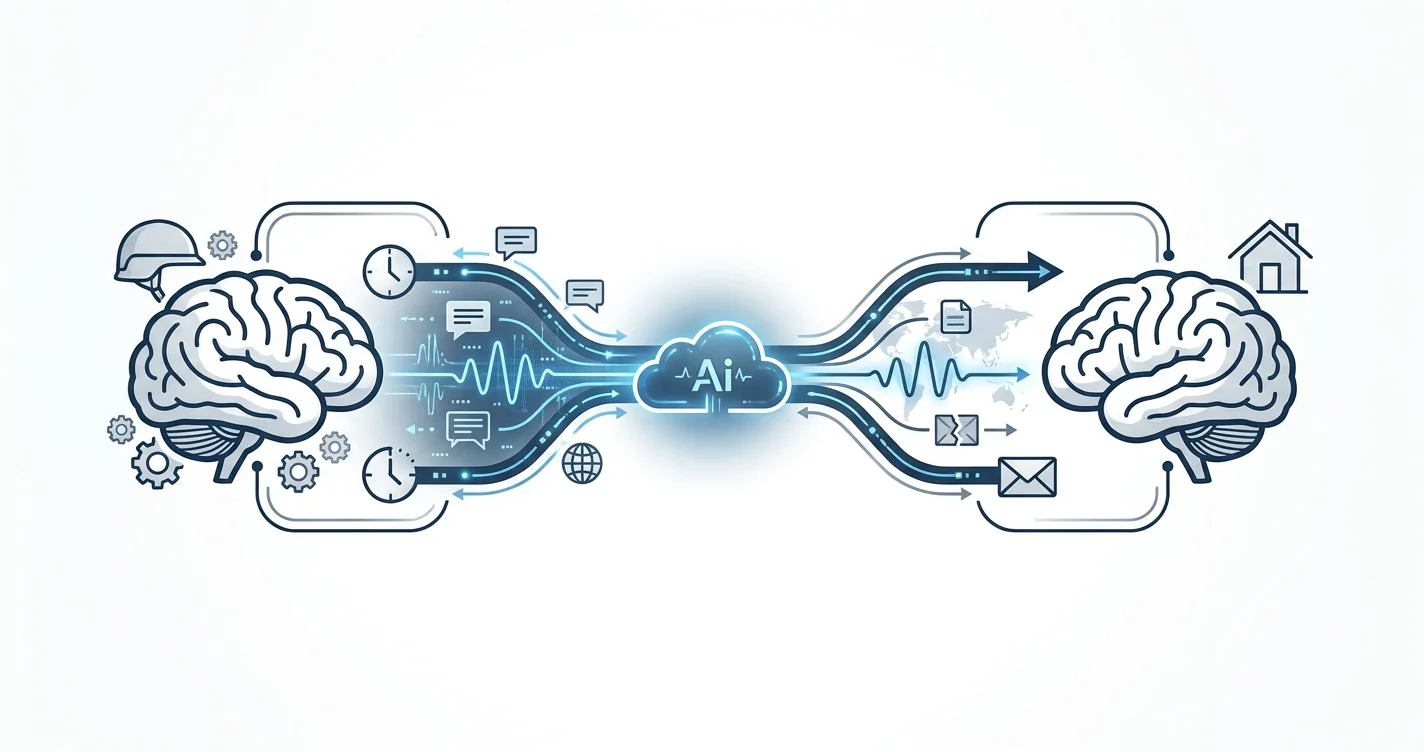
Military relationships run on a different clock than civilian ones. Deployment cycles, PCS moves, and reintegration stretch communication in ways most relationship advice never accounts for, and this guide breaks down what actually matters in an AI relationship coach for military couples, plus where Lovon fits into that picture.
TL;DR
- Lovon is a solid AI relationship coach for military couples navigating deployment and PCS stress. Consider it.
- Voice sessions beat text chat when you have five minutes between duty shifts, not thirty.
- Deployment cycles run 6 to 12 months; reintegration friction usually peaks in the first 90 days home.
- Skip coaches built for shared time zones — military schedules need 24/7, asynchronous support instead.
- An AI relationship coach supplements Military OneSource and licensed counseling; it never replaces them.
Why this matters
Deployment cycles typically run 6 to 12 months, and the strain doesn't stop when the plane lands. Reintegration friction usually peaks in the first 90 days home, when both partners are relearning how to share a routine, a bed, and decisions they handled solo for months.
Add a PCS move every 2 to 3 years on top of that, and a military couple resets its entire support system — friends, therapists, routines — on a schedule no civilian relationship deals with. Couples who already lean on rituals to stay connected get more out of using an AI relationship coach daily, especially once deployment cuts real conversation time down to almost nothing.
As of 2026, most on-demand relationship apps still assume civilian, nine-to-five schedules. An AI relationship coach for military couples has to work around duty rosters, field exercises, and whatever internet connection shows up that day, not around an appointment book. That's the gap Lovon is built to sit in: a voice conversation at 0300 from a barracks or during a five-minute break, not a scheduled session that assumes a quiet Tuesday afternoon.
Who this is for
This is for dual-military couples, military-spouse pairs riding out a deployment, and anyone rebuilding a routine after a PCS move or homecoming. It's for the partner who needs to talk through a fight at 11pm because that's the only window both of you have, and for the service member who won't book a 45-minute therapy slot but will talk for ten minutes between shifts.
It is not for a couple in active crisis. Domestic violence, suicidal ideation, or a mental health emergency needs a licensed provider, a chaplain, or Military OneSource — not an app, and not this one.
What to look for in an AI relationship coach for military couples
Works around duty hours, not office hours
Military schedules don't run nine-to-five, and a coach that only opens during business hours misses most of the moments that actually need it. Look for 24/7 voice access that fits around watch rotations and field time, not a booking calendar.
Handles voice, not just text
Typing a long message isn't always an option — driving, field exercises, spotty barracks wifi all get in the way. A voice-based AI relationship coach fits into found minutes better than a chat window that expects a typed paragraph.
Understands deployment and PCS stress without a long backstory
You shouldn't have to re-explain what a PCS or a TDY is every time you open the app. A coach that already recognizes military-specific terms and stressors saves emotional labor you don't have to spare.
Keeps sessions private from command and the unit
Privacy matters when you're talking through marriage strain that could touch clearance conversations or unit gossip. Nothing about your sessions should be visible to a command team or a family readiness group.
Is honest about what it can't do
A credible AI relationship coach says plainly that it isn't a licensed clinician and points you toward Military OneSource, a chaplain, or a couples therapist when things get serious. Anything that implies it can diagnose or treat a mental health condition is overselling itself.
Builds a habit, not a one-time vent
One venting session doesn't fix a recurring pattern. Look for structure that supports return visits — a check-in before a duty shift, a debrief after a hard call home — instead of a single cathartic dump.
Where an AI relationship coach for military couples actually helps
The deployment stretch — the safe pick for long separations. Deployment communication gets reduced to short, high-stakes windows: a ten-minute call, a handful of messages, and old arguments get relitigated because there was never time to actually resolve them before someone shipped out. A short voice session with Lovon on the days you do have signal gives you something to say besides rehashing the same fight. See AI relationship advice for long-distance couples for more on managing the gap. Verdict: Buy.
The homecoming friction — for reintegration weeks. Reintegration friction peaks in the first 90 days home, when both partners are used to running the household alone. Trust gets tested in small ways — who decides what, who gets to be tired. A coach that specifically names trust rebuilding after separation, rather than generic date-night tips, is more useful here, which is why AI relationship coach for trust issues is worth a read before the homecoming, not after the third fight. Verdict: Consider.
The communication breakdown — for couples stuck on repeat. For couples having the same three fights on every video call — money, parenting decisions made solo, feeling unheard — structured communication coaching does more than a vent session. AI couples therapy for communication problems walks through the pattern instead of just the latest blowup. Verdict: Buy.
The PCS disruption — for the move that resets everything. In 2026, a PCS move still resets your support system roughly every 2 to 3 years: new base, new friend group, sometimes a licensed therapist you have to find again from scratch. An AI relationship coach doesn't replace that new therapist once you find one, but it covers the gap in between orders. Verdict: Consider.
Talk to an AI relationship coach today
Start a voice conversation with Lovon whenever your schedule allows.
What to avoid
- Text-only chat bots that need long typed messages when you have five minutes of signal and a boot in the mud.
- Apps built assuming shared time zones, where both partners are expected to log in during the same evening window.
- Anything positioned as crisis or PTSD treatment. An AI relationship coach cannot diagnose or manage a mental health emergency — that's a job for Military OneSource, a chaplain, or a licensed clinician.
How the picks stack up
| Scenario | Works during deployment | Time-zone flexible | Verdict |
|---|---|---|---|
| Deployment stretch | Yes | Yes | Buy |
| Homecoming friction | Partial | Yes | Consider |
| Communication breakdown | Yes | Yes | Buy |
| PCS disruption | Yes | Yes | Consider |
FAQ
What is the best AI relationship coach for military couples in 2026?
Lovon works well for military couples in 2026 because it's voice-based and available around the clock rather than tied to a fixed weekly appointment. It's a supplement to counseling, not a replacement for a licensed therapist or Military OneSource.
Can an AI relationship coach help during deployment?
Yes, an AI relationship coach can help you process a fight or a hard call home during a short voice session between duty shifts. It won't replace face-to-face reconnection once the deployment ends, but it fills the communication gap while you're apart.
Is voice-based coaching better than text-based apps for service members?
For most service members, yes, because voice fits into found minutes — driving, a break between shifts — better than typing a long message. Text-only tools require more time and attention than a rushed schedule usually allows.
Does an AI relationship coach replace Military OneSource counseling?
No. An AI relationship coach for military couples is a between-sessions supplement, not a replacement for Military OneSource, a chaplain, or a licensed marriage counselor. Crisis situations and mental health emergencies need a human professional.
Is an AI relationship coach private for someone with a security clearance?
A well-built AI relationship coach keeps sessions private and separate from any command or unit visibility. Check the specific app's privacy terms before assuming, since privacy practices vary by product.
How much does an AI relationship coach cost in 2026?
Pricing varies by app and plan, so check current pricing directly on the app before committing. Cost shouldn't be the deciding factor over whether the tool actually fits a deployment or duty schedule.
Can AI relationship coaching help with reintegration after deployment?
Yes, reintegration coaching that names trust and routine friction directly is more useful than generic relationship tips during the first 90 days home. It helps surface the small frictions before they turn into bigger arguments.
What should military couples avoid in an AI relationship coach?
Avoid tools that assume a shared time zone, require long typed sessions, or imply they can treat PTSD or a mental health crisis. Those situations need a licensed provider, not an app.
One last thing
Reintegration friction almost never starts with the big fights — it starts with the dishes, the thermostat, who gets to sleep in. If your check-ins with an AI relationship coach start there instead of jumping straight to money or trust, you'll get further, faster, in the first 90 days home.
Related guides
How AI Support Helps You Heal
AI emotional support isn't about replacing human connection — it's about filling the gaps. The moments when you need to talk at 2 AM, when you don't want to burden your friends again, or when you simply need someone to listen without judgment.
Here's what happens in a typical Lovon session:
You share what's on your mind
There's no script, no intake form, no waiting room. You speak or type whatever you're feeling — in your own words, at your own pace.
Lovon validates and explores
Using frameworks from CBT (Cognitive Behavioral Therapy) and motivational interviewing, Lovon acknowledges your feelings first, then gently helps you explore them. No dismissive "just move on" advice.
You build coping skills together
Lovon doesn't just listen — it actively works with you on evidence-based techniques: thought reframing, urge surfing, behavioral experiments, and more.
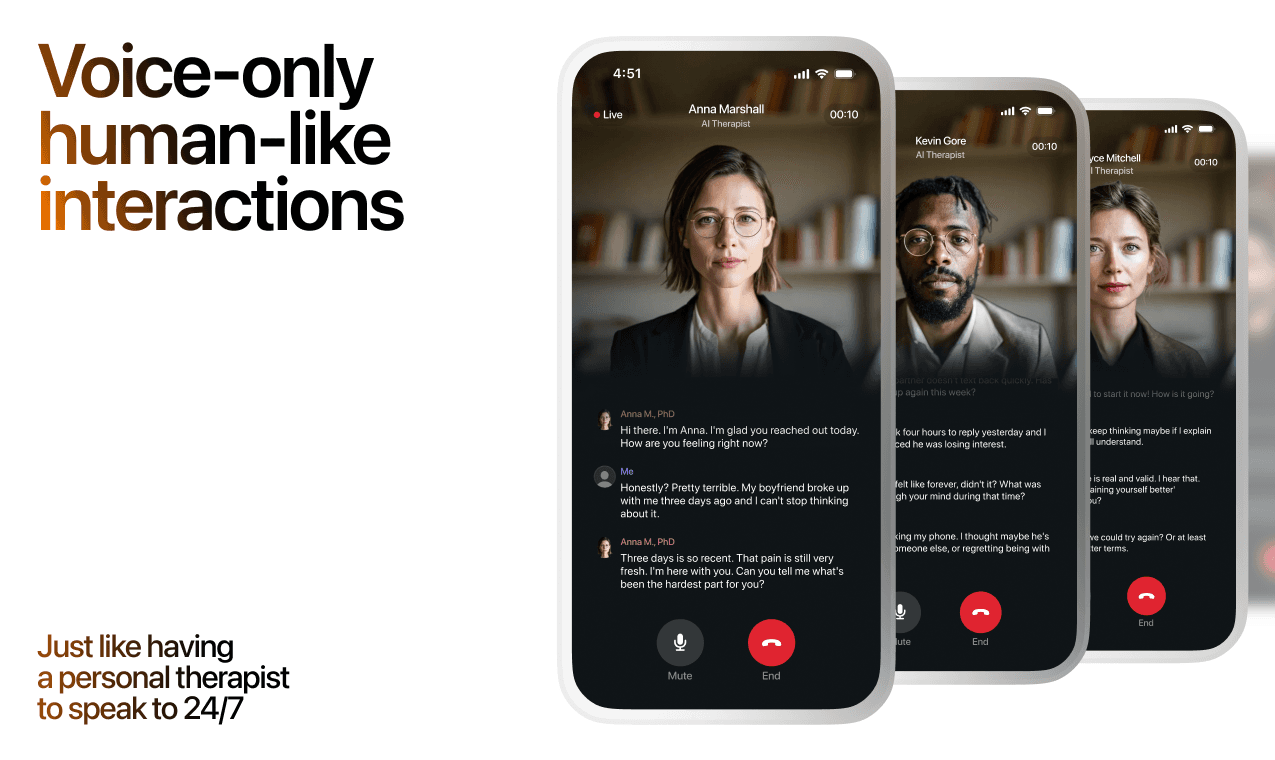
What a Session with Lovon Looks Like
When to Seek Professional Help
AI support is a valuable tool, but it's not a replacement for professional care. Please consider reaching out to a licensed therapist if you experience any of the following:
- Persistent thoughts of self-harm or suicide
- Inability to perform daily activities (work, eating, sleeping) for more than 2 weeks
- Turning to alcohol or substances to cope
- Intense anger or desire to harm your ex-partner
- Complete emotional numbness that doesn't improve over time
Crisis Resources (US): If you're in immediate danger, call 988 (Suicide & Crisis Lifeline) or text HOME to 741741 (Crisis Text Line). Available 24/7, free, and confidential.
Outside the US? Find a crisis line in your country
Ready to Start?
Your healing journey can begin right now
A 7-day trial. No judgment. Just a safe space to process what you're going through.
Frequently Asked Questions
Is Lovon a replacement for a real therapist?
Is my conversation with Lovon AI private?
How is Lovon different from ChatGPT for emotional support?
Can I use Lovon if I'm already seeing a therapist?
Can I try Lovon before subscribing?
About the Author

The Lovon Editorial Team
Mental Health & Wellness Content Team
The Lovon Editorial Team develops mental health and wellness content designed to make psychological concepts accessible and actionable. Our goal is to bridge the gap between clinical research and everyday life - helping you understand why your mind works the way it does and what you can do about it....
Related articles
- AI Life Coach for Relationship Goals 2026
The best AI life coach for relationship goals in 2026: voice-based, personalized sessions for communication, conflict…
- Best AI Relationship Coach for Anxious Attachment 2026
Find the best AI relationship coach for anxious attachment in 2026. Lovon offers voice-based, on-demand emotional…
- AI Relationship Coach for Long-Distance Friends 2026
An AI relationship coach for long-distance friendships gives you 24/7 voice check-ins in 2026. See what to look for, the…
- AI Relationship Coach for Reconnecting After Separation
Lovon's AI relationship coach for reconnecting after separation lets you rehearse tough messages by voice in 2026, not a…
See also
Quizzes
- Emotional Intelligence Test: Your EQ in a Relationship
Find where your EQ slips when things get tense.
- Overfunctioning in Relationship Test: 12 Questions
See how far the load has tilted, in 3 minutes.
Free tools
- Relationship Check-In Questions, and How to Run One
Check-ins fail on structure, not on questions. Tell it whether this would be your first one, what is on your mind, and…
- What to Say When They Are Struggling
A chat, not a list. Tell the coach who this person is to you, what they are going through, and what you already said…
From the wiki
- How to break up with someone you still love?
Loving someone does not mean the relationship works. If you have circled the same decision for months and the reasons…
Disclaimer: This article is for informational purposes only and does not constitute medical advice, diagnosis, or treatment. Always seek the advice of your physician or other qualified health provider with any questions you may have regarding a medical condition. If you are in crisis or think you may have an emergency, call 988 (Suicide & Crisis Lifeline) or go to the nearest emergency room. Outside the US? Find a crisis line in your country.