
Can you be friends with an ex after a breakup?
Can you be friends with an ex after a breakup? Yes, with mutual readiness and clear boundaries. Learn when to reconnect, take space, or keep contact practical.

Key Takeaways
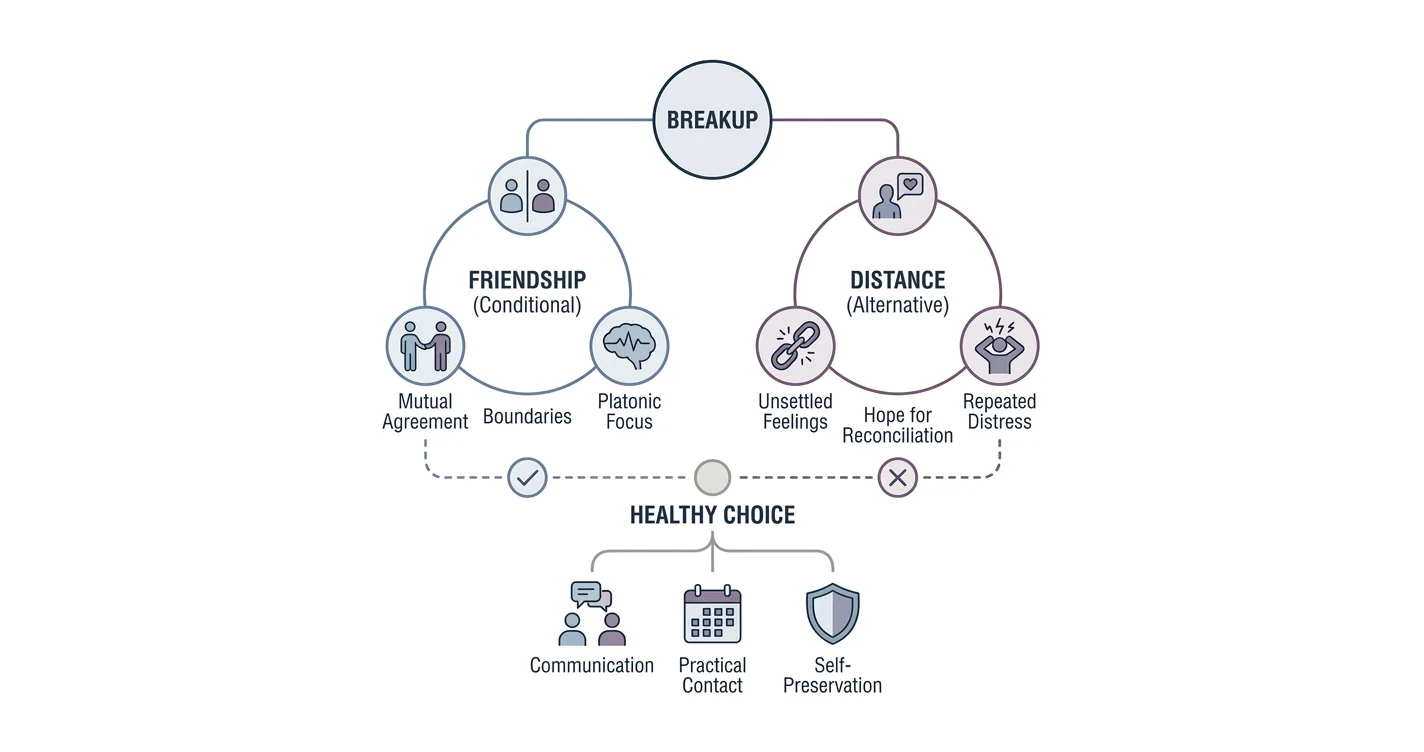
- Can you be friends with an ex after a breakup? Yes, when friendship is mutual, safe, and genuinely platonic.
- Choose distance when contact keeps romantic hope alive or repeatedly leaves you distressed.
- Shared responsibilities require practical communication, not emotional closeness.
- Lovon offers voice-based emotional support for reflection; it does not replace licensed clinical care.
Yes, you can be friends with an ex after a breakup when you both accept that the romantic relationship has ended, freely want friendship, and respect each other’s boundaries. Friendship is not a good next step if contact keeps you waiting for reconciliation, repeatedly leaves you distressed, or exposes you to pressure or abuse. You do not owe an ex friendship, and you can choose distance without deciding what the relationship will look like forever.
TL;DR
- Can you be friends with an ex after a breakup? Yes, when friendship is mutual, safe, and genuinely platonic.
- Choose distance when contact keeps romantic hope alive or repeatedly leaves you distressed.
- Shared responsibilities require practical communication, not emotional closeness.
- Lovon offers voice-based emotional support for reflection; it does not replace licensed clinical care.
Why this matters
You can care about someone and still need a life that does not revolve around them. The useful question is not whether staying friends proves you are mature. It is whether the contact you have actually supports the life you want now.
In 2026, messages, shared chats, and social feeds make it easy to keep contact going without discussing what it means. Start with healthy relationship boundaries, rather than assuming that changing the label changes the relationship.
Friendship is an option after a breakup, not a requirement for ending well. You can appreciate what you shared without continuing the same access, routines, or emotional responsibilities.
Can you be friends with an ex after a breakup?
Yes, but choose the kind of contact that matches your current feelings and responsibilities. An occasional friendly exchange, a close friendship, and communication about shared children are different arrangements. None requires you to keep behaving like a couple.
Use this comparison to decide what to try. These are choices, not stages you must complete.
| Contact choice | Best for | Benefit | Limitation | Recommendation |
|---|---|---|---|---|
| Friendship | People who both accept the breakup and want platonic connection | Preserves a connection you both value | Requires boundaries around intimacy and expectations | Try it only with mutual agreement |
| Practical contact | People with shared responsibilities | Keeps necessary decisions separate from personal closeness | Still involves contact when feelings are unsettled | Keep messages focused on the responsibility |
| Distance | People who do not want friendship or find contact painful | Creates room to choose your own routines | Changes access to someone familiar | Choose it without treating it as punishment |
Ask yourself whether you would still want this friendship if getting back together were no longer possible. An honest no is useful information. It does not make your feelings wrong; it tells you that friendship is not what you want right now.
Check what you want from the contact
Notice your reason for reaching out. Are you interested in a friendship, or are you hoping a familiar conversation will change their mind? Are you sharing something because you want to, or because silence feels like losing your chance?
You do not need perfectly settled feelings before making a decision. You do need to be honest about the arrangement you can handle. Do not agree to friendship when what you want is another chance at romance.
Check whether the choice is mutual
A friendship needs a willing yes from both people. Guilt, repeated requests, or a promise made during the breakup are not substitutes for current consent. Your ex can decline friendship, and so can you.
You can also change your answer. Agreeing to occasional contact does not commit you to daily messages, private meetings, or being available whenever your ex feels lonely.
What does readiness for friendship look like in 2026?
Readiness is about how you respond to contact, not how convincingly you say you are over the breakup. Look at your behavior before, during, and after an exchange. Be curious rather than harsh with yourself.
These questions help you make a practical decision:
- Can you accept that a friendly message is not a promise to reunite?
- Can you tolerate a delayed reply without repeatedly checking for one?
- Can you decline an invitation without fearing you have lost your chance?
- Can you respect your ex’s privacy without asking mutual friends for updates?
- Can you hear that your ex is dating someone without trying to change the arrangement?
- Do you want this friendship even when you are not feeling lonely?
These are reflection prompts, not a diagnostic test. A difficult answer does not mean friendship will never work. It gives you a reason to slow down, choose less contact, or say no for now.
Missing your ex is not the same as being ready to be their friend. You can miss the comfort of the relationship while recognizing that continuing its routines is not right for you.
Why friendship after a breakup varies
There is no single arrangement that fits every breakup. Base your decision on what is happening between you, rather than what friends, family, or your ex think you should do.
- Your reasons for staying connected. Shared interests are different from hoping friendship will lead back to dating.
- Whether you both accept the ending. An agreed label does not resolve conflicting expectations about reconciliation.
- How boundaries are treated. Notice whether requests for space receive respect or pressure.
- Your response to contact. Repeated distress after conversations is a reason to reconsider the arrangement.
- Shared responsibilities. Children, housing, work, or other commitments can require communication without requiring friendship.
- Safety. Threats, stalking, coercion, or abuse change the priority from preserving connection to protecting yourself.
You do not need to prove your ex is a bad person to decide against friendship. Not wanting the relationship in this new form is enough.
How do you set boundaries with an ex?
Make the arrangement specific before returning to familiar habits. For your 2026 contact plan, focus on what you can agree to now, not promises about always being there. You can revisit the plan without promising that greater closeness will follow.
Name your purpose
Decide whether you want friendship, practical communication, or space. Write your answer privately before discussing it so you can notice when you are agreeing to something different just to avoid disappointing your ex.
Keep the conversation about your choice. You do not have to persuade your ex that your feelings are reasonable before setting a limit.
Set contact limits
Agree on how you will communicate and what kinds of conversations you want to have. Decide whether private meetings, late-night messages, flirting, or discussing new dates fit the friendship you are choosing.
A boundary should describe your participation. You can stop discussing your ex’s dating life; you cannot control whether your ex dates.
Separate shared tasks
If you share responsibilities, give those conversations a clear purpose. Discuss the schedule, the item that needs returning, or the decision that needs making. Keep relationship discussions separate rather than attaching them to every practical message.
You can be civil without becoming emotionally close. Necessary contact is not consent to friendship.
Review the effect
After contact, notice what happens next. Are you returning to your day, or spending it rereading messages and searching for signs? Do you feel able to keep your boundaries, or are you abandoning them to preserve access?
If the arrangement repeatedly hurts, reduce or stop optional contact. You do not need to wait for a dramatic incident to change something that is not working.
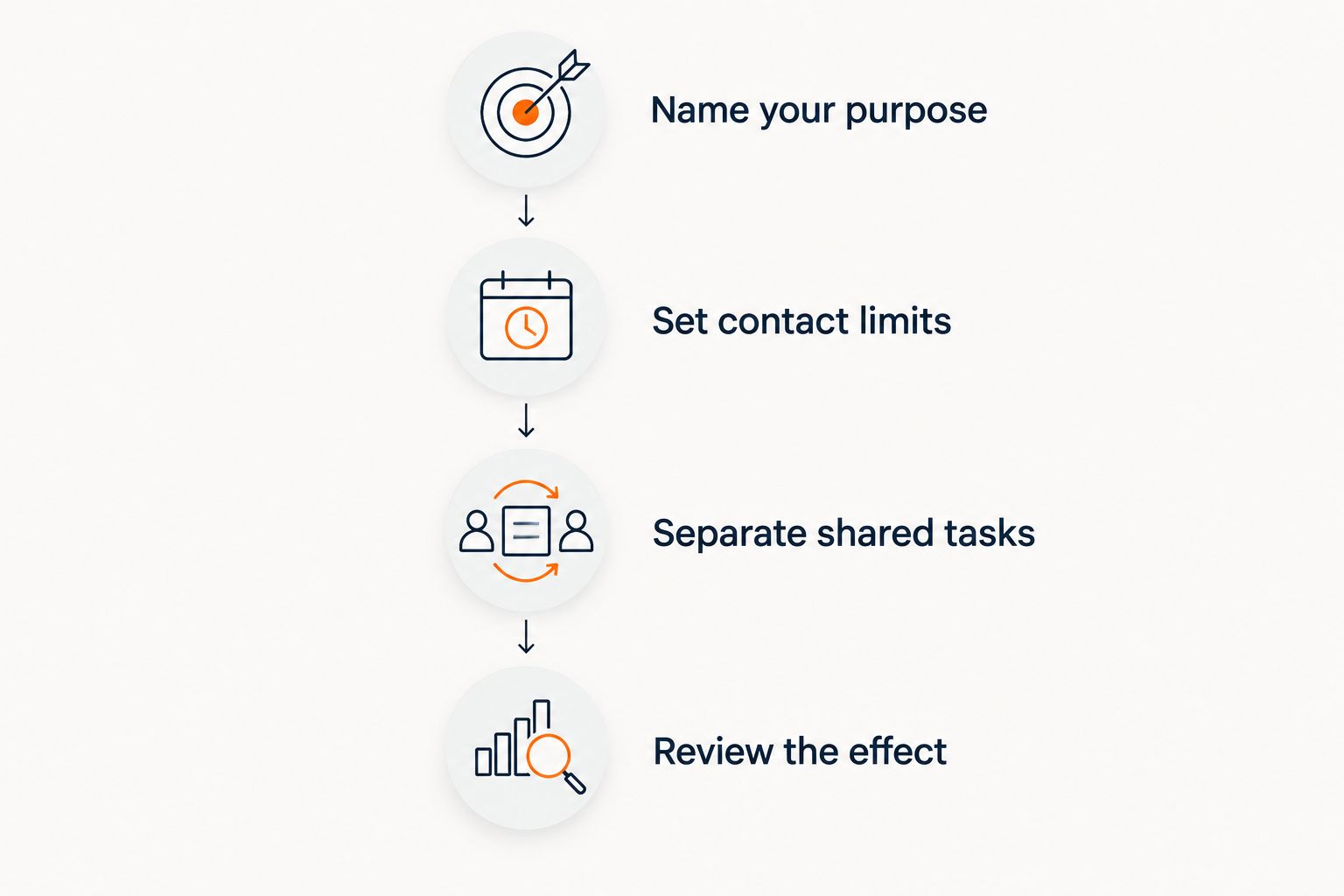 Four steps for choosing and reviewing boundaries with an ex
Choose the purpose of contact before deciding how much access to offer.
When should you choose distance instead?
Choose distance when you do not want friendship or when the contact available is not something you can comfortably accept. That includes agreeing to friendship while privately waiting for your ex to reconsider. A smaller relationship is not automatically easier than an ending.
Pay attention to repeated patterns:
- You cancel your own plans whenever your ex wants attention.
- You use messages or social posts to check whether they still care.
- You keep flirting or having sex despite wanting a platonic arrangement.
- Your ex treats your limits as something to argue away.
- You feel responsible for managing their reaction to the breakup.
Distance does not have to be a tactic or a test. Do not use silence to make someone chase you; use it when you genuinely do not want contact. You can communicate your decision briefly without inviting repeated negotiation.
If there were threats, coercion, stalking, or abuse, do not use a friendship experiment to assess safety. Seek individualized help from a qualified professional or domestic violence advocate, and prioritize immediate safety over explaining your decision.
Can you stay friends if you still love your ex?
You can still love your ex, but friendship is not a good fit when you are accepting it mainly to keep a path back to romance. Affection does not require continued access. Choose contact based on what you can honestly accept now.
Ask whether you want a friendship with the person as they are, including their right not to date you. If that feels impossible, give yourself permission to step back rather than perform comfort you do not feel.
Do you have to be friends if you share children or work?
You do not have to be friends to communicate about shared responsibilities. Aim for clear, respectful exchanges about the task at hand. Personal closeness is a separate choice.
For parenting arrangements, keep children out of adult relationship discussions and avoid using them to carry messages. If practical conversations involve threats or persistent conflict, seek qualified support for your situation rather than trying to solve it through greater closeness.
Is it wrong to say no when your ex wants friendship?
No, declining friendship is a valid boundary. Your ex’s disappointment does not create an obligation to stay available. Be clear about what you are choosing instead of offering a future friendship you do not actually want.
You can care about their feelings without taking responsibility for removing every painful feeling. A respectful ending allows both people to make choices.
Get support without making your ex your only outlet
Before sending a message, ask what you need: comfort, help sorting through feelings, practical information, or renewed romantic connection. Different needs call for different support. Your ex does not have to remain your main source of reassurance.
Lovon is a voice-based mental health app for people seeking everyday emotional support and self-reflection, not licensed clinical care. You can use Lovon to talk through relationship feelings and explore coping tools. It is not a licensed clinician and cannot replace professional assessment or treatment.
For breakup support in 2026, treat Lovon as an additional outlet, not the person or service that decides whether a relationship is safe. Trusted people can offer human connection, and a licensed mental health professional can help when distress affects your daily life. You deserve support beyond the relationship you are deciding whether to keep.
FAQ
Can you be friends with an ex immediately after breaking up?
You can, but you do not have to agree to immediate friendship. If contact keeps romantic expectations alive or repeatedly leaves you distressed, choose space or practical contact instead.
How long should I wait before being friends with my ex?
Do not choose a waiting period as proof that you are ready. Reconsider friendship when you both accept the breakup, freely want platonic contact, and can respect each other’s limits.
Can I be friends with my ex if I still want them back?
Friendship is not a good fit when you are using it mainly to keep a chance of reconciliation. Be honest about wanting romance and choose an arrangement you can accept without expecting that outcome.
Is it okay to stop talking to my ex even if we ended well?
Yes, you can stop optional contact even after a respectful breakup. You do not need anger, betrayal, or a major argument to justify wanting distance.
Should I tell a new partner that I am friends with my ex?
Be honest about a continuing friendship with an ex rather than hiding its nature. Discuss expectations without treating secrecy or demands for control as solutions.
Can we be friends if my ex keeps flirting?
A platonic friendship requires agreement about romantic and sexual boundaries. If your ex keeps flirting after you ask them to stop, reduce contact rather than repeatedly defending the same limit.
Can Lovon help me think through whether to contact my ex?
Lovon offers voice-based mental health support and self-reflection guidance for relationship struggles. It is not a licensed clinician and does not replace professional care or individualized safety advice.
One last thing
You do not need a permanent answer today. If you are making this decision in 2026, choose the contact you can honestly handle now and allow yourself to reconsider later. You are not promising friendship by leaving the future undecided.
Being kind and being available are different choices. You can wish your ex well, respect what the relationship meant, and still stop being their closest source of comfort.
Related guides
How AI Support Helps You Heal
AI emotional support isn't about replacing human connection — it's about filling the gaps. The moments when you need to talk at 2 AM, when you don't want to burden your friends again, or when you simply need someone to listen without judgment.
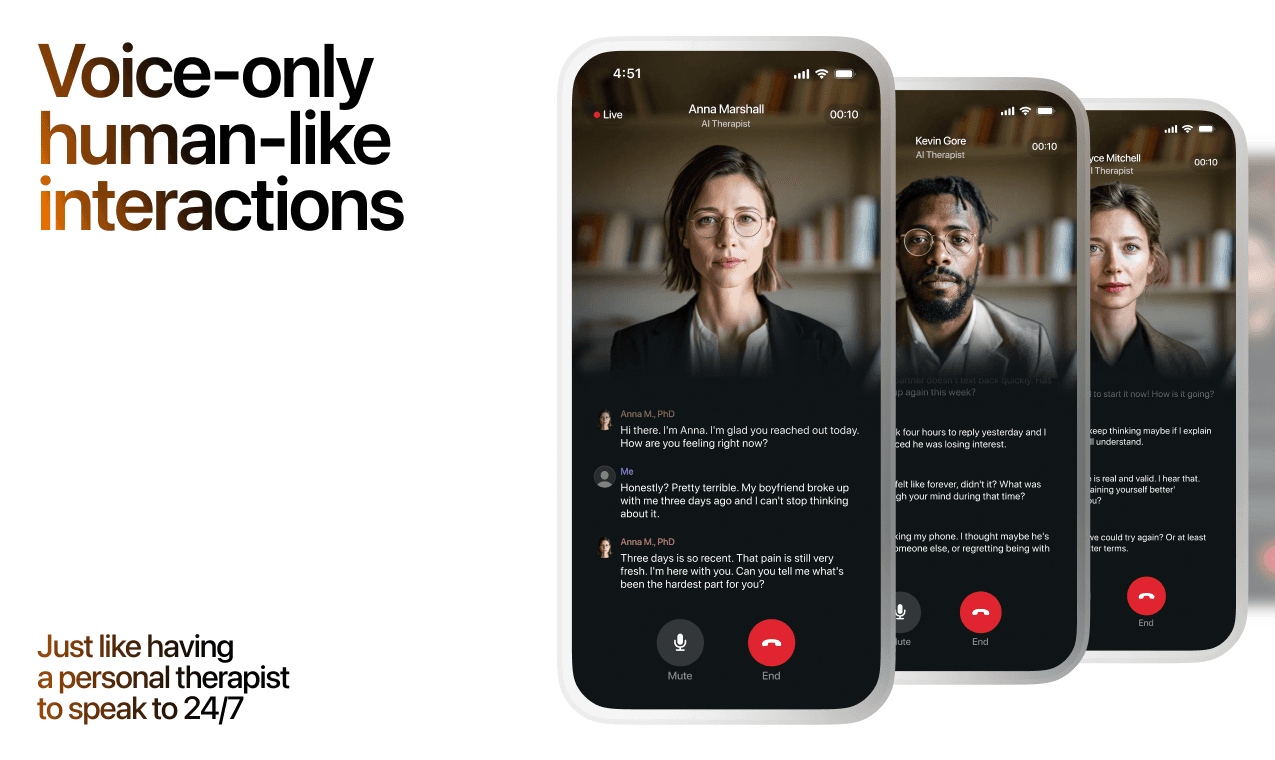
Here's what happens in a typical Lovon session:
You share what's on your mind
There's no script, no intake form, no waiting room. You speak or type whatever you're feeling — in your own words, at your own pace.
Lovon validates and explores
Using frameworks from CBT (Cognitive Behavioral Therapy) and motivational interviewing, Lovon acknowledges your feelings first, then gently helps you explore them. No dismissive "just move on" advice.
You build coping skills together
Lovon doesn't just listen — it actively works with you on evidence-based techniques: thought reframing, urge surfing, behavioral experiments, and more.
What a Session with Lovon Looks Like
When to Seek Professional Help
AI support is a valuable tool, but it's not a replacement for professional care. Please consider reaching out to a licensed therapist if you experience any of the following:
- Persistent thoughts of self-harm or suicide
- Inability to perform daily activities (work, eating, sleeping) for more than 2 weeks
- Turning to alcohol or substances to cope
- Intense anger or desire to harm your ex-partner
- Complete emotional numbness that doesn't improve over time
Crisis Resources (US): If you're in immediate danger, call 988 (Suicide & Crisis Lifeline) or text HOME to 741741 (Crisis Text Line). Available 24/7, free, and confidential.
Outside the US? Find a crisis line in your country
Ready to Start?
Your healing journey can begin right now
A 7-day trial. No judgment. Just a safe space to process what you're going through.
Frequently Asked Questions
Is Lovon a replacement for a real therapist?
Is my conversation with Lovon AI private?
How is Lovon different from ChatGPT for emotional support?
Can I use Lovon if I'm already seeing a therapist?
Can I try Lovon before subscribing?
About the Author

The Lovon Editorial Team
Mental Health & Wellness Content Team
The Lovon Editorial Team develops mental health and wellness content designed to make psychological concepts accessible and actionable. Our goal is to bridge the gap between clinical research and everyday life - helping you understand why your mind works the way it does and what you can do about it....
Related articles
- How to Rebuild a Friendship After a Falling Out (2026)
How to rebuild a friendship after a falling out in 2026: cool down, own your part, and rebuild trust through consistent…
- Is jealousy in a relationship ever healthy?
Is jealousy in a relationship ever healthy? Yes, when you respond with respect, not control. Learn the warning signs…
- How to Cope With Loneliness: Steps That Work in 2026
How to cope with loneliness in 2026: 7 concrete steps, troubleshooting fixes, and tools for the moments between human…
- How long should you wait before dating again?
How long should you wait before dating again? There is no fixed rule. Check your emotional readiness, motives, and…
See also
Quizzes
- Love Addiction Test: Free 12-Question Self-Check
See how much of your life one person is taking.
- Should I Break Up With My Boyfriend? 12-Question Quiz
Twelve questions on whether the doubt has settled.
Free tools
- Breakup Message Writer
A chat for saying it once. Tell it how long it has been and why now, and get a message you could actually send, plus the…
- How to Forgive Someone Who Hurt You
Forgiving, reconciling, and deciding it was fine are three different things, and they get merged. Tell it what happened…
From the wiki
- What is a rebound relationship?
A rebound is a relationship that starts while someone is still attached to the last one, and is doing a job the old…
Disclaimer: This article is for informational purposes only and does not constitute medical advice, diagnosis, or treatment. Always seek the advice of your physician or other qualified health provider with any questions you may have regarding a medical condition. If you are in crisis or think you may have an emergency, call 988 (Suicide & Crisis Lifeline) or go to the nearest emergency room. Outside the US? Find a crisis line in your country.