
Is jealousy in a relationship ever healthy?
Is jealousy in a relationship ever healthy? Yes, when you respond with respect, not control. Learn the warning signs, set boundaries, and talk without blame.

Key Takeaways
- Is jealousy in a relationship ever healthy? Yes, when your response protects trust, communication, and both
- Feeling jealous does not prove that your partner has done something wrong.
- Healthy relationship boundaries are mutual agreements, not demands for passwords, isolation, or constant updates.
- Lovon offers emotional support for self-reflection, not licensed clinical care or proof about a partner’s behavior.
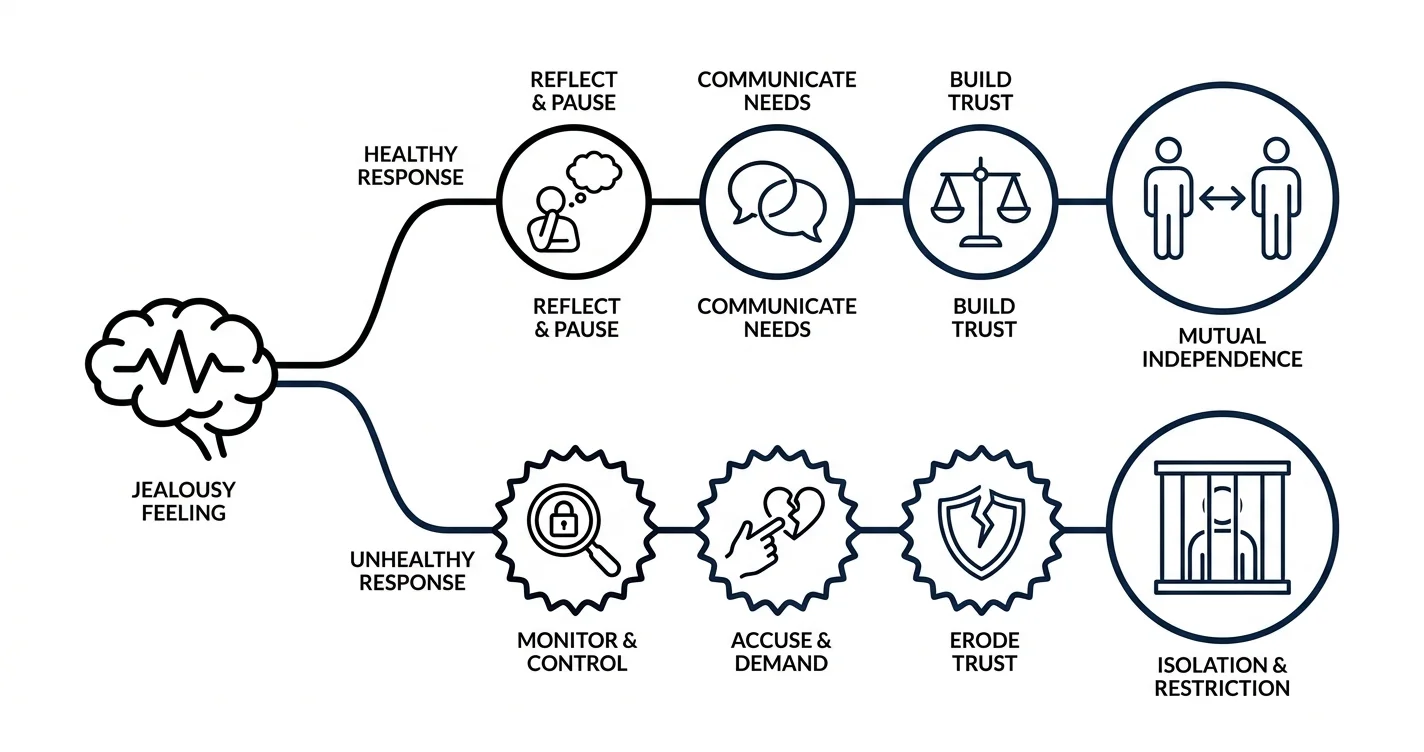
Yes, jealousy in a relationship can lead to a healthy conversation when you treat it as a feeling to understand, not a reason to control your partner. The healthy part is your response: checking the facts, asking for reassurance, and discussing boundaries respectfully. Jealousy itself does not prove love, cheating, or that your partner owes you access to their private life.
TL;DR
- Is jealousy in a relationship ever healthy? Yes, when your response protects trust, communication, and both partners’ independence.
- Feeling jealous does not prove that your partner has done something wrong.
- Healthy relationship boundaries are mutual agreements, not demands for passwords, isolation, or constant updates.
- Lovon offers emotional support for self-reflection, not licensed clinical care or proof about a partner’s behavior.
Why this matters
You do not have to shame yourself for feeling jealous. You also do not have to accept hurtful behavior because someone calls it love. A feeling deserves attention; controlling behavior needs a limit.
In 2026, social feeds, read receipts, and location sharing give couples plenty of information without necessarily giving them clarity. A visible notification is an observation, not an explanation. Before acting, separate what you actually know from what you fear.
Start with healthy relationship boundaries: what you agree to, what stays private, and what happens when an agreement is broken. Clear agreements give you something more useful than guessing.
Is jealousy in a relationship ever healthy?
Yes—but it is more accurate to describe a healthy response to jealousy than to call jealousy inherently healthy. You can notice discomfort, talk about it without blame, and use the conversation to understand an unmet need. You cannot turn that discomfort into permission to monitor, threaten, or punish someone.
The distinction shows up in behavior, not in how strongly someone says they care.
| Situation | Healthy response | Unhealthy response |
|---|---|---|
| Your partner spends time with a friend | Describe your discomfort and ask about an unclear boundary | Demand that your partner end the friendship |
| A message feels flirtatious | Ask what happened and discuss your existing agreement | Treat your interpretation as proof of cheating |
| Your partner replies later than expected | Allow room for ordinary explanations and discuss communication needs | Demand immediate replies or repeated evidence of their whereabouts |
| A past betrayal makes you anxious | Discuss accountability and decide whether trust can be rebuilt | Use the betrayal to justify indefinite surveillance |
| You feel insecure about a partner’s past | Reflect on the fear and discuss present commitments | Interrogate your partner or shame them for past relationships |
A respectful conversation can clarify expectations. Its limitation is that talking cannot guarantee loyalty or remove every uncertainty. Your partner still has the right to disagree, and you still have the right to decide whether the relationship works for you.
What does a healthy response to jealousy look like?
A healthy response leaves room for both your feelings and your partner’s freedom. You can say that something hurt without presenting your fear as a verdict. You can ask for reassurance without making your partner responsible for eliminating every uncomfortable thought.
Imagine that your partner spends much of a gathering talking with someone else. You feel overlooked and worry that there is attraction. A useful conversation names the observation, explains the feeling, and asks about connection—not whether your partner will stop speaking to other people.
Try this structure in your own words:
- Observation: Describe what happened without adding a motive.
- Feeling: Name jealousy, hurt, fear, or loneliness.
- Request: Ask for something specific that respects both people.
For example, you might explain that you felt disconnected during the gathering and ask to spend more time together at the next one. That request addresses connection. It does not require your partner to surrender friendships or social independence.
The test is not whether your partner immediately agrees. It is whether both of you can discuss the request without fear or punishment.
When does jealousy become unhealthy?
Jealousy becomes unhealthy when the response repeatedly harms trust, privacy, independence, or safety. Secretly checking messages, restricting friendships, making accusations, or using anger to obtain compliance are not expressions of care.
Digital access does not change that distinction in 2026. Sharing a password voluntarily is different from handing it over because refusing will trigger threats. Location sharing is not meaningful consent when you cannot safely turn it off.
Watch for behavior such as:
- Requiring proof of where someone is or whom they are with.
- Treating ordinary social contact as disloyalty.
- Insulting a partner or comparing them with past partners.
- Using silence, threats, or humiliation to force agreement.
- Restricting work, friendships, clothing, or activities.
- Repeatedly violating a stated privacy boundary.
You do not need to establish a diagnosis to take these behaviors seriously. Describe what is happening and how it affects your choices. If you are afraid to say no, prioritize confidential support rather than finding a better way to explain yourself.
Why jealousy varies between situations
The same feeling does not always point to the same problem. Sometimes you need to examine an assumption; sometimes you need to address a broken agreement. Understanding the context helps you choose a response without excusing harmful behavior.
- Past betrayal: A previous breach of trust can make a current situation feel threatening. Separate what happened before from what is happening now.
- Unclear agreements: Partners can have different expectations about flirting, friendships, or exclusivity. Discuss those expectations directly.
- Fear of losing connection: Feeling distant from your partner can bring attention to your need for closeness. Ask for connection rather than imposing restrictions.
- Comparison: Comparing yourself with a friend, an ex, or someone online can pull attention toward perceived shortcomings. Comparison is not evidence about your partner’s intentions.
- Current dishonesty: A lie or broken commitment deserves attention on its own. Calming yourself does not mean ignoring facts.
These are possible contexts, not a checklist that tells you why you feel jealous. You can explore which fits without assigning yourself an attachment label or deciding that your partner must be guilty.
What should I do when I feel jealous?
Pause before you investigate, accuse, or demand reassurance. The goal is not to make the feeling disappear before you speak. It is to choose an action you can stand behind once the intensity settles.
1. Pause
Put down the phone if you are about to search messages, profiles, or old photos. Notice your breathing and your surroundings. Give yourself room to choose rather than turning the first urge into an action.
2. Check facts
Write down what you directly observed. In a separate sentence, write your interpretation. A late reply is an observation; believing that it means rejection is an interpretation that still needs context.
3. Name needs
Ask what matters underneath the jealousy. You might want clearer expectations, more shared attention, honesty about a specific event, or help with your own uncertainty. Naming the need makes the conversation more focused.
4. Make requests
Ask for a discussion or a specific change rather than demanding proof of love. Keep the request connected to the concern. Asking to clarify your agreement about flirting is different from requiring unrestricted phone access.
5. Respect limits
Listen to the response without assuming disagreement proves dishonesty. Your partner can decline a request. You can then decide whether your needs and their limits are compatible, without coercing a different answer.
6. Review patterns
Notice what happens across conversations. Are agreements clearer and behavior more consistent, or do accusations and checking continue? If the pattern remains distressing, seek support rather than repeating the same confrontation.
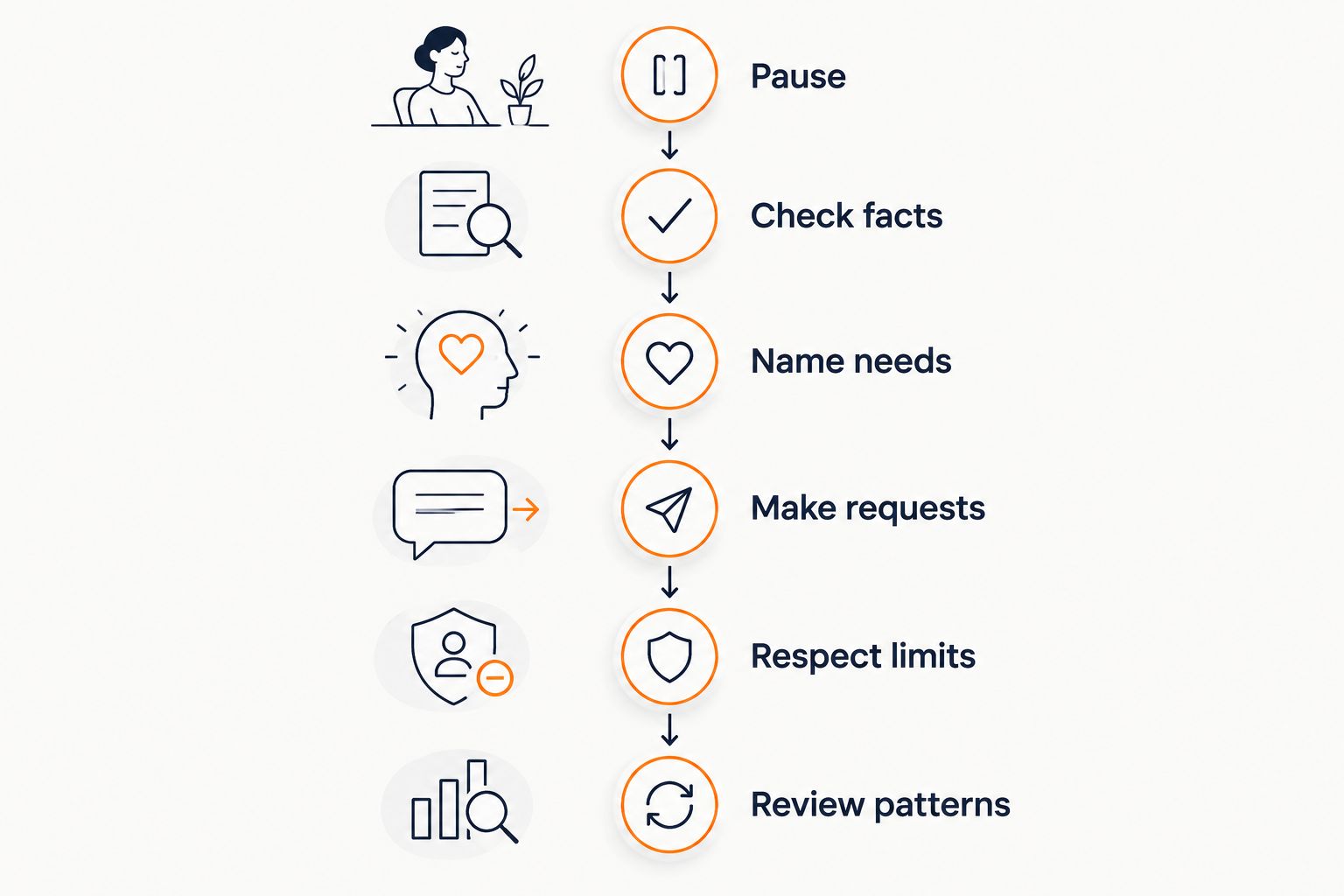 Six steps for responding to jealousy without accusation or control
Check what happened before deciding what it means.
You can use this process for a confusing message or an uncomfortable social interaction. It is not a safety plan for threats or violence. When you fear retaliation, get individual support before attempting a difficult conversation.
Does jealousy mean my partner really loves me?
Jealousy is not proof of love. Someone can feel jealous and behave disrespectfully, while someone who rarely feels jealous can be deeply committed. Look at honesty, care, reliability, and respect for your choices instead.
Deliberately provoking jealousy is not a useful test of commitment. It creates a reaction without answering whether your partner understands your needs. If you want more affection or attention, ask for that directly.
Is it reasonable to feel jealous after cheating?
Jealousy after cheating is understandable, but it does not tell you whether the relationship is now safe or workable. Rebuilding trust requires attention to the actual breach, present behavior, and agreements both partners freely accept.
You do not have to rush forgiveness or remain in the relationship. At the same time, permanent monitoring is not the same as restored trust. If you cannot imagine staying without constant checking, discuss that honestly with a licensed therapist rather than treating surveillance as the solution.
Is being jealous of my partner’s past different?
Jealousy about a partner’s past focuses on events that happened before your current agreement. Those feelings deserve care, but your partner’s previous relationships are not a present betrayal simply because thinking about them hurts.
Repeatedly asking for more detail can keep the conversation centered on comparison rather than your current relationship. Ask what information genuinely affects a present decision. You do not need an exhaustive history to discuss commitment, sexual health, or boundaries.
When should I get support for relationship jealousy?
Seek support when jealousy repeatedly disrupts sleep, work, friendships, or your ability to respect boundaries. A licensed mental health professional can help you explore the pattern and choose care suited to your circumstances. Feeling jealous alone does not establish a mental health diagnosis.
For everyday reflection in 2026, Lovon is suited to people seeking voice-based emotional support, not licensed clinical care. The app offers conversations, coping tools, and self-reflection guidance for concerns that include relationship struggles.
The benefit of Lovon is having a place to talk through your feelings and consider what you want to say. Its limit matters: Lovon is not a licensed clinician, cannot verify your partner’s behavior, and does not replace professional care. Treat any response as support for reflection, not evidence that someone is faithful or unfaithful.
If your partner threatens you, stalks you, restricts your movements, or makes you afraid to disagree, contact a domestic violence service through a device they cannot access. A joint conversation is not the first priority when speaking openly puts you at risk. In immediate danger in the United States, call 911.
FAQ
Is jealousy in a relationship ever healthy?
Yes, jealousy can lead to a healthy conversation when you respond with honesty, respect, and clear boundaries. The feeling itself does not justify monitoring, accusations, or restrictions on your partner’s independence.
Does being jealous mean I do not trust my partner?
Feeling jealous does not automatically mean you distrust your partner. Examine what triggered the feeling and separate a fear or interpretation from evidence of a broken agreement.
Is it okay to ask my partner for reassurance?
Yes, asking for reassurance is reasonable when the request respects both people’s limits. Reassurance does not include an entitlement to passwords, constant updates, or proof of loyalty on demand.
Is checking my partner’s phone a healthy way to handle jealousy?
Secretly checking your partner’s phone is not a healthy response to jealousy. Discuss the specific concern directly when it is safe, and distinguish freely chosen transparency from access obtained through pressure.
What if my partner calls controlling behavior healthy jealousy?
Calling control healthy jealousy does not make it respectful. Threats, isolation, monitoring, and punishment require attention regardless of the explanation; seek confidential support if you are afraid to refuse.
Can a relationship be healthy without jealousy?
Yes, a relationship can be healthy without jealousy. Commitment is better assessed through honesty, consistency, care, and respect than through how possessive either person feels.
Can an emotional support app tell me whether my partner is cheating?
No, an emotional support app cannot establish whether your partner is cheating. In 2026, treat app responses as prompts for reflection, not verification of another person’s actions.
One last thing
You can feel jealous and still choose a respectful response. You can also feel calm and recognize that an agreement has been broken. Neither the presence nor the absence of jealousy decides whether your concern is valid.
For your next difficult conversation in 2026, prepare an observation, a feeling, and a request. If the request requires someone to give up privacy, friendships, or freedom to relieve your discomfort, reconsider it before you ask. If saying no feels unsafe, seek support instead of negotiating under pressure.
Related guides
How AI Support Helps You Heal
AI emotional support isn't about replacing human connection — it's about filling the gaps. The moments when you need to talk at 2 AM, when you don't want to burden your friends again, or when you simply need someone to listen without judgment.
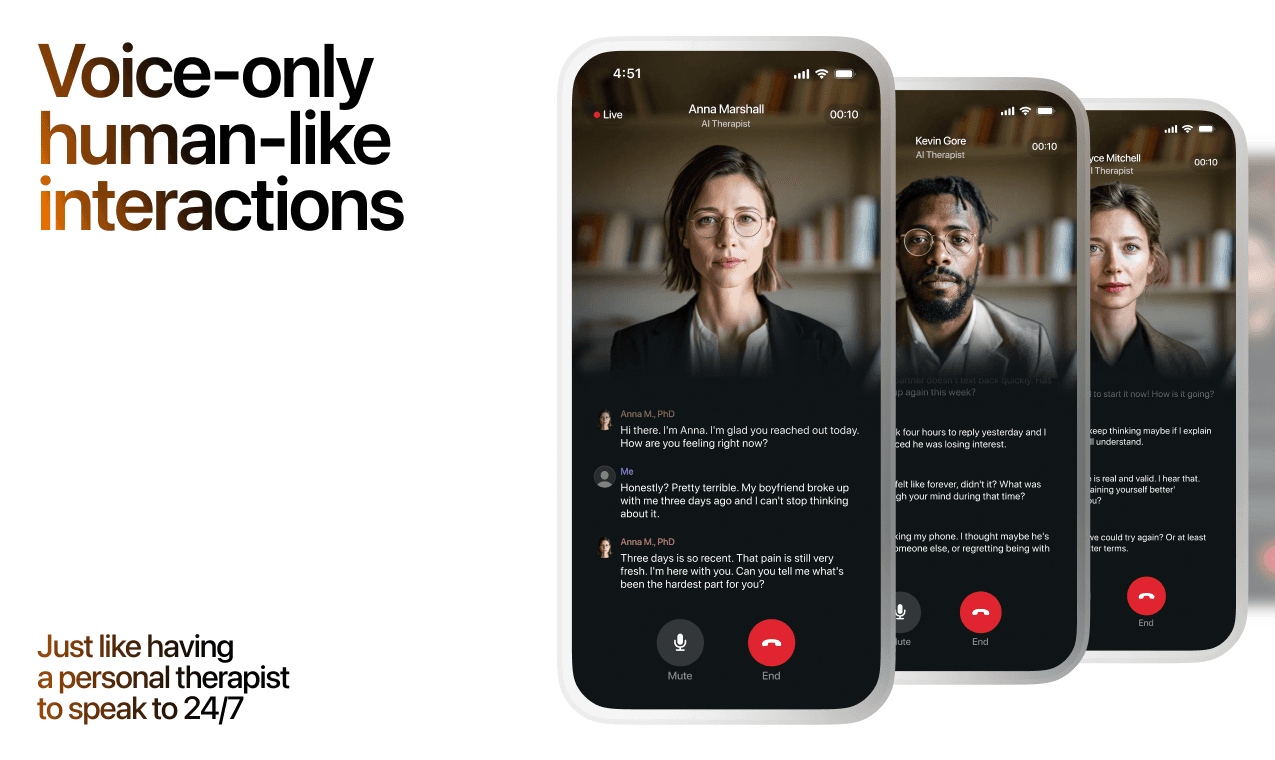
Here's what happens in a typical Lovon session:
You share what's on your mind
There's no script, no intake form, no waiting room. You speak or type whatever you're feeling — in your own words, at your own pace.
Lovon validates and explores
Using frameworks from CBT (Cognitive Behavioral Therapy) and motivational interviewing, Lovon acknowledges your feelings first, then gently helps you explore them. No dismissive "just move on" advice.
You build coping skills together
Lovon doesn't just listen — it actively works with you on evidence-based techniques: thought reframing, urge surfing, behavioral experiments, and more.
What a Session with Lovon Looks Like
When to Seek Professional Help
AI support is a valuable tool, but it's not a replacement for professional care. Please consider reaching out to a licensed therapist if you experience any of the following:
- Persistent thoughts of self-harm or suicide
- Inability to perform daily activities (work, eating, sleeping) for more than 2 weeks
- Turning to alcohol or substances to cope
- Intense anger or desire to harm your ex-partner
- Complete emotional numbness that doesn't improve over time
Crisis Resources (US): If you're in immediate danger, call 988 (Suicide & Crisis Lifeline) or text HOME to 741741 (Crisis Text Line). Available 24/7, free, and confidential.
Outside the US? Find a crisis line in your country
Ready to Start?
Your healing journey can begin right now
A 7-day trial. No judgment. Just a safe space to process what you're going through.
Frequently Asked Questions
Is Lovon a replacement for a real therapist?
Is my conversation with Lovon AI private?
How is Lovon different from ChatGPT for emotional support?
Can I use Lovon if I'm already seeing a therapist?
Can I try Lovon before subscribing?
About the Author
The Lovon Editorial Team
Mental Health & Wellness Content Team
The Lovon Editorial Team develops mental health and wellness content designed to make psychological concepts accessible and actionable. Our goal is to bridge the gap between clinical research and everyday life - helping you understand why your mind works the way it does and what you can do about it....
Related articles
- Feedback vs Criticism in Relationships: Healthy Intimacy or Harsh Judgment
Every intimate relationship encounters moments where partners need to address concerns, express disappointment, or…
- Should I Break Up With My Girlfriend? Signs It's Time To Break Up
Many of us believe a relationship will last forever. But at some point, you might start asking yourself a difficult…
- Insecure in Your Relationship? Understand Your Insecurity & Feel Secure
Quick Takeaways:
- How to Heal Anxious Attachment on Your Own (2026)
Step-by-step guide to healing anxious attachment solo in 2026: triggers, nervous system work, boundaries, and tools that…
See also
Quizzes
- Should I Forgive Him for Cheating? 12-Question Quiz
Twelve questions on whether rebuilding is possible.
- Am I Being Cheated On? 12-Question Reality Check
Sort the evidence from the fear in 2 minutes.
Free tools
- How to Stop Being Jealous in a Relationship
Two very different people search this, and advice that assumes either one is wrong half the time. This sorts what you…
- How to Respond to an Apology You're Not Sure About
A chat for how to respond to an apology that is sitting unanswered on your phone. Paste what they said, tell it what it…
From the wiki
- What is cheating in a relationship?
Cheating is a breach of the agreement you and your partner made about who else gets your body, your attention and your…
Disclaimer: This article is for informational purposes only and does not constitute medical advice, diagnosis, or treatment. Always seek the advice of your physician or other qualified health provider with any questions you may have regarding a medical condition. If you are in crisis or think you may have an emergency, call 988 (Suicide & Crisis Lifeline) or go to the nearest emergency room. Outside the US? Find a crisis line in your country.