
AI Therapy for Social Battery Burnout in Introverts 2026
AI therapy for social battery burnout in introverts: what to look for, what to skip, and why voice sessions beat text chat. 2026 buying guide.

Key Takeaways
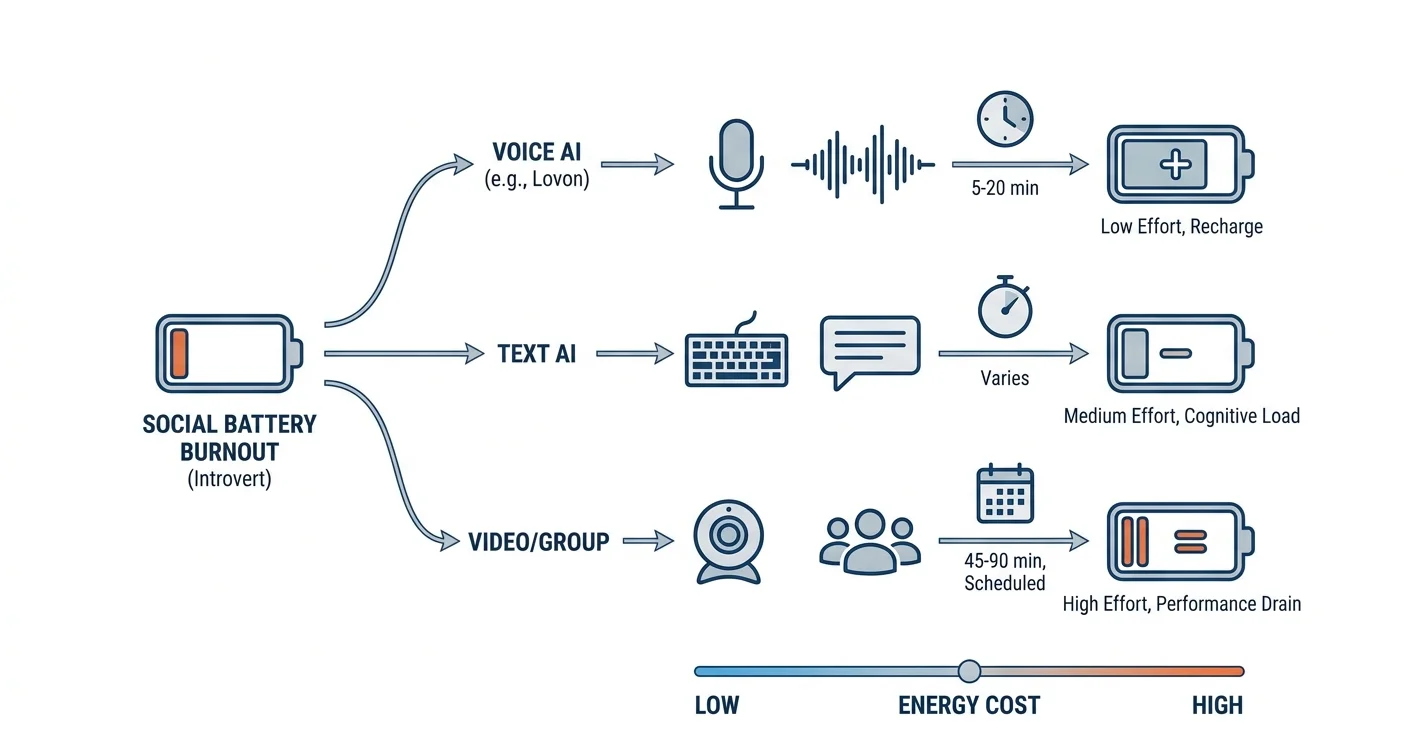
- Voice-based AI therapy for social battery burnout in introverts works because sessions run 5-20 minutes with zero
- Text-based chatbots ask a drained brain to keep typing; voice sessions let you just talk, which fits burnout
- Group therapy and video calls drain the same battery you're trying to recharge — save them for non-burnout weeks.
- Nervous system reset tools matter more than talk time when the exhaustion is sensory overload, not sadness.
- Lovon's voice AI therapist: Consider for daily decompression, not a swap for a licensed clinician during a real crisis.
Social battery burnout doesn't look like ordinary tiredness. It's the flat, snappish exhaustion that shows up after three meetings, a group dinner, and a phone call you didn't want to take — and it doesn't lift with a good night's sleep. This guide breaks down what actually helps an introvert recharge, and where AI therapy for social battery burnout in introverts fits into that toolkit versus where it doesn't.
TL;DR
- Voice-based AI therapy for social battery burnout in introverts works because sessions run 5-20 minutes with zero scheduling or small talk.
- Text-based chatbots ask a drained brain to keep typing; voice sessions let you just talk, which fits burnout recovery better.
- Group therapy and video calls drain the same battery you're trying to recharge — save them for non-burnout weeks.
- Nervous system reset tools matter more than talk time when the exhaustion is sensory overload, not sadness.
- Lovon's voice AI voice companion: Consider for daily decompression, not a swap for a licensed clinician during a real crisis.
Why this matters
Introverts don't run out of social energy because they dislike people — they run out because processing conversation, reading faces, and managing group dynamics costs more fuel per hour than it does for extroverts. Stack enough of that in 2026's back-to-back-meeting, always-online culture and you get burnout that mimics depression: low motivation, irritability, a flat mood that doesn't respond to a nap.
The mistake most people make is treating social battery burnout with more socializing — a call with a friend to "talk it out," a support group, a check-in meeting. For an introvert mid-burnout, that's like trying to charge a phone with the cable unplugged. What actually helps is a way to process the day that costs almost nothing to use.
That's the gap Lovon is built to sit in: a voice-based AI support session you open when you're too fried to type a paragraph but still need to get something out of your head.
Who this is for
This is for the introvert who feels wiped after a normal, non-traumatic day of socializing — team meetings, a friend's birthday dinner, a family visit — and needs somewhere private to decompress before bed. It's not built for someone in acute psychiatric crisis; that calls for a licensed clinician or a crisis line, not an app.
What to look for in AI therapy for social battery burnout
Voice-first, not another text thread
If you're burned out from talking all day, the last thing that helps is typing out your feelings in a chat box — it's still output, still effort. A voice session lets you speak the way you'd speak to a friend, without composing sentences on a screen.
Sessions that fit under 20 minutes
Burnout recovery windows are short. An introvert decompressing after work has maybe 10 to 20 minutes before the next obligation; a tool that demands a 45-minute commitment gets skipped, not used.
No scheduling or waiting room
Booking a session three days out defeats the point of same-day recharge. The value of AI therapy for social battery burnout in introverts is that it's there at 9:47pm on a Tuesday, not next Thursday at 2pm.
Coping tools built for sensory overload, not just talk
Social battery burnout is often more sensory than emotional — it's overstimulation, not sadness. Look for tools that address nervous system regulation directly, not just a chat that mirrors your feelings back at you.
Privacy you don't have to perform in
Introverts already spend the day managing how they come across. A tool that requires video, a group setting, or any audience defeats its own purpose.
Honesty about its limits
Any AI tool worth using for burnout should say plainly what it is and isn't. Lovon says outright that it's not a replacement for licensed clinical care — that's a feature, not a disclaimer to skip past.
Where AI therapy fits into your recharge routine
The quiet reset — voice sessions after a social day. Lovon's voice conversations run in the 5-to-20-minute range, short enough to use between a work call and dinner without eating your whole evening. The specific value here: you talk, it listens, you don't have to type or perform. Consider this your default tool for ordinary post-social exhaustion — read more in Lovon's guide for highly sensitive people, which covers overlapping sensory-overload territory.
For the shutdown, not just the mood. When burnout shows up as a body thing — tight chest, wanting to disappear, zero words left — talk therapy alone misses the target. Nervous system reset practices (breathing patterns, grounding, a few minutes of guided regulation) address the physical layer first. Buy into this as a companion tool, especially on days the exhaustion feels more physical than emotional; see signs of nervous system dysregulation and how to reset it for the specifics.
Text-based chat apps — the wildcard that usually isn't for you. Typing requires composing thoughts into sentences, which is exactly the cognitive labor burnout depletes first. If you find yourself staring at a blank chat box after a draining day, that's the tool fighting your state, not helping it. Skip text-only apps for acute burnout; save them for reflective journaling on a good day.
Scheduled video therapy — the safe pick, wrong week. A standing weekly session with a therapist is valuable and shouldn't be replaced. But during an active burnout stretch, a fixed video call at a fixed time adds one more performance obligation to a depleted week. Hold your existing therapy schedule steady, and use on-demand voice sessions to fill the gaps between appointments, not to replace them.
Group support settings — draining by design. Support groups work for people who recharge through connection. For an introvert whose battery is already at zero, a group setting is another room to read, another set of faces to manage. Skip group formats until the battery is back above half.
Try a voice session tonight
Open Lovon and talk through the day in under 20 minutes, no scheduling needed.
What to avoid
- Apps that require live video by default. If the only option is face-to-camera, it defeats the low-effort, low-performance point of recovering from social exhaustion.
- "Always be networking" style productivity coaches. Anything that frames rest as a task to optimize adds pressure instead of removing it.
- Committing to a fixed daily session count during a burnout stretch. Forcing a streak turns a recovery tool into another obligation — use it when drained, skip it when you're not.
Verdict comparison
| Option | Session length | Scheduling needed | Energy cost to use | Verdict |
|---|---|---|---|---|
| Lovon voice AI voice support | 5-20 min | None | Low | Buy |
| Text-based AI chat | Varies | None | Medium-high | Skip for acute burnout |
| Scheduled video therapy | 45-60 min | Yes | High | Hold as your baseline care |
| In-person group support | 60-90 min | Yes | High | Skip until recovered |
FAQ
What is social battery burnout in introverts?
Social battery burnout is the exhaustion introverts feel after extended or back-to-back social interaction, even when the interactions themselves were pleasant. It shows up as irritability, low motivation, and a flat mood that sleep alone doesn't fix.
Can AI therapy help with introvert burnout?
Yes, AI therapy for social battery burnout in introverts works well as a low-effort way to decompress because sessions require no scheduling, no group setting, and often just a voice conversation. It's a support tool, not a replacement for licensed clinical care during a serious crisis.
Is AI voice therapy better than text-based apps for social burnout?
For social battery burnout specifically, voice tends to work better because typing requires the same cognitive composition effort that caused the exhaustion. Speaking out loud, the way Lovon's sessions are built, asks less of an already-depleted brain.
How much does AI therapy cost compared to traditional therapy in 2026?
AI therapy apps generally run far below the out-of-pocket cost of traditional weekly sessions, though pricing varies by app and plan. Traditional therapy without insurance in 2026 commonly runs well over $100 per session depending on location and provider.
How is social battery burnout different from depression?
Social battery burnout usually lifts with rest, alone time, and reduced social demand within a day or two, while depression persists regardless of how much time alone you get. If low mood continues past a few days of real rest, that's a signal to talk to a licensed professional, not just recharge more.
Can introverts use AI therapy every day?
Introverts can use short AI voice sessions daily as a decompression habit, similar to journaling, without it becoming another obligation. The point is to use it when drained, not to force a streak that turns rest into a task.
Is Lovon a replacement for a licensed therapist?
No. Lovon is built with input from PhD psychologists but is explicit that it does not replace licensed clinical care, especially for crisis situations or diagnosed conditions.
How long does it take to recharge a social battery?
Most introverts report needing anywhere from 20 minutes to a few hours of low-stimulation alone time to recharge after a draining social day, depending on how demanding the interaction was. Chronic burnout that doesn't respond to a day or two of rest usually needs more support than self-care alone.
One last thing
The fastest way to misdiagnose your own burnout is to assume more willpower fixes it — introverts often push through a second draining event because the first one "wasn't that bad," and the battery goes from low to empty without warning. If a five-minute voice check-in after work becomes the difference between a manageable evening and a wrecked one, that's the tool doing its job, not a sign you needed to push harder.
Related guides
How AI Support Helps You Heal
AI emotional support isn't about replacing human connection — it's about filling the gaps. The moments when you need to talk at 2 AM, when you don't want to burden your friends again, or when you simply need someone to listen without judgment.
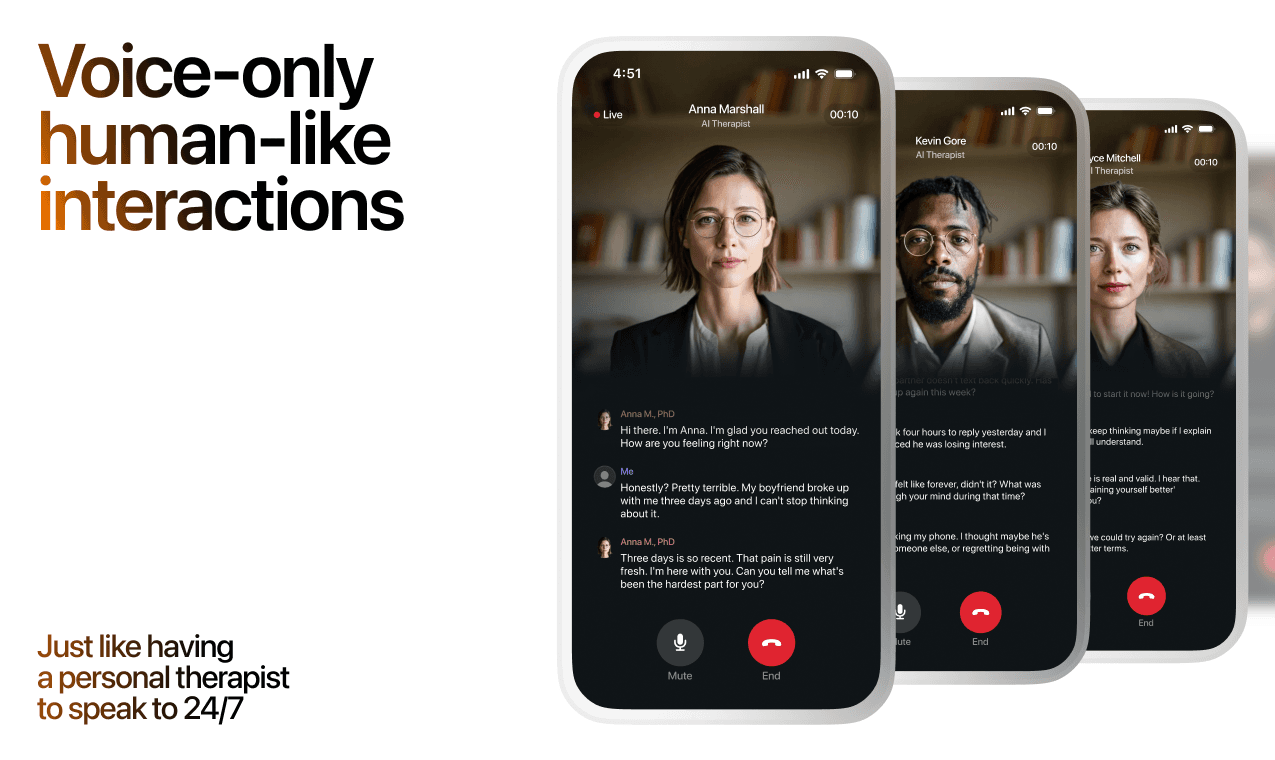
Here's what happens in a typical Lovon session:
You share what's on your mind
There's no script, no intake form, no waiting room. You speak or type whatever you're feeling — in your own words, at your own pace.
Lovon validates and explores
Using frameworks from CBT (Cognitive Behavioral Therapy) and motivational interviewing, Lovon acknowledges your feelings first, then gently helps you explore them. No dismissive "just move on" advice.
You build coping skills together
Lovon doesn't just listen — it actively works with you on evidence-based techniques: thought reframing, urge surfing, behavioral experiments, and more.
What a Session with Lovon Looks Like
When to Seek Professional Help
AI support is a valuable tool, but it's not a replacement for professional care. Please consider reaching out to a licensed therapist if you experience any of the following:
- Persistent thoughts of self-harm or suicide
- Inability to perform daily activities (work, eating, sleeping) for more than 2 weeks
- Turning to alcohol or substances to cope
- Intense anger or desire to harm your ex-partner
- Complete emotional numbness that doesn't improve over time
Crisis Resources (US): If you're in immediate danger, call 988 (Suicide & Crisis Lifeline) or text HOME to 741741 (Crisis Text Line). Available 24/7, free, and confidential.
Outside the US? Find a crisis line in your country
Ready to Start?
Your healing journey can begin right now
A 7-day trial. No judgment. Just a safe space to process what you're going through.
Frequently Asked Questions
Is Lovon a replacement for a real therapist?
Is my conversation with Lovon AI private?
How is Lovon different from ChatGPT for emotional support?
Can I use Lovon if I'm already seeing a therapist?
Can I try Lovon before subscribing?
About the Author

The Lovon Editorial Team
Mental Health & Wellness Content Team
The Lovon Editorial Team develops mental health and wellness content designed to make psychological concepts accessible and actionable. Our goal is to bridge the gap between clinical research and everyday life - helping you understand why your mind works the way it does and what you can do about it....
Related articles
- AI Support App for Caregiver Burnout: 2026 Verdict
The best ai support app for caregiver burnout in 2026 is Lovon, offering voice-based AI support available 24/7 without…
- Best AI App for Phone Anxiety in 2026: Ranked
The best ai app for phone anxiety in 2026, ranked by voice practice over text chat. Lovon wins for real conversation…
- Best AI Life Coach for Burnout in 2026
The best AI life coach for burnout in 2026: Lovon leads with on-demand voice therapy and CBT tools. Compare top picks…
- Can self-care alone fix burnout?
Can self care alone fix burnout? No. See what rest can help with, why work demands must change, and when to seek support…
See also
Quizzes
- Perfectionism Test: What Are Your Standards Costing?
See what your standards actually cost, in 3 minutes.
- Shame Test: Do You Read Mistakes as Verdicts?
See which exit your shame takes, in 3 minutes.
Free tools
- What to Say to Someone Who Is Grieving
Get sentences that fit this person and this week, not a list of things people say at funerals. Describe who they lost…
- How to Come Out to Your Parents
A chat about how to come out to your parents that starts with whether now is safe, not with the speech. Tell it your…
From the wiki
- Why do I feel lonely all of a sudden?
Sudden loneliness usually traces back to something that quietly ended in the last few months: a routine, a shared class…
Disclaimer: This article is for informational purposes only and does not constitute medical advice, diagnosis, or treatment. Always seek the advice of your physician or other qualified health provider with any questions you may have regarding a medical condition. If you are in crisis or think you may have an emergency, call 988 (Suicide & Crisis Lifeline) or go to the nearest emergency room. Outside the US? Find a crisis line in your country.