
Is ADHD considered a disability?
Is ADHD considered a disability? Yes, when its effects meet the rules. Learn how workplace, school and Social Security decisions differ in 2026, and what to ask.

Key Takeaways
- Is ADHD considered a disability? Yes, when its effects meet the rules for the protection or benefit you seek.
- An ADHD diagnosis does not automatically qualify you for accommodations, an IEP or Social Security disability benefits.
- Document how ADHD affects daily tasks, then ask the relevant employer, school or agency about its process.
- Lovon is best for adults who want voice-based emotional support, not a disability determination.
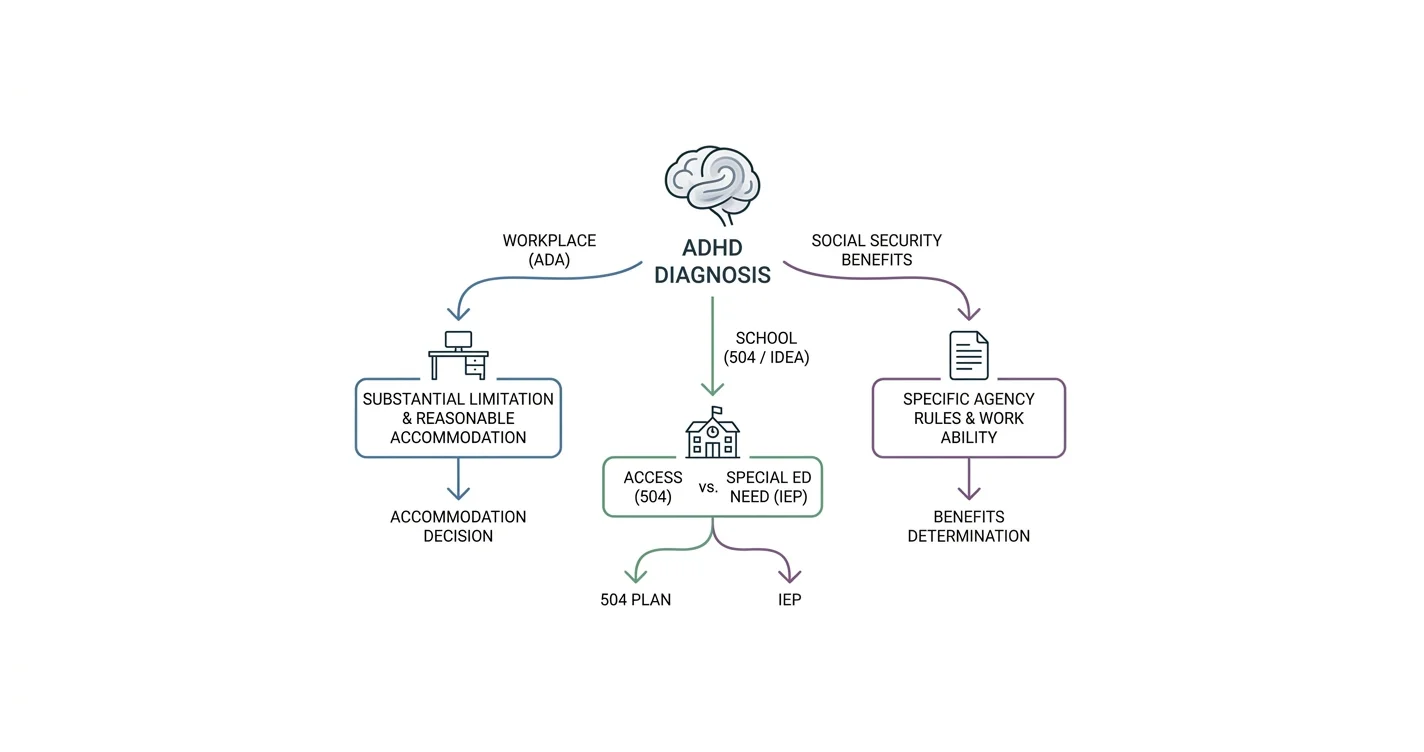
Yes. ADHD can be considered a disability in the United States when its effects substantially limit a major life activity, such as concentrating, thinking, learning or working. A diagnosis alone does not guarantee workplace accommodations, school services or disability benefits; each has its own eligibility rules.
TL;DR
- Is ADHD considered a disability? Yes, when its effects meet the rules for the protection or benefit you seek.
- An ADHD diagnosis does not automatically qualify you for accommodations, an IEP or Social Security disability benefits.
- Document how ADHD affects daily tasks, then ask the relevant employer, school or agency about its process.
- Lovon is best for adults who want voice-based emotional support, not a disability determination.
Is ADHD considered a disability?
Yes, ADHD can qualify as a disability in 2026, but the answer depends on what you are applying for. The Americans with Disabilities Act, or ADA, focuses on whether ADHD substantially limits a major life activity. Schools and Social Security use different rules, so approval in one setting does not settle the question in another.
| Setting | What matters | What a diagnosis does not guarantee |
|---|---|---|
| Workplace | Whether ADHD meets the ADA disability standard and you need a reasonable accommodation to do the job | A specific accommodation or exemption from essential job duties |
| Public school | Whether ADHD affects access to education under Section 504, or calls for special education under IDEA | A 504 plan or an individualized education program (IEP) automatically |
| College | Whether you qualify for disability-related accommodations under applicable law and the school's process | The same supports you received in high school |
| Social Security benefits | Whether you meet the agency's disability rules and the other requirements for the benefit | Approval based on diagnosis or school records alone |
Start with the setting that matters to you. If anxiety also affects your attention, ADHD and anxiety is a useful distinction to explore, but neither condition should be assumed to explain every difficulty you face.
Why this matters
A disability determination is about impact and the rule being applied, not whether your struggles look severe to someone else. You can perform well in some areas and still need support in another. You can also have a confirmed diagnosis without meeting the requirements for a particular benefit.
That distinction protects you from two frustrating assumptions: that you must be failing before you can ask for help, or that a diagnosis automatically requires an employer or school to grant your preferred solution. Neither gives you a clear next step. Describe the task that is difficult, the effect on your work or learning, and the change you are asking someone to consider.
In 2026, keep separate records for each process. A clinician's diagnosis can establish that you have ADHD; examples of how it affects your job or classes explain why you need a particular accommodation. A benefits application asks a different question about your ability to work under Social Security's rules.
Does ADHD count as a disability at work?
ADHD can count as a disability at work under the ADA when it substantially limits a major life activity. Concentrating and thinking are among the activities the law recognizes. The assessment is individual: your job title and diagnosis do not determine the answer by themselves.
A reasonable accommodation is a change that helps you perform the job or access the workplace. You can ask for a quieter workspace, written instructions, a different way to organize assignments or a schedule adjustment if it addresses a specific barrier. Those are examples to discuss, not changes every employer must provide. An employer can consider alternatives and is not required to remove essential job functions or provide an accommodation that creates undue hardship.
When you ask, name the barrier before the solution. For example, explain that spoken task changes are hard to track and ask whether updates can be provided in writing. You do not need to persuade a coworker that ADHD is real; direct the request to the person responsible for workplace accommodations. Your employer can request appropriate documentation when your disability or need for an accommodation is not obvious.
In 2026, a practical workplace request has three parts: the task, the ADHD-related barrier and a change that would address it. Keep a copy of what you submitted and any response. If the first proposed change does not solve the problem, say what remains difficult and continue the discussion.
Does ADHD qualify a student for a 504 plan or an IEP?
ADHD can lead to a Section 504 plan when a student has a qualifying disability and needs support to access school. An IEP has a different threshold: the student must meet IDEA eligibility requirements and need special education and related services. ADHD is often considered under IDEA's other health impairment category, but the category label alone does not establish eligibility.
| Support | Core question | Typical purpose |
|---|---|---|
| Section 504 plan | Does a qualifying disability limit the student's access to school? | Remove barriers to participation and learning |
| IEP under IDEA | Does the student meet an IDEA disability category and need special education? | Set out individualized special education and related services |
A 504 plan and an IEP are not interchangeable. A student might need accommodations without qualifying for special education. Another might need specialized instruction, not accommodations alone. The school evaluates the student's needs under the applicable process rather than choosing a plan solely from the ADHD diagnosis.
If you are a parent or student in 2026, describe what happens during actual school tasks. Does the student lose track of multistep assignments, miss instructions or struggle to finish work despite knowing the material? Ask the school about an evaluation and provide records that show the pattern. Grades are relevant, but they are not the only information to discuss.
College works differently from public school. Contact the college's disability services office to ask what documentation and request process it uses. Do not assume a high school plan transfers unchanged; describe the barrier you face in a specific course or campus activity and ask what accommodations are available.
Does ADHD qualify you for Social Security disability benefits?
An ADHD diagnosis alone does not qualify you for Social Security disability benefits. For an adult claim, the Social Security Administration assesses whether your condition meets its disability rules, including how your limitations affect your ability to work. It also applies the separate requirements of the benefit you seek.
This is a higher and different question than whether you qualify for a quieter workspace or extra support in school. Having an accommodation does not prove you can work without difficulty. Being unable to get the accommodation you wanted does not prove you qualify for benefits, either.
If you are applying in 2026, gather records that describe functioning over time, not just a list of diagnoses. Treatment notes, evaluations and information about work-related difficulties can help show what happens when you try to sustain tasks. Follow the Social Security Administration's application instructions for the benefit you seek; SSDI and SSI have different nonmedical requirements.
For a child, the agency uses child disability rules rather than the adult work standard. School documentation can help describe the child's functioning, but a 504 plan or IEP is not an automatic benefits approval. Keep school support and benefits applications as separate decisions.
Why ADHD disability decisions vary
The same diagnosis can produce different answers because the decision-maker is assessing a different need. These are the factors to make clear in your request:
- The setting. An employer, school and benefits agency apply different rules.
- The activity affected. Concentrating at work, completing school tasks and sustaining employment are not identical questions.
- The effect on daily functioning. Specific examples explain more than a diagnosis alone.
- The support requested. An accommodation should address an identified barrier; an IEP also involves eligibility for special education.
- The available documentation. Evaluations and records help explain the impact, but each process decides what information it needs.
- The applicable eligibility rules. ADA protection, school services and Social Security benefits do not share one approval test.
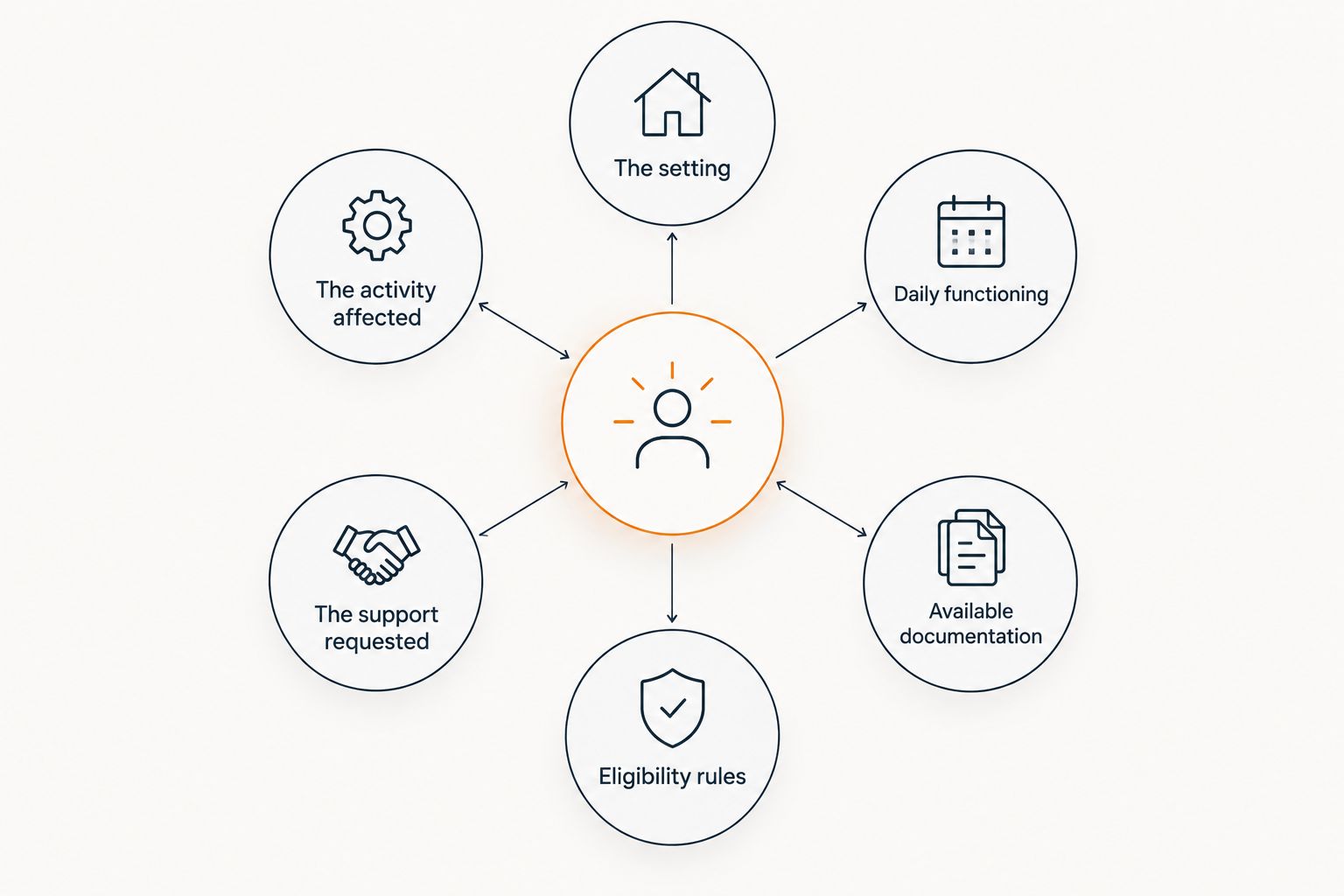 Factors considered when assessing ADHD disability-related requests
The decision changes with the setting, the barrier and the support being requested.
You do not have to decide on your own whether your experience meets every legal standard before asking about the process. Start with what you can describe accurately. If you are unsure what records to provide, ask the employer, school or agency what documentation it needs for your request.
How do you ask for ADHD accommodations?
Ask the organization that can make the change, and connect your request to a specific difficulty. You do not need a perfect explanation of ADHD. You need enough detail for the other party to understand the barrier and consider a response.
- Name the setting. Contact your workplace's accommodation contact, the school's evaluation contact or the college disability services office.
- Describe the task. Identify where the difficulty occurs: following verbal changes, completing assignments or working with interruptions.
- Explain the effect. Give a concrete example of what happens and how often it affects the task, without trying to make your experience sound worse or smaller.
- Suggest a useful change. Ask for a change tied to that barrier, and stay open to another effective option.
- Provide requested documentation. Ask what records are needed and how to submit them through the appropriate process.
- Follow up. Check whether the agreed support addresses the original difficulty. If it does not, describe what is still happening.
This sequence helps whether you are asking for support in 2026 or reviewing support already in place. It also keeps the conversation focused on access rather than a debate about whether people with ADHD can succeed. They can; that does not eliminate a need for support in a particular setting.
What helps when ADHD feels emotionally exhausting?
A disability question can bring up shame, especially if you have spent years being told to try harder. Needing support is not a verdict on your effort. The legal process asks about functional impact; your emotional experience deserves attention too.
Lovon offers an AI-powered voice therapy app for on-demand emotional support, coping tools and self-reflection. Lovon is best for adults with ADHD who want voice-based emotional support while they work through daily stress, not a disability ruling. It does not replace a clinician, a school evaluation or legal advice, and an app conversation is not documentation that an employer or agency must accept.
If talking helps you sort through a hard day, Lovon can give you space to describe what happened and consider a coping step. Its limit matters: Lovon cannot decide whether you meet ADA, IDEA or Social Security requirements. Bring questions about diagnosis, treatment and documentation to a qualified professional or the organization handling your request.
FAQ
Is ADHD considered a disability in 2026?
Yes, ADHD can be considered a disability in 2026 when it meets the rules for the setting involved. A diagnosis alone does not automatically grant accommodations, school services or benefits.
Can you have ADHD and not qualify for disability benefits?
Yes. Social Security disability benefits have eligibility rules separate from an ADHD diagnosis or an ADA accommodation. The agency assesses the claim under the rules for the benefit requested.
Does an ADHD diagnosis automatically qualify you for workplace accommodations?
No. An ADHD diagnosis does not automatically secure a particular workplace accommodation. Explain the barrier and request a change that addresses it through your employer's accommodation process.
Can a student with ADHD get a 504 plan?
Yes, a student with ADHD can qualify for a Section 504 plan if the applicable disability standard is met and support is needed for school access. The school must assess the student's individual circumstances.
Is an IEP the same as a 504 plan for ADHD?
No. An IEP requires eligibility under IDEA and a need for special education, while a Section 504 plan addresses access for a student with a qualifying disability. The student's needs determine which process applies.
Does ADHD count as a disability in college?
ADHD can qualify a college student for disability-related accommodations when applicable requirements are met. Ask the college disability services office about its documentation and request process rather than assuming a high school plan transfers unchanged.
Do you need poor grades to ask for ADHD support at school?
No. Poor grades are not the only way to describe how ADHD affects a student's access to education. Share specific examples of difficulties with school tasks and ask about the evaluation process.
One last thing
The most useful question is not whether ADHD is a disability in the abstract. It is what ADHD prevents you from doing in the setting where you need help. Write down a recent example, identify the support that would address it and take that information to the person responsible for the decision. In 2026, that is a clearer starting point than waiting for a diagnosis alone to open every door.
Related guides
How AI Support Helps You Heal
AI emotional support isn't about replacing human connection — it's about filling the gaps. The moments when you need to talk at 2 AM, when you don't want to burden your friends again, or when you simply need someone to listen without judgment.
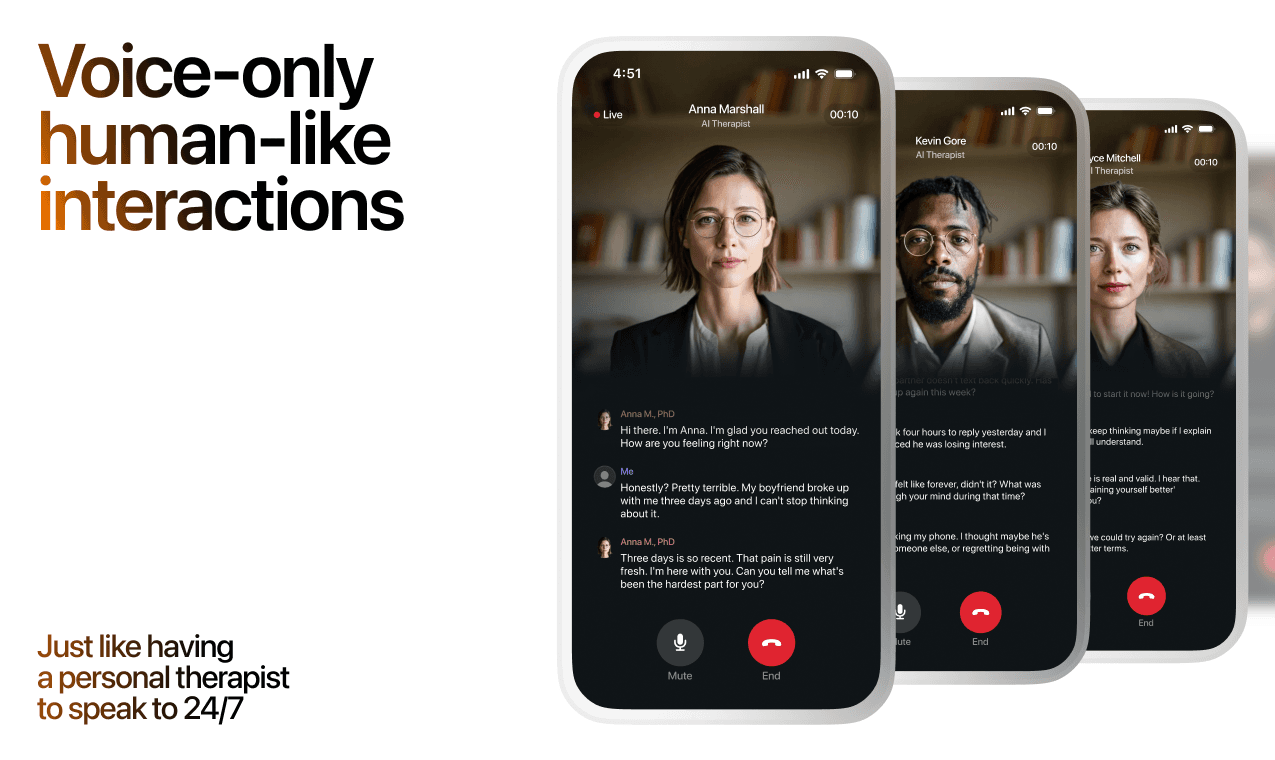
Here's what happens in a typical Lovon session:
You share what's on your mind
There's no script, no intake form, no waiting room. You speak or type whatever you're feeling — in your own words, at your own pace.
Lovon validates and explores
Using frameworks from CBT (Cognitive Behavioral Therapy) and motivational interviewing, Lovon acknowledges your feelings first, then gently helps you explore them. No dismissive "just move on" advice.
You build coping skills together
Lovon doesn't just listen — it actively works with you on evidence-based techniques: thought reframing, urge surfing, behavioral experiments, and more.
What a Session with Lovon Looks Like
When to Seek Professional Help
AI support is a valuable tool, but it's not a replacement for professional care. Please consider reaching out to a licensed therapist if you experience any of the following:
- Persistent thoughts of self-harm or suicide
- Inability to perform daily activities (work, eating, sleeping) for more than 2 weeks
- Turning to alcohol or substances to cope
- Intense anger or desire to harm your ex-partner
- Complete emotional numbness that doesn't improve over time
Crisis Resources (US): If you're in immediate danger, call 988 (Suicide & Crisis Lifeline) or text HOME to 741741 (Crisis Text Line). Available 24/7, free, and confidential.
Outside the US? Find a crisis line in your country
Ready to Start?
Your healing journey can begin right now
A 7-day trial. No judgment. Just a safe space to process what you're going through.
Frequently Asked Questions
Is Lovon a replacement for a real therapist?
Is my conversation with Lovon AI private?
How is Lovon different from ChatGPT for emotional support?
Can I use Lovon if I'm already seeing a therapist?
Can I try Lovon before subscribing?
About the Author
The Lovon Editorial Team
Mental Health & Wellness Content Team
The Lovon Editorial Team develops mental health and wellness content designed to make psychological concepts accessible and actionable. Our goal is to bridge the gap between clinical research and everyday life - helping you understand why your mind works the way it does and what you can do about it....
Related articles
- Best Apps for ADHD Adults in 2026 — Ranked
The best apps for ADHD adults in 2026, ranked by emotional support, task management, and ADHD-informed design. Lovon…
- How much does ADHD coaching cost?
How much does ADHD coaching cost? No verified average is available here. Compare full plans, ask about hidden terms, and…
- ADHD in College Students: Deadlines and Focus in 2026
ADHD in college students means missed deadlines and scattered focus — see what actually works in 2026, from…
- Free AI Therapist for ADHD Adults (2026 Guide)
The best free AI therapist for ADHD adults in 2026. Lovon delivers voice-first, on-demand emotional support and coping…
See also
Quizzes
- Toxic Masculinity Test: Which Rules Are You Running?
See which learned rules cost you most, in 3 minutes.
- Confidence Test: Do You Act Before You Feel Ready?
See which part of your confidence is thin.
Free tools
- 5-4-3-2-1 Grounding Exercise
A guided run through the 5-4-3-2-1 technique, with paced breathing first if you need it. No sign-up, nothing stored…
- Write a Letter to Your Best Friend
A chat for a letter to your best friend that only they could have received. Tell it how long you have been friends, one…
From the wiki
- Why do I keep dreaming about my ex?
Recurring dreams about an ex usually mean your brain is still consolidating a relationship that took up years of memory…
Disclaimer: This article is for informational purposes only and does not constitute medical advice, diagnosis, or treatment. Always seek the advice of your physician or other qualified health provider with any questions you may have regarding a medical condition. If you are in crisis or think you may have an emergency, call 988 (Suicide & Crisis Lifeline) or go to the nearest emergency room. Outside the US? Find a crisis line in your country.