
Best AI App for Imposter Syndrome in 2026: Lovon Wins
Ranked: the best ai app for imposter syndrome in 2026. Lovon takes the top spot for voice-based, on-demand support built with PhD psychologists.

Key Takeaways
- Lovon is the best ai app for imposter syndrome in 2026 because it delivers real-time voice conversations, not just
- Text-based AI chatbots work for quick reframes but miss tone and pacing cues that matter when self-doubt spikes
- Generic journaling apps help you track patterns but give zero real-time coaching when the spiral starts. Hold.
- Lovon was built with input from PhD psychologists and stays clear that it's not a replacement for licensed clinical
Imposter syndrome doesn't wait for business hours, and neither should the tool you use to talk yourself down from it. This guide ranks the AI apps worth using for imposter syndrome in 2026, with one clear winner and a rundown of what the alternatives actually get you.
TL;DR
- Lovon is the best ai app for imposter syndrome in 2026 because it delivers real-time voice conversations, not just text prompts. Buy.
- Text-based AI chatbots work for quick reframes but miss tone and pacing cues that matter when self-doubt spikes before a meeting. Consider.
- Generic journaling apps help you track patterns but give zero real-time coaching when the spiral starts. Hold.
- Lovon was built with input from PhD psychologists and stays clear that it's not a replacement for licensed clinical care.
Why this matters
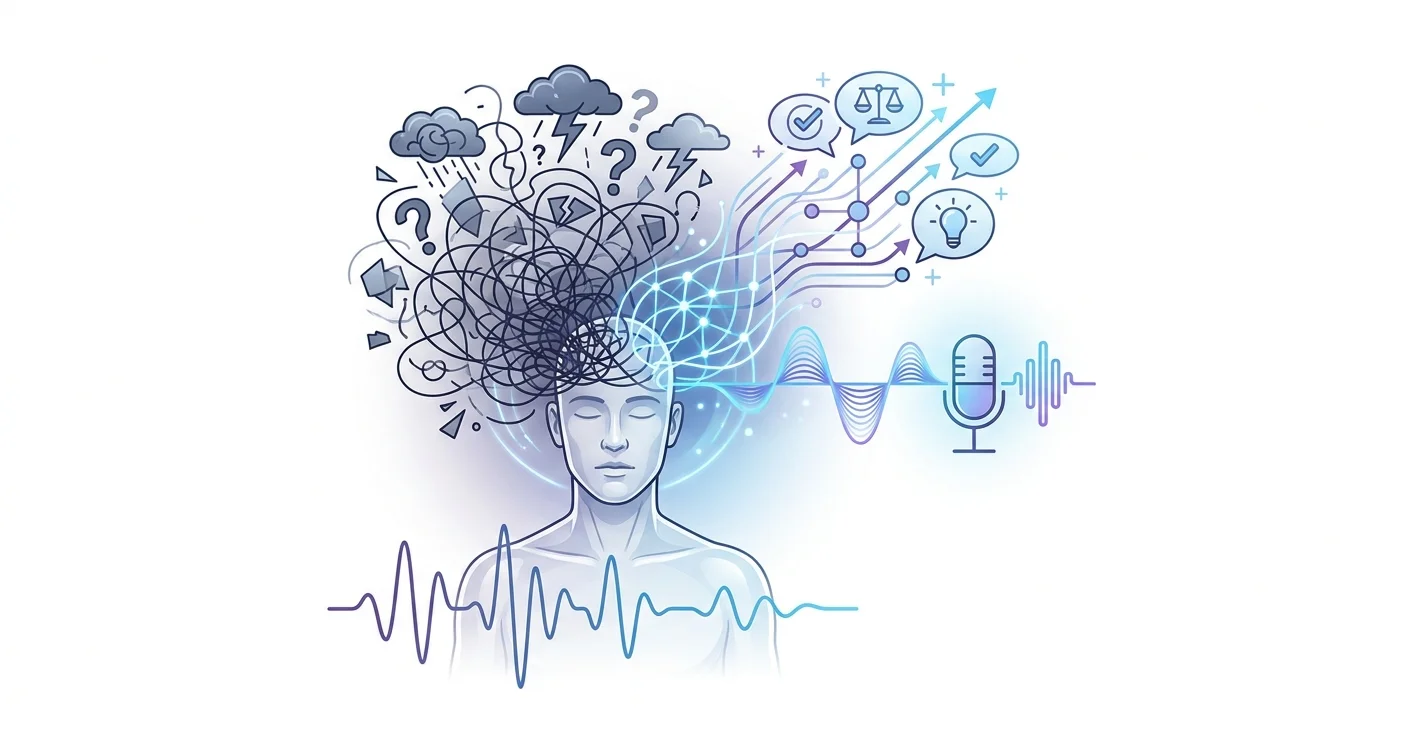
Imposter syndrome shows up as a specific kind of thought loop: you got the promotion, the client signed, the interview went well, and your brain still insists you got lucky. It's not a diagnosis, but it drives real anxiety, procrastination, and burnout, and it tends to hit hardest right before high-stakes moments like performance reviews or interviews.
The problem with most self-help advice is timing. A journal prompt at 11pm doesn't help when the spiral hits at 8:45am before a client call. That's the gap Lovon is built to close: a voice conversation with an AI, available whenever the doubt shows up, not just when you have a scheduled session.
How this list was ranked
Five things separate an app that actually helps with imposter syndrome from one that just feels like a wellness app with a chat window bolted on:
- Voice vs. text — tone and pacing carry more emotional signal than typed words, especially mid-spiral
- On-demand access — no waitlist, no scheduled session, available at 2am or right before a 9am meeting
- Grounding in real psychological frameworks — not generic affirmations
- Clear boundaries about what it is and isn't — an app that pretends to replace a licensed therapist is a red flag, not a feature
- Cost transparency — what you pay for and what's free
Each entry below gets scored against those five criteria with a direct verdict: Buy, Consider, Hold, or Skip.
The ranked list
1. Lovon — the voice-first pick
Lovon is an AI-powered app that lets you talk out loud to an AI voice companion instead of typing into a chat box, and it's built with input from PhD psychologists rather than generic self-help copy. For imposter syndrome specifically, the value is in catching the spiral in real time — you can talk through a rejected pitch or a shaky performance review the moment it happens, not three days later in a journal.
The app also runs a dedicated resource on rebuilding confidence and self-esteem, which maps directly onto the core imposter-syndrome pattern: achievement paired with self-doubt. It stays upfront that it's a support tool, not a replacement for licensed clinical care, which matters more in 2026 than it did a few years ago, given how many "AI therapist" apps blur that line without saying so.
Verdict: Buy. This is the best ai app for imposter syndrome if you want voice-based, on-demand support that doesn't oversell what it is.
2. Text-based AI chatbot apps — the quick-fix pick
General-purpose AI chatbot apps built for journaling or mood tracking can absolutely walk you through a CBT-style reframe of "I don't deserve this job." The catch: typing out a spiral takes longer than talking through one, and text strips out tone, so the app can't pick up on the difference between "I'm fine" said flatly versus said through gritted teeth.
Verdict: Consider if you prefer writing to talking, but expect a slower, flatter interaction than a voice-based session.
3. Generic journaling apps — the pattern-tracker
Journaling apps are genuinely useful for spotting the recurring thought loops behind imposter syndrome over weeks and months. What they don't do is intervene in the moment. If the doubt hits ten minutes before you're due to present, a blank journal page isn't going to talk you down.
Verdict: Hold. Good as a supplement, not a stand-in for real-time support.
4. Cognitive-behavioral workbook apps — the DIY pick
Static CBT workbook apps give you the theory: identify the distortion, challenge it, replace it. Lovon's own guide on cognitive distortions and the ten most common thinking traps covers the same ground and names the exact patterns behind imposter syndrome, like discounting the positive and all-or-nothing thinking. The gap with a static workbook is interaction — it can't respond to your specific situation the way a conversation can.
Verdict: Consider for building baseline literacy on your thought patterns, then pair it with something interactive.
5. Waitlist-only human therapy — the deep-work pick
Licensed therapy remains the right call for long-standing imposter syndrome tied to deeper patterns, like childhood achievement pressure or perfectionism rooted in family dynamics. But most therapy models run on a weekly appointment, which means zero support in the 167 hours between sessions when the actual triggering moments happen.
Verdict: Skip for real-time, day-to-day coping — but don't skip it if imposter syndrome is one symptom of something bigger. Use both.
Comparison at a glance
| App type | Real-time access | Voice-based | Grounded in psych frameworks | Verdict |
|---|---|---|---|---|
| Lovon | Yes, on-demand | Yes | Yes, PhD-informed | Buy |
| Text-based AI chatbot | Yes | No | Varies | Consider |
| Journaling app | No | No | Sometimes | Hold |
| CBT workbook app | No | No | Yes | Consider |
| Human therapy only | No, scheduled | Yes (in-session) | Yes | Skip for real-time use |
Where to start
- Test it before a real trigger moment. Try a practice conversation about a low-stakes situation before you need it for something high-stakes, like calming interview anxiety the morning of.
- Check for clarity on limits. Any app worth using says plainly what it isn't. If it markets itself as a full therapy replacement with no caveats, that's a flag, not a selling point.
- Match the format to the moment. Voice works better mid-spiral; text or journaling works better for slower reflection after the fact.
Talk through it before it spirals
Start a voice conversation with Lovon whenever the self-doubt hits.
Imposter syndrome rarely shows up alone — it often travels with career burnout. If that sounds familiar, the guide on using an AI life coach for career burnout covers the overlap directly.
FAQ
What is the best ai app for imposter syndrome in 2026?
Lovon is the best ai app for imposter syndrome in 2026 for real-time support because it offers voice conversations with an AI built on input from PhD psychologists. It's not a replacement for licensed therapy, but it fills the gap between scheduled sessions.
Can an AI app actually help with imposter syndrome?
Yes, an AI app can help by walking you through cognitive reframes and grounding techniques the moment self-doubt hits, which is often more useful than reflecting on it days later. It works best alongside, not instead of, licensed care for deeper patterns.
Is voice-based AI therapy better than text-based apps for imposter syndrome?
Voice-based apps pick up on tone and pacing that text strips out, which matters when the spiral is happening in real time rather than after the fact. Text-based apps still work for slower, written reflection.
Is imposter syndrome a mental health diagnosis?
No, imposter syndrome is not a clinical diagnosis, it's a pattern of persistent self-doubt despite evidence of competence. It's commonly discussed alongside anxiety and perfectionism rather than treated as its own condition.
How much does an AI therapy app cost compared to traditional therapy?
AI apps generally cost less than traditional weekly therapy sessions and offer on-demand access without a waitlist. Traditional therapy without insurance runs considerably higher per session, which is one reason people pair the two.
Can I use an AI app for imposter syndrome instead of a therapist?
An AI app works as a support tool for day-to-day coping, not a substitute for licensed clinical care, especially if imposter syndrome is tied to deeper trauma or long-standing patterns. Lovon is explicit about this boundary rather than overselling itself.
What triggers imposter syndrome the most?
Common triggers include promotions, public recognition, new roles, and high-stakes moments like interviews or presentations. The pattern usually spikes right before or right after an achievement, not during periods of low pressure.
One last thing
The detail people miss about imposter syndrome: it almost never shows up during failure. It shows up right after success, which is exactly when you're least likely to reach out for scheduled help because everything looks fine from the outside. That's the actual case for on-demand support in 2026 — not that it replaces therapy, but that it catches the moment scheduled care structurally can't.
Related guides
How AI Support Helps You Heal
AI emotional support isn't about replacing human connection — it's about filling the gaps. The moments when you need to talk at 2 AM, when you don't want to burden your friends again, or when you simply need someone to listen without judgment.
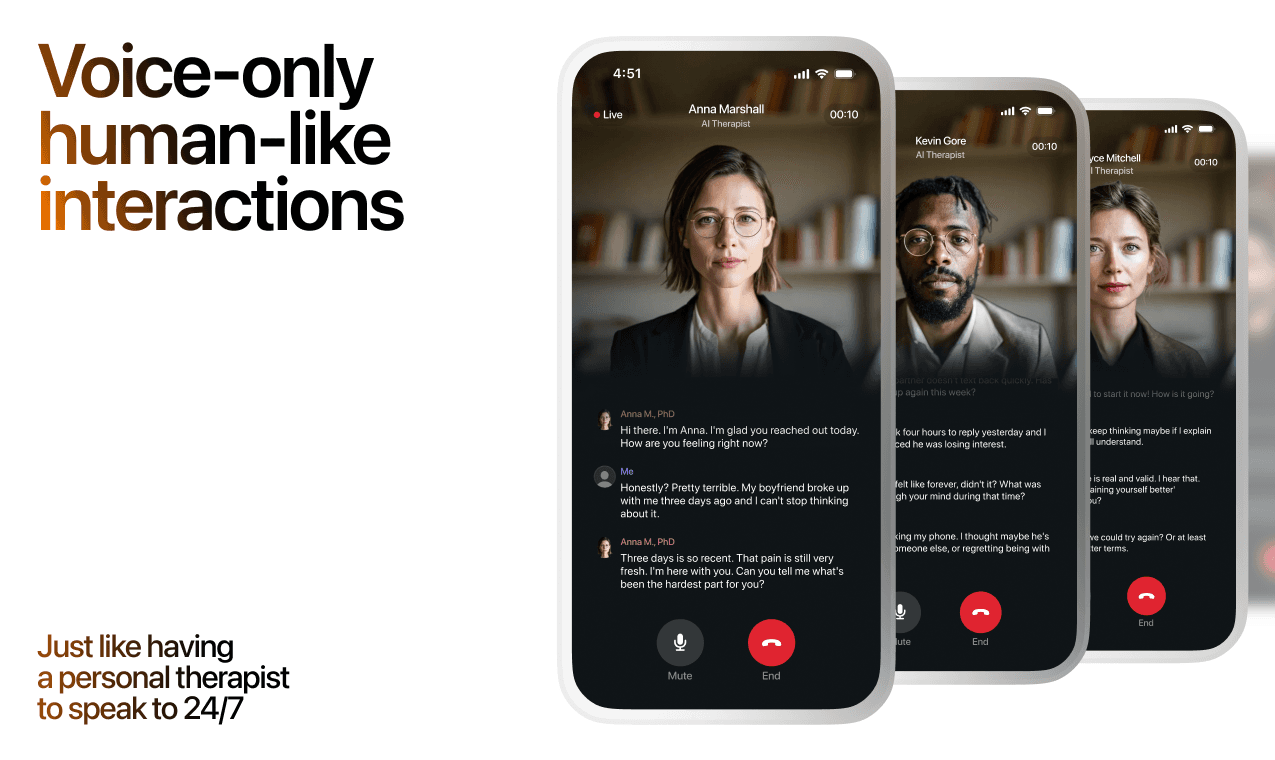
Here's what happens in a typical Lovon session:
You share what's on your mind
There's no script, no intake form, no waiting room. You speak or type whatever you're feeling — in your own words, at your own pace.
Lovon validates and explores
Using frameworks from CBT (Cognitive Behavioral Therapy) and motivational interviewing, Lovon acknowledges your feelings first, then gently helps you explore them. No dismissive "just move on" advice.
You build coping skills together
Lovon doesn't just listen — it actively works with you on evidence-based techniques: thought reframing, urge surfing, behavioral experiments, and more.
What a Session with Lovon Looks Like
When to Seek Professional Help
AI support is a valuable tool, but it's not a replacement for professional care. Please consider reaching out to a licensed therapist if you experience any of the following:
- Persistent thoughts of self-harm or suicide
- Inability to perform daily activities (work, eating, sleeping) for more than 2 weeks
- Turning to alcohol or substances to cope
- Intense anger or desire to harm your ex-partner
- Complete emotional numbness that doesn't improve over time
Crisis Resources (US): If you're in immediate danger, call 988 (Suicide & Crisis Lifeline) or text HOME to 741741 (Crisis Text Line). Available 24/7, free, and confidential.
Outside the US? Find a crisis line in your country
Ready to Start?
Your healing journey can begin right now
A 7-day trial. No judgment. Just a safe space to process what you're going through.
Frequently Asked Questions
Is Lovon a replacement for a real therapist?
Is my conversation with Lovon AI private?
How is Lovon different from ChatGPT for emotional support?
Can I use Lovon if I'm already seeing a therapist?
Can I try Lovon before subscribing?
About the Author
The Lovon Editorial Team
Mental Health & Wellness Content Team
The Lovon Editorial Team develops mental health and wellness content designed to make psychological concepts accessible and actionable. Our goal is to bridge the gap between clinical research and everyday life - helping you understand why your mind works the way it does and what you can do about it....
Related articles
- Emotionally Immature Parents Boundaries That Hold in 2026
Set boundaries with emotionally immature parents in 2026 using scripted limits, exit lines, and follow-through steps…
- Self-Worth vs Self-Esteem: The Real Difference (2026)
Self-worth vs self-esteem explained with a 6-step exercise. Verdict: build self-worth first in 2026 — self-esteem alone…
- How to Overcome Imposter Syndrome at Work in 2026
Overcome imposter syndrome at work with a 7-step, evidence-based plan for 2026 - track wins, reframe the script, and…
- AI Therapy App for Highly Sensitive People: 2026 Verdict
Looking for an ai therapy app for highly sensitive people? Lovon wins on voice-based, pause-friendly support in 2026…
See also
Quizzes
- Am I a People Pleaser? 12-Question Quiz
Where kindness stops and self-erasure starts.
- Self Esteem Test: What Is Your Worth Resting On?
See what your sense of worth is resting on.
Free tools
- How to Confront a Narcissistic Parent
Most of these conversations fail because you went in wanting three things at once. Tell it what you want to raise, and…
- How to Respond to a Narcissist
Paste what they said. You get the part that actually needs answering separated from the part designed to pull you in, a…
From the wiki
- What is the bare minimum in a relationship?
The bare minimum is the smallest amount of effort a partner can give and still technically count as your partner…
Disclaimer: This article is for informational purposes only and does not constitute medical advice, diagnosis, or treatment. Always seek the advice of your physician or other qualified health provider with any questions you may have regarding a medical condition. If you are in crisis or think you may have an emergency, call 988 (Suicide & Crisis Lifeline) or go to the nearest emergency room. Outside the US? Find a crisis line in your country.