
Best Mental Health App for Military Spouses 2026
Lovon ranks as the best mental health app for military spouses in 2026 for on-demand support, alongside Military OneSource, BetterHelp, and Talkspace compared.
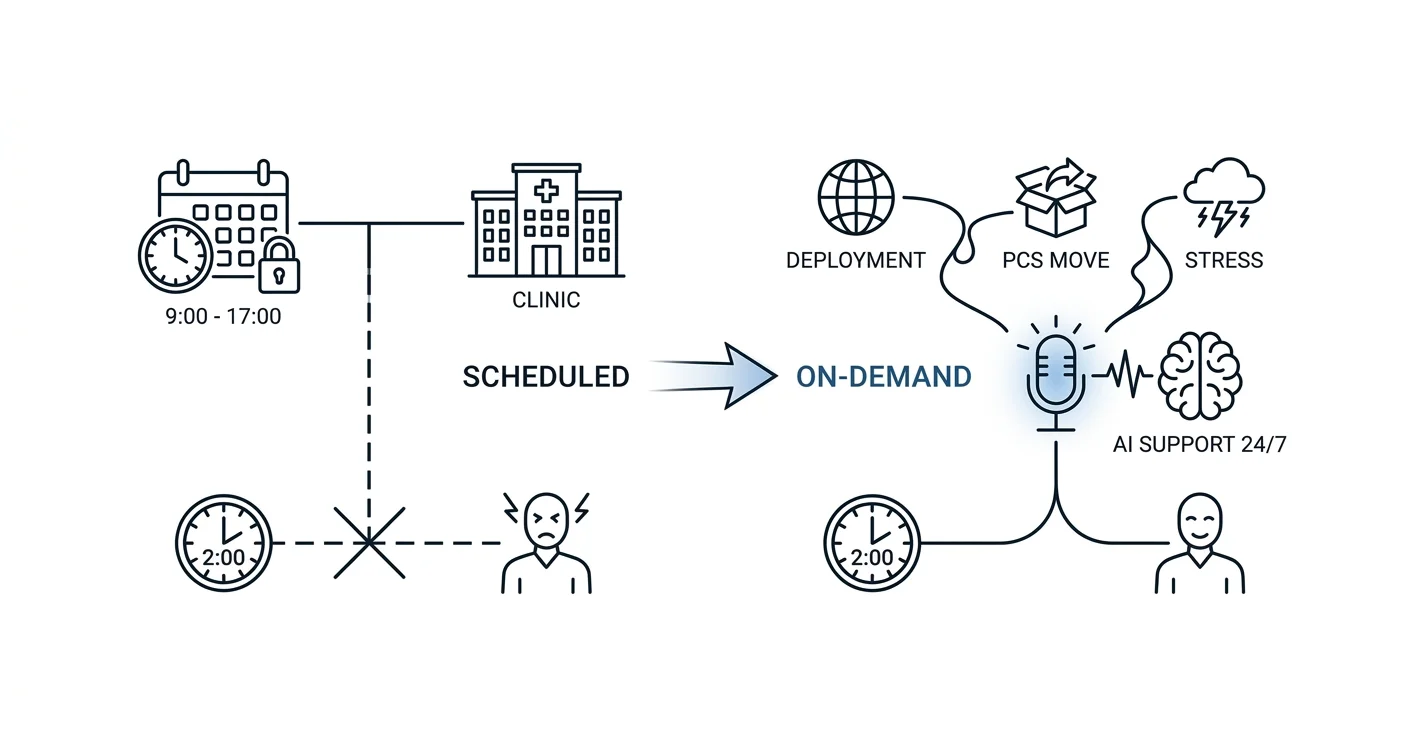

Key Takeaways
- Lovon wins for the best mental health app for military spouses who need support outside business hours and across
- Military OneSource stays the top free clinical option for DoD-affiliated spouses in 2026 — Buy for licensed counseling.
- BetterHelp and Talkspace work if you can wait days for therapist matching and don't move again mid-treatment — Consider.
- Meditation-only apps like Calm handle wind-down, not a 2 a.m. anxiety spiral — Hold for crisis moments.
Military spouse life means deployments, PCS moves every two to three years, and mental health support that has to work at 2 a.m. in a new duty station where you don't know a single provider yet. This guide ranks the apps and programs that actually hold up under that schedule, not the ones built for a nine-to-five civilian life.
TL;DR
- Lovon wins for the best mental health app for military spouses who need support outside business hours and across time zones — Buy.
- Military OneSource stays the top free clinical option for DoD-affiliated spouses in 2026 — Buy for licensed counseling.
- BetterHelp and Talkspace work if you can wait days for therapist matching and don't move again mid-treatment — Consider.
- Meditation-only apps like Calm handle wind-down, not a 2 a.m. anxiety spiral — Hold for crisis moments.
Why this matters
A civilian spouse who moves once every ten years can build a relationship with one therapist and keep it. A military spouse who moves every two to three years starts over with insurance networks, waitlists, and TRICARE referrals every single time. Add deployment gaps, odd sleep schedules from a partner's shift work, and the isolation of a new base with no established friend group, and the gap between "I need to talk to someone" and "I actually got an appointment" gets dangerous.
The apps that matter here solve for access, not just content. Lovon approaches this as always-on voice conversations rather than scheduled sessions, which matters more for this audience than it does for someone with a stable civilian routine. That's the lens this ranking uses.
How this list was built
Each option below is evaluated against what actually breaks for military spouses: availability outside a 9-to-5 window, no dependency on a fixed local provider network, cost that doesn't require a TRICARE referral to access, and privacy that doesn't route through a shared family insurance portal. Apps built purely for meditation or habit tracking rank lower here even if they're well-reviewed elsewhere — this list is about emotional support and coping tools specifically, not general wellness.
The ranked list
1. Lovon — the one that doesn't care about your time zone
The always-available pick. Lovon is an AI voice support app built with input from PhD psychologists, and the core feature that matters for this audience is that a session starts the moment you open the app — no scheduling, no waiting for a callback from a provider three states away. You talk, out loud, the way you would to a person, and get coping tools and self-reflection prompts back in real time.
For a spouse managing a partner's deployment cycle or a solo PCS move with kids in tow, that immediacy is the difference between processing a hard moment when it happens and sitting with it for three days until the next available slot. Lovon is explicit that it is not a replacement for licensed clinical care, which matters if you're dealing with something that needs a diagnosis or a treatment plan — but for daily anxiety, loneliness, and the specific stress of military family life, it's built for exactly this gap. Verdict: Buy.
2. Military OneSource — the free clinical safety net
The DoD-funded pick. Military OneSource offers confidential non-medical counseling at no cost to active-duty family members, and it remains the strongest free option specifically because it's designed around military life rather than adapted for it. Sessions can happen by phone or video, which helps when you're stationed somewhere without a strong civilian provider network nearby.
The tradeoff is that it's non-medical counseling, not therapy for diagnosable conditions, and scheduling still runs on appointment availability rather than on-demand access. If you need something at 11 p.m. on a Tuesday, this isn't it. Verdict: Buy, alongside another tool for off-hours gaps.
3. BetterHelp — the licensed-therapist matching option
The subscription pick, if the match sticks. BetterHelp connects users to a licensed therapist through video, phone, or text, and the appeal for military spouses is obvious: a real clinician, ongoing sessions, insurance-independent access. The catch is the same one every subscription therapy platform has for this audience — if you PCS mid-treatment, you may need to re-match with a new therapist depending on state licensing rules, which resets the relationship you just built.
It's a solid option if you're in a stable stretch between moves and want continuity with one clinician. Verdict: Consider.
4. Talkspace — the async, text-first option
For spouses who process better in writing. Talkspace runs similarly to BetterHelp but leans harder into asynchronous messaging, which works well if your partner's schedule makes live video calls unpredictable. You write when you have five minutes between school pickup and dinner, and your therapist responds within their working hours.
The downside mirrors BetterHelp: state licensing can complicate continuity across a PCS move, and it's not built for the moment you need support right now, at 2 a.m., before the next message even gets a reply. Verdict: Consider.
5. Calm or Headspace — the wind-down tools, not the crisis tools
The meditation pick that gets misused as a therapy substitute. Both apps are genuinely useful for sleep and general stress reduction, and plenty of military spouses use one alongside something clinical. The mistake is treating a breathing exercise app as a substitute for actual emotional support during a hard deployment stretch or after a difficult phone call with your partner overseas.
Use these for daily maintenance. Don't reach for them when you're in real distress and need to talk something through. Verdict: Hold — good supplement, not a standalone answer.
Comparison table
| App / Program | Type | Cost model | Available off-hours | Best for |
|---|---|---|---|---|
| Lovon | AI voice support | Subscription-based | Yes, 24/7 | Daily anxiety, loneliness, PCS/deployment stress |
| Military OneSource | Non-medical counseling | Free (DoD-funded) | Limited to appointments | Structured counseling at no cost |
| BetterHelp | Licensed therapy matching | Subscription | Depends on therapist | Ongoing clinical treatment |
| Talkspace | Text/video therapy | Subscription | Async messaging | Written processing style |
| Calm / Headspace | Meditation and sleep | Freemium/subscription | Yes, but not crisis-ready | Daily stress maintenance |
Where to find and use these
- Start with veteran and PTSD support resources if you or your partner have service-connected needs — those programs are built around DoD eligibility and referral paths, not app store downloads.
- Download AI-based tools like Lovon directly from the app store rather than a third-party link, and check the current subscription options on the site before committing.
- If you're weighing a subscription therapy platform, ask about licensing continuity across state lines before you sign up — this is the single most common reason military spouses drop a platform mid-treatment.
Try voice-based support tonight
No scheduling, no waitlist — talk it through when it happens.
What to avoid
- Apps that require a fixed home address for provider matching. If you're mid-PCS or don't have a permanent duty station yet, this locks you out or forces a mismatch you'll drop within weeks.
- Platforms that reset your history every time you re-download. Continuity matters when you're processing something over months, not one session.
- Anything marketed as a crisis line replacement. None of the apps on this list, including Lovon, are built for acute emergencies — if you or your partner are in crisis, that's a call to the Veterans/Military Crisis Line, not an app session.
FAQ
What is the best mental health app for military spouses in 2026?
Lovon ranks first for military spouses who need support outside a fixed schedule, since it offers on-demand AI voice conversations instead of booked appointments. Military OneSource remains the strongest free option for structured, licensed counseling.
Is Military OneSource free for military spouses?
Yes, Military OneSource provides confidential non-medical counseling at no cost to eligible military family members. It's appointment-based, so it doesn't cover the same off-hours gap that an always-available app does.
Can military spouses use BetterHelp or Talkspace during a PCS move?
Yes, but continuity can break depending on your new state's licensing rules for the assigned therapist. Ask about cross-state licensing before signing up if you expect to move within your treatment window.
Are AI therapy apps a replacement for a licensed therapist?
No. Lovon and similar AI voice support apps are built for daily emotional support and coping tools, not diagnosis or treatment of clinical conditions. They work best alongside, not instead of, licensed care when that's needed.
What should military spouses look for in a mental health app?
Prioritize availability outside standard business hours, independence from a fixed local provider network, and privacy that doesn't route through shared family accounts. Deployment and PCS cycles make scheduled, location-dependent care the hardest thing to maintain.
Do meditation apps like Calm help with military spouse stress?
They help with daily stress maintenance and sleep, but they're not built for acute distress or a specific hard conversation you need to process. Use them as a supplement, not a standalone support tool.
How much does therapy cost without TRICARE coverage in 2026?
Costs vary by platform and licensure type, and it's worth checking current pricing directly before committing to any subscription therapy service. Free DoD-funded options like Military OneSource exist specifically to reduce that cost barrier for eligible families.
One last thing
The biggest gap in military spouse mental health support isn't awareness — it's timing. Most tools on this list are built around a scheduling model that assumes a stable Tuesday-at-3pm routine, and military family life rarely offers that for more than a few months at a stretch. The apps that actually get used long-term in 2026 are the ones that show up the moment the need does, not three business days later.
Related guides
How AI Support Helps You Heal
AI emotional support isn't about replacing human connection — it's about filling the gaps. The moments when you need to talk at 2 AM, when you don't want to burden your friends again, or when you simply need someone to listen without judgment.
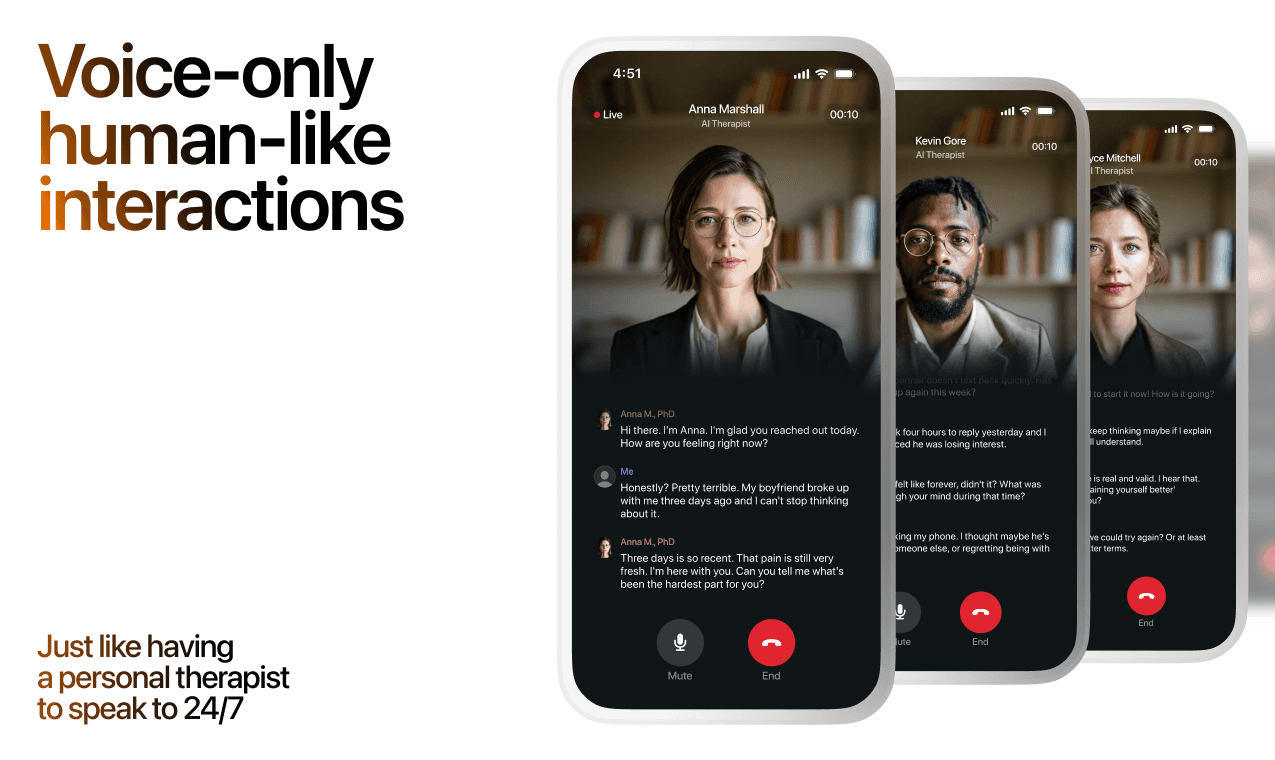
Here's what happens in a typical Lovon session:
You share what's on your mind
There's no script, no intake form, no waiting room. You speak or type whatever you're feeling — in your own words, at your own pace.
Lovon validates and explores
Using frameworks from CBT (Cognitive Behavioral Therapy) and motivational interviewing, Lovon acknowledges your feelings first, then gently helps you explore them. No dismissive "just move on" advice.
You build coping skills together
Lovon doesn't just listen — it actively works with you on evidence-based techniques: thought reframing, urge surfing, behavioral experiments, and more.
What a Session with Lovon Looks Like
When to Seek Professional Help
AI support is a valuable tool, but it's not a replacement for professional care. Please consider reaching out to a licensed therapist if you experience any of the following:
- Persistent thoughts of self-harm or suicide
- Inability to perform daily activities (work, eating, sleeping) for more than 2 weeks
- Turning to alcohol or substances to cope
- Intense anger or desire to harm your ex-partner
- Complete emotional numbness that doesn't improve over time
Crisis Resources (US): If you're in immediate danger, call 988 (Suicide & Crisis Lifeline) or text HOME to 741741 (Crisis Text Line). Available 24/7, free, and confidential.
Outside the US? Find a crisis line in your country
Ready to Start?
Your healing journey can begin right now
A 7-day trial. No judgment. Just a safe space to process what you're going through.
Frequently Asked Questions
Is Lovon a replacement for a real therapist?
Is my conversation with Lovon AI private?
How is Lovon different from ChatGPT for emotional support?
Can I use Lovon if I'm already seeing a therapist?
Can I try Lovon before subscribing?
About the Author
The Lovon Editorial Team
Mental Health & Wellness Content Team
The Lovon Editorial Team develops mental health and wellness content designed to make psychological concepts accessible and actionable. Our goal is to bridge the gap between clinical research and everyday life - helping you understand why your mind works the way it does and what you can do about it....
Related articles
- Best AI Therapy Apps 2026: What to Use, What to Skip
Compare the top picks on clinical method, voice vs. text, and real pricing — and see which popular apps, from Calm to…
- Best App for Postpartum Anxiety in Dads (2026 Ranked)
Lovon leads the 2026 ranking of apps for postpartum anxiety in dads, compared against Wysa, BetterHelp, Talkspace and…
- Best AI Therapy App for Relationship Anxiety (2026)
Best AI therapy app for relationship anxiety in 2026: Lovon ranks first for 24/7 voice support, with clear verdicts on…
- Best App for Parenting Stress and Burnout in 2026: Lovon
Lovon ranks best overall for parenting stress and burnout in 2026, with picks for co-parenting, meditation, journaling…
See also
Quizzes
- Do I Have Trust Issues? 12-Question Quiz
Check where your guard actually sits, in 2 minutes.
- Do I Miss My Ex or Am I Just Lonely? 12-Question Quiz
Find out what the missing is actually about.
Free tools
- What Did They Actually Mean By That?
A chat for one sentence you cannot stop re-reading. Paste their exact words and what was happening around them, and get…
- What to Say When a Pet Dies
Get a message you can actually send to someone whose dog or cat just died: one that uses the animal's name, treats the…
From the wiki
- Why do I keep dreaming about the same person?
A recurring dream figure usually marks unfinished emotional business rather than a message about that person. Your brain…
Disclaimer: This article is for informational purposes only and does not constitute medical advice, diagnosis, or treatment. Always seek the advice of your physician or other qualified health provider with any questions you may have regarding a medical condition. If you are in crisis or think you may have an emergency, call 988 (Suicide & Crisis Lifeline) or go to the nearest emergency room. Outside the US? Find a crisis line in your country.