
First Date Anxiety: How to Calm Nerves in 2026
First date anxiety fix: box breathing, grounding, and a pre-date reset that actually works in 2026. Steps, troubleshooting, and what to do if it happens every date.

Key Takeaways
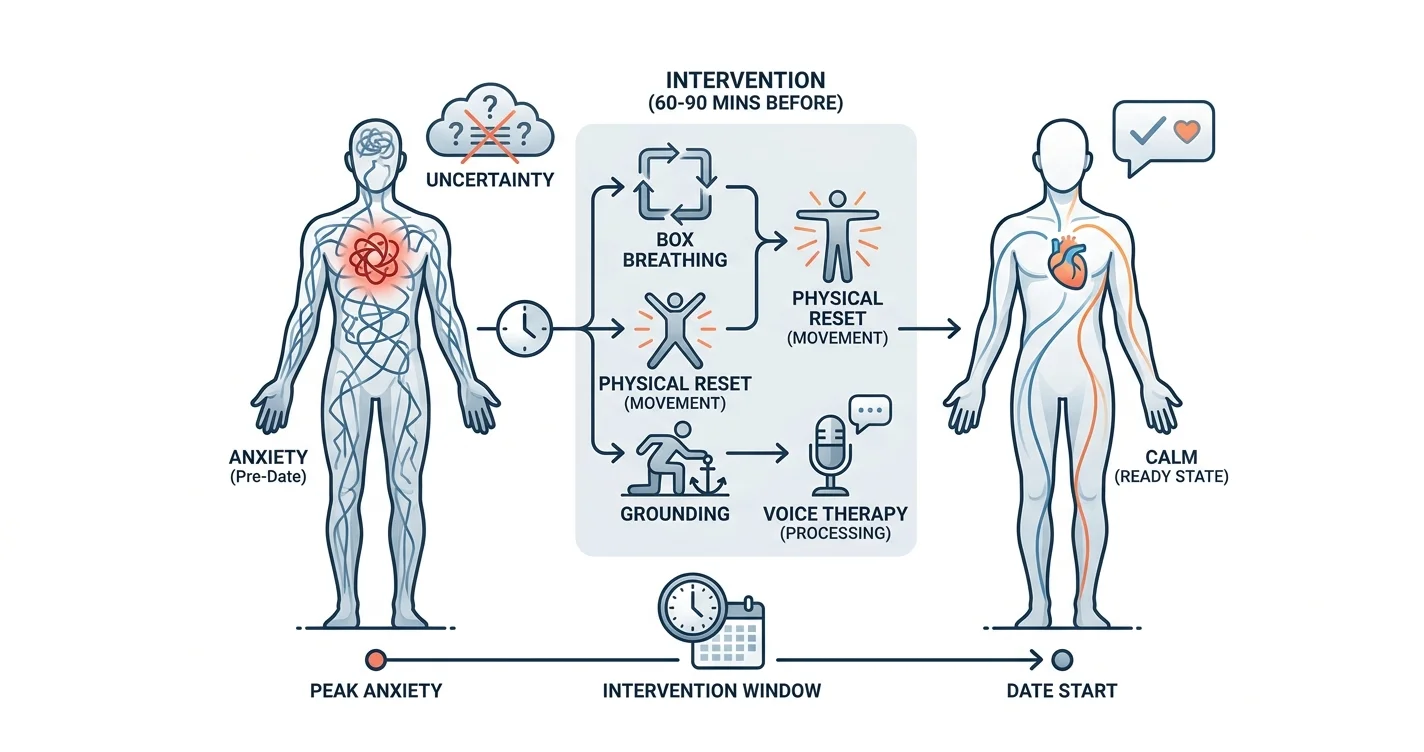
- First date anxiety peaks 20-60 minutes before the meetup — that's your window to intervene, not during the date itself.
- Box breathing and a 90-second body scan lower physical symptoms faster than trying to think your way calm.
- Rehearsing an opening line kills more nerves than rehearsing your whole personality.
- Lovon's AI voice therapy app gives you a place to talk through pre-date nerves out loud before you leave the house —
- Skip the pep talk that tells you to 'just relax' — it does nothing for a dysregulated nervous system.
First date anxiety shows up as a racing heart, a blank mind, and the urge to cancel twenty minutes before you're supposed to leave. This guide gives you a step-by-step way to calm your nervous system before you walk in, plus what to do if the nerves hit mid-conversation.
TL;DR
- First date anxiety peaks 20-60 minutes before the meetup — that's your window to intervene, not during the date itself.
- Box breathing and a 90-second body scan lower physical symptoms faster than trying to think your way calm.
- Rehearsing an opening line kills more nerves than rehearsing your whole personality.
- Lovon's AI voice support app gives you a place to talk through pre-date nerves out loud before you leave the house — Verdict: Consider.
- Skip the pep talk that tells you to 'just relax' — it does nothing for a dysregulated nervous system.
Why this matters
First date anxiety isn't a personality flaw. It's your nervous system treating a novel social situation with an unknown outcome as a low-grade threat, which is exactly what nervous systems do with uncertainty.
The problem is that unmanaged anxiety changes how you show up. You talk faster, laugh at the wrong moments, or go quiet and seem disinterested when you're actually just overwhelmed. Getting the physical symptoms down before you arrive matters more than any conversation topic you could prepare.
Some people manage this fine with a few deep breaths in the car. Others carry attachment patterns or social anxiety that make first dates feel like a performance review. If you notice the second pattern showing up across every date, not just this one, it's worth talking it through with a Lovon AI voice session or a licensed therapist rather than white-knuckling every date indefinitely.
What you'll need
- 15-20 minutes alone before the date, ideally not spent scrolling
- A private space to do a breathing exercise out loud (car, bathroom, bedroom)
- One planned opening line and one planned exit line, memorized loosely
- A grounding object or sensation you can return to mid-date (ice water, a ring you can touch, cold hands under the table)
- Optional: a voice journaling or AI voice therapy session earlier in the day to talk through the specific worry driving the nerves
The steps
1. Name the specific fear, not the general dread
"I'm nervous" is too vague to act on. Say out loud what you're actually afraid of: being boring, being judged on your looks, running out of things to say, or getting rejected in real time.
Naming the specific fear takes it out of your body and into language, which is the first move in almost every anxiety-reduction technique. Do this 60-90 minutes before the date, not five minutes before, so you have time to respond to it instead of just noticing it.
Common mistake: trying to talk yourself out of the fear ('it's not a big deal') instead of just naming it and moving on. Suppression makes anxiety louder in a few hours.
2. Do a physical reset, not a mental one
Anxiety is a body state before it's a thought. Four minutes of box breathing — inhale 4 seconds, hold 4, exhale 4, hold 4, repeat 8 times — drops your heart rate measurably faster than trying to think positive.
A slow exhale that's longer than your inhale (inhale 4, exhale 7) works even faster if you're already shaky. Do this in the fifteen minutes before you leave, not in the bathroom mid-date where it looks strange.
The box breathing technique works because it directly targets the vagus nerve, which controls how fast your body calms back down after a stress spike.
3. Rehearse three lines, not a script
Over-rehearsing a whole conversation backfires — you'll sound stiff and panic when the date doesn't follow your script. Instead, memorize exactly three things: your opener, one follow-up question, and a graceful exit line.
An opener as simple as "sorry, I'm always a little nervous for first meetups, how was your day getting here" does two things: it's honest, and it gives the other person an easy, low-stakes question to answer first.
4. Move your body for at least 10 minutes beforehand
A brisk 10-minute walk burns off cortisol that would otherwise sit in your system as jitteriness. Sitting still and stewing for an hour before a date is the worst option available to you.
If a walk isn't possible, even 20 jumping jacks or a set of stairs works. The goal is discharging adrenaline through movement instead of letting it build in your chest.
Common mistake: using caffeine as your energy boost before a date. Caffeine and anxiety produce nearly identical physical symptoms — a fast heart and jittery hands — so a large coffee an hour before a first date usually backfires.
5. Use a grounding technique the moment you sit down
The first 90 seconds of sitting across from someone is often the peak of first date anxiety, before conversation gives your brain something else to do. A quick grounding move — pressing your feet flat on the floor and naming five things you can see — pulls you out of your head and into the room.
Grounding techniques work in real time because they compete with anxious thoughts for the same attention your brain has available.
6. Practice slow, visible exhales during lulls in conversation
Silence on a first date feels catastrophic in the moment but reads as normal to almost everyone else. When a lull hits, resist the urge to fill it with rapid-fire questions — instead, take one slow breath, exhale through pursed lips, and let the pause exist for two or three seconds.
Breathing exercises for anxiety relief are the fastest tool you have mid-date because you can do them without anyone noticing.
7. Debrief the date the same night, even if it went badly
How you process the date afterward shapes how anxious you'll be for the next one. Talking through what actually happened — out loud, not just replaying it in your head at 2am — stops the spiral of overanalyzing every text response for the next three days.
A voice journaling habit or a short AI voice therapy check-in the same evening gives that processing somewhere to go instead of looping in your head.
Talk through pre-date nerves before you go
Have a voice conversation with Lovon's AI voice companion to process the specific worry driving the anxiety.
Troubleshooting
My heart is still racing five minutes before I need to leave. Do 8 rounds of box breathing right there, even in the car. Physical symptoms respond to physical interventions faster than to reassurance.
I go completely blank the second they say hello. This is a freeze response, not a memory failure. Take one slow breath before you speak, and let your rehearsed opener carry the first ten seconds.
I keep replaying the date for hours afterward. Rumination after a date is common with anxious attachment patterns. A same-night debrief, spoken out loud rather than looped silently, shortens the spiral.
I feel anxious for days leading up to the date, not just the hour before. That's less first date anxiety and more generalized social or relationship anxiety, and the fixes above will only take the edge off. Worth addressing the pattern directly rather than managing it date by date.
Caffeine or alcohol made it worse, not better. Both amplify physical anxiety symptoms in different ways — caffeine speeds your heart rate, alcohol lowers your inhibition around oversharing. Neither actually reduces anxiety; they just mask it temporarily.
Tools and resources
- A private space and 15 minutes before you leave — the single biggest lever, more than any technique
- Box breathing technique for the pre-date physical reset
- Grounding techniques for anxiety and panic for the first 90 seconds of the date itself
- Breathing exercises for anxiety relief for mid-conversation lulls
- A voice conversation with Lovon's AI voice companion if you want to talk through the specific fear before you leave the house — useful as a companion tool, not a substitute for licensed care if the anxiety is severe or persistent
What to do next
If first date anxiety is a one-off case of nerves, the steps above are usually enough. If it shows up on every date, check whether an anxious attachment pattern is driving it rather than the date itself — that's a different problem with a different fix, and worth naming before you go on date twenty feeling exactly like date one.
A quick way to check: read through a relationship red flags checklist for early dating and notice whether your nerves are about the person or about the format of dating itself.
FAQ
What is first date anxiety?
First date anxiety is the physical and mental stress response — racing heart, blank mind, overthinking — that shows up before or during a first meetup with someone new. It's a normal nervous system response to social uncertainty, not a sign anything is wrong with you.
How do I stop shaking before a first date?
Box breathing for 4 minutes (inhale 4 seconds, hold 4, exhale 4, hold 4) lowers physical shaking faster than trying to calm down mentally. Do it in the 15 minutes before you leave, not five minutes before.
Is it normal to feel sick before a first date?
Yes, nausea and a tight stomach are common physical symptoms of first date anxiety because stress hormones slow digestion. A brisk 10-minute walk before you leave usually reduces it more than sitting still.
How long before a date should I start calming down?
Start 60-90 minutes before so you have time to name the specific fear and do a physical reset, not just five minutes of panic in the car. Anxiety that builds all day needs more lead time than anxiety that spikes right before.
Should I have a drink to calm my nerves before a date?
No — alcohol masks anxiety symptoms temporarily but doesn't reduce them, and it increases the odds of oversharing or misjudging the conversation. A breathing exercise or short walk works better and doesn't wear off mid-date.
What if I go blank and can't think of anything to say?
Going blank is a freeze response, not a sign you're bad at conversation. Rehearsing one opener and one follow-up question in advance gives your brain a script to fall back on in the first ten seconds.
Is first date anxiety a sign of anxious attachment?
Not always — occasional first date nerves are normal for most people. If the anxiety is intense on every date regardless of the person, an anxious attachment pattern may be a bigger factor than the date itself.
Can an AI therapy app help with first date anxiety?
An AI voice support app like Lovon can help you talk through the specific worry driving the anxiety before you leave the house, which reduces spiraling. It's a coping tool, not a replacement for licensed care if the anxiety is severe or tied to a deeper pattern.
One last thing
The biggest first date anxiety mistake isn't nerves — it's trying to seem completely calm. Naming the nerves out loud to your date ("I'm a little nervous, good nervous") in the first minute almost always lowers the tension in the room faster than hiding it, because it gives the other person permission to admit they're nervous too.
Related guides
How AI Support Helps You Heal
AI emotional support isn't about replacing human connection — it's about filling the gaps. The moments when you need to talk at 2 AM, when you don't want to burden your friends again, or when you simply need someone to listen without judgment.
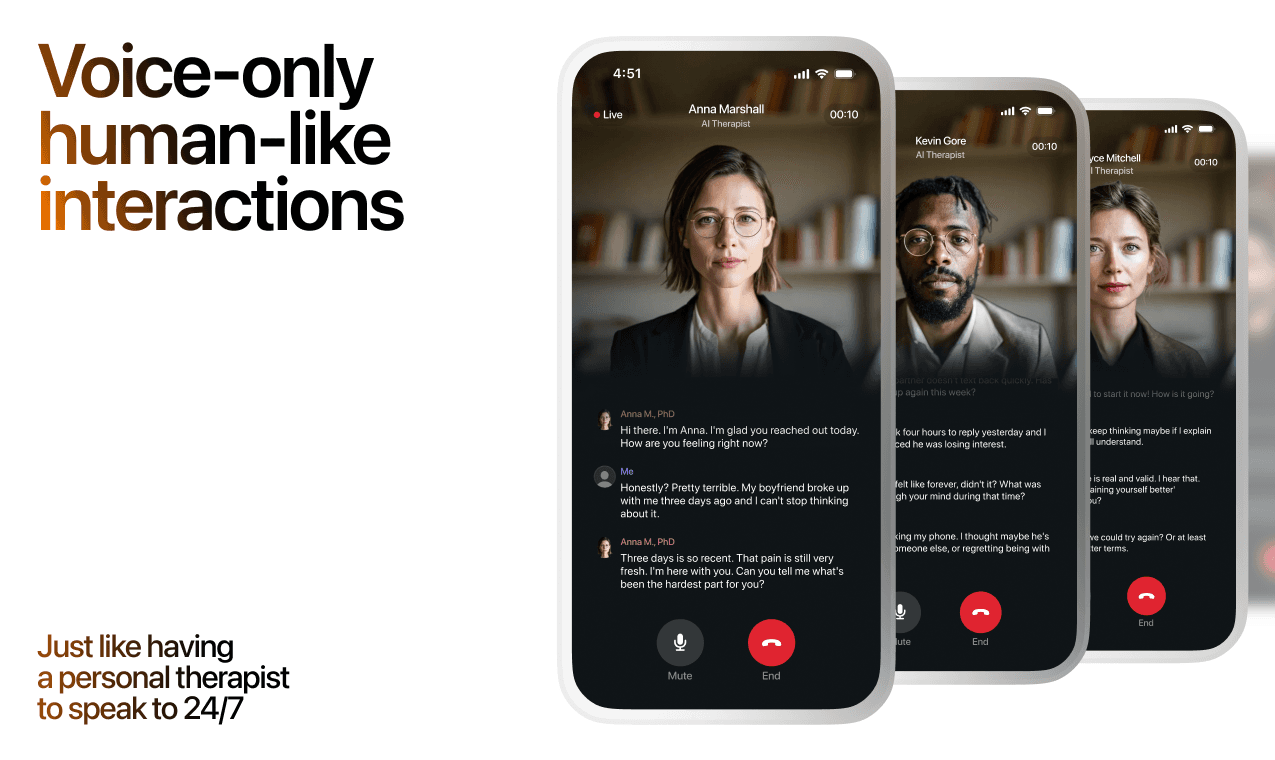
Here's what happens in a typical Lovon session:
You share what's on your mind
There's no script, no intake form, no waiting room. You speak or type whatever you're feeling — in your own words, at your own pace.
Lovon validates and explores
Using frameworks from CBT (Cognitive Behavioral Therapy) and motivational interviewing, Lovon acknowledges your feelings first, then gently helps you explore them. No dismissive "just move on" advice.
You build coping skills together
Lovon doesn't just listen — it actively works with you on evidence-based techniques: thought reframing, urge surfing, behavioral experiments, and more.
What a Session with Lovon Looks Like
When to Seek Professional Help
AI support is a valuable tool, but it's not a replacement for professional care. Please consider reaching out to a licensed therapist if you experience any of the following:
- Persistent thoughts of self-harm or suicide
- Inability to perform daily activities (work, eating, sleeping) for more than 2 weeks
- Turning to alcohol or substances to cope
- Intense anger or desire to harm your ex-partner
- Complete emotional numbness that doesn't improve over time
Crisis Resources (US): If you're in immediate danger, call 988 (Suicide & Crisis Lifeline) or text HOME to 741741 (Crisis Text Line). Available 24/7, free, and confidential.
Outside the US? Find a crisis line in your country
Ready to Start?
Your healing journey can begin right now
A 7-day trial. No judgment. Just a safe space to process what you're going through.
Frequently Asked Questions
Is Lovon a replacement for a real therapist?
Is my conversation with Lovon AI private?
How is Lovon different from ChatGPT for emotional support?
Can I use Lovon if I'm already seeing a therapist?
Can I try Lovon before subscribing?
About the Author
The Lovon Editorial Team
Mental Health & Wellness Content Team
The Lovon Editorial Team develops mental health and wellness content designed to make psychological concepts accessible and actionable. Our goal is to bridge the gap between clinical research and everyday life - helping you understand why your mind works the way it does and what you can do about it....
Related articles
- AI Relationship Coach for Dating App Burnout: Buy in 2026
Wiped out from swiping? See how an AI relationship coach for dating app burnout helps in 2026, what to look for, and…
- Anxious Attachment Triggers: How to Defuse Them (2026)
Anxious attachment triggers explained: a 6-step sequence to name, regulate, and defuse them in 2026, plus…
- Pre-Wedding Cold Feet: How to Calm Them in 2026
Pre-wedding cold feet are normal for most couples, but real doubt doesn't fade with breathing tricks alone. What helps…
- How to Manage Relationship Anxiety Day to Day (2026)
Learn how to manage relationship anxiety day to day with 7 practical steps, troubleshooting fixes, and tools that work…
See also
Quizzes
- Am I Ready for a Relationship? 12-Question Check
Check what you are actually ready for, in 2 minutes.
- Am I in Love? 13-Question Gut Check
Know what you feel in 2 minutes.
Free tools
- How to Tell Someone You Like Them
The wording depends on what you would lose. Tell it who they are to you and how you usually talk, and you get something…
- First Date Questions Worth Asking
A chat for the hour before a first date. Say how you met, what you already know about them, and what you are worried…
From the wiki
- Will I ever find love?
No one can honestly promise you will. What is true is that the odds are not fixed at birth and not decided by your last…
Disclaimer: This article is for informational purposes only and does not constitute medical advice, diagnosis, or treatment. Always seek the advice of your physician or other qualified health provider with any questions you may have regarding a medical condition. If you are in crisis or think you may have an emergency, call 988 (Suicide & Crisis Lifeline) or go to the nearest emergency room. Outside the US? Find a crisis line in your country.