
How long does an anxiety attack usually last?
How long does an anxiety attack last? There is no set time. Learn why the 5 to 20 minutes cited for most panic attacks does not apply to every anxiety episode.

Key Takeaways
- How long does an anxiety attack last? There is no set duration; symptoms can build, ease and return.
- NHS guidance says most panic attacks last 5 to 20 minutes. That is not an anxiety-attack time limit.
- Track whether symptoms are easing, recurring or changing rather than watching the clock.
- Lovon is best for talking through everyday anxiety between care appointments, not for emergency or licensed clinical
There is no fixed duration for an anxiety attack in 2026. Anxiety can build, ease and return, so one episode can feel brief while another lasts much longer. Panic attacks have a different pattern: NHS guidance says most last 5 to 20 minutes, but that range does not tell you how long your anxiety will last.
TL;DR
- How long does an anxiety attack last? There is no set duration; symptoms can build, ease and return.
- NHS guidance says most panic attacks last 5 to 20 minutes. That is not an anxiety-attack time limit.
- Track whether symptoms are easing, recurring or changing rather than watching the clock.
- Lovon is best for talking through everyday anxiety between care appointments, not for emergency or licensed clinical care.
Why this matters
A time estimate can feel reassuring when your heart is racing or your thoughts will not slow down. But applying a panic-attack timeline to every spell of anxiety can leave you more worried when the feeling does not end on schedule. The distinction between panic attacks and anxiety attacks gives you a more useful starting point: notice how the feeling began, whether it peaked suddenly and whether it keeps returning.
A clock cannot tell you whether a symptom is safe to ignore. New or severe physical symptoms deserve medical attention, even if they seem to arrive with anxiety. Do not wait for a time limit to pass before seeking help.
How long does an anxiety attack usually last?
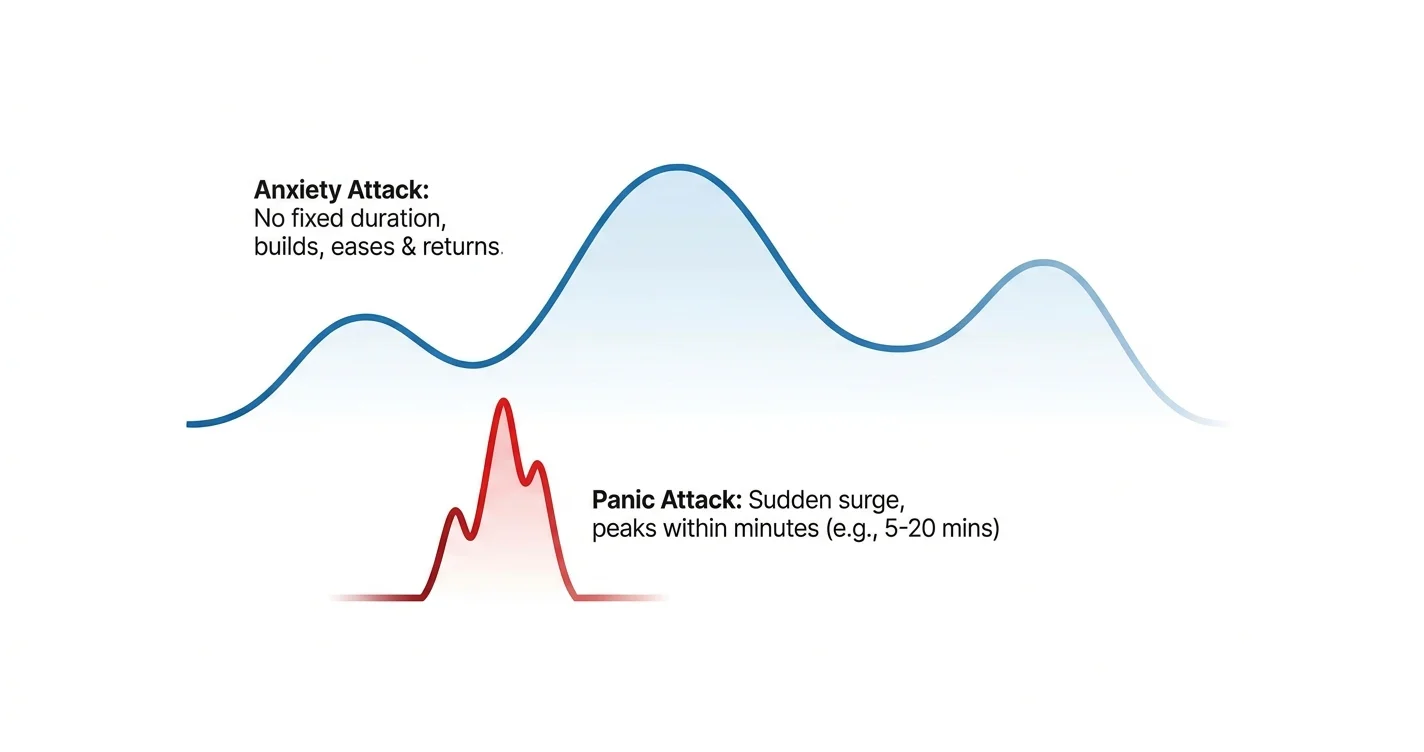
An anxiety attack has no standard length. People use the phrase to describe periods of intense worry or physical tension, but it is not a formal diagnosis with a defined start, peak and end. The feeling can rise gradually, settle and then return when the same worry comes back.
A panic attack is more clearly defined by a sudden surge of intense fear or discomfort that peaks within minutes. NHS guidance on panic disorder says most panic attacks last 5 to 20 minutes; some have been reported to last up to 1 hour. Those figures describe panic attacks, not every experience someone calls an anxiety attack.
| What you notice | Anxiety that builds | A panic attack |
|---|---|---|
| Onset | Builds gradually around a worry or stressor | Surges abruptly |
| Course | Can ease and return | Peaks within minutes |
| Duration | No set duration | Most last 5 to 20 minutes, according to NHS guidance |
| Useful next step | Notice what keeps the worry active | Focus on safety and let the surge pass; seek medical help for unfamiliar or severe symptoms |
This is a guide to patterns, not a way to diagnose yourself. You can feel anxious before a panic attack, and you can still feel shaken after its sharpest symptoms ease. In 2026, the practical question is not whether your experience fits a stopwatch. It is whether symptoms are improving, repeating or calling for professional help.
The contrast is easier to use when you separate the sudden surge from the worry around it. A panic attack can end while you remain concerned about another one. That continued worry does not mean the same panic attack is still at its peak.
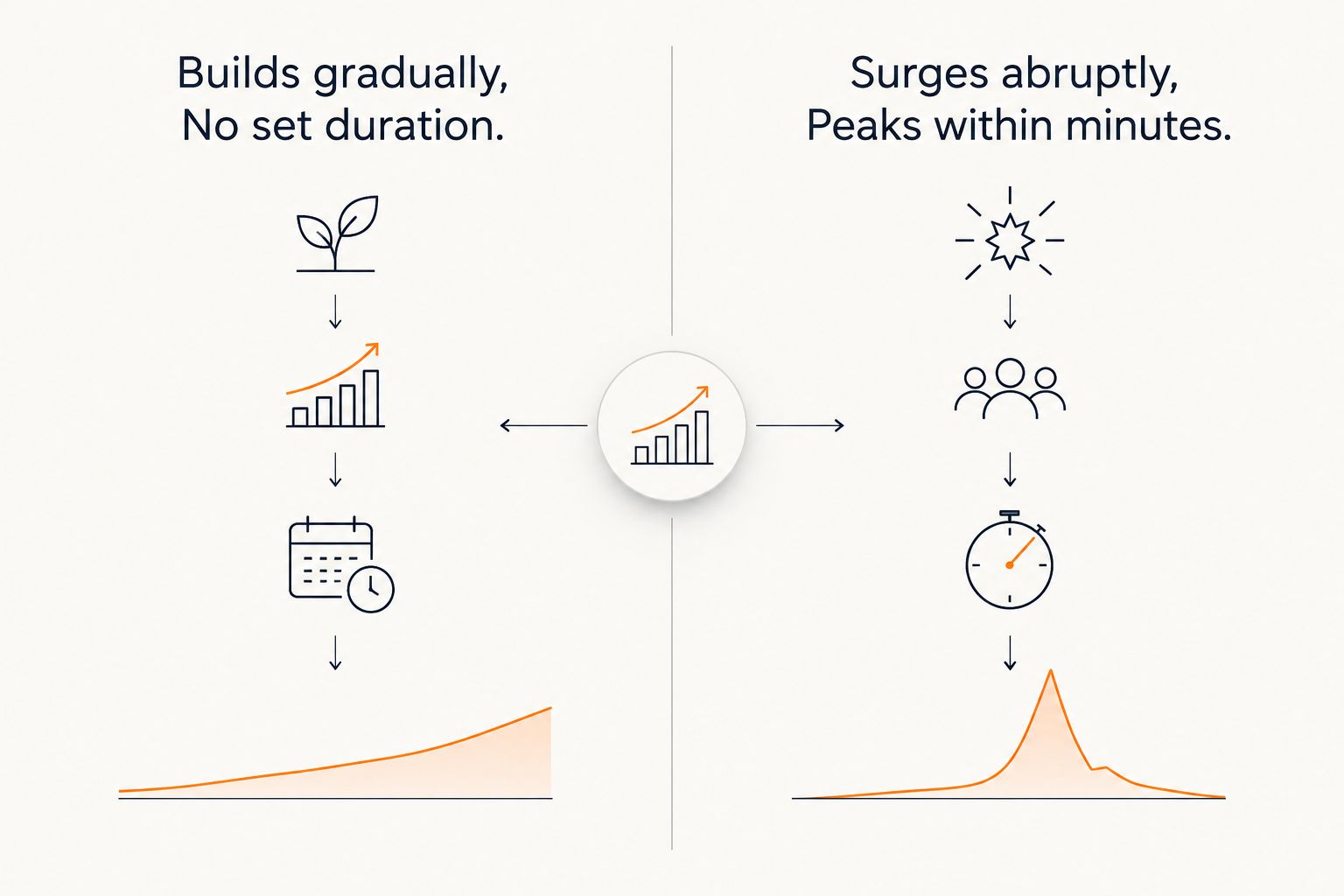 Two-column diagram contrasting gradually building anxiety with an abrupt panic surge
A sudden peak and a longer period of worry do not follow the same timeline.
What does it mean if the feeling comes in waves?
Treat each change as information rather than trying to force the experience into one continuous episode. Notice what was happening when the feeling rose, what changed when it eased and whether the same thought brought it back. This gives you something more useful to describe to a clinician than a single start and stop time.
A wave of anxiety also does not prove you are having repeated panic attacks. Panic attacks have a sudden, intense peak; worry can remain in the background or rise again without that pattern. If you cannot tell which is happening, describe the symptoms in plain words instead of settling on a label.
Can you still feel anxious after a panic attack ends?
Yes. The intense surge can subside while you remain worried about what happened or whether it will happen again. The NHS 5 to 20 minutes figure applies to most panic attacks, not to every feeling that follows one. If the worry keeps affecting your day, that continuing anxiety deserves attention in its own right.
Why the length varies
There is no dependable timer for an experience people call an anxiety attack. These factors help explain why one spell of worry can feel contained and another can stretch across your day:
- The worry is still present. If the conversation, task or thought upsetting you continues, anxiety can rise again after it starts to settle.
- Several worries are competing for your attention. Relief from one concern does not automatically quiet the others.
- You are watching for symptoms. Repeatedly checking whether your heart, breathing or thoughts feel normal can keep your attention on the distress.
- You are anticipating another surge. Fear of feeling anxious again can become a fresh source of worry.
- You have not had space to recover. A stressful situation can end while you still feel unsettled and need time to regroup.
None of these factors gives you a personal duration estimate. Use them as prompts: What was happening before this started? What keeps bringing my attention back? What changes when the feeling softens? You do not need a perfect answer while you are distressed.
In 2026, keep the distinction simple: a duration estimate is useful for understanding the usual course of a panic attack, but it is not a deadline for feeling calm. If anxiety repeatedly interrupts sleep, work or relationships, speak with a licensed mental health professional rather than waiting for it to resolve by the clock.
What to do while you wait for anxiety to ease
You do not have to solve the entire cause while you feel overwhelmed. Start with the next manageable action, then check whether it helps you feel steadier.
- Pause and name what is happening. Try a plain description such as, I feel anxious, and my body feels tense. You do not have to decide whether it is an anxiety attack or a panic attack immediately.
- Get physically comfortable. Sit or stand somewhere you feel safe. Loosen anything restrictive and notice the support beneath your feet or body.
- Let your breathing settle without forcing it. Breathe at a comfortable pace. If counting breaths makes you more focused on your symptoms, skip the counting.
- Bring attention to what is around you. Describe what you can see, hear or feel. This gives your attention somewhere to rest besides the worry.
- Choose one next step. You might step away from a stressful exchange, tell someone you trust what is happening or write down the thought you want to revisit later.
These steps are ways to care for yourself, not a promise to end symptoms within a set number of minutes. If one step feels frustrating, stop and choose another. The aim is to make the moment more manageable while you decide whether you need additional support.
Lovon offers voice conversations for people who want to talk through everyday anxiety and reflect on what they are feeling. Lovon is best for support between care appointments, not for diagnosing symptoms or replacing a licensed clinician. If you want to explore that option, you can learn about Lovon. For sudden, severe or unfamiliar physical symptoms, seek medical care instead of using an app to assess them.
Talk through what you feel
Use a voice conversation to reflect on everyday anxiety and your next step.
When should you get help rather than wait?
Seek urgent medical help for new, severe or unfamiliar symptoms, especially chest pain, fainting or difficulty breathing. Anxiety can cause distressing physical sensations, but you should not assume that anxiety explains a symptom you have not had assessed. In the United States, call 911 for an immediate medical emergency.
If you feel at risk of harming yourself, call or text 988 in the United States for crisis support, or call 911 if you are in immediate danger. An article or support app cannot respond to an emergency for you.
For anxiety that keeps returning or changes how you live, arrange a conversation with a licensed clinician. Tell them what you felt, how it started, whether it peaked suddenly and what was happening when it eased. You can also mention any repeated fear of another episode. You do not need to prove that an episode lasted a particular length before asking for help.
Can an anxiety attack last all day?
Yes, anxiety can remain high or return throughout the day, but that does not establish one continuous panic attack. NHS guidance says most panic attacks last 5 to 20 minutes. If you have felt on edge for much longer, pay attention to whether the intensity changes, what seems to restart it and whether you need support with the underlying worry.
A whole day of distress is reason enough to take your experience seriously. Rest, reach out to someone you trust and consider professional help if this is recurring or interfering with daily life. In 2026, you do not need to wait for a symptom to match a textbook timeline before speaking up.
How do I know whether it was panic or anxiety?
Panic typically surges abruptly and peaks within minutes; anxiety often builds around a worry and has no fixed end point. You cannot confirm a diagnosis from duration alone. If the symptoms are new, severe or hard to distinguish from a medical problem, get medical advice.
It can help to describe the sequence without naming it: The fear came on suddenly, or I had been worrying for a while before my body felt tense. That description gives a clinician more to work with than a label you are unsure about. It also lets you ask for help without first having to settle the terminology yourself.
FAQ
How long does an anxiety attack last?
An anxiety attack has no set duration because the phrase does not describe a formally timed diagnosis. Anxiety can build, ease and return, so look at the pattern rather than a countdown.
How long does a panic attack usually last?
NHS guidance says most panic attacks last 5 to 20 minutes. Some have been reported to last up to 1 hour; lingering worry afterward is not necessarily the same panic attack.
Can anxiety last longer than a panic attack?
Yes. Anxiety can continue or return after a panic attack's intense surge has passed. The usual 5 to 20 minutes cited by the NHS applies to most panic attacks, not to all anxiety.
Why do I still feel anxious after the worst part is over?
You can remain worried after the most intense symptoms ease, especially if you are concerned they will return. If that worry keeps disrupting your life, talk with a licensed clinician.
Can an anxiety attack come and go in waves?
Yes. Anxiety can ease and rise again when a worry or stressful situation returns. Describe the changes you notice rather than assuming every wave is a separate panic attack.
When should I seek medical help for anxiety-like symptoms?
Seek urgent medical help for new, severe or unfamiliar symptoms such as chest pain, fainting or difficulty breathing. Do not wait for an expected panic-attack duration to pass before getting help.
Is an anxiety attack the same thing as a panic attack?
No. A panic attack is a sudden surge that peaks within minutes; anxiety can build gradually and has no fixed duration. A clinician can help you make sense of repeated or concerning symptoms.
One last thing
Feeling better and feeling completely calm are not the same milestone. In 2026, if the sharpest part has passed but you still feel unsettled, you do not need to decide that the episode has either ended perfectly or started all over again. Notice what has eased, take the next gentle step and ask for help when the pattern keeps returning.
Related guides
How AI Support Helps You Heal
AI emotional support isn't about replacing human connection — it's about filling the gaps. The moments when you need to talk at 2 AM, when you don't want to burden your friends again, or when you simply need someone to listen without judgment.
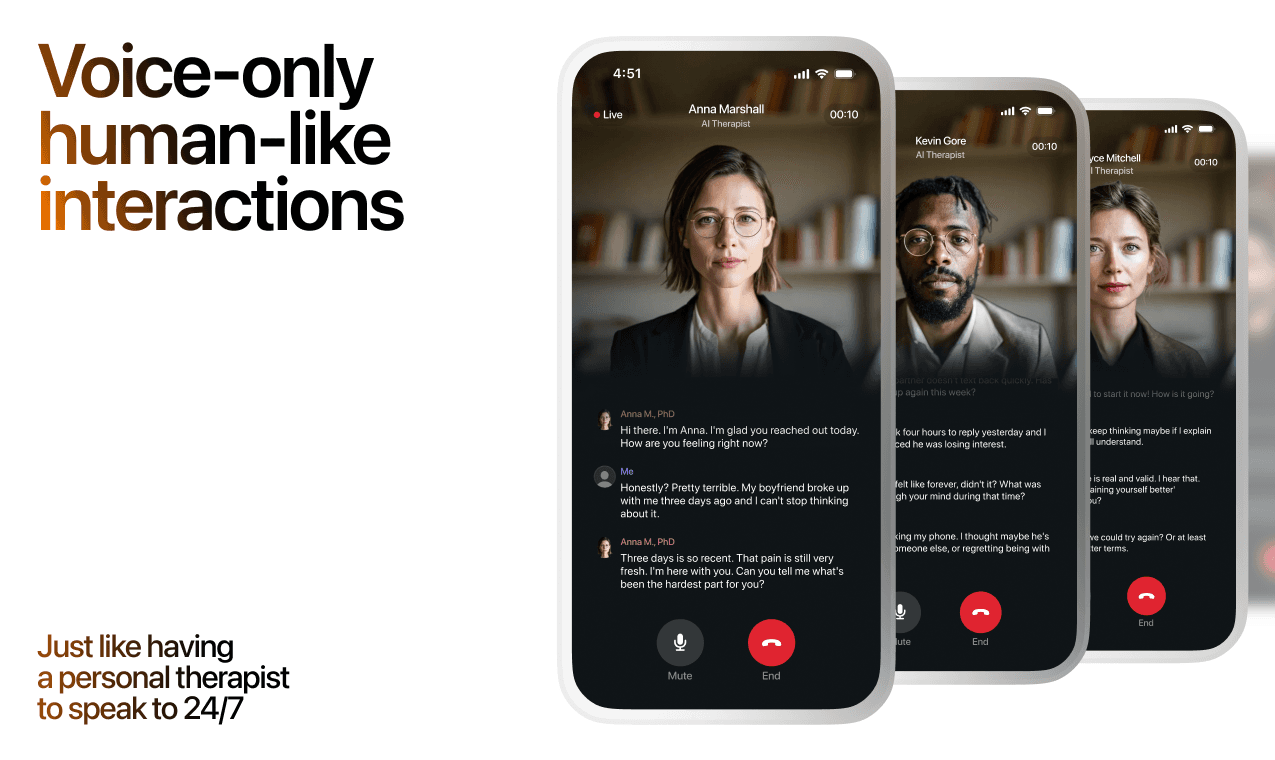
Here's what happens in a typical Lovon session:
You share what's on your mind
There's no script, no intake form, no waiting room. You speak or type whatever you're feeling — in your own words, at your own pace.
Lovon validates and explores
Using frameworks from CBT (Cognitive Behavioral Therapy) and motivational interviewing, Lovon acknowledges your feelings first, then gently helps you explore them. No dismissive "just move on" advice.
You build coping skills together
Lovon doesn't just listen — it actively works with you on evidence-based techniques: thought reframing, urge surfing, behavioral experiments, and more.
What a Session with Lovon Looks Like
When to Seek Professional Help
AI support is a valuable tool, but it's not a replacement for professional care. Please consider reaching out to a licensed therapist if you experience any of the following:
- Persistent thoughts of self-harm or suicide
- Inability to perform daily activities (work, eating, sleeping) for more than 2 weeks
- Turning to alcohol or substances to cope
- Intense anger or desire to harm your ex-partner
- Complete emotional numbness that doesn't improve over time
Crisis Resources (US): If you're in immediate danger, call 988 (Suicide & Crisis Lifeline) or text HOME to 741741 (Crisis Text Line). Available 24/7, free, and confidential.
Outside the US? Find a crisis line in your country
Ready to Start?
Your healing journey can begin right now
A 7-day trial. No judgment. Just a safe space to process what you're going through.
Frequently Asked Questions
Is Lovon a replacement for a real therapist?
Is my conversation with Lovon AI private?
How is Lovon different from ChatGPT for emotional support?
Can I use Lovon if I'm already seeing a therapist?
Can I try Lovon before subscribing?
About the Author
The Lovon Editorial Team
Mental Health & Wellness Content Team
The Lovon Editorial Team develops mental health and wellness content designed to make psychological concepts accessible and actionable. Our goal is to bridge the gap between clinical research and everyday life - helping you understand why your mind works the way it does and what you can do about it....
Related articles
- Derealization vs Depersonalization: Tell Them Apart (2026)
Derealization vs depersonalization explained step by step: spot the difference, ground fast, and know when 2026 warning…
- Coping With Depression Alone in 2026: What Actually Helps
Coping with depression alone in 2026: a 7-step plan for the hours between therapy sessions, troubleshooting fixes, and…
- Depression vs Sadness: How to Tell the Difference (2026)
Depression vs sadness: learn the 6 key differences — duration, cause, anhedonia, and more — so you know when to seek…
- How long does it take to get an adult ADHD diagnosis?
How long does an adult ADHD diagnosis take? There is no fixed timeline in 2026. Learn what affects the wait, what an…
See also
Quizzes
- Guilt Test: Is Your Guilt Doing Its Job?
See whether your guilt repairs or just hurts.
- Perfectionism Test: What Are Your Standards Costing?
See what your standards actually cost, in 3 minutes.
Free tools
- Words of Encouragement for Him When He Is Struggling
Words of encouragement for him that fit what he is actually going through, for when your usual lines are not landing…
- How to Reconnect With an Old Friend
A chat for how to reconnect with an old friend, starting with the text you have been meaning to send for a year. Tell it…
From the wiki
- Why do I keep dreaming about the same person?
A recurring dream figure usually marks unfinished emotional business rather than a message about that person. Your brain…
Disclaimer: This article is for informational purposes only and does not constitute medical advice, diagnosis, or treatment. Always seek the advice of your physician or other qualified health provider with any questions you may have regarding a medical condition. If you are in crisis or think you may have an emergency, call 988 (Suicide & Crisis Lifeline) or go to the nearest emergency room. Outside the US? Find a crisis line in your country.