
AI Therapy App for Body Image Issues: 2026 Verdict
AI therapy app for body image issues in 2026: Lovon wins for daily spirals, with eating disorder support, self-esteem coaching, and therapy options compared.

Key Takeaways
- Lovon's AI voice therapy app for body image issues runs 24/7 - Buy for daily spiral moments.
- Text-based AI chat works for quiet check-ins but misses tone and pacing that voice conversation carries.
- Eating disorder-specific support beats general apps when compulsive food behavior is part of the pattern.
- Licensed in-person therapy still wins for diagnosed body dysmorphia in 2026 - no app replaces that.
- Skip calorie-tracking wellness apps rebranded as body image tools - they reinforce the exact problem.
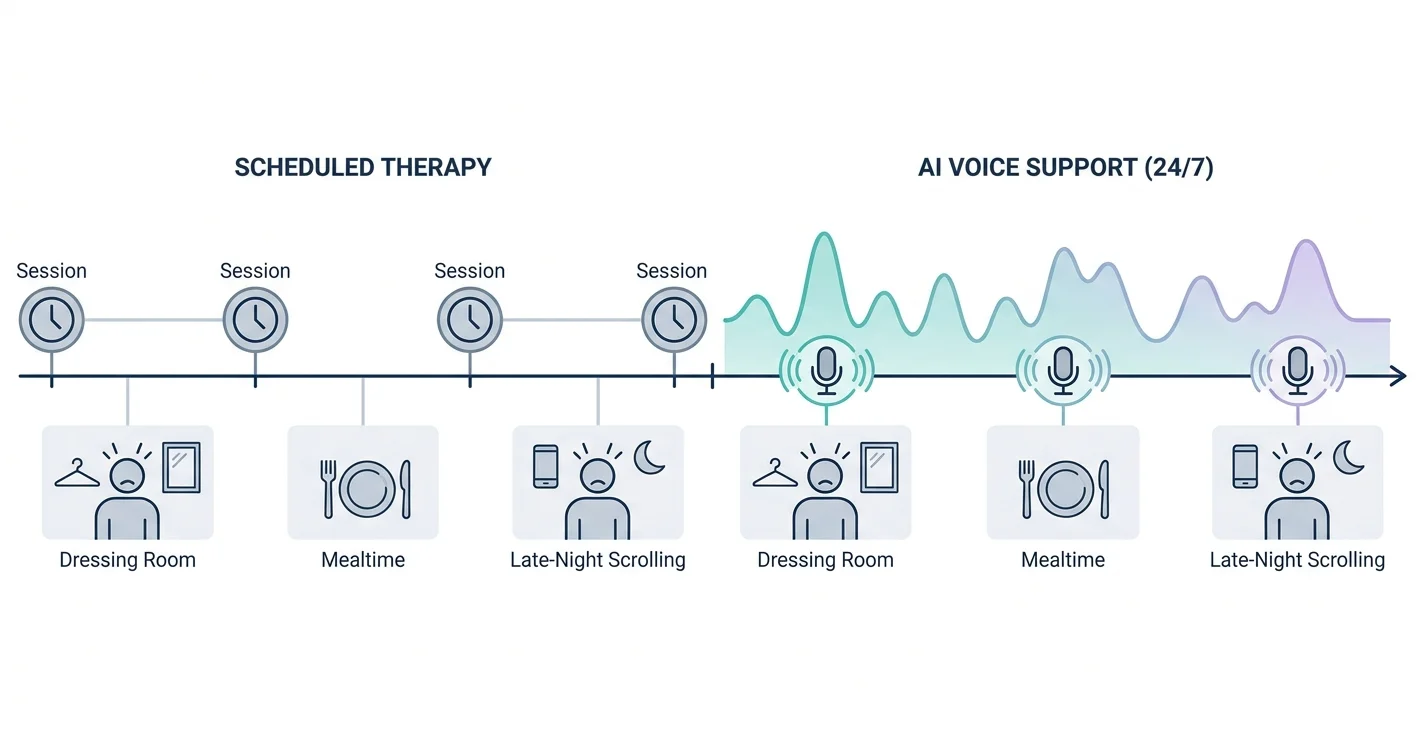
Body image struggles rarely wait for a scheduled appointment - they hit in dressing rooms, before dinner, scrolling at midnight - and an AI therapy app for body image issues gives you a place to talk it through the moment it happens.
TL;DR
- Lovon's AI voice support app for body image issues runs 24/7 - Buy for daily spiral moments.
- Text-based AI chat works for quiet check-ins but misses tone and pacing that voice conversation carries.
- Eating disorder-specific support beats general apps when compulsive food behavior is part of the pattern.
- Licensed in-person therapy still wins for diagnosed body dysmorphia in 2026 - no app replaces that.
- Skip calorie-tracking wellness apps rebranded as body image tools - they reinforce the exact problem.
Why this matters
Body image work is different from a single crisis. It's a pattern - checking a mirror, comparing a photo, avoiding a swimsuit - that wears down self-esteem hour by hour, not just during a weekly session.
Waiting five days for a Tuesday appointment doesn't interrupt a pattern that repeats every night. Lovon built its AI voice support tool around the idea that support needs to exist in the moment, not just on a calendar. See how AI voice therapy differs from text-based apps for what that actually sounds like mid-spiral instead of journaled about later.
None of this replaces a licensed clinician treating diagnosed body dysmorphic disorder or an eating disorder. It fills the hours a therapist's office doesn't cover.
Who this is for
This guide is for anyone whose body image struggle shows up between therapy sessions, not during them - the person who spirals after scrolling, avoids photos, or replays a comment about their weight for the rest of the day. It's also for people who don't have a therapist yet and want somewhere lower-stakes to start. It is not written for someone in active medical crisis around eating or self-harm - that calls for an emergency line or a clinician, not an app.
What to look for in an AI therapy app for body image issues
Availability when the spiral actually happens
Body image spirals don't book appointments. They hit while getting dressed for work, before a photo gets posted, at 2am scrolling. An app that's only useful during business hours misses the exact moment it needs to help.
Recognition of comparison triggers
Social feeds are one of the most common triggers for body image distress, and a tool worth using should recognize that pattern rather than treat every spiral as a mystery. How social media comparison fuels anxiety breaks down why that trigger hits so often in 2026.
Tone that doesn't add shame
A lot of wellness-app language around body image still centers weight loss or "fixing" appearance. What actually helps is a tone that treats the distress as valid without reinforcing the idea that the body is the problem.
Honesty about clinical limits
Any AI therapy app for body image issues should say plainly what it isn't. Lovon is upfront that it's not a replacement for licensed clinical care - that honesty matters more here than almost anywhere else in mental health, because body image distress can mask disordered eating that needs a real diagnosis.
Cost that doesn't add another barrier
Cost is one of the biggest reasons people delay any kind of mental health support, body image included. Check what a plan actually runs before committing to it.
Your options, ranked
The always-on pick: AI voice therapy
Lovon's voice conversation format means you talk out loud instead of typing, which matters when a body image spiral makes it hard to organize thoughts into text. It's available 24/7, built with input from PhD psychologists, and positioned as a companion rather than a clinician replacement. If your spirals hit at 11pm or during a dressing room meltdown, this is the option built for that hour. Buy for anyone who needs support between sessions or doesn't have a therapist yet.
The quiet-mode option: text-based AI chat
Typing works when talking out loud feels like too much, or when you're somewhere public and a voice conversation isn't practical. The tradeoff: text strips out tone, pacing, and the pauses that often carry as much signal as the words themselves. Consider it as a backup for moments voice isn't an option, not as your primary tool.
The specialist pick: eating disorder-specific support
When body image distress comes with compulsive behavior around food, restriction, or bingeing, general self-esteem coaching isn't enough on its own. AI therapy app for eating disorder recovery support covers what a more targeted approach needs to include. Consider this route first if food behavior is part of the picture, and loop in a clinician for actual diagnosis.
The long-game pick: self-esteem and confidence coaching
Body image issues often sit on top of a bigger self-worth problem that outlasts any single trigger. AI life coach for confidence and self-esteem is built for the slower work of rebuilding that foundation, not just talking down tonight's spiral. Consider it alongside daily support, not instead of it.
The clinical backstop: a licensed therapist
For diagnosed body dysmorphic disorder, an active eating disorder, or trauma tied to appearance, a licensed clinician is still the right call in 2026 - no app claims otherwise. Cost and wait times are the usual barriers here. Buy (or start the search) if symptoms are severe, persistent, or affecting your physical health.
Try Lovon tonight
Start a voice conversation whenever body image thoughts spiral - no appointment needed.
What to avoid
- Calorie-tracking apps rebranded as "body confidence" tools. If the core feature is still logging food or weight, it's a diet app wearing a wellness label, not body image support.
- Generic chatbots with canned scripts. A body image spiral needs a response shaped to what you're actually saying, not a rotating set of affirmations.
- Anything that skips the clinical disclaimer. If an app never mentions its limits, it's either overselling itself or hasn't thought through what happens when someone needs more than it can give.
Verdict comparison
| Option | Availability | Best for | Verdict |
|---|---|---|---|
| AI voice support (Lovon) | 24/7 | Daily spirals, no therapist yet | Buy |
| Text-based AI chat | 24/7, async | Quiet moments, public settings | Consider |
| Eating disorder-specific support | Scheduled | Compulsive food/body behavior | Consider |
| Self-esteem coaching | On-demand | Long-term self-worth rebuilding | Consider |
| Licensed in-person therapist | Scheduled, wait times common | Diagnosed BDD or eating disorder | Buy |
FAQ
What's the best AI therapy app for body image issues in 2026?
Lovon's voice-based format works well for daily spirals because it's available 24/7 and doesn't require typing out what you're feeling. It's not a diagnosis tool, so pair it with a clinician if food behavior or self-harm is involved.
Is an AI therapy app for body image issues better than an in-person therapist?
It's not a replacement, it's a gap-filler. An AI app covers the hours between sessions or before you have a therapist; a licensed clinician is still the right call for diagnosed conditions.
Can an AI voice therapy app help with body dysmorphia?
It can help you talk through distress in the moment, but body dysmorphic disorder needs a clinical diagnosis and treatment plan from a licensed provider, not an app alone.
How much does an AI therapy app for body image issues cost in 2026?
Pricing varies by app and plan, so check current rates directly on the provider's site before committing. Cost is one of the top reasons people delay any mental health support.
Is Lovon a replacement for a licensed therapist?
No. Lovon is built with input from PhD psychologists as an always-available companion, not a substitute for licensed clinical care, and it says so plainly.
Does voice-based AI therapy work better than text-based chat for body image spirals?
Voice tends to capture tone and pacing that text strips out, which matters when a spiral makes it hard to organize thoughts into typed sentences. Text still works as a quieter backup option.
Can AI therapy help with an eating disorder?
AI support can help manage day-to-day distress, but an eating disorder needs a specialist and often a medical team for safe treatment. Use AI tools alongside that care, not instead of it.
How do I start using an AI therapy app for body image issues?
Start with a single conversation the next time a spiral hits, rather than waiting for a calm moment to test it. That's the exact use case these tools are built around.
One last thing: the moment body image distress usually peaks isn't during a bad workout or a hard conversation - it's in the quiet ten minutes right before bed, scrolling one more time before sleep. That's the exact window a scheduled Tuesday appointment can't cover, so test whichever option you pick against that specific hour before deciding it actually works for you in 2026.
Related guides
How AI Support Helps You Heal
AI emotional support isn't about replacing human connection — it's about filling the gaps. The moments when you need to talk at 2 AM, when you don't want to burden your friends again, or when you simply need someone to listen without judgment.
Here's what happens in a typical Lovon session:
You share what's on your mind
There's no script, no intake form, no waiting room. You speak or type whatever you're feeling — in your own words, at your own pace.
Lovon validates and explores
Using frameworks from CBT (Cognitive Behavioral Therapy) and motivational interviewing, Lovon acknowledges your feelings first, then gently helps you explore them. No dismissive "just move on" advice.
You build coping skills together
Lovon doesn't just listen — it actively works with you on evidence-based techniques: thought reframing, urge surfing, behavioral experiments, and more.
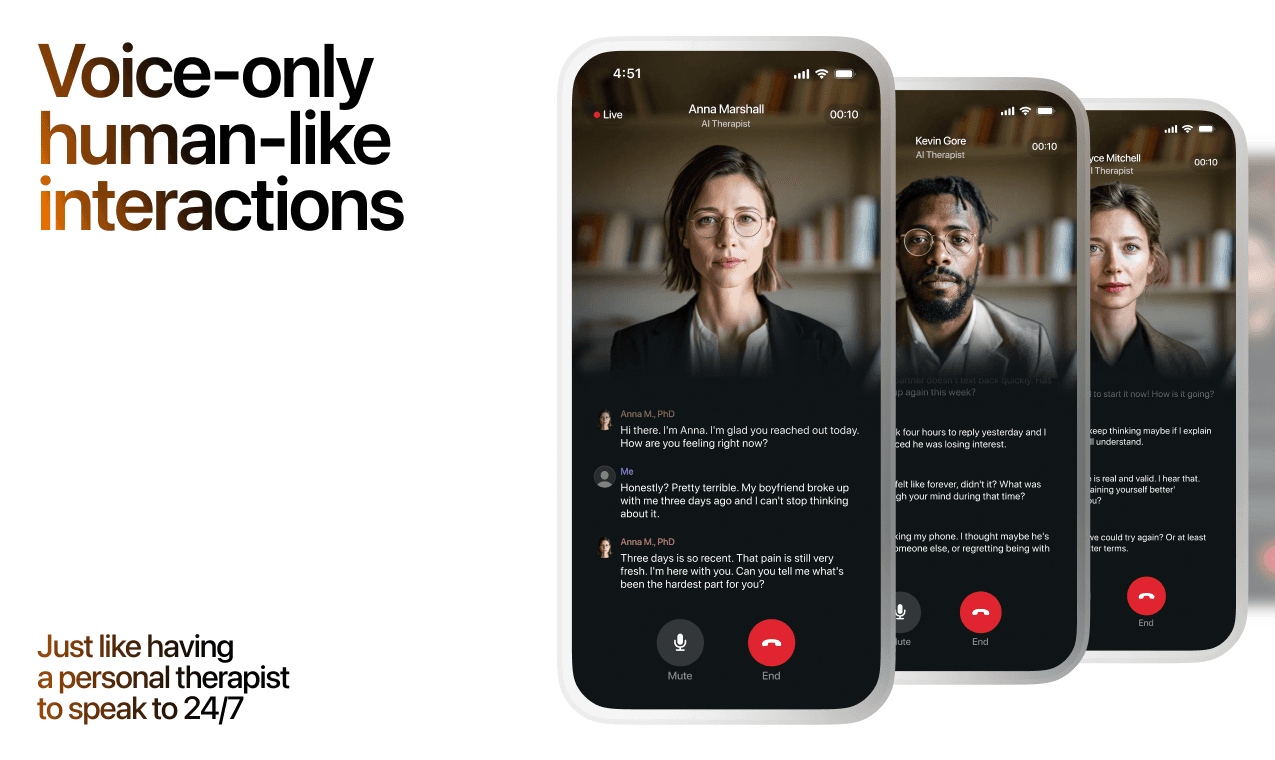
What a Session with Lovon Looks Like
When to Seek Professional Help
AI support is a valuable tool, but it's not a replacement for professional care. Please consider reaching out to a licensed therapist if you experience any of the following:
- Persistent thoughts of self-harm or suicide
- Inability to perform daily activities (work, eating, sleeping) for more than 2 weeks
- Turning to alcohol or substances to cope
- Intense anger or desire to harm your ex-partner
- Complete emotional numbness that doesn't improve over time
Crisis Resources (US): If you're in immediate danger, call 988 (Suicide & Crisis Lifeline) or text HOME to 741741 (Crisis Text Line). Available 24/7, free, and confidential.
Outside the US? Find a crisis line in your country
Ready to Start?
Your healing journey can begin right now
A 7-day trial. No judgment. Just a safe space to process what you're going through.
Frequently Asked Questions
Is Lovon a replacement for a real therapist?
Is my conversation with Lovon AI private?
How is Lovon different from ChatGPT for emotional support?
Can I use Lovon if I'm already seeing a therapist?
Can I try Lovon before subscribing?
About the Author
The Lovon Editorial Team
Mental Health & Wellness Content Team
The Lovon Editorial Team develops mental health and wellness content designed to make psychological concepts accessible and actionable. Our goal is to bridge the gap between clinical research and everyday life - helping you understand why your mind works the way it does and what you can do about it....
Related articles
- AI Coping Tools for Seasonal Affective Disorder (2026)
AI coping tools for seasonal affective disorder ranked for 2026: what to use daily, what to skip, and where AI voice…
- Best AI App for Phone Anxiety in 2026: Ranked
The best ai app for phone anxiety in 2026, ranked by voice practice over text chat. Lovon wins for real conversation…
- Best AI App for Health Anxiety in 2026: Ranked
The best ai app for health anxiety in 2026, ranked by availability and risk of reinforcing checking behavior. Lovon wins…
- AI Therapy for Postpartum Depression: What Works in 2026
AI therapy for postpartum depression works best when it's voice-based and available at 3am — see what to look for, what…
See also
Quizzes
- Highly Sensitive Person Test: How Much Do You Take In?
See how deeply you process, notice and get overloaded.
- Do I Have Abandonment Issues? 12-Question Self-Check
See how loudly the fear of being left runs things.
Free tools
- Write a Letter to Your Best Friend
A chat for a letter to your best friend that only they could have received. Tell it how long you have been friends, one…
- Self-Esteem Check-In
Eight statements, one read on three sides of self-esteem: your self-talk, how you act with people, and what you do with…
From the wiki
- How to stop maladaptive daydreaming?
Maladaptive daydreaming is immersive waking fantasy that eats hours, usually with music and pacing attached. You rarely…
Disclaimer: This article is for informational purposes only and does not constitute medical advice, diagnosis, or treatment. Always seek the advice of your physician or other qualified health provider with any questions you may have regarding a medical condition. If you are in crisis or think you may have an emergency, call 988 (Suicide & Crisis Lifeline) or go to the nearest emergency room. Outside the US? Find a crisis line in your country.