
Why Do I Feel Anxious for No Reason? 2026 Guide
Anxious with no clear trigger? See the real causes behind free-floating anxiety in 2026 and the steps that calm your nervous system fast.

Key Takeaways
- Free-floating anxiety usually traces to nervous system dysregulation, not one clear event — treat the body first.
- Poor sleep, caffeine, and unprocessed stress from days ago commonly explain why do i feel anxious for no reason in 2026.
- Grounding techniques and slow breathing interrupt an amygdala hijack in under 5 minutes.
- Lovon's AI voice therapy gives you a coping-tool session on demand when anxiety hits at 2am with no obvious cause.
Anxiety with no obvious trigger still has a cause — it's just running underneath conscious thought instead of sitting in your calendar. This guide breaks down what's actually happening in your body when anxiety shows up out of nowhere, and gives you a concrete way to bring it down today, in 2026.
TL;DR
- Free-floating anxiety usually traces to nervous system dysregulation, not one clear event — treat the body first.
- Poor sleep, caffeine, and unprocessed stress from days ago commonly explain why do i feel anxious for no reason in 2026.
- Grounding techniques and slow breathing interrupt an amygdala hijack in under 5 minutes.
- Lovon's AI voice support gives you a coping-tool session on demand when anxiety hits at 2am with no obvious cause.
Why this matters
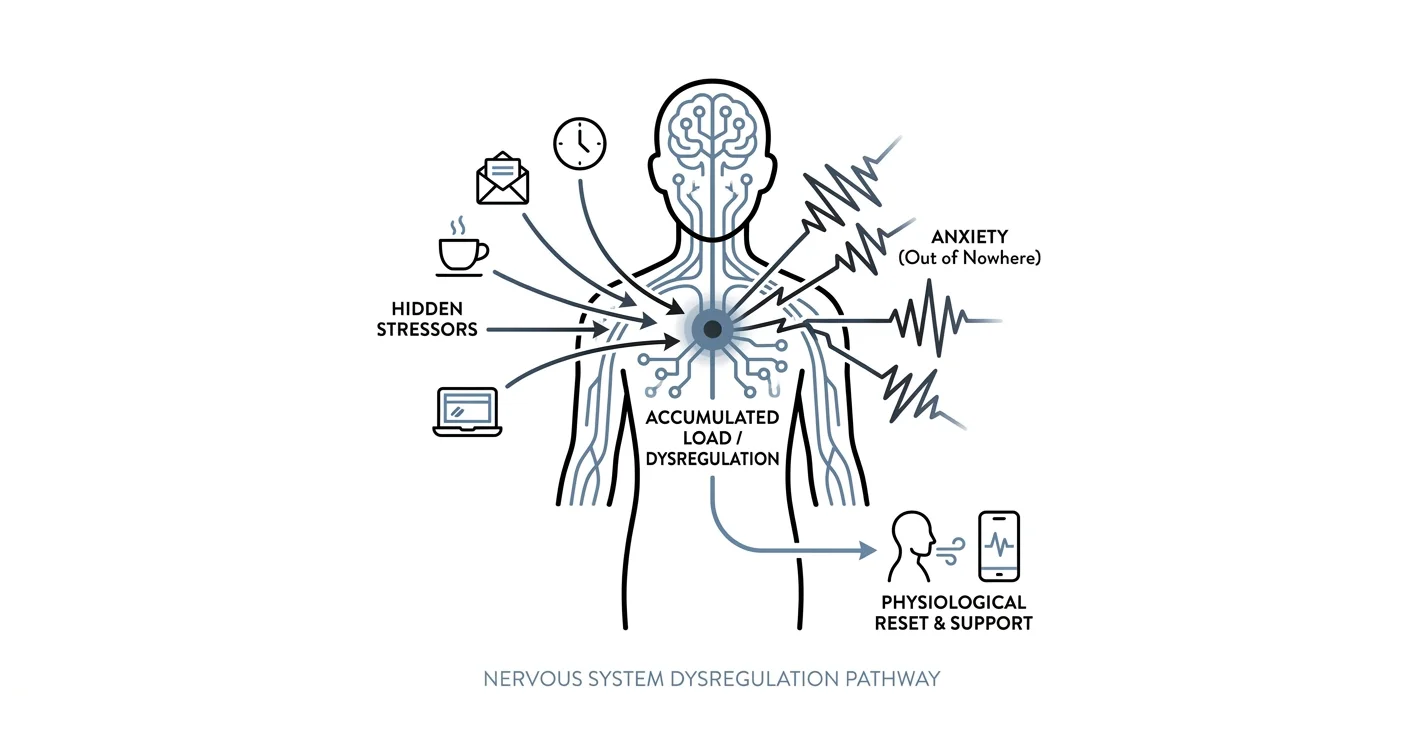
Anxiety that arrives with no clear trigger isn't random, even when it feels that way. It's usually the tail end of stress that built up over hours or days: a bad night of sleep, three cups of coffee, an argument you never finished processing. That out-of-nowhere feeling is almost always nervous system dysregulation — your body's alarm system firing without a matching threat in the room.
Here's the part most people skip: your nervous system doesn't distinguish between a deadline three days out and a car swerving toward you right now. It reacts to accumulated load, not to a single obvious cause. In 2026, that's a big reason more people reach for AI voice therapy at 11pm instead of waiting for a Tuesday appointment — the anxiety doesn't wait, so the support shouldn't either.
What you'll need
- 10 quiet minutes, ideally somewhere you can sit without being interrupted
- A notes app or notebook to track patterns for a week
- Honest answers about your last 48 hours: sleep, caffeine, screens, conflict
- A grounding technique you already know, or one you'll pick up below
- Optional: the Lovon app, if you want a guided voice session while the anxiety is active rather than after it passes
The steps
1. Rule out the physical stuff first
Before you go looking for a hidden emotional cause, check the boring ones. Dehydration, skipped meals, poor sleep, and too much caffeine mimic anxiety symptoms almost exactly — racing heart, tight chest, restless legs. In 2026 the average adult drinks more caffeine later in the day than a decade ago, and that shift alone explains a chunk of afternoon anxiety spikes. Common mistake: jumping straight to "something's psychologically wrong with me" before checking if you slept five hours and skipped lunch.
2. Name the stressor you buried
Sit with the notes app and write down everything unresolved from the last three days — an email you haven't answered, a comment that stung, a bill you're avoiding. Anxiety with no obvious source is frequently anxiety with a source you've mentally filed away as "not a big deal." Naming it doesn't fix it, but it moves the anxiety from vague to specific, and specific is workable. Common mistake: assuming that if it didn't feel like a big deal at the time, it can't be causing anxiety now.
3. Check what your body already knows
Anxiety without a story attached is often your amygdala reacting faster than your thinking brain can catch up. This is an amygdala hijack — a real, measurable brain response where the threat-detection system overrides logic before you've consciously registered a threat at all. Recognizing this stage stops you from spiraling into "why am I like this" and gets you straight to calming the body. Common mistake: trying to reason your way out of a physiological reaction instead of regulating it first.
4. Interrupt the spiral with a body-based reset
Once you know it's physiological, act on the body, not the thoughts. Slow your exhale to twice the length of your inhale for two minutes. Press your feet flat on the floor and name five things you can see. These are grounding techniques, and they work because they give your nervous system evidence the danger has passed. Most people feel a measurable drop in intensity within 3 to 5 minutes. Common mistake: waiting for the anxiety to fully disappear before doing anything — start the reset the moment you notice it, not after it peaks.
5. Separate anticipatory anxiety from present-moment anxiety
Ask yourself one question: is this about right now, or about something that hasn't happened yet? Most "no reason" anxiety is actually anticipatory — your brain rehearsing a future scenario without telling you it's doing so. If the answer is "the future," the anxiety isn't lying to you about danger, it's just early. Common mistake: treating anticipatory anxiety as proof something is currently wrong, when it's actually a preview your brain generated on its own.
6. Track the pattern for seven days
Write down the time of day, what you ate, how you slept, and what happened in the two hours before each anxious episode. By day seven in 2026's crowded, always-on schedule, most people find a repeating trigger they'd missed entirely — a specific meeting, a specific person, a specific hour of low blood sugar. Common mistake: giving up after two or three days because "nothing obvious showed up yet."
7. Get support before it becomes chronic
If the anxiety is showing up most days, or interfering with sleep and work, that's the signal to bring in outside support rather than keep white-knuckling it alone. An AI voice therapist session can walk you through a coping tool in real time, at the moment the anxiety hits, which is exactly when self-help articles are hardest to use. Common mistake: waiting for anxiety to become unbearable before treating it as worth addressing.
Talk it through right now
Start a voice session with Lovon the moment anxiety hits, no appointment needed.
Troubleshooting
- Anxious the second you wake up, before anything's happened: cortisol naturally peaks in the first hour after waking. Check your blood sugar and get sunlight within 30 minutes — both blunt the spike.
- Anxiety spikes after scrolling: comparison and bad news trigger the same threat response as a real-world danger. Cap the first scroll of the day to 5 minutes or delay it until after breakfast.
- Anxiety hits an hour after coffee: caffeine crashes mimic anxiety symptoms almost exactly. Cut the second cup or move it earlier in the day.
- Anxiety at 2am with no clear thought attached: this is usually your nervous system, not your mind — try the exhale-lengthening technique from step 4 before reaching for your phone.
- Anxiety despite "nothing being wrong": revisit step 2. Nine times out of ten there's a small unresolved thing you've mentally waved off as unimportant.
Tools and resources
- A grounding technique you can do anywhere, in under 5 minutes
- A breathing pattern with a longer exhale than inhale
- A 7-day tracking sheet for sleep, caffeine, and mood
- Somatic movement — even a 10-minute walk — to burn off excess cortisol
- An AI voice therapist for the moments a worksheet can't reach you, like 2am or mid-workday
FAQ
Why do I feel anxious for no reason?
You're almost never anxious for genuinely no reason — the cause is usually accumulated stress, poor sleep, caffeine, or an unresolved worry your mind filed as minor. In 2026, this pattern is common enough that most anxiety specialists treat it as the default, not the exception.
Is sudden anxiety a sign of a panic attack?
Sudden anxiety can precede a panic attack but often stays at a lower intensity and passes within minutes. If your chest tightens, your heart races, and it peaks within 10 minutes then fades, that pattern points toward panic rather than general anxiety.
Can anxiety happen with zero stress in your life?
Yes — anxiety can appear even when your conscious life feels calm, because your nervous system reacts to physical stressors too, like poor sleep, dehydration, or too much caffeine. The absence of an obvious emotional trigger doesn't mean the anxiety has no cause.
How long does random anxiety usually last?
Most episodes of anxiety with no clear trigger pass within 20 to 30 minutes once you interrupt them with a body-based reset like slow breathing or grounding. If it lasts most of the day for more than a week, that's the point to bring in outside support.
Is it normal to feel anxious every day for no reason?
Daily anxiety without an identifiable cause is common but not something to just tolerate — it usually means an underlying pattern like poor sleep, high caffeine intake, or chronic low-grade stress is going untreated. Tracking it for a week almost always surfaces the pattern.
Can AI therapy help with anxiety that has no clear cause?
AI voice therapy can walk you through grounding and breathing tools in the moment the anxiety hits, which is often when it's hardest to use a worksheet or wait for an appointment. It works alongside licensed care, not as a replacement for it.
What's the difference between anxiety and just being stressed?
Stress usually has an identifiable source and eases once the source resolves, while anxiety can persist or spike even after the stressful event has passed. Anxiety with no obvious reason often has a hidden or delayed stress source behind it.
Does caffeine really cause anxiety with no other trigger?
Yes — caffeine raises cortisol and heart rate in a way that closely mimics anxiety symptoms, and the crash an hour or two later can trigger a second wave. Cutting a second or third cup is one of the fastest ways to test whether caffeine is your hidden cause.
One last thing
The anxiety that feels most mysterious is usually the most fixable, because it's rarely about a deep unresolved trauma — it's more often three cups of coffee, five hours of sleep, and one email you never answered. Track those three things for a week in 2026 before you assume something bigger is wrong.
Related guides
How AI Support Helps You Heal
AI emotional support isn't about replacing human connection — it's about filling the gaps. The moments when you need to talk at 2 AM, when you don't want to burden your friends again, or when you simply need someone to listen without judgment.
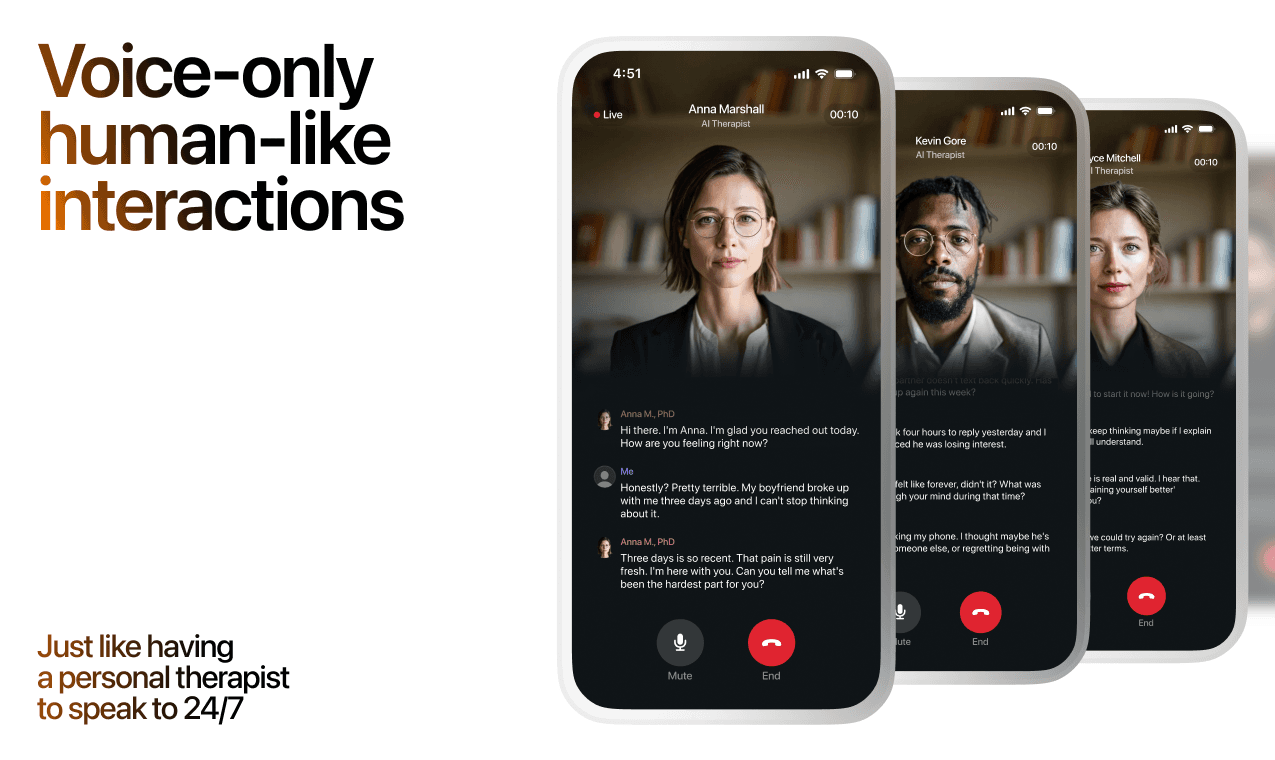
Here's what happens in a typical Lovon session:
You share what's on your mind
There's no script, no intake form, no waiting room. You speak or type whatever you're feeling — in your own words, at your own pace.
Lovon validates and explores
Using frameworks from CBT (Cognitive Behavioral Therapy) and motivational interviewing, Lovon acknowledges your feelings first, then gently helps you explore them. No dismissive "just move on" advice.
You build coping skills together
Lovon doesn't just listen — it actively works with you on evidence-based techniques: thought reframing, urge surfing, behavioral experiments, and more.
What a Session with Lovon Looks Like
When to Seek Professional Help
AI support is a valuable tool, but it's not a replacement for professional care. Please consider reaching out to a licensed therapist if you experience any of the following:
- Persistent thoughts of self-harm or suicide
- Inability to perform daily activities (work, eating, sleeping) for more than 2 weeks
- Turning to alcohol or substances to cope
- Intense anger or desire to harm your ex-partner
- Complete emotional numbness that doesn't improve over time
Crisis Resources (US): If you're in immediate danger, call 988 (Suicide & Crisis Lifeline) or text HOME to 741741 (Crisis Text Line). Available 24/7, free, and confidential.
Outside the US? Find a crisis line in your country
Ready to Start?
Your healing journey can begin right now
A 7-day trial. No judgment. Just a safe space to process what you're going through.
Frequently Asked Questions
Is Lovon a replacement for a real therapist?
Is my conversation with Lovon AI private?
How is Lovon different from ChatGPT for emotional support?
Can I use Lovon if I'm already seeing a therapist?
Can I try Lovon before subscribing?
About the Author
The Lovon Editorial Team
Mental Health & Wellness Content Team
The Lovon Editorial Team develops mental health and wellness content designed to make psychological concepts accessible and actionable. Our goal is to bridge the gap between clinical research and everyday life - helping you understand why your mind works the way it does and what you can do about it....
Related articles
- How to Heal Anxious Attachment on Your Own (2026)
Step-by-step guide to healing anxious attachment solo in 2026: triggers, nervous system work, boundaries, and tools that…
- Why Do I Shake When Anxious? Causes & Fixes 2026
Shaking when anxious is adrenaline, not weakness. See the real causes, the fastest fixes for 2026, and when shaking…
- Why Chest Feels Tight When Anxious (2026 Fix)
Chest tight when anxious? Tensed muscles and shallow breathing are the cause in 2026 guidance. Get the 7-step fix and…
- Can an AI voice app actually calm you down?
Yes, AI voice apps calm acute anxiety spikes fast through paced voice conversation. See how it works, its limits, and…
See also
Quizzes
- Perfectionism Test: What Are Your Standards Costing?
See what your standards actually cost, in 3 minutes.
- What's My Attachment Style? Free 12-Question Quiz
Find your attachment pattern in 3 minutes.
Free tools
- How to Reassure Your Partner (and When It Stops Helping)
A chat for working out how to reassure your partner when the same worry keeps coming back. Say what sets it off and how…
- Vent to Someone
Say the whole thing. It does not have to be fair or organized, you will not have to manage how it lands, and no advice…
From the wiki
- Why do I feel lonely all of a sudden?
Sudden loneliness usually traces back to something that quietly ended in the last few months: a routine, a shared class…
Disclaimer: This article is for informational purposes only and does not constitute medical advice, diagnosis, or treatment. Always seek the advice of your physician or other qualified health provider with any questions you may have regarding a medical condition. If you are in crisis or think you may have an emergency, call 988 (Suicide & Crisis Lifeline) or go to the nearest emergency room. Outside the US? Find a crisis line in your country.