
How to Stop Anger Outbursts Before They Happen (2026)
Learn how to stop anger outbursts before they happen in 2026 with trigger tracking, box breathing, and a pre-planned pause backed by real steps.

Key Takeaways
- Catching the body's warning signs in the first 90 seconds stops most anger outbursts before words leave your mouth.
- Box breathing and a scheduled pause work better than telling yourself to 'just calm down' in the heat of the moment.
- Most outbursts repeat 3-4 predictable triggers once you track them for two weeks.
- Lovon's AI voice therapist gives you a place to rehearse responses between real sessions - a solid daily practice
Anger outbursts feel sudden, but they aren't random. Your body sends warning signals for seconds to minutes before you snap, and learning to catch those signals is the entire skill of stopping anger outbursts before they happen.
TL;DR
- Catching the body's warning signs in the first 90 seconds stops most anger outbursts before words leave your mouth.
- Box breathing and a scheduled pause work better than telling yourself to 'just calm down' in the heat of the moment.
- Most outbursts repeat 3-4 predictable triggers once you track them for two weeks.
- Lovon's AI voice companion gives you a place to rehearse responses between real sessions - a solid daily practice tool, not a replacement for treatment.
Why this matters
An anger outburst is rarely about the thing that just happened. It's the last straw on a pile that's been building since morning, or a nervous system that's been running hot for days. By the time you're yelling, the rational part of your brain has already stepped back and let the alarm system run the show.
That alarm system has a name: the amygdala hijack. Once it fires, your heart rate spikes, your voice gets louder, and reasoning your way out of it in real time is nearly impossible. The fix isn't willpower in the moment. It's building habits that catch the surge before it peaks, which is exactly what this guide walks through step by step.
What you'll need
- A notebook, notes app, or voice memo tool to log triggers for two weeks
- 60 seconds of privacy when you feel the surge start (a bathroom, a car, a hallway)
- A short list of physical cues that show up before your outbursts (clenched jaw, hot face, racing thoughts)
- A breathing technique you've practiced when calm, not one you're learning mid-argument
- Optional: a voice-based tool like Lovon for talking through what triggered you the same day, while it's still fresh
The steps
1. Log the pattern before you try to break it
You can't interrupt a cycle you haven't mapped. For two weeks, write down every moment you felt irritation cross into anger: what happened five minutes before, who was there, and what your body did first.
Most people find their outbursts cluster around 3-4 repeat triggers — being interrupted, feeling disrespected, running late, or getting unsolicited advice. Once you see the pattern in writing, you stop being surprised by it. Learning to identify your emotional triggers is the single highest-leverage step in this entire process, and skipping it is the most common reason anger management attempts fail by week three.
Common mistake: logging only the explosion, not the ten minutes before it. The buildup is where the intervention has to happen.
2. Name the physical cue that always comes first
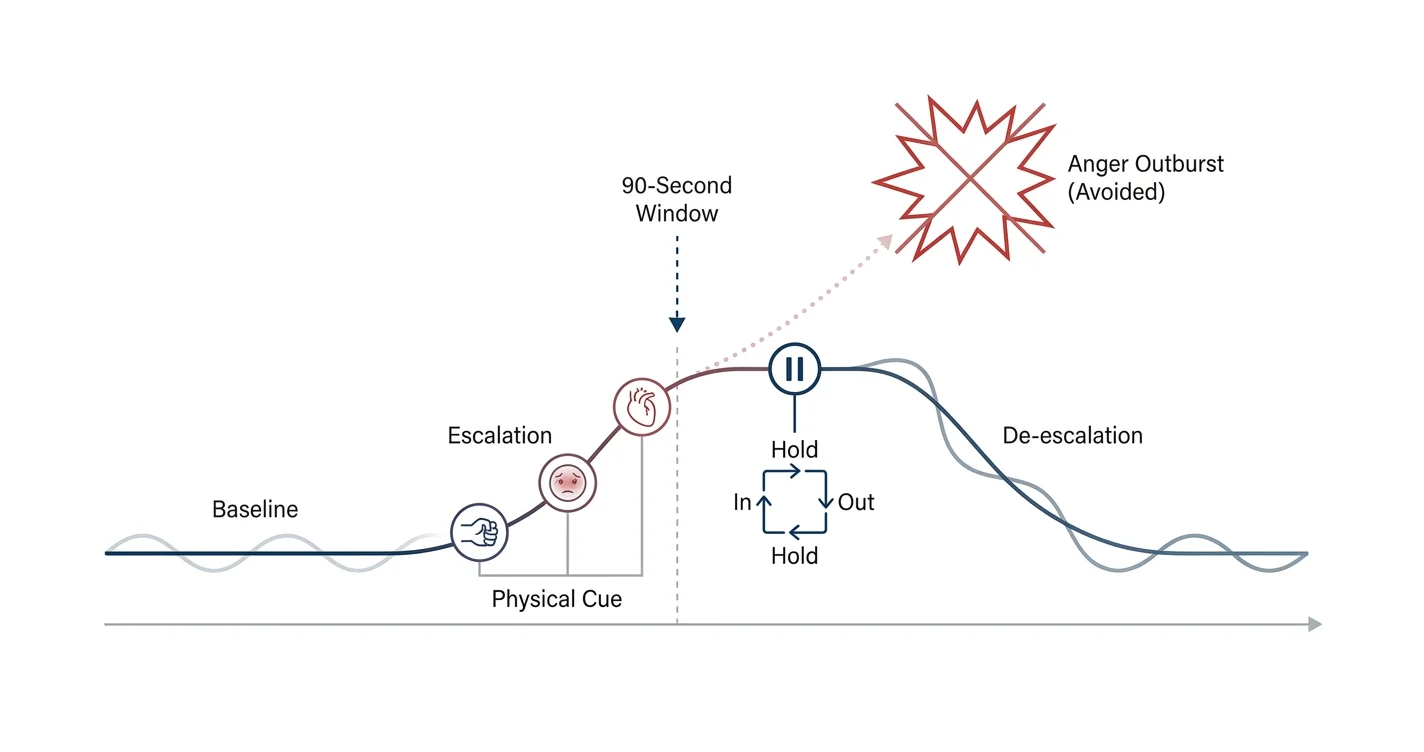
Every outburst has a physical tell that arrives before the words do. For most people it's a hot face, a tight jaw, a clenched fist, or a sudden urge to interrupt. That tell is your two-minute warning.
Write yours down and rehearse it out loud: "When my jaw clenches, that means I have about 90 seconds before I say something I'll regret." Naming it out loud, even alone in your car, makes it easier to catch live.
3. Build a pause you actually use
A pause only works if it's decided in advance. "I'll take a break if I get 1 through 10 on a heat scale" beats "I'll try to calm down" because it removes the decision from the heated moment.
A workable script: "I need five minutes, I'll be back." Say it, leave the room, and set a timer. Five minutes is long enough for cortisol to start dropping and short enough that it doesn't read as stonewalling.
4. Practice a breathing pattern before you need it
Box breathing — four seconds in, four seconds hold, four seconds out, four seconds hold — slows your heart rate and gives your prefrontal cortex time to come back online. It only works if your body already knows the pattern, so practice it daily when you're calm, not for the first time mid-argument.
Run through the box breathing technique for five minutes every morning in 2026 and it becomes muscle memory by week two. Expected outcome: your heat scale drops by 2-3 points within 60-90 seconds of starting the pattern.
5. Lower your baseline before the trigger hits
Someone running on four hours of sleep and skipped meals is closer to their outburst threshold before the day even starts. Anger outbursts are far more likely when your nervous system is already dysregulated from stress, hunger, or exhaustion.
Eat something before high-stakes conversations. Sleep debt and blood sugar crashes shrink your window of tolerance more than any single trigger does.
6. Rehearse the trigger, not just the calm
Most people only practice breathing when they're relaxed, then wonder why it fails under pressure. Visualize the actual trigger — the specific sentence your partner says, the specific tone your boss uses — and rehearse your breathing response to that exact scenario.
Talking it through out loud works better than silent visualization for most people. Saying the trigger sentence and your planned response, even to an empty room or to an AI voice therapist, builds the same rehearsal effect as a role-play with a real person.
7. Debrief the same day, win or lose
Whether you caught it or lost it, review the moment the same day while details are fresh. What was the first physical cue? Did you use the pause? What would you do differently in the next 24 hours?
Skipping the debrief is why the same trigger blindsides people over and over. A two-minute voice note or a quick talk-through turns one outburst into data instead of just shame.
Talk through today's trigger before it builds up
Have a voice conversation with Lovon's AI voice companion the same day it happens.
Troubleshooting
The pause makes things worse, not better. If your partner or coworker reads "I need five minutes" as stonewalling, say the plan out loud in advance, before you're heated: "When I say I need a break, it means I'm coming back, not shutting you out."
You catch the cue but still explode. This usually means the amygdala hijack happened faster than your 90-second window. Read up on amygdala hijack and shrink your trigger threshold — the goal shifts from stopping the surge to shortening the recovery time after it.
Breathing feels impossible mid-argument. That's normal under high adrenaline. Practice box breathing at a lower stakes level first — traffic, a slow line at the store — before expecting it to work during a real fight.
Outbursts happen even on good days. Check your window of tolerance — chronic stress and poor sleep shrink it over weeks, not days, so a single "good day" doesn't undo months of a narrowed baseline.
You feel worse after logging every trigger. Tracking anger without a release valve can feel like reliving it. Pair the log with a same-day talk-through, even a short one, instead of letting the notes just sit there.
If you can name the trigger before it fires, you get to choose the response instead of reacting to it.
Tools and resources
- A notes app or voice memo tool for the two-week trigger log
- A visual or physical timer for the five-minute pause
- Nervous system dysregulation signs and reset practices, for the days your baseline feels off before any trigger even shows up
- Lovon's AI voice companion for a same-day talk-through when a real session isn't available — useful for rehearsing responses out loud, not a substitute for licensed clinical care
FAQ
How do I stop anger outbursts before they happen?
You stop anger outbursts by catching the physical warning signs — a tight jaw, hot face, racing thoughts — in the 60 to 90 seconds before the peak, then using a pre-planned pause and a breathing pattern you've already practiced calm. Logging your triggers for two weeks makes the pattern visible so you're not caught off guard by the same 3-4 repeat situations.
What triggers sudden anger outbursts?
The most common triggers are feeling disrespected, being interrupted, running late, and unsolicited criticism or advice. A shrunken window of tolerance from poor sleep, skipped meals, or ongoing stress lowers the threshold, making smaller things trigger bigger reactions.
Is it possible to control anger without medication?
Yes, for most everyday anger and irritability, tracking triggers, practicing breathing techniques daily, and using a pre-decided pause reduce outburst frequency without medication. Anger tied to a diagnosed condition or trauma history may need a licensed clinician alongside these tools.
How long does an anger outburst actually last?
The physiological surge behind an outburst typically peaks and starts fading within 90 seconds to 20 minutes if you stop feeding it with more escalation. That's why a five-minute pause, taken early, is usually enough to bring your heart rate back down.
Can AI therapy help with anger management?
An AI voice companion like Lovon can give you a place to talk through what triggered you the same day, rehearse responses out loud, and build coping habits between real sessions in 2026. It's a support tool, not a replacement for a licensed therapist, especially for anger tied to trauma or a diagnosed condition.
Why do I get angry over small things?
Small triggers cause outsized anger when your baseline stress is already high — a narrowed window of tolerance means less is needed to push you over the edge. Sleep debt, hunger, and unresolved daily stress are the usual hidden factors behind this pattern.
What is the fastest way to calm down when already angry?
Box breathing — four seconds in, four seconds hold, four seconds out, four seconds hold — is the fastest reliable method, but it only works well if you've practiced it calm first. Leaving the room for five minutes with a stated return time is the second fastest and works even when breathing alone doesn't cut it.
Does journaling actually reduce anger outbursts?
Journaling reduces outbursts mainly by revealing the repeat triggers behind them — most people find 3-4 patterns account for the majority of their episodes once logged for two weeks. The reduction comes from prevention through pattern recognition, not from the writing itself.
One last thing
The outburst you're most ashamed of probably wasn't about the thing you yelled about. It was the fourth small trigger of the day landing on a nervous system that had zero room left — which is exactly why the two-week trigger log matters more than any single breathing technique. Fix the baseline, and the triggers stop feeling like emergencies.
Related guides
How AI Support Helps You Heal
AI emotional support isn't about replacing human connection — it's about filling the gaps. The moments when you need to talk at 2 AM, when you don't want to burden your friends again, or when you simply need someone to listen without judgment.
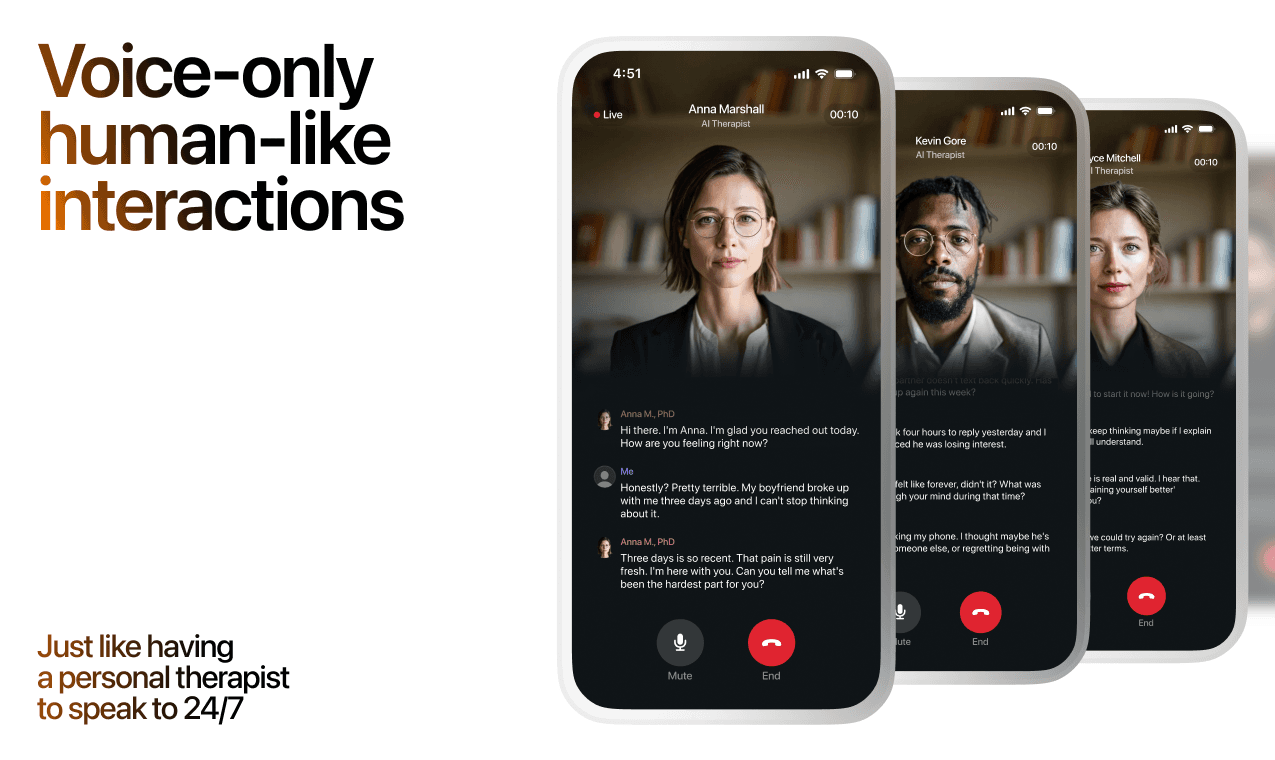
Here's what happens in a typical Lovon session:
You share what's on your mind
There's no script, no intake form, no waiting room. You speak or type whatever you're feeling — in your own words, at your own pace.
Lovon validates and explores
Using frameworks from CBT (Cognitive Behavioral Therapy) and motivational interviewing, Lovon acknowledges your feelings first, then gently helps you explore them. No dismissive "just move on" advice.
You build coping skills together
Lovon doesn't just listen — it actively works with you on evidence-based techniques: thought reframing, urge surfing, behavioral experiments, and more.
What a Session with Lovon Looks Like
When to Seek Professional Help
AI support is a valuable tool, but it's not a replacement for professional care. Please consider reaching out to a licensed therapist if you experience any of the following:
- Persistent thoughts of self-harm or suicide
- Inability to perform daily activities (work, eating, sleeping) for more than 2 weeks
- Turning to alcohol or substances to cope
- Intense anger or desire to harm your ex-partner
- Complete emotional numbness that doesn't improve over time
Crisis Resources (US): If you're in immediate danger, call 988 (Suicide & Crisis Lifeline) or text HOME to 741741 (Crisis Text Line). Available 24/7, free, and confidential.
Outside the US? Find a crisis line in your country
Ready to Start?
Your healing journey can begin right now
A 7-day trial. No judgment. Just a safe space to process what you're going through.
Frequently Asked Questions
Is Lovon a replacement for a real therapist?
Is my conversation with Lovon AI private?
How is Lovon different from ChatGPT for emotional support?
Can I use Lovon if I'm already seeing a therapist?
Can I try Lovon before subscribing?
About the Author
The Lovon Editorial Team
Mental Health & Wellness Content Team
The Lovon Editorial Team develops mental health and wellness content designed to make psychological concepts accessible and actionable. Our goal is to bridge the gap between clinical research and everyday life - helping you understand why your mind works the way it does and what you can do about it....
Related articles
- PTSD Triggers 2026: How to Identify and Manage Them Daily
PTSD triggers explained: spot patterns in 14 days, use a 90-second grounding response, and build a daily routine that…
- AI Therapist for Work Stress: How to Use It in 2026
Learn how to use an ai therapist for work stress the right way in 2026 - specific triggers, grounding steps, and when…
- Best AI App for Anger Management in 2026: Ranked
The best ai app for anger management in 2026, ranked by real-time availability, format, and honesty about limits. Lovon…
- Sunday Scaries: Why They Happen & How to Calm It (2026)
Sunday scaries peak before Monday even starts. See why the dread hits in 2026, plus 7 concrete steps to calm it before…
See also
Quizzes
- Am I a People Pleaser? 12-Question Quiz
Where kindness stops and self-erasure starts.
- Am I Codependent? 12-Question Self-Check
See how much of you is left over, in 2 minutes.
Free tools
- How to Reconnect With an Old Friend
A chat for how to reconnect with an old friend, starting with the text you have been meaning to send for a year. Tell it…
- 5-4-3-2-1 Grounding Exercise
A guided run through the 5-4-3-2-1 technique, with paced breathing first if you need it. No sign-up, nothing stored…
From the wiki
- What is inhibited grief?
Inhibited grief is grief that never gets out. The loss happened, you kept functioning, and the feeling stayed sealed…
Disclaimer: This article is for informational purposes only and does not constitute medical advice, diagnosis, or treatment. Always seek the advice of your physician or other qualified health provider with any questions you may have regarding a medical condition. If you are in crisis or think you may have an emergency, call 988 (Suicide & Crisis Lifeline) or go to the nearest emergency room. Outside the US? Find a crisis line in your country.