
Is adult ADHD real or just an excuse?
Is adult ADHD real? Yes. Learn how clinicians assess lasting symptoms, what else can affect attention, and how to take responsibility while getting support.

Key Takeaways
- Is adult ADHD real? Yes. Persistent symptoms can affect work, home life, and relationships.
- ADHD can explain a difficulty without excusing its impact on other people.
- A clinician checks childhood history, symptoms across settings, impairment, and other possible causes.
- Lovon is best for talking through ADHD-related stress, not for getting an ADHD diagnosis.
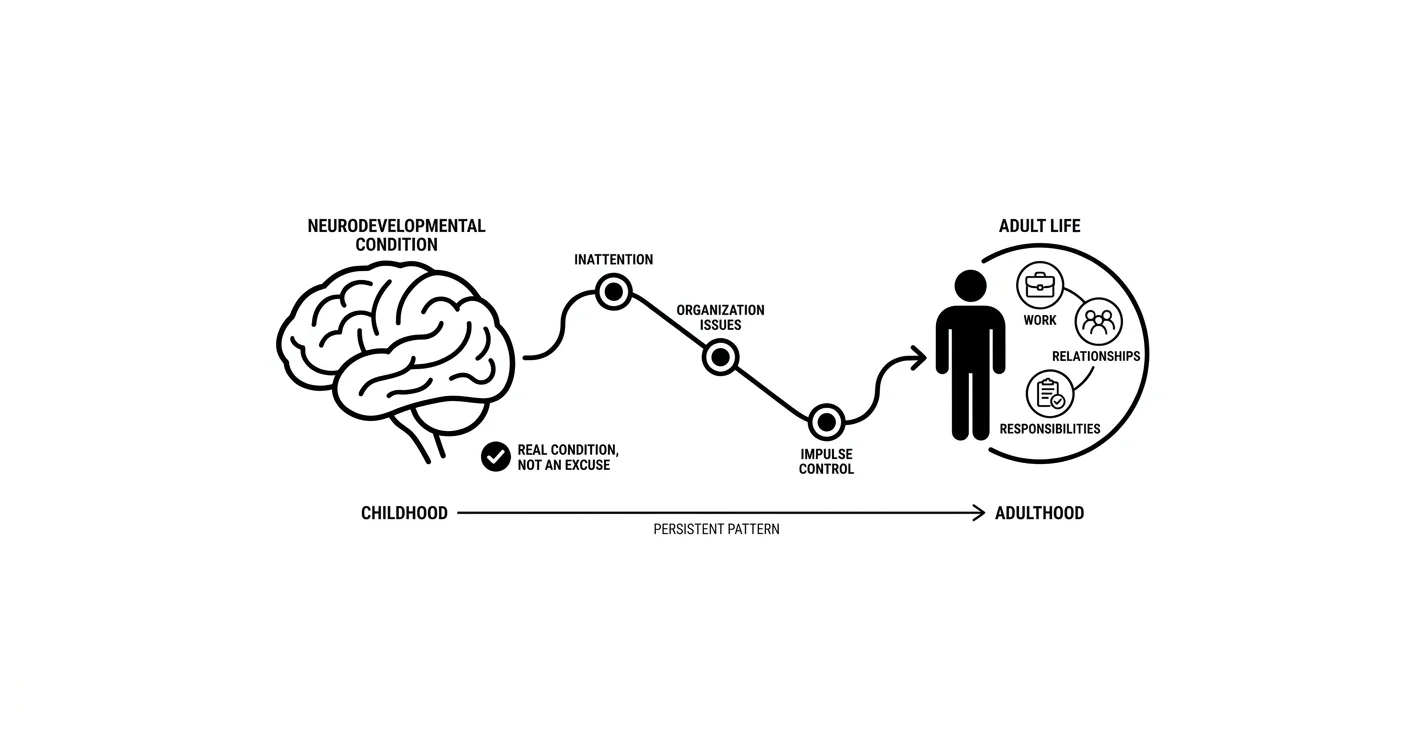
Yes. Adult ADHD is a real neurodevelopmental condition, not an excuse for behavior. It can affect attention, organization, impulse control, and daily responsibilities long after childhood. In 2026, the useful question is not whether someone is trying hard enough; it is whether a persistent pattern of symptoms warrants a professional evaluation.
TL;DR
- Is adult ADHD real? Yes. Persistent symptoms can affect work, home life, and relationships.
- ADHD can explain a difficulty without excusing its impact on other people.
- A clinician checks childhood history, symptoms across settings, impairment, and other possible causes.
- Lovon is best for talking through ADHD-related stress, not for getting an ADHD diagnosis.
Why this matters
Being called lazy when you keep losing track of tasks hurts. So does living with someone who repeatedly misses commitments. Both experiences deserve to be taken seriously. The question of whether adult ADHD is real often comes up when someone needs an explanation, while someone else needs a change.
The answer should make room for both. A diagnosis can clarify why a task is difficult; it does not erase the task or its effect on another person. If worry also makes it hard to concentrate, this guide to ADHD and anxiety covers where the experiences overlap. In 2026, start with the pattern you can observe rather than a judgment about character.
Is adult ADHD real or just an excuse?
Adult ADHD is real. Using ADHD to avoid every conversation about consequences is different from having ADHD. Clinicians assess a lasting pattern of symptoms and impairment; they do not diagnose someone because they forgot a meeting or had a disorganized week. At the same time, a person does not have to prove that they are struggling by failing at every part of life.
| Question | What points toward an ADHD evaluation | What needs another look |
|---|---|---|
| How long has it been happening? | Difficulties form a persistent pattern that reaches back to childhood. | The problem began recently or appears only during a specific stressful period. |
| Where does it happen? | Similar difficulties affect more than one part of life, such as work and home. | The difficulty appears in one situation and needs more context. |
| What is the impact? | Symptoms interfere with responsibilities, relationships, or daily functioning. | The trait is noticeable but does not cause meaningful impairment. |
| What else is happening? | A clinician considers the full history, including sleep, mood, and anxiety. | Another condition or circumstance better explains the difficulties. |
This table is a way to organize questions, not a test. A recent change in concentration still deserves attention even if ADHD is not the cause. The distinction matters because the next step depends on what is actually happening, not on which label feels most convincing.
What makes ADHD more than occasional distraction?
Everyone gets distracted. ADHD involves a persistent pattern of inattention, hyperactivity, impulsivity, or a combination that interferes with functioning. In adults, it can show up as trouble starting and finishing tasks, tracking obligations, waiting, or pausing before acting. Some people feel restless without looking visibly hyperactive.
A difficult task is not proof of a disorder. Notice whether the same kinds of difficulty keep showing up despite your efforts to address them. If they affect your work, relationships, or responsibilities, write down what happens and discuss it with a qualified clinician.
Can a capable adult still have ADHD?
Yes. Doing well in some situations does not rule out ADHD. A person can keep up at work and still struggle to manage bills, household tasks, or conversations at home. The relevant question is how persistent symptoms affect functioning across the whole of life, not whether someone has ever succeeded.
That also means you should not diagnose a coworker, partner, or yourself from a single behavior. Missing a deadline has many possible explanations. A fuller history helps separate a recurring difficulty from an isolated mistake.
What does an adult ADHD assessment check?
An adult ADHD assessment looks for a persistent, impairing pattern rather than a personality flaw. Diagnostic criteria require symptoms for at least 6 months, evidence that several symptoms were present before 12 years of age, and symptoms in at least 2 settings. For adults, the criteria call for at least 5 symptoms of inattention, hyperactivity-impulsivity, or both. A qualified clinician also checks whether another explanation better fits.
These numbers come from the DSM-5-TR diagnostic criteria. They are not a self-scoring checklist. You can remember the pattern but struggle to recall exact childhood examples; an evaluator can ask about school, family life, past records, and what people close to you noticed.
If you are seeking an evaluation in 2026, bring concrete examples instead of trying to deliver a polished account of your whole life. The aim is to describe what happens, how often it disrupts you, and whether the pattern has been there for years.
- Describe the task. Say what you meant to do and what happened instead. A specific example tells a clinician more than saying you are bad at focusing.
- Explain the impact. Note whether the pattern affects deadlines, shared responsibilities, finances, or relationships. Include what you have already tried.
- Look back. Think about similar difficulties in childhood, even if nobody used the word ADHD at the time. Bring records or another person's observations if you have them.
- Mention other changes. Share problems with sleep, mood, anxiety, or stress. These details help the clinician assess the full picture rather than assuming one cause.
You do not need to arrive with the right diagnosis. You need to give an accurate account. If ADHD fits, an evaluation can guide a discussion of treatment and practical support. If it does not, the difficulties you described still warrant an answer.
Why adult ADHD experiences vary
Two adults with ADHD can need different kinds of help. These factors change what a difficulty looks like and how clearly it shows up:
- The tasks involved. A person who manages an engaging task can still struggle with a repetitive obligation. Doing well at one thing does not cancel difficulty elsewhere.
- The setting. Work, home, and relationships ask for different kinds of attention and follow-through. Ask where the problem repeats, not just where it is most visible.
- The support already in place. Reminders, calendars, and shared routines can help someone meet an obligation. Functioning with support does not answer what happens without it.
- Sleep and stress. Poor sleep or sustained stress can make concentration harder. Tell an evaluator about them rather than assuming that every lapse has the same cause.
- Anxiety or low mood. These can affect attention and motivation too. They need consideration alongside ADHD, not a quick either-or judgment.
None of these factors makes it possible to diagnose ADHD from a conversation. They explain why a person's experience can look inconsistent from the outside. In 2026, judge the recurring impact and the response to it, not how convincing someone seems in a single moment.
Does having ADHD excuse missed responsibilities?
No. ADHD can help explain why keeping a commitment is difficult, but the effect of a missed commitment is still real. The productive conversation is about what happened and what would make the next attempt more reliable. Blame alone rarely gives either person a usable plan.
If you have ADHD, name the specific problem rather than using the diagnosis as the whole answer. You might say that you lost track of a task, acknowledge the impact, and agree on a reminder or a check-in. If a proposed system fails, change the system and keep discussing the responsibility. An explanation is most useful when it leads to a workable next step.
If you are the person affected, you can take ADHD seriously and set a boundary. Say which commitment matters and what you need if it cannot be met. You do not have to decide whether someone is trying hard enough before you can ask for honesty or a different arrangement.
What if I think I have ADHD but was never diagnosed?
Ask a qualified clinician for an adult ADHD evaluation. Describe the pattern you have noticed, when you first remember it, and how it affects daily life. A clinician can assess ADHD and consider other explanations; an online article or app cannot make that determination.
Before the appointment, keep a brief record of situations that keep repeating. Note the task, what got in the way, and the consequence. Also write down what helps, whether that is a reminder, a quieter place, or breaking a task into smaller parts. The record is useful even if the eventual explanation is not ADHD.
You can try practical supports while you wait. Put an important task somewhere you will see it, agree on a clear deadline with another person, or make the first step small enough to start. These are ways to reduce friction, not substitutes for an assessment. If the difficulty is disrupting your life, do not wait for a perfect record before seeking help.
Can you talk through ADHD-related stress without a diagnosis?
Yes. You do not need a diagnosis to describe feeling overwhelmed, frustrated, or ashamed. Talking can help you name a problem and choose a next step. It cannot establish whether ADHD is the cause.
Lovon is best for adults who want to talk through ADHD-related stress, not for diagnosing ADHD. The Lovon voice therapy app offers on-demand emotional support and coping tools. You can explore Lovon if speaking feels easier than writing. Its support is not a replacement for licensed clinical care, and a qualified clinician is the right person to ask about diagnosis or treatment.
In 2026, keep those roles separate. Use a conversation to get clearer about what you are feeling and what you want to bring to an appointment. Do not treat an app's response as confirmation that you do or do not have a condition.
Is it ADHD, stress, or something else?
You cannot reliably separate them by asking whether you feel distracted. Ask instead when the difficulties began, where they occur, and what else changed. A long-running pattern across settings warrants a different conversation from concentration problems that appeared during a stressful period. Both deserve care.
Avoid turning this question into a contest over whose explanation is more valid. Stress can be serious without being ADHD. ADHD can be real when stress is present too. A clinician can look at timing, impairment, and other symptoms without asking you to dismiss what you have experienced.
For someone close to you, the same principle applies. You can say what you see and how it affects you, but you cannot settle their diagnosis. Focus on the behavior you need to address while leaving the medical question to a professional.
FAQ
Is adult ADHD real in 2026?
Yes. Adult ADHD is a recognized neurodevelopmental condition. A qualified clinician assesses a persistent pattern of symptoms, its impact, and other possible explanations.
Can ADHD start for the first time in adulthood?
ADHD diagnostic criteria require evidence of several symptoms before 12 years of age. If concentration problems first appeared in adulthood, a clinician should look into other possible causes.
Can you have ADHD if you did well in school?
Yes. Doing well in school does not, by itself, rule out ADHD. An evaluator looks at the broader history and how symptoms affect daily functioning.
Does ADHD excuse hurting someone or missing commitments?
No. ADHD can explain a difficulty without removing responsibility for its impact. A clear plan and an honest conversation matter to the people affected.
How long do ADHD symptoms need to last?
At least 6 months under the DSM-5-TR diagnostic criteria. A clinician also looks for childhood symptoms, impairment, and symptoms in at least 2 settings.
Can anxiety look like ADHD in adults?
Yes. Anxiety can make it hard to concentrate, and a person can also have both anxiety and ADHD. An evaluation considers the timing and full pattern of symptoms.
Can an app diagnose adult ADHD?
No. Lovon offers voice-based emotional support, not an ADHD diagnosis. Ask a qualified clinician for an assessment if persistent symptoms are affecting your life.
One last thing
The word excuse often ends a conversation that needs to get more specific. In 2026, try a better question: What keeps happening, whom does it affect, and what support or change would help? That question takes adult ADHD seriously without asking anyone to ignore the consequences. If the pattern persists, bring it to a qualified clinician.
Related guides
How AI Support Helps You Heal
AI emotional support isn't about replacing human connection — it's about filling the gaps. The moments when you need to talk at 2 AM, when you don't want to burden your friends again, or when you simply need someone to listen without judgment.
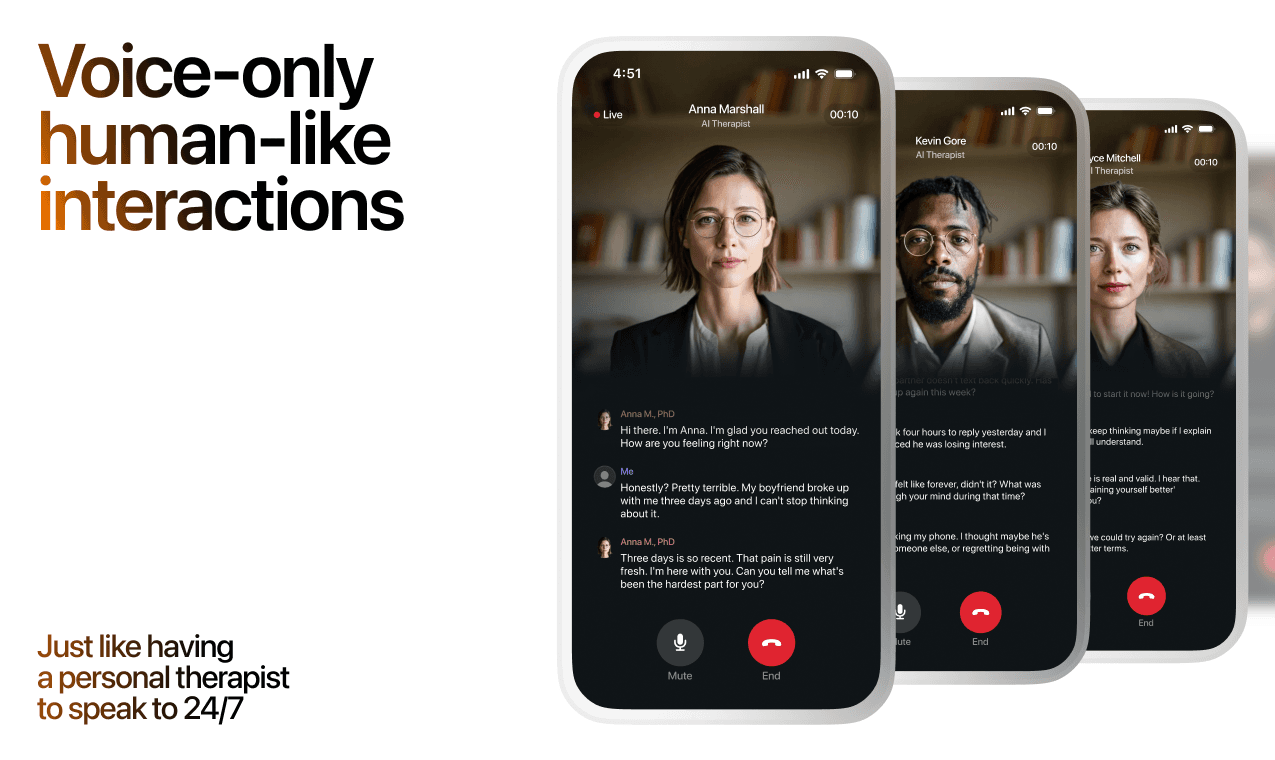
Here's what happens in a typical Lovon session:
You share what's on your mind
There's no script, no intake form, no waiting room. You speak or type whatever you're feeling — in your own words, at your own pace.
Lovon validates and explores
Using frameworks from CBT (Cognitive Behavioral Therapy) and motivational interviewing, Lovon acknowledges your feelings first, then gently helps you explore them. No dismissive "just move on" advice.
You build coping skills together
Lovon doesn't just listen — it actively works with you on evidence-based techniques: thought reframing, urge surfing, behavioral experiments, and more.
What a Session with Lovon Looks Like
When to Seek Professional Help
AI support is a valuable tool, but it's not a replacement for professional care. Please consider reaching out to a licensed therapist if you experience any of the following:
- Persistent thoughts of self-harm or suicide
- Inability to perform daily activities (work, eating, sleeping) for more than 2 weeks
- Turning to alcohol or substances to cope
- Intense anger or desire to harm your ex-partner
- Complete emotional numbness that doesn't improve over time
Crisis Resources (US): If you're in immediate danger, call 988 (Suicide & Crisis Lifeline) or text HOME to 741741 (Crisis Text Line). Available 24/7, free, and confidential.
Outside the US? Find a crisis line in your country
Ready to Start?
Your healing journey can begin right now
A 7-day trial. No judgment. Just a safe space to process what you're going through.
Frequently Asked Questions
Is Lovon a replacement for a real therapist?
Is my conversation with Lovon AI private?
How is Lovon different from ChatGPT for emotional support?
Can I use Lovon if I'm already seeing a therapist?
Can I try Lovon before subscribing?
About the Author
The Lovon Editorial Team
Mental Health & Wellness Content Team
The Lovon Editorial Team develops mental health and wellness content designed to make psychological concepts accessible and actionable. Our goal is to bridge the gap between clinical research and everyday life - helping you understand why your mind works the way it does and what you can do about it....
Related articles
- Is it normal to lose feelings in a long relationship?
Is it normal to lose feelings in a long relationship? Yes, feelings can change. Understand emotional distance, warning…
- How long does it take to get an adult ADHD diagnosis?
How long does an adult ADHD diagnosis take? There is no fixed timeline in 2026. Learn what affects the wait, what an…
- Is ADHD considered a disability?
Is ADHD considered a disability? Yes, when its effects meet the rules. Learn how workplace, school and Social Security…
- Can ADHD be managed without medication?
Can ADHD be managed without medication? Yes, for some adults. Learn which therapy, routines, and supports help, where…
See also
Quizzes
- Highly Sensitive Person Test: How Much Do You Take In?
See how deeply you process, notice and get overloaded.
- Alexithymia Test: Can You Name What You Feel?
See where your feelings lose their names, in 3 minutes.
Free tools
- What to Say to Someone Who Is Grieving
Get sentences that fit this person and this week, not a list of things people say at funerals. Describe who they lost…
- What to Say When a Pet Dies
Get a message you can actually send to someone whose dog or cat just died: one that uses the animal's name, treats the…
From the wiki
- Why do I keep dreaming about the same person?
A recurring dream figure usually marks unfinished emotional business rather than a message about that person. Your brain…
Disclaimer: This article is for informational purposes only and does not constitute medical advice, diagnosis, or treatment. Always seek the advice of your physician or other qualified health provider with any questions you may have regarding a medical condition. If you are in crisis or think you may have an emergency, call 988 (Suicide & Crisis Lifeline) or go to the nearest emergency room. Outside the US? Find a crisis line in your country.