
Can low self-esteem affect your physical health?
Can low self esteem affect physical health? Yes, indirectly through stress, sleep, and daily habits. Learn what helps and when to seek medical care.


Key Takeaways
- Can low self esteem affect physical health? Yes, through stress, sleep disruption, and changes in daily care.
- Headaches, stomach discomfort, and fatigue are not proof that low self-esteem is the cause.
- Treat physical symptoms and self-critical thinking together; you do not need to choose between medical and emotional support.
- Lovon offers voice-based emotional support, not medical diagnosis or a replacement for licensed clinical care.
Yes, low self-esteem can affect your physical health indirectly through stress, disrupted sleep, and changes in how you care for yourself. It does not mean low self-esteem caused a particular illness, and new or persistent physical symptoms deserve medical attention rather than being dismissed as emotional.
TL;DR
- Can low self esteem affect physical health? Yes, through stress, sleep disruption, and changes in daily care.
- Headaches, stomach discomfort, and fatigue are not proof that low self-esteem is the cause.
- Treat physical symptoms and self-critical thinking together; you do not need to choose between medical and emotional support.
- Lovon offers voice-based emotional support, not medical diagnosis or a replacement for licensed clinical care.
Can low self-esteem affect your physical health?
Low self-esteem can influence physical health, but the connection is not a simple cause-and-effect diagnosis. Feeling inadequate can feed repeated worry, make rest feel undeserved, or make asking for help harder. Those patterns can affect your body without making the symptoms imaginary.
The clearest explanation involves the effects of stress and daily habits. This guide to whether chronic stress can cause physical illness explains that related connection in more detail.
| Pathway | What you might notice | What it does not establish |
|---|---|---|
| Stress and tension | Tight shoulders, headaches, stomach discomfort | That self-esteem is the only cause |
| Disrupted sleep | Difficulty settling, tiredness, trouble concentrating | That fatigue needs no medical assessment |
| Changes in daily care | Skipped meals, less movement, delayed appointments | That you are lazy or responsible for being unwell |
| Anxiety or depression alongside self-criticism | Sleep, appetite, energy, or pain changes | That low self-esteem alone is a diagnosis |
These are possible connections, not a symptom checklist for diagnosing yourself. Physical illness, medication effects, sleep disorders, and other conditions can produce similar experiences.
Why this matters
When you already feel bad about yourself, physical symptoms can become another reason to criticize yourself. You might interpret exhaustion as weakness or a missed appointment as evidence that you cannot manage life. That adds blame without explaining what your body needs.
Your symptoms deserve care even when stress contributes to them. Emotional support and medical assessment can happen together. You do not have to prove that a symptom is entirely physical before asking for help.
For your 2026 health plan, keep that distinction clear: working on self-esteem supports your well-being, but it does not replace investigating persistent pain, fatigue, or other changes.
How self-criticism can keep stress going
A difficult event can end while your internal criticism continues. After a tense conversation, you might replay what you said, imagine rejection, and stay alert for signs that you made a mistake. Your shoulders remain tight long after you have left the room.
Stress can cause muscle tension, headaches, digestive symptoms, and sleep problems. MedlinePlus, the National Library of Medicine's public health resource, describes these physical effects in its guidance on stress and health. That supports the stress pathway; it does not establish that low self-esteem caused your particular symptoms.
A useful pattern to notice is:
- Trigger: Something happens, such as criticism or an uncomfortable interaction.
- Self-criticism: You turn the event into a judgment about your whole worth.
- Body tension: You notice tight muscles, stomach discomfort, or difficulty settling.
- Less recovery: You lose sleep, skip a break, or withdraw from support.
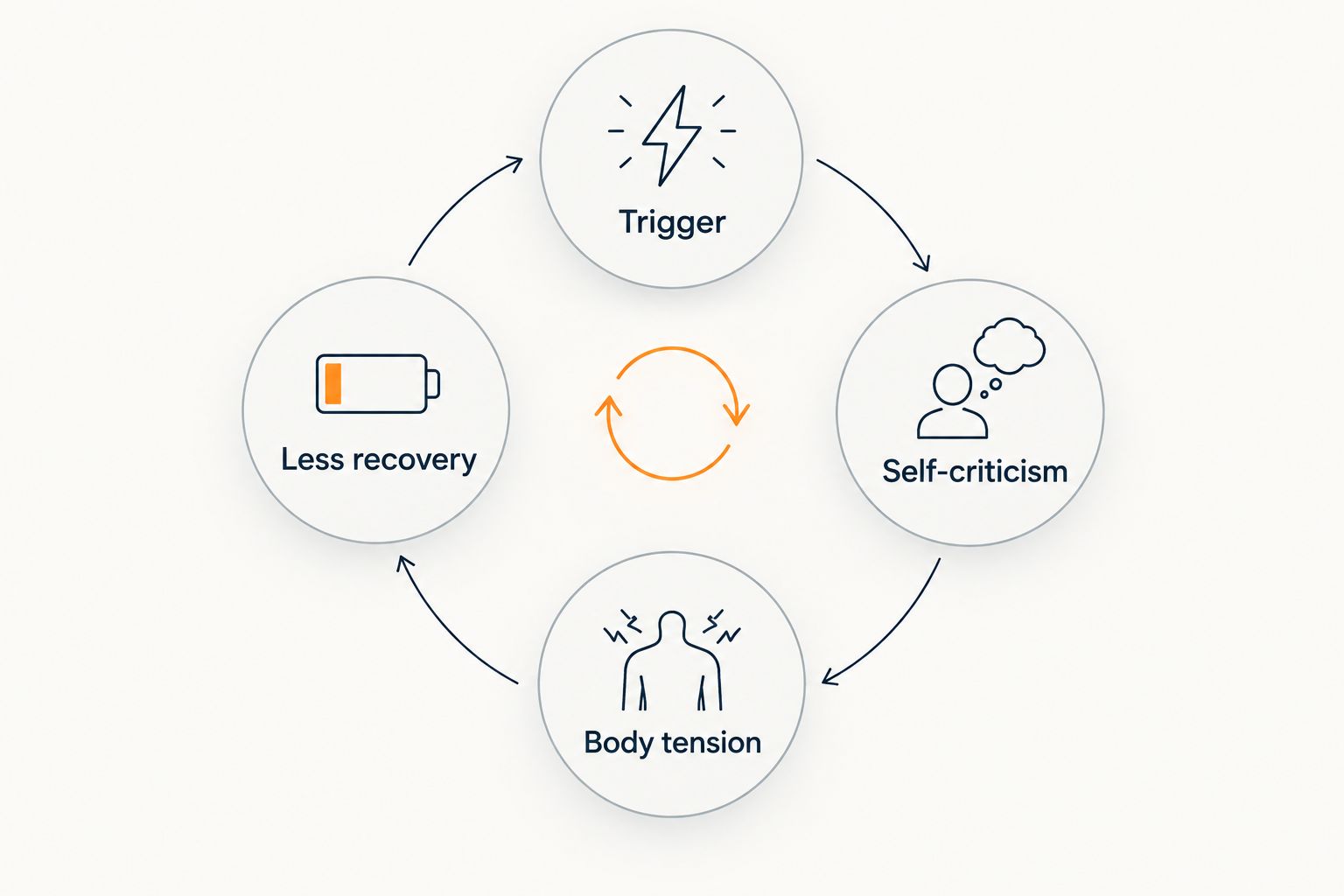 A loop connecting a trigger, self-criticism, body tension, and less recovery
Notice the pattern without assuming it explains every physical symptom.
You do not need to force yourself into positive thinking to interrupt this pattern. A more grounded response is to describe the event accurately, notice your body, and choose a practical next step.
Sleep and everyday care can be affected too
Self-critical thoughts can follow you into bed. Replaying mistakes or worrying about how others see you can make settling down harder, while tiredness can leave you with less patience for yourself the next day.
For a concrete 2026 sleep reference, CDC guidance recommends at least 7 hours per night for adults ages 18–60. This is general guidance, not a promise that reaching a sleep target will resolve low self-esteem or unexplained fatigue.
Everyday care also matters. If you believe your needs are inconvenient, you might postpone meals, work through breaks, or delay an appointment because someone else seems more deserving. These behaviors are worth addressing without turning them into another performance standard.
Choose a basic need you can meet today. Eat something, take a break, or arrange the appointment you have been putting off. You do not need to feel confident first.
Why the physical effects vary
People with low self-esteem do not all develop the same symptoms. The impact depends on what else is happening in your life and how self-critical thoughts affect your behavior.
- How persistent the criticism is. A passing doubt differs from repeatedly attacking yourself throughout the day.
- Your current stress load. Relationship conflict, caregiving, financial strain, or work pressure can add demands that self-esteem work alone does not remove.
- Your sleep. Difficulty sleeping can compound tiredness and make emotional coping harder.
- Your access to care. Support, appointment access, and practical resources affect what help you can obtain.
- Other health conditions. Anxiety, depression, chronic pain, and medical conditions can overlap with low self-esteem and need their own assessment.
These factors explain why a confidence exercise is not a complete treatment plan. Support needs to fit your symptoms, circumstances, and health history.
What can you do when self-criticism affects your body?
Start with care, not correction. You do not need to fix your personality before you can respond to a headache, eat regularly, or ask someone for support.
Notice the situation without deciding the cause
Make a brief note when a symptom occurs: what happened beforehand, what you noticed physically, and whether it affected your activities. Include sleep changes, illness, or medication changes if relevant. A short record can help you explain the pattern at an appointment.
Avoid repeatedly checking your pulse, scanning your body, or searching symptoms for reassurance. If tracking increases your anxiety, stop and discuss a simpler approach with a clinician.
Replace the attack with an accurate statement
Instead of treating a mistake as evidence that you are worthless, describe what actually happened. Missing a deadline means a deadline was missed; it does not establish your value as a person. Then identify the action available to you, such as asking for clarification or adjusting the task.
This is not pretending everything is fine. It separates a solvable problem from a sweeping judgment about yourself.
Give your body ordinary care
Try gentle movement that fits your health and ability. As a 2026 planning reference, CDC guidance recommends at least 150 minutes of moderate-intensity aerobic activity per week for adults, alongside muscle-strengthening activity. Some activity is better than none; this is not a requirement you must meet before you deserve support.
If pain, illness, disability, or exhaustion affects movement, ask a healthcare professional what is appropriate. Do not use exercise as punishment for how you look or feel.
Ask for help with the pattern
A licensed therapist can help you examine persistent self-criticism and address associated anxiety, low mood, or avoidance. A primary care clinician can assess physical symptoms and discuss whether tests, treatment, or referrals are needed.
Bring both concerns into the conversation. You can explain that you have been feeling harsh toward yourself and have also noticed changes in sleep, appetite, pain, or energy.
Which kind of support fits your needs?
Choose support by what you need assessed, not by how deserving you feel. Medical care, licensed therapy, and an emotional-support app serve different purposes. None requires you to wait until you are struggling more.
| Support option | Best for | Useful role | Limitation |
|---|---|---|---|
| Primary care clinician | New, persistent, or unexplained physical symptoms | Assesses possible medical causes and next steps | Emotional patterns can need additional therapy support |
| Licensed therapist | Persistent self-criticism or distress affecting daily life | Provides clinical assessment and psychological treatment within their scope | Physical symptoms can also need medical evaluation |
| Lovon | Everyday emotional support and self-reflection by voice | Offers conversations, coping tools, and reflection guidance | Is not a licensed clinician and cannot replace medical or crisis care |
Lovon is best for people seeking everyday voice-based emotional support, not clinical diagnosis or emergency care. That distinction matters when low self-esteem and physical symptoms overlap. Lovon can be an additional place to talk, while qualified professionals assess symptoms and treatment needs.
Can low self-esteem cause headaches or stomach problems?
Low self-esteem can contribute indirectly to headaches or stomach discomfort when it feeds ongoing stress, but those symptoms have many possible causes. The timing of a symptom can suggest something to discuss; it cannot confirm a diagnosis.
Seek medical advice for symptoms that persist, worsen, recur, or interfere with eating, sleeping, or normal activities. Sudden or severe symptoms need more urgent assessment.
Will improving self-esteem make physical symptoms disappear?
Improving self-esteem does not guarantee that physical symptoms will disappear. Reducing self-criticism and caring for your needs can help with stress-related patterns, while a separate medical condition still needs appropriate treatment.
Do not judge progress only by whether every symptom stops. Keeping an appointment, asking for help, or resting without punishing yourself are meaningful changes even while a health problem remains under investigation.
When should you get professional help?
Get professional help when self-criticism or physical symptoms disrupt your work, relationships, sleep, eating, or ability to care for yourself. You do not need a diagnosis before making an appointment. Mention symptoms even if you suspect stress plays a role.
For your 2026 appointment notes, include when symptoms began, what has changed, and what makes daily life harder. Tell the clinician about medications and supplements, and ask what symptoms should prompt urgent care.
Do not assume new chest pain, severe breathing difficulty, fainting, or sudden weakness is anxiety or low self-esteem. Seek emergency medical help. In the United States, call 911 for a medical emergency.
If you are thinking about suicide or need immediate crisis support in the United States, call or text 988. The 988 Suicide & Crisis Lifeline provides crisis support; an emotional-support app is not a substitute.
One last thing
You do not have to like yourself before you take care of yourself. Waiting for confidence can leave ordinary needs unmet. A practical 2026 starting point is to choose the next caring action, not the next self-improvement goal.
Book the appointment. Have the meal. Tell someone you are struggling. Your body does not need you to earn care.
Related guides
How AI Support Helps You Heal
AI emotional support isn't about replacing human connection — it's about filling the gaps. The moments when you need to talk at 2 AM, when you don't want to burden your friends again, or when you simply need someone to listen without judgment.
Here's what happens in a typical Lovon session:
You share what's on your mind
There's no script, no intake form, no waiting room. You speak or type whatever you're feeling — in your own words, at your own pace.
Lovon validates and explores
Using frameworks from CBT (Cognitive Behavioral Therapy) and motivational interviewing, Lovon acknowledges your feelings first, then gently helps you explore them. No dismissive "just move on" advice.
You build coping skills together
Lovon doesn't just listen — it actively works with you on evidence-based techniques: thought reframing, urge surfing, behavioral experiments, and more.
What a Session with Lovon Looks Like

Lovon is AI support, not a replacement for professional care. If things have been hard to get through for weeks, or you are thinking about harming yourself, talk to a doctor or a licensed therapist.
Ready to Start?
Your healing journey can begin right now
A 3-day trial. No judgment. Just a safe space to process what you're going through.
Frequently Asked Questions
Can low self esteem affect physical health even if I am not depressed?
Can low self-esteem make me feel tired all the time?
Does low self-esteem mean my physical symptoms are all in my head?
Can low self-esteem cause heart disease?
Should I see a doctor or a therapist for physical symptoms and low self-esteem?
How long does it take for physical symptoms linked to stress to improve?
What is a small first step if I feel too overwhelmed to work on self-esteem?
About the Author

The Lovon Editorial Team
Mental Health & Wellness Content Team
The Lovon Editorial Team develops mental health and wellness content designed to make psychological concepts accessible and actionable. Our goal is to bridge the gap between clinical research and everyday life - helping you understand why your mind works the way it does and what you can do about it....
Related articles
- Is it normal to still think about your ex years later?
Thinking about ex years later can be normal. Learn how to distinguish passing memories from rumination, set boundaries…
- How long should you wait before moving in together?
How long before moving in together? Choose readiness over a deadline. Discuss money, chores, boundaries, and safety…
- Chronic Guilt: Why You Feel Guilty All the Time (2026)
Chronic guilt runs even when you've done nothing wrong. Learn the 6 steps to identify its root cause and break the cycle…
- Is it normal to feel numb after a traumatic event?
Is it normal to feel numb after a traumatic event? Yes. Learn what emotional numbness means, gentle ways to cope, and…
See also
Quizzes
- Self-Concept Clarity Test: Do You Know Who You Are?
See how clearly you know yourself, in 3 minutes.
- Emotion Regulation Test: Can You Bring a Feeling Down?
See how your feelings rise and settle, in 3 minutes.
Free tools
- Journal Prompts
Pick how you feel, what you want to write about, or both, and get three prompts with room to write right under them…
- Self-Love Meditation
Not loving every part of yourself at once, just being a little kinder than usual. Six minutes to notice how you talk to…
From the wiki
- What is the bare minimum in a relationship?
The bare minimum is the smallest amount of effort a partner can give and still technically count as your partner…
Disclaimer: This article is for informational purposes only and does not constitute medical advice, diagnosis, or treatment. Always seek the advice of your physician or other qualified health provider with any questions you may have regarding a medical condition. If you are in crisis or think you may have an emergency, call 988 (Suicide & Crisis Lifeline) or go to the nearest emergency room. Outside the US? Find a crisis line in your country.