
Can you be anxious and depressed at the same time?
Can you be anxious and depressed at the same time? Yes. Understand overlapping symptoms, treatment options, and when to seek professional support.


Key Takeaways
- Can you be anxious and depressed at the same time? Yes; anxiety and depression can occur together.
- Sleep problems, fatigue, irritability, and trouble concentrating can belong to either condition.
- Treatment can address both conditions; describe your worry and low mood together.
- Lovon offers emotional support, not diagnosis, licensed clinical care, or crisis treatment.
Yes, you can be anxious and depressed at the same time. You can experience symptoms of both, or meet the criteria for both an anxiety disorder and a depressive disorder. Feeling restless and worried while also feeling empty, exhausted, or uninterested in life is not a contradiction; a licensed clinician can help you understand the overlap and choose treatment.
TL;DR
- Can you be anxious and depressed at the same time? Yes; anxiety and depression can occur together.
- Sleep problems, fatigue, irritability, and trouble concentrating can belong to either condition.
- Treatment can address both conditions; describe your worry and low mood together.
- Lovon offers emotional support, not diagnosis, licensed clinical care, or crisis treatment.
Why this matters: You do not have to decide which feeling is the real problem before asking for help. Looking at anxiety and low mood together gives your clinician a clearer picture than discussing either in isolation. If sadness is difficult to name, this guide to depression versus sadness explains that distinction.
Can you be anxious and depressed at the same time?
Yes. The National Institute of Mental Health describes anxiety disorders as conditions that can occur alongside depression. Having both is sometimes called having co-occurring conditions; that phrase describes their presence together, not a separate diagnosis you must identify yourself.
The symptoms also overlap. Trouble sleeping, low energy, irritability, and difficulty concentrating do not tell you which condition is responsible on their own.
| Experience | Anxiety can look like | Depression can look like | When both are present |
|---|---|---|---|
| Thoughts | Worry about what might happen | Hopelessness, guilt, or harsh self-criticism | Worrying about the future while expecting nothing to improve |
| Energy | Restlessness or feeling on edge | Fatigue or feeling slowed down | Feeling exhausted but unable to settle |
| Sleep | Difficulty switching off worry | Sleeping too little or too much | Poor sleep alongside worry and low mood |
| Daily activities | Avoiding situations that feel threatening | Losing interest or finding it hard to start | Wanting connection but feeling afraid and depleted |
| Concentration | Attention repeatedly returning to worries | Difficulty thinking or making decisions | Feeling distracted and mentally stuck |
These are examples, not a diagnostic checklist. You do not need every experience in the table, and the same experience can have other explanations.
For your next mental health appointment in 2026, describe the whole pattern—not just the symptom that sounds most serious. Tell your clinician what changed, how long it has lasted, and what has become harder to do.
What does having anxiety and depression together feel like?
You might dread answering a message, then feel guilty and lonely after leaving it unanswered. You might worry intensely about work while struggling to care about work at all. Those experiences can exist in the same afternoon.
Anxiety does not always look energetic, and depression does not always look tearful. Some people feel tense, irritable, numb, or disconnected rather than visibly upset.
Feeling tired but unable to relax
Your body can feel worn out while your thoughts keep searching for danger or mistakes. Resting does not necessarily feel restful when worry continues in the background.
Describe both parts when seeking help. Saying that you feel exhausted and restless is more useful than choosing only one word.
Wanting connection but pulling away
Low mood can reduce your interest or energy, while anxiety makes social contact feel threatening. You might cancel plans for both reasons, then feel worse about being alone.
That pattern deserves support, not a judgment about your character. A small, manageable contact is a reasonable starting point, but persistent withdrawal needs clinical attention too.
Feeling numb and worried together
Emotional numbness does not rule out anxiety. You can feel detached from pleasure while still fearing that something bad will happen.
Tell a clinician about numbness even if you are not crying. The ability to laugh occasionally or finish necessary tasks does not rule out depression either.
Why anxiety and depression symptoms vary
There is no single pattern everyone follows. Established mental health guidance describes biological, psychological, and environmental influences, so an assessment looks beyond a list of symptoms.
Factors that can shape what you notice include:
- Sleep disruption: Difficulty sleeping can worsen emotional distress and make concentration harder.
- Ongoing stress: Financial pressure, work demands, caregiving, and relationship conflict can affect both worry and mood.
- Avoidance and withdrawal: Pulling away can reduce access to connection and activities that matter to you.
- Repetitive thinking: Future-focused worry and repeated self-critical thinking can keep distress active.
- Physical health and substances: Medical conditions, medications, alcohol, and other substances can contribute to or resemble mental health symptoms.
None of these factors proves what caused your symptoms. Bring changes in sleep, health, medication, or substance use to an appointment rather than trying to explain everything through anxiety or depression alone.
How do you know whether you need an assessment?
Seek an assessment when symptoms interfere with daily life, keep returning, or feel difficult to manage. You do not need a confirmed diagnosis to contact a primary care clinician or licensed mental health professional.
For major depression, the National Institute of Mental Health describes symptoms occurring most of the day, nearly every day, for at least 2 weeks, with depressed mood or loss of interest among the core symptoms. That duration is part of an assessment, not a rule requiring you to wait before seeking help.
For generalized anxiety disorder, diagnostic criteria include difficulty controlling worry on most days for at least 6 months, alongside other criteria. Other anxiety disorders have different requirements, and distress deserves attention before that threshold.
These time frames do not establish a diagnosis by themselves. A clinician also considers symptom severity, functioning, medical explanations, and your history.
What should you tell a clinician?
Bring examples rather than trying to use the right terminology. Describe missed responsibilities, interrupted sleep, avoided situations, lost enjoyment, and changes other people have noticed.
Also mention any periods of unusually high or irritable mood, much less need for sleep, or impulsive behavior. Those details help a clinician assess other possible explanations and choose appropriate care.
For a first appointment in 2026, a brief written summary is enough. You do not need a perfectly organized history to deserve help.
What helps when you feel anxious and depressed?
Treatment can address both conditions. Psychotherapy, medication when appropriate, and practical support are established options; a clinician helps match the plan to your symptoms, preferences, and health history.
The table below is a 2026 care-planning guide, not a ranking. Each option has a different role, and they can be used together.
| Support option | Best for | Main benefit | Limitation |
|---|---|---|---|
| Primary care assessment | Symptoms with possible medical contributors | Reviews health, medications, and next steps | Specialist mental health care can still be needed |
| Licensed psychotherapy | Persistent symptoms and patterns affecting daily life | Offers structured treatment and individualized support | Requires participation and a suitable therapeutic fit |
| Prescribed medication | People whose clinician recommends medication | Can help treat anxiety or depressive symptoms | Needs monitoring for benefits, side effects, and other risks |
| Everyday coping support | Practicing skills alongside care | Helps you organize thoughts and take manageable actions | Does not replace assessment or treatment |
Cognitive behavioral therapy is one established treatment used for anxiety and depression. It helps you examine patterns in thoughts and behavior and practice different responses; it is not simply being told to think positively.
Medication decisions belong with a qualified prescriber. Do not start, stop, or change prescribed medication based on an article or app conversation.
What can you do when everything feels like too much?
Start with a manageable action rather than a complete routine. The aim is to make the next step possible, not to prove that you can fix the problem alone.
- Name both. Put the worry and low mood into separate sentences. You might notice fear about tomorrow alongside little interest in today.
- Notice your surroundings. Feel the support beneath your feet or body and describe something you can see. Keep your breathing comfortable rather than forcing deep breaths.
- Choose one action. Pick an ordinary task that fits your current energy, such as drinking water, eating something, or opening the curtains.
- Contact someone. Ask for a specific kind of support, such as company, help arranging an appointment, or someone to listen.
- Arrange care. Contact a clinician if symptoms persist, worsen, or interfere with daily life. Coping exercises do not need to come first.
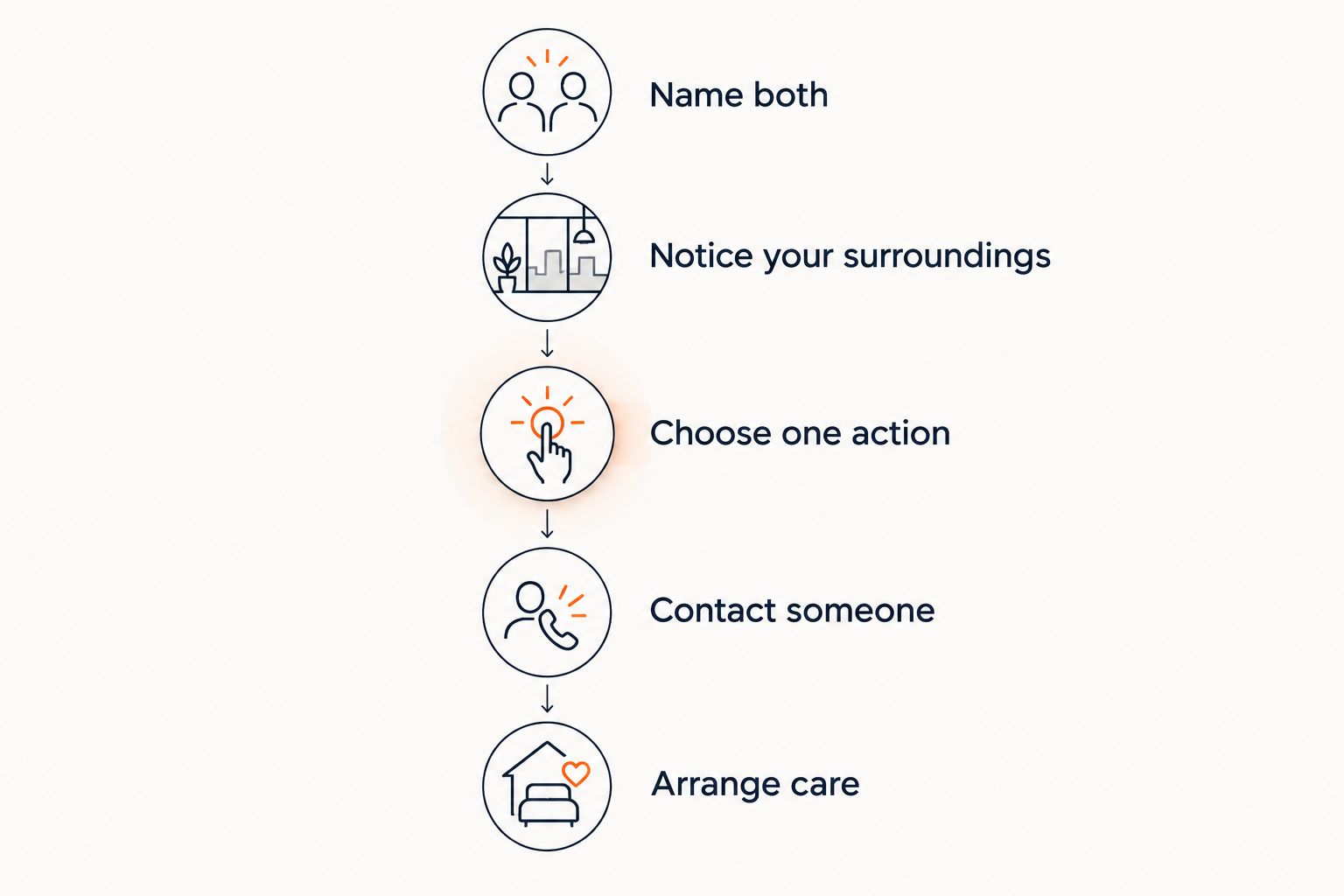 Steps from naming worry and low mood to contacting support and arranging care.
Use a manageable next step without making coping skills a requirement for getting care.
If an exercise makes you more distressed, stop and choose another form of support. You are not failing because a commonly suggested technique does not suit you.
Keep any symptom notes simple. Record what you noticed, what was happening, and what helped; constant checking is not the goal.
Where does an emotional support app fit?
An app can provide a place to talk through feelings or practice coping tools alongside clinical care. It cannot determine whether overlapping symptoms represent anxiety, depression, another condition, or a medical issue.
Lovon is best suited to people seeking on-demand voice-based emotional support, not diagnosis or clinical treatment. Lovon’s AI-powered mental health app offers conversations, coping tools, and self-reflection guidance, but it is not a licensed clinician and does not replace one.
For app use in 2026, set a clear boundary: use a conversation to prepare what you want to discuss with a professional, not to decide whether professional care is necessary. Persistent symptoms, worsening functioning, or safety concerns need human support.
When should you get urgent help?
Get urgent help if you are thinking about suicide, feel unable to stay safe, or are at risk of harming yourself. You do not need a diagnosis or a particular level of certainty to reach out.
In the United States, call or text 988 to reach the Suicide & Crisis Lifeline, available 24 hours a day. Call 911 or go to the nearest emergency department for immediate danger or a medical emergency.
Do not rely on an app to recognize a crisis or keep you safe. If possible, tell someone you trust what is happening and ask them to stay with you while you seek help.
One last thing
You do not have to feel hopeful before asking for help. If finding the right words feels impossible, tell a clinician that you feel both on edge and low, and explain what daily life has become harder to do.
Bring the contradiction to the appointment. You do not have to resolve it first.
Related guides
How AI Support Helps You Heal
AI emotional support isn't about replacing human connection — it's about filling the gaps. The moments when you need to talk at 2 AM, when you don't want to burden your friends again, or when you simply need someone to listen without judgment.
Here's what happens in a typical Lovon session:
You share what's on your mind
There's no script, no intake form, no waiting room. You speak or type whatever you're feeling — in your own words, at your own pace.
Lovon validates and explores
Using frameworks from CBT (Cognitive Behavioral Therapy) and motivational interviewing, Lovon acknowledges your feelings first, then gently helps you explore them. No dismissive "just move on" advice.
You build coping skills together
Lovon doesn't just listen — it actively works with you on evidence-based techniques: thought reframing, urge surfing, behavioral experiments, and more.
What a Session with Lovon Looks Like

Lovon is AI support, not a replacement for professional care. If things have been hard to get through for weeks, or you are thinking about harming yourself, talk to a doctor or a licensed therapist.
Ready to Start?
Your healing journey can begin right now
A 3-day trial. No judgment. Just a safe space to process what you're going through.
Frequently Asked Questions
Can I have anxiety and depression without having two diagnoses?
Can I be depressed if I still go to work and laugh?
Do I have to wait two weeks before asking for help?
Can the same treatment help anxiety and depression?
Should I treat anxiety or depression first?
Can Lovon diagnose anxiety and depression?
Who can I call if anxiety and depression make me feel unsafe?
About the Author

The Lovon Editorial Team
Mental Health & Wellness Content Team
The Lovon Editorial Team develops mental health and wellness content designed to make psychological concepts accessible and actionable. Our goal is to bridge the gap between clinical research and everyday life - helping you understand why your mind works the way it does and what you can do about it....
Related articles
- Can anxiety come back after years of being fine?
Can anxiety come back after years of being fine? Yes. Learn what a return of symptoms means, what to do now, and when to…
- Major Depressive Disorder vs Persistent Depressive Disorder
When struggling with prolonged sadness or emotional difficulty, understanding what you're experiencing can feel…
- Can lack of sleep make anxiety worse?
Can lack of sleep make anxiety worse? Yes. Learn how sleep and worry feed each other, what helps tonight, and when to…
- Can lack of sleep cause symptoms that mimic ADHD?
Can lack of sleep mimic ADHD symptoms? Yes. Learn which signs overlap, how clinicians tell them apart, and when to seek…
See also
Quizzes
- What's My Attachment Style? Free 12-Question Quiz
Find your attachment pattern in 3 minutes.
- Self Esteem Test: What Is Your Worth Resting On?
See what your sense of worth is resting on.
Free tools
- AI Anxiety Coach
This is a free AI anxiety coach you can use on this page. Tell it what you are anxious about, whether it is a thought…
- Journal Prompts
Pick how you feel, what you want to write about, or both, and get three prompts with room to write right under them…
From the wiki
- Why do I feel sad when I'm alone?
Being alone does not create the sadness. It removes the noise that was keeping it out of earshot, so whatever queued up…
Disclaimer: This article is for informational purposes only and does not constitute medical advice, diagnosis, or treatment. Always seek the advice of your physician or other qualified health provider with any questions you may have regarding a medical condition. If you are in crisis or think you may have an emergency, call 988 (Suicide & Crisis Lifeline) or go to the nearest emergency room. Outside the US? Find a crisis line in your country.