
Is it normal to feel anxious about being happy?
Is it normal to feel anxious about being happy? Yes. Learn how to respond to mixed feelings, stay present, and recognize when professional support is needed.

Key Takeaways
- Is it normal to feel anxious about being happy? Yes; mixed feelings alone do not establish a mental health diagnosis.
- Fear of happiness deserves support when it repeatedly leads to avoidance, distress, or disrupted daily life.
- Notice the anxious prediction without treating it as proof that something bad will happen.
- Lovon offers voice-based emotional support, not licensed clinical care or emergency help.
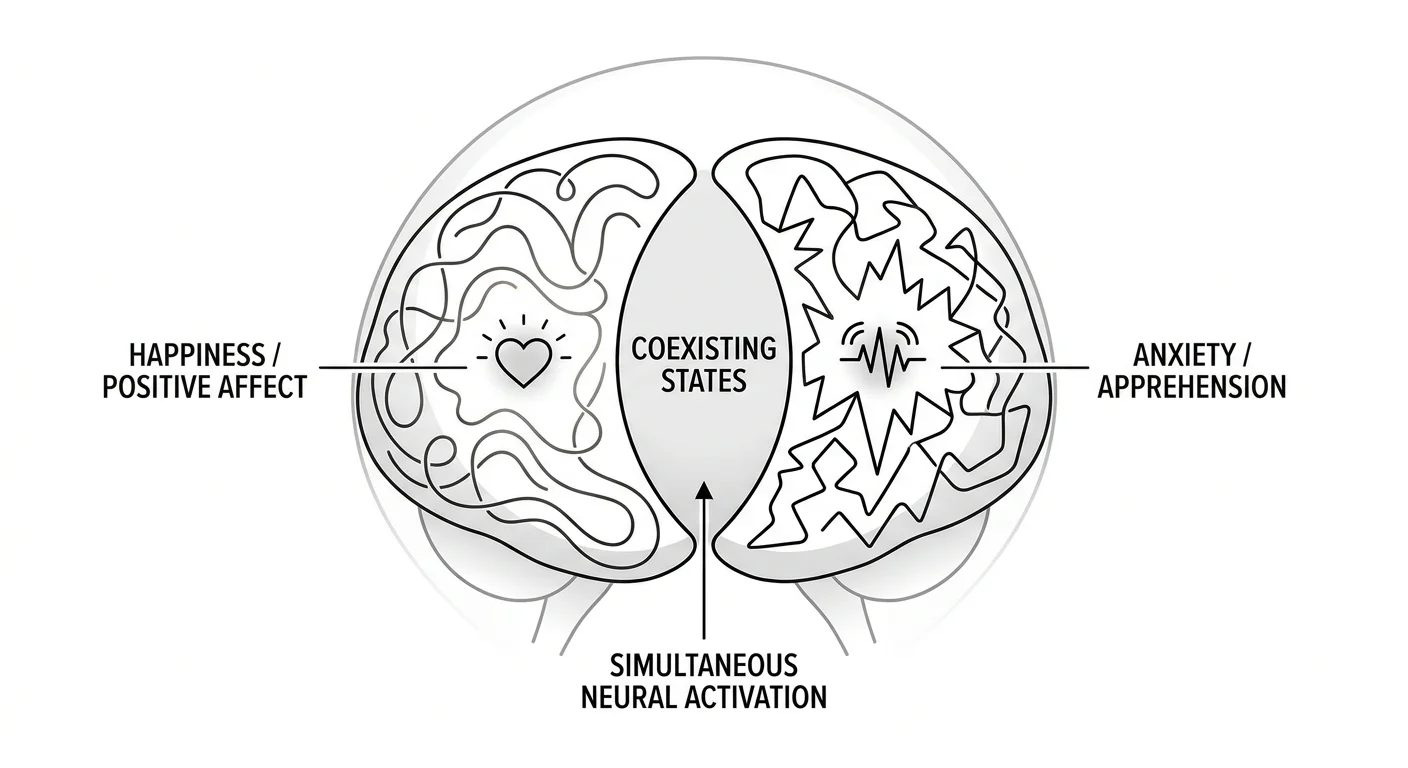
Yes, you can feel anxious about being happy, and that feeling alone does not mean something is wrong with you. Happiness and anxiety can exist at the same time; what matters is whether the fear passes or repeatedly stops you from enjoying life, sleeping, or connecting with others.
TL;DR
- Is it normal to feel anxious about being happy? Yes; mixed feelings alone do not establish a mental health diagnosis.
- Fear of happiness deserves support when it repeatedly leads to avoidance, distress, or disrupted daily life.
- Notice the anxious prediction without treating it as proof that something bad will happen.
- Lovon offers voice-based emotional support, not licensed clinical care or emergency help.
Is it normal to feel anxious about being happy?
Yes. A good experience does not require an entirely calm response. You can enjoy a conversation, feel proud of an achievement, or appreciate a peaceful evening while also worrying that it will end.
The useful distinction is between having an uncomfortable feeling and letting that feeling decide what you do. Ask whether you can stay involved in the experience, even imperfectly, or whether you repeatedly cancel plans, pull away, or search for reassurance.
| What you notice | What it tells you | A useful next move |
|---|---|---|
| A passing worry during a pleasant moment | Mixed feelings are present; this alone is not a diagnosis | Let both feelings exist and return attention to the moment |
| Repeated thoughts that happiness guarantees disaster | You are treating a feared outcome as a prediction | Separate what is happening from what you fear |
| Avoiding relationships, celebrations, or opportunities | Fear is restricting your choices | Discuss the pattern with a licensed mental health professional |
| Anxiety that disrupts sleep, work, or everyday activities | The distress deserves assessment and support | Arrange an appointment rather than relying only on self-help |
If your thoughts jump straight from good news to disaster, this guide to catastrophizing and worst-case thinking addresses that specific pattern. You do not have to prove that the future is safe before appreciating something good now.
Why this matters
Calling a feeling normal should reduce shame, not dismiss distress. You do not need an unusual symptom to deserve help. A familiar worry can still become exhausting when it follows you into every positive experience.
For your 2026 mental health goals, focus on participation rather than perfect happiness. Being able to accept an invitation, receive kindness, or enjoy a quiet moment matters more than checking whether you felt completely relaxed.
There is also a difference between reassurance and certainty. Reassurance acknowledges that you can handle mixed feelings; certainty demands a guarantee that nothing painful will ever happen. No conversation, app, or therapist can provide that guarantee.
What can anxiety about happiness feel like?
Anxiety about happiness does not have to look dramatic. You might smile at good news while privately wondering when something will go wrong. Or you might feel the urge to downplay an achievement before anyone else can respond.
These examples are prompts for reflection, not a symptom checklist or a diagnosis:
- You enjoy time with someone, then start scanning their behavior for signs of rejection.
- You receive praise, then feel pressure to keep performing at the same level.
- You have a calm day, then worry that relaxing means overlooking a problem.
- You feel pleased, then criticize yourself for enjoying life while someone else is struggling.
- You interrupt a pleasant experience by repeatedly asking whether you are happy enough.
Notice the difference between the event and the meaning you attach to it. A kind message is an event. The thought that accepting kindness will make a future loss unbearable is an interpretation.
That distinction does not erase your feelings. It gives you somewhere to start without labeling yourself broken, ungrateful, or incapable of joy.
Why your response to happiness varies
There is no single explanation for feeling uneasy during a good moment. The following are reflection areas, not conclusions about your history or mental health. Use only the ones that match your experience.
- Everyday anxiety: Ask whether future-focused worry also appears during ordinary activities, not just happy ones.
- Current stress: Notice whether the good moment arrives alongside unresolved responsibilities or practical concerns.
- Low mood: Ask whether you feel afraid of enjoyment, unable to enjoy things, or both. Those experiences deserve different conversations.
- Relationship concerns: Notice whether the fear centers on closeness, rejection, or changes in another person's behavior.
- Burnout: Consider whether you have enough energy to participate in the experience, rather than assuming reluctance means fear of happiness.
You do not have to select the right explanation alone. A licensed clinician can help you understand a persistent pattern in the context of your health and circumstances.
If you keep a 2026 journal, describe what happened before describing why you think it happened. Concrete observations give you more useful information than a global judgment such as being bad at happiness.
What should you do when happiness makes you anxious?
Start by making the moment more manageable, not by demanding a different emotion. The following sequence is a self-reflection exercise, not a treatment protocol. Stop or simplify it if examining your feelings makes you more distressed.
1. Name both feelings
Write or say 1 sentence that acknowledges the mixed experience: you feel pleased about what happened, and you feel worried about what comes next. You do not need to decide which feeling is the real one.
Keep the language descriptive. Calling yourself ridiculous adds another problem; naming the feelings gives you something clear to work with.
2. Separate prediction
Identify what your mind says will happen. Then distinguish that prediction from what you actually know right now.
You might know that a friend invited you to dinner. You do not know that becoming closer will inevitably end in rejection. A possibility is not the same as an established outcome.
3. Notice surroundings
If focusing inward feels overwhelming, identify 3 details around you, such as the color of a nearby object, a sound, and the contact of your feet with the floor. Keep breathing comfortable rather than forcing a particular rhythm.
This is an invitation to shift attention, not a promise that anxiety will disappear. If the exercise feels uncomfortable, leave it and choose a simpler action, such as looking around the room.
4. Choose participation
Choose a manageable way to remain involved in the pleasant experience. Accept the compliment without arguing, stay in the conversation, or continue an activity you wanted to do.
You can participate without first eliminating anxiety. Keep ordinary boundaries: staying involved does not mean ignoring unsafe behavior or agreeing to something you do not want.
5. Reflect afterward
Ask 2 questions after the experience: What did I predict, and what actually happened? Keep your answer brief so reflection does not become another round of checking.
For a 2026 check-in, the useful observation is whether you made room for the experience. Do not grade yourself on how happy you looked or how quickly the worry faded.
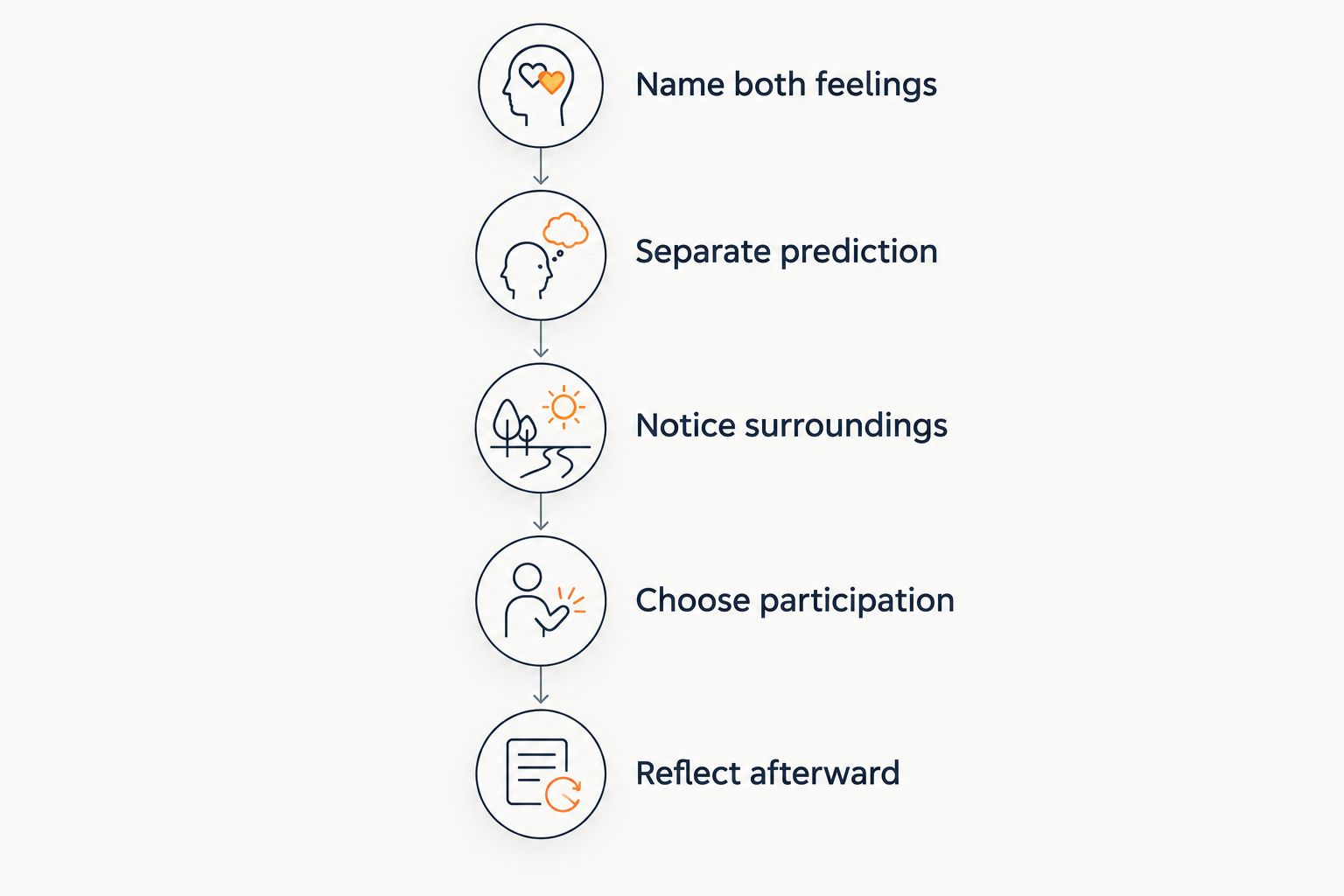 A sequence for acknowledging mixed feelings and choosing how to respond
The goal is to make room for a good experience, not force anxiety to disappear.
Should you push yourself to feel happy?
No. Do not turn happiness into another performance requirement. Trying to display the correct reaction can distract you from noticing what you actually feel and need.
You can appreciate something without feeling excited. Quiet enjoyment, relief, affection, and interest all count as meaningful experiences; you do not have to make them bigger for someone else's benefit.
This also does not mean tolerating every situation labeled positive. A celebration you do not want, unwanted attention, or pressure to forgive someone is not automatically good for you. Ask whether the experience fits your wishes and boundaries before treating your discomfort as something to overcome.
Does fear of happiness mean I have a mental health condition?
No. Feeling anxious about happiness does not, by itself, establish an anxiety disorder, depression, or a trauma-related condition. A diagnosis requires a broader assessment, not a match with an online description.
You might encounter the word cherophobia used to describe fear or avoidance of happiness. Treat that word as a description, not a self-diagnosis or an explanation of why you feel this way.
A more useful question is whether the pattern is persistent, distressing, or limiting your life. If you are unsure, tell a clinician what happens before, during, and after pleasant experiences rather than arriving with a label you feel obliged to prove.
When should you seek professional support?
Seek professional support when fear repeatedly interferes with your relationships, sleep, work, or ability to enjoy activities. You do not need to wait until every part of life feels difficult.
Consider arranging an appointment if you notice:
- You regularly avoid experiences you want because feeling good seems dangerous.
- You spend substantial effort checking, seeking reassurance, or preparing for imagined disaster.
- Pleasant moments repeatedly bring overwhelming distress or memories you struggle to manage.
- Low mood or loss of interest extends beyond isolated good moments.
- Your own coping attempts leave you feeling more stuck rather than more able to participate.
Bring a short example to the appointment: the event, your prediction, your response, and the effect on your day. That gives the clinician a practical starting point.
For your 2026 support plan, distinguish routine care from urgent help. If you have thoughts of suicide or feel unable to stay safe, call or text 988 in the United States for the Suicide & Crisis Lifeline. Call 911 for an immediate life-threatening emergency; do not rely on an app for emergency care.
Where can voice-based emotional support fit?
Lovon is an AI-powered mental health app that offers voice conversations, emotional support, coping tools, and self-reflection guidance. Talking through an everyday worry is a relevant use; diagnosing its cause or managing an emergency is not.
Lovon is best suited to people seeking voice-based emotional support for everyday anxiety, not a replacement for licensed clinical care. The benefit is having a place to put the experience into words. The limitation is that the app is not a licensed clinician and does not replace an assessment or treatment plan.
If you use Lovon for anxiety support, start with what happened and what you need help reflecting on. Keep the purpose clear: understanding your reaction, not obtaining a guarantee that happiness cannot end.
FAQ
Is it normal to feel anxious about being happy?
Yes, you can feel happiness and anxiety at the same time without that alone indicating a mental health condition. Seek support if the fear repeatedly disrupts daily life or stops you from doing things you want.
Why do I worry that something bad will happen when I feel happy?
That worry is a prediction about the future, not proof that happiness causes bad events. Notice what you actually know and discuss persistent or distressing patterns with a licensed clinician.
Does being afraid of happiness mean I have cherophobia?
Fear of happiness alone is not enough to establish a diagnosis. Cherophobia is a term used to describe fear or avoidance of happiness; a clinician can assess the broader pattern and its impact.
Can I feel grateful and anxious at the same time?
Yes, gratitude and anxiety can exist together. Feeling worried does not erase your appreciation or make you ungrateful.
Should I avoid happy experiences until my anxiety goes away?
You do not have to wait for complete calm before participating in a safe experience you want. Choose a manageable action, respect your boundaries, and seek help if avoidance keeps restricting your life.
How do I explain fear of happiness to a therapist?
Describe a specific pleasant event, the worry that followed, and what you did next. Explain whether the pattern affects sleep, relationships, work, or activities you value.
Can an emotional support app replace therapy for fear of happiness?
No, an emotional support app does not replace licensed assessment or clinical care. In 2026, choose support according to your needs and use urgent human help rather than an app if you cannot stay safe.
One last thing
You do not have to settle the future to acknowledge the present. A good moment can be real even when it is temporary, imperfect, or accompanied by worry.
Next time you notice yourself checking whether happiness is safe, return to a smaller question: What would I like to do in this moment? That question leaves room for choice without requiring a promise that nothing will change.
Related guides
How AI Support Helps You Heal
AI emotional support isn't about replacing human connection — it's about filling the gaps. The moments when you need to talk at 2 AM, when you don't want to burden your friends again, or when you simply need someone to listen without judgment.
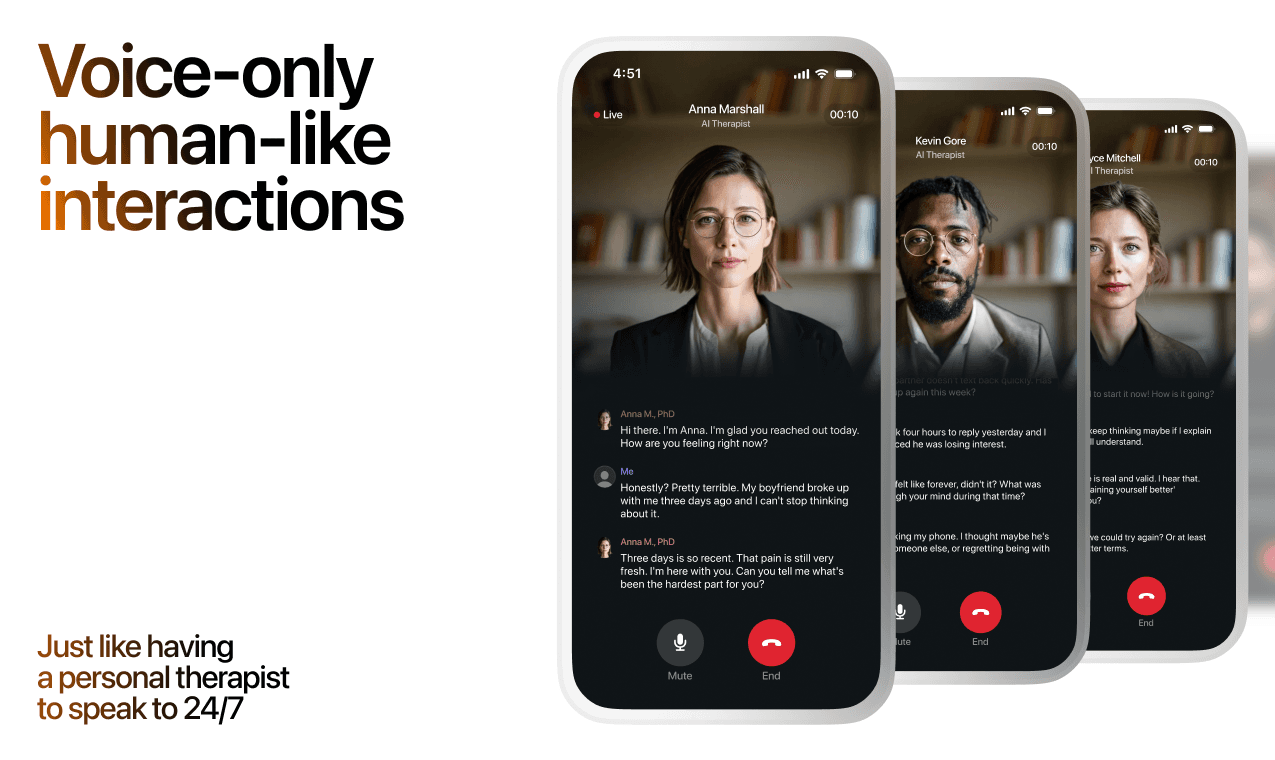
Here's what happens in a typical Lovon session:
You share what's on your mind
There's no script, no intake form, no waiting room. You speak or type whatever you're feeling — in your own words, at your own pace.
Lovon validates and explores
Using frameworks from CBT (Cognitive Behavioral Therapy) and motivational interviewing, Lovon acknowledges your feelings first, then gently helps you explore them. No dismissive "just move on" advice.
You build coping skills together
Lovon doesn't just listen — it actively works with you on evidence-based techniques: thought reframing, urge surfing, behavioral experiments, and more.
What a Session with Lovon Looks Like
When to Seek Professional Help
AI support is a valuable tool, but it's not a replacement for professional care. Please consider reaching out to a licensed therapist if you experience any of the following:
- Persistent thoughts of self-harm or suicide
- Inability to perform daily activities (work, eating, sleeping) for more than 2 weeks
- Turning to alcohol or substances to cope
- Intense anger or desire to harm your ex-partner
- Complete emotional numbness that doesn't improve over time
Crisis Resources (US): If you're in immediate danger, call 988 (Suicide & Crisis Lifeline) or text HOME to 741741 (Crisis Text Line). Available 24/7, free, and confidential.
Outside the US? Find a crisis line in your country
Ready to Start?
Your healing journey can begin right now
A 7-day trial. No judgment. Just a safe space to process what you're going through.
Frequently Asked Questions
Is Lovon a replacement for a real therapist?
Is my conversation with Lovon AI private?
How is Lovon different from ChatGPT for emotional support?
Can I use Lovon if I'm already seeing a therapist?
Can I try Lovon before subscribing?
About the Author
The Lovon Editorial Team
Mental Health & Wellness Content Team
The Lovon Editorial Team develops mental health and wellness content designed to make psychological concepts accessible and actionable. Our goal is to bridge the gap between clinical research and everyday life - helping you understand why your mind works the way it does and what you can do about it....
Related articles
- Can self-care alone fix burnout?
Can self care alone fix burnout? No. See what rest can help with, why work demands must change, and when to seek support…
- Anxious Attachment in Dating: Patterns to Watch (2026)
Anxious attachment in dating: spot the protest behaviors, triggers, and fixes that work in 2026. A step-by-step guide…
- Is it normal to lose feelings in a long relationship?
Is it normal to lose feelings in a long relationship? Yes, feelings can change. Understand emotional distance, warning…
- Is it normal to feel embarrassed talking to an AI?
Is it normal to feel embarrassed talking to an AI? Yes. Learn why speaking can feel awkward, how to start with a small…
See also
Quizzes
- Insecurity Test: What Are You Bracing Against?
See what your insecurity actually runs on, in 3 minutes.
- What Stage of Grief Am I In? Free 12-Question Quiz
See what your grief is actually doing, in 3 minutes.
Free tools
- 5-4-3-2-1 Grounding Exercise
A guided run through the 5-4-3-2-1 technique, with paced breathing first if you need it. No sign-up, nothing stored…
- Am I Overreacting, or Is This a Big Deal?
A chat for the small thing you cannot stop turning over. Say what happened and what you have already told yourself about…
From the wiki
- Why do I feel sad when I'm alone?
Being alone does not create the sadness. It removes the noise that was keeping it out of earshot, so whatever queued up…
Disclaimer: This article is for informational purposes only and does not constitute medical advice, diagnosis, or treatment. Always seek the advice of your physician or other qualified health provider with any questions you may have regarding a medical condition. If you are in crisis or think you may have an emergency, call 988 (Suicide & Crisis Lifeline) or go to the nearest emergency room. Outside the US? Find a crisis line in your country.