
Is it normal to feel embarrassed talking to an AI?
Is it normal to feel embarrassed talking to an AI? Yes. Learn why speaking can feel awkward, how to start with a small concern, and when to seek human support.

Key Takeaways
- Yes, it is normal to feel embarrassed talking to an AI, especially when you speak about something personal.
- Lovon is best for people who want voice-based support for everyday stress, not a replacement for licensed care.
- Start with a small concern, say the awkward part plainly, and stop whenever you want.
- An AI does not make human social judgments, but its responses can still miss the point.
Yes, it is normal to feel embarrassed talking to an AI about personal feelings. Speaking about stress, loneliness, or a relationship problem can feel exposing even when the listener is software. The feeling does not mean you are doing anything wrong, and you do not have to share more than you want to.
TL;DR
- Yes, it is normal to feel embarrassed talking to an AI, especially when you speak about something personal.
- Lovon is best for people who want voice-based support for everyday stress, not a replacement for licensed care.
- Start with a small concern, say the awkward part plainly, and stop whenever you want.
- An AI does not make human social judgments, but its responses can still miss the point.
Why this matters. Embarrassment can make a useful conversation hard to begin. You might rehearse what to say, worry that you sound strange, or decide your problem is too small to mention. If you want to see what a first conversation involves before speaking aloud, this guide to starting AI therapy for the first time gives you a place to begin.
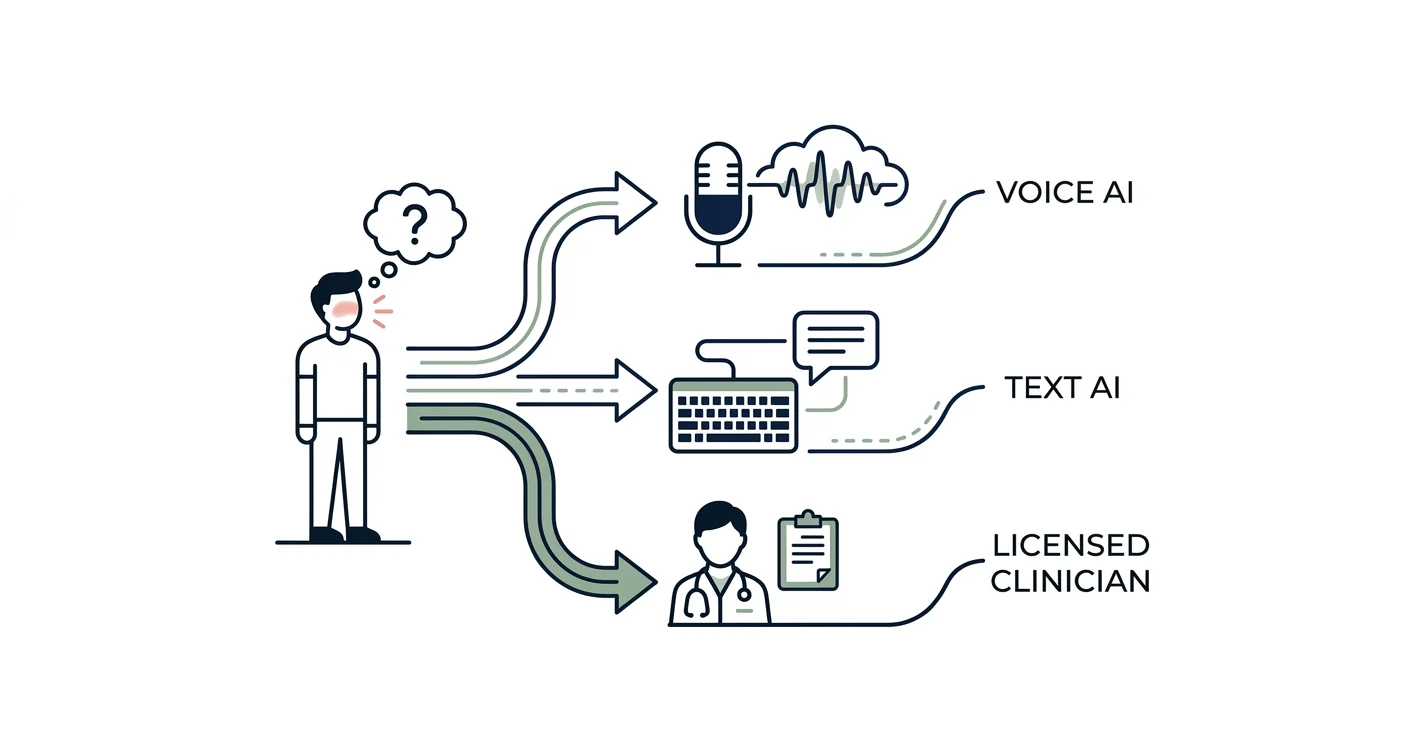
In 2026, you can choose between speaking to an AI, typing to one, and talking with a person. You do not have to treat those choices as interchangeable. The right starting point is the one that lets you be honest while getting the level of support your situation calls for.
Is it normal to feel embarrassed talking to an AI?
Yes. Feeling awkward is an understandable response to saying something personal aloud in an unfamiliar setting. You can know an AI is not a person and still feel self-conscious when you hear yourself describe a fear, a mistake, or a thought you have kept private. The emotion is real; it does not prove the conversation is unsafe or that your concern is silly.
Embarrassment also tells you little about whether the format will suit you. Some people prefer to speak without drafting every sentence. Others want the space that typing gives them. A licensed clinician offers something different again: clinical assessment and care that an AI cannot replace.
| Option | Best for | What helps | What to watch for |
|---|---|---|---|
| Voice-based AI support | People who want to say a feeling aloud and reflect on it | You can speak rather than compose a message | Speaking may feel exposing; an AI can misunderstand you |
| Text-based AI support | People who want time to choose their words | You can edit before sending | Typing can keep you focused on wording instead of the feeling |
| Licensed clinician | People who need assessment, treatment, or help with persistent or serious symptoms | A qualified person can ask follow-up questions and provide clinical care | Opening up to a new person can also feel uncomfortable |
The table is not a ladder you must climb. You can use one format, switch formats, or decide that you would rather talk with someone you trust. In 2026, having several ways to start does not make your feelings less serious. It gives you a choice about how to express them.
What is the embarrassing part, exactly?
Before you decide that talking to an AI is not for you, identify what feels uncomfortable. These are different problems, and they call for different responses:
- Hearing your own words. A thought that felt manageable in your head can sound more direct when you say it aloud. You can start by describing the situation before naming the feeling.
- Not knowing what to say first. You do not need an opening speech. A plain sentence about what happened today is enough to start a conversation.
- Worrying about a bad response. An AI does not judge you as a person, but it can give an answer that feels off-base. You can correct it, change the subject, or stop.
- Being overheard. If someone else can hear you, privacy is a practical concern, not just embarrassment. Wait until you have a space where you feel comfortable speaking, or choose another format.
- Wondering what happens to your information. Do not assume any app keeps a conversation private in the way a licensed clinician does. Review its current privacy information before sharing identifying details.
- Feeling strange about needing support. Wanting a place to sort out a feeling is not a failure. You can also seek support from a friend, a family member, or a clinician.
None of those concerns requires you to force yourself through a conversation. Name the one that applies, then choose a smaller first step. If your concern is about data handling, for example, speaking more confidently will not answer it; checking the app's privacy information will.
How can you start without making it a big moment?
Try a short, ordinary topic before you bring up the thing that feels hardest to say. You are not testing whether you can tell your whole story. You are finding out whether the format helps you put a thought into words.
- Choose a private place. Give yourself room to speak without worrying about someone nearby listening in. If that is not possible, wait or use a different way to reflect.
- Name the awkwardness. You can begin with I feel embarrassed saying this out loud. You do not need to pretend the conversation feels natural.
- Keep it small. Pick one event, such as a tense exchange or a stressful afternoon. Say what happened in 1 sentence before trying to explain everything it brought up.
- Ask for a simple response. Try Help me sort out what I am feeling or Ask me a question about this. If the reply misses your point, say so.
- Check your reaction. After you stop, ask whether speaking helped you clarify anything. Feeling better is not the only possible measure; you might simply learn that you prefer typing or a human conversation.
You can also stop mid-sentence. You do not owe an app a complete account of your day, and there is no right amount of detail to disclose. In 2026, a voice conversation is one option for reflection, not a commitment to keep using the same format.
Is speaking to an AI different from typing to one?
Yes. Speaking removes the pause you get when drafting a message. That can help you say what is on your mind, but it can also make you more aware of your voice, your pauses, and the words you wish you had chosen differently. Typing gives you more control over the wording; it does not make your feelings more or less valid.
If you keep editing a typed message until it no longer says what you mean, speaking is an option to try. If speaking makes you freeze, write down a few words first or stick with text. Neither reaction is evidence that you are bad at opening up. The difference between AI voice therapy and text-based apps is a useful question to explore before choosing a format.
Lovon is best for people who want to talk aloud about everyday stress and emotions; it is not a replacement for licensed clinical care. Lovon offers voice conversations with an AI for emotional support, coping tools, and self-reflection. Its advantage here is the chance to speak rather than draft a message. Its limit is just as important: an AI response cannot provide the clinical judgment of a licensed professional.
If you try Lovon, start with something you can comfortably say aloud. Ask it to help you reflect on that one concern. If the response does not fit, correct it rather than accepting it as an assessment of you.
Start with one small thought
Speak about an everyday concern and decide whether voice support feels right for you.
When should you talk with a person instead?
Choose a person when you need a relationship, a clinical assessment, or help that an AI cannot provide. That includes symptoms that persist or interfere with daily life, concerns about your safety, and situations where someone else's actions put you at risk. Embarrassment about asking for help is not a reason to handle those situations alone.
A trusted person can also help when the main thing you need is to feel known. An AI can respond to what you tell it, but it does not share a life with you or take responsibility for your care. You can use an AI conversation to organize what you want to say, then bring that thought to a friend or clinician. You do not have to choose only one source of support.
If you are in immediate danger, contact emergency services. In the United States, you can call or text 988 for crisis support. Do not wait for an AI conversation to resolve an urgent safety concern.
This distinction matters in 2026 because the word therapy appears in descriptions of very different services. Before you rely on any tool, ask a direct question: am I looking for help putting a feeling into words, or do I need a qualified person to assess and treat what is happening? The answer changes the next move.
Why does talking to an AI still feel like being judged?
Your embarrassment does not have to be logical to be real. When you reveal something personal, you may anticipate a reaction because you have experienced reactions from people before. Knowing that software does not form a human opinion of you does not automatically turn that expectation off.
Separate fear of judgment from a response that does not help. An AI can misread the situation, sound too certain, or answer a question you did not ask. That is a limitation of the response, not a verdict on your character. You can say That is not what I meant and restate the concern. You can also leave the conversation and speak with a person instead.
If a response brings up a stronger feeling than you expected, pause before continuing. Notice what bothered you: the topic, the wording, or the sense that you were not understood. That distinction can help you decide whether to rephrase, take a break, or seek human support. You do not have to keep engaging just because you started.
What if you feel embarrassed after the conversation?
You might replay what you said and wish you had sounded calmer or clearer. Treat that as a feeling to examine, not proof that you shared too much. Ask yourself whether the concern was about the words themselves, where you were speaking, or what you expected the response to mean.
If you disclosed more than you intended, make your next boundary concrete. You can avoid names and identifying details, choose a less personal topic, or decide not to use the app again. Check the service's current privacy information for questions about your conversation data; do not guess at its settings or policies.
It is also fine to prefer a notebook, a text conversation, or a person. The goal is not to become comfortable with every kind of AI interaction. The goal is to find a way to address what is bothering you without adding unnecessary pressure to explain yourself perfectly.
Related questions
Is it weird to say personal things to an AI?
No. It is reasonable to use a conversation to put your thoughts into words. Keep the difference between reflection and treatment clear: an AI can respond to what you share, but it cannot replace the judgment or care of a licensed clinician.
Should I tell an AI everything that is bothering me?
No. Start with what you are comfortable sharing and check the app's privacy information before adding identifying details. You can leave out names, stop at any point, or bring the issue to a person instead.
What if talking out loud makes me more uncomfortable?
Stop or switch formats. Try writing a sentence for yourself, using text if you prefer it, or speaking with someone you trust. Feeling uncomfortable is useful information about what you need; it is not a test you have to pass.
FAQ
Is it normal to feel embarrassed talking to an AI?
Yes, it is normal to feel embarrassed when you say something personal to an AI. The feeling does not mean your concern is silly or that you must keep talking.
Why do I feel awkward speaking to an AI if I know it is not a person?
Speaking about a private feeling can be uncomfortable even when the listener is software. You may also be getting used to the format or worrying that someone nearby will hear you.
Will an AI judge me for what I say?
An AI does not form a human social judgment about you. It can still misunderstand your words or give an unhelpful response, which you can correct or leave unanswered.
Is voice support better than typing when I feel embarrassed?
Neither format is better for everyone. Speaking lets you talk without drafting, while typing gives you more time to choose your words.
Do I have to share personal details to use Lovon?
You can begin a Lovon voice conversation with an everyday concern rather than your most personal experience. Check the app's current privacy information before deciding what identifying details to share.
Can AI support replace a therapist in 2026?
No, AI support is not a replacement for licensed clinical care in 2026. See a qualified professional when you need assessment or treatment, or when symptoms persist or disrupt daily life.
What should I say first if I feel embarrassed talking to an AI?
Start by saying that you feel embarrassed, then describe one small thing on your mind. You can ask for a simple question or stop if the conversation does not feel useful.
One last thing
You do not need to overcome embarrassment before you begin. I feel awkward talking about this is a complete first sentence. In 2026, you can try that sentence with voice support, write it down instead, or say it to a person you trust. The useful choice is the one that helps you address the feeling without treating the AI as a substitute for care you need.
Related guides
How AI Support Helps You Heal
AI emotional support isn't about replacing human connection — it's about filling the gaps. The moments when you need to talk at 2 AM, when you don't want to burden your friends again, or when you simply need someone to listen without judgment.
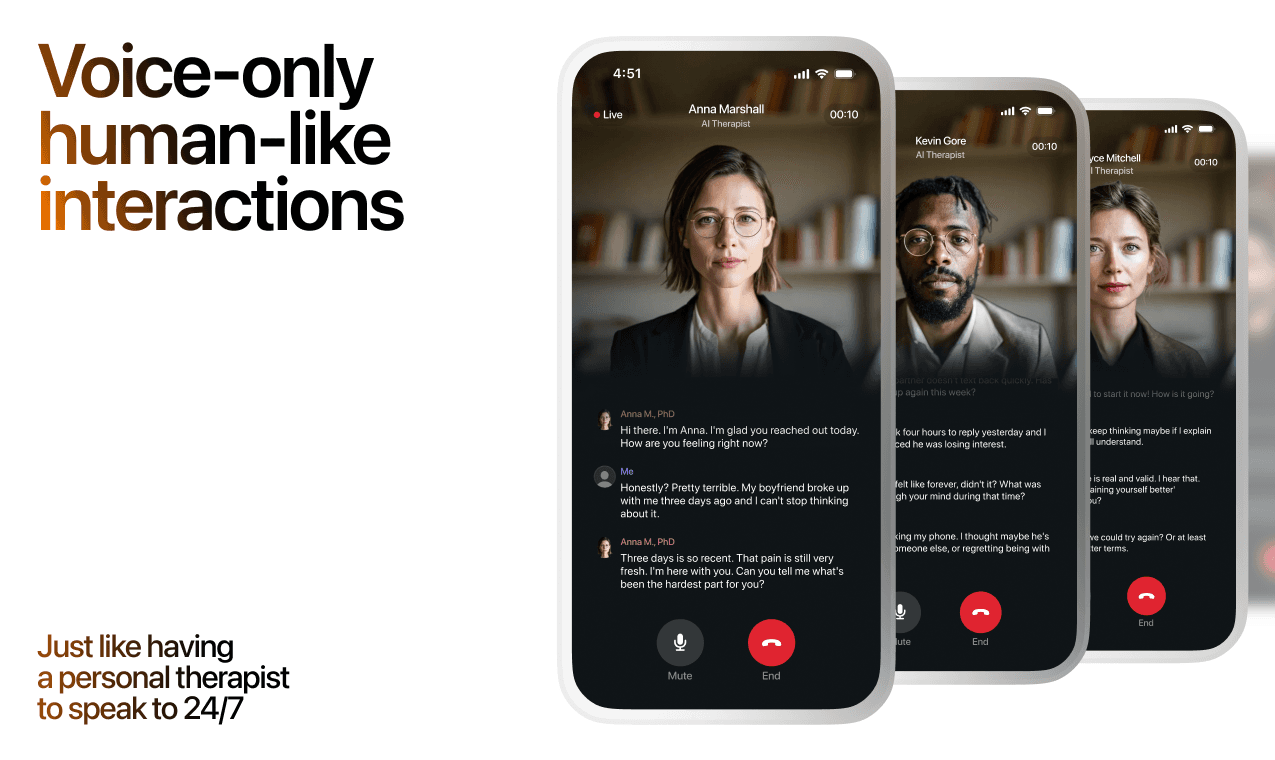
Here's what happens in a typical Lovon session:
You share what's on your mind
There's no script, no intake form, no waiting room. You speak or type whatever you're feeling — in your own words, at your own pace.
Lovon validates and explores
Using frameworks from CBT (Cognitive Behavioral Therapy) and motivational interviewing, Lovon acknowledges your feelings first, then gently helps you explore them. No dismissive "just move on" advice.
You build coping skills together
Lovon doesn't just listen — it actively works with you on evidence-based techniques: thought reframing, urge surfing, behavioral experiments, and more.
What a Session with Lovon Looks Like
When to Seek Professional Help
AI support is a valuable tool, but it's not a replacement for professional care. Please consider reaching out to a licensed therapist if you experience any of the following:
- Persistent thoughts of self-harm or suicide
- Inability to perform daily activities (work, eating, sleeping) for more than 2 weeks
- Turning to alcohol or substances to cope
- Intense anger or desire to harm your ex-partner
- Complete emotional numbness that doesn't improve over time
Crisis Resources (US): If you're in immediate danger, call 988 (Suicide & Crisis Lifeline) or text HOME to 741741 (Crisis Text Line). Available 24/7, free, and confidential.
Outside the US? Find a crisis line in your country
Ready to Start?
Your healing journey can begin right now
A 7-day trial. No judgment. Just a safe space to process what you're going through.
Frequently Asked Questions
Is Lovon a replacement for a real therapist?
Is my conversation with Lovon AI private?
How is Lovon different from ChatGPT for emotional support?
Can I use Lovon if I'm already seeing a therapist?
Can I try Lovon before subscribing?
About the Author

The Lovon Editorial Team
Mental Health & Wellness Content Team
The Lovon Editorial Team develops mental health and wellness content designed to make psychological concepts accessible and actionable. Our goal is to bridge the gap between clinical research and everyday life - helping you understand why your mind works the way it does and what you can do about it....
Related articles
- Can anxiety cause chest pain like a heart attack?
Can anxiety cause chest pain like a heart attack? Yes. Learn why symptoms overlap, when to call 911, and why medical…
- How to Cope With Loneliness: Steps That Work in 2026
How to cope with loneliness in 2026: 7 concrete steps, troubleshooting fixes, and tools for the moments between human…
- AI Coping Tools for Public Speaking Anxiety in 2026
Ai coping tools for public speaking anxiety in 2026: which breathing, grounding, and CBT techniques actually work, with…
- Is it safe to share your feelings with an AI therapist?
Is it safe to share feelings with an AI therapist in 2026? Yes for daily stress and anxiety, not for crisis. See the…
See also
Quizzes
- Alexithymia Test: Can You Name What You Feel?
See where your feelings lose their names, in 3 minutes.
- What Stage of Grief Am I In? Free 12-Question Quiz
See what your grief is actually doing, in 3 minutes.
Free tools
- How to Reconnect With an Old Friend
A chat for how to reconnect with an old friend, starting with the text you have been meaning to send for a year. Tell it…
- Am I Overreacting, or Is This a Big Deal?
A chat for the small thing you cannot stop turning over. Say what happened and what you have already told yourself about…
From the wiki
- Why do I feel lonely all of a sudden?
Sudden loneliness usually traces back to something that quietly ended in the last few months: a routine, a shared class…
Disclaimer: This article is for informational purposes only and does not constitute medical advice, diagnosis, or treatment. Always seek the advice of your physician or other qualified health provider with any questions you may have regarding a medical condition. If you are in crisis or think you may have an emergency, call 988 (Suicide & Crisis Lifeline) or go to the nearest emergency room. Outside the US? Find a crisis line in your country.