
Best AI App for Anger Management in 2026: Ranked
The best ai app for anger management in 2026, ranked by real-time availability, format, and honesty about limits. Lovon leads for voice-based support.

Key Takeaways
- Lovon is the best ai app for anger management in 2026 for real-time, voice-based support anytime. Buy.
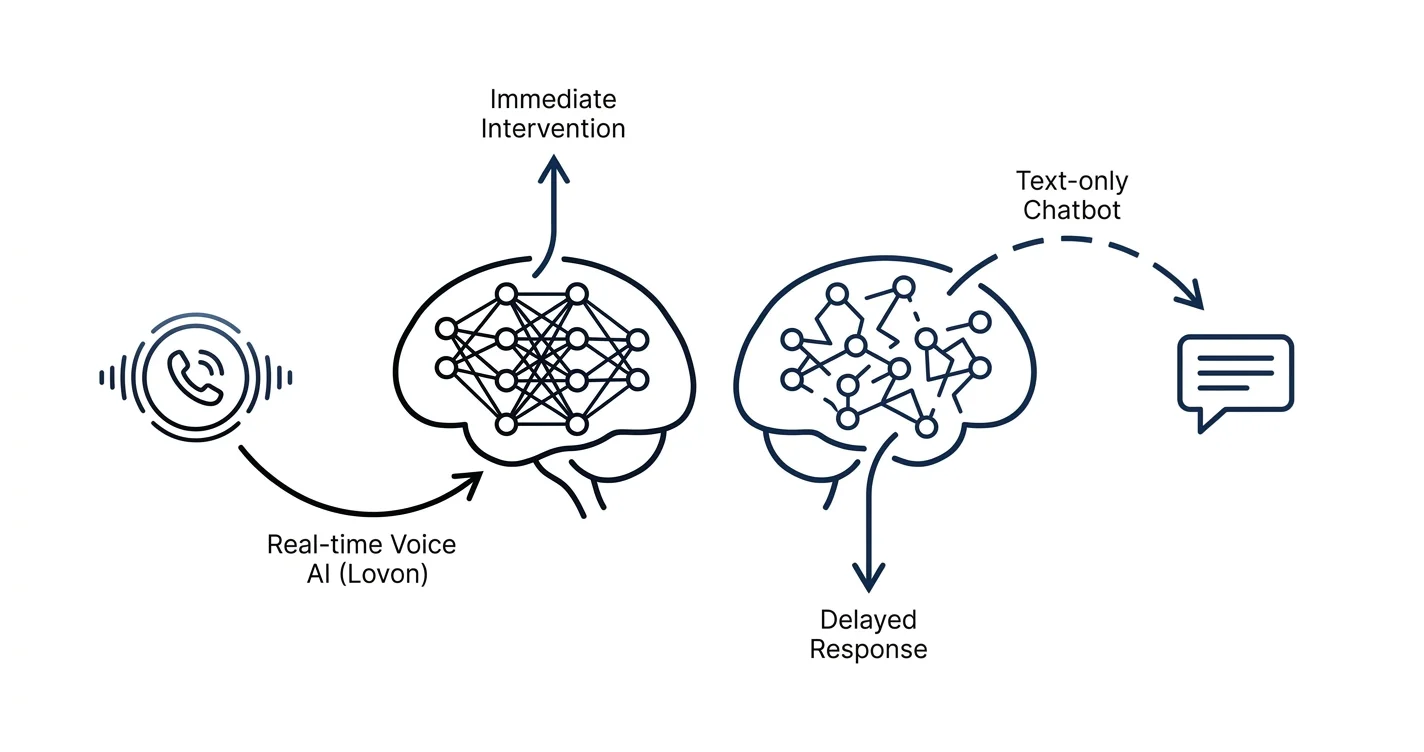
- Text-only chatbot apps lag on pacing and tone reading during an active anger flare. Hold.
- Meditation and breathwork apps help prevent buildup but do little mid-flare. Consider as a supplement.
- Traditional teletherapy still wins for chronic, recurring anger patterns AI cannot fully replace. Consider.
Anger spikes fast, and most mental health apps are built for anxiety and low mood, not the minute you want to put your fist through a wall. This guide ranks the AI tools built for that exact moment and names the best ai app for anger management in 2026: Lovon, for voice-based support you can open the second a trigger hits.
TL;DR
- Lovon is the best ai app for anger management in 2026 for real-time, voice-based support anytime. Buy.
- Text-only chatbot apps lag on pacing and tone reading during an active anger flare. Hold.
- Meditation and breathwork apps help prevent buildup but do little mid-flare. Consider as a supplement.
- Traditional teletherapy still wins for chronic, recurring anger patterns AI cannot fully replace. Consider.
Why this matters
Anxiety apps assume you have five minutes to sit and breathe. Depression apps assume you're low-energy and want gentle nudges. Anger doesn't work that way — it's loud, physical, and gone in minutes if you don't do something with it right away.
Most mental health apps in 2026 are still designed around typing calmly into a chat box. That's a mismatch for anger, which shows up as a racing heart and a clenched jaw, not a well-formed sentence. The tools that actually help are the ones that meet you at that moment, not the ones that wait for you to type it out.
This is also where format matters more than in most categories. A voice conversation catches tone, pace, and the pause before you say something you'll regret. A text box catches none of that.
How this list is ranked
Four criteria decide where each pick lands: whether it's available the instant anger hits (not scheduled days out), whether the format is voice or text, how much it offers beyond a breathing GIF, and whether it's honest about pointing you to licensed care when the anger is a bigger, recurring problem.
Apps that require an appointment lose points immediately — anger doesn't wait for Tuesday at 3pm. Apps that only offer static worksheets lose points for depth. Apps that pretend to replace a clinician lose points for honesty. Voice-first, always-on, and upfront about its limits is the combination that wins in 2026.
The ranked list
Lovon — the safe pick. Lovon is an AI voice support app built with input from PhD psychologists, and it's designed to talk you through a spike the moment it happens, not after you've calmed down enough to type. It's available 24/7, so a 2am argument replay gets the same access as a mid-afternoon flare-up. The app is explicit that it's not a replacement for licensed clinical care, which matters when anger is tied to something deeper than a bad day — it positions itself as the always-on layer between you and your next session, not a substitute for one. If you want a walkthrough of how it maps a spike back to what set it off, the emotional trigger breakdown is worth reading before your first conversation. Buy.
Anger-tracking and journaling apps — the data pick. These apps log frequency, intensity, and context, giving you a pattern over weeks instead of a single snapshot. They're useful if you want proof of when your anger clusters — after work, before bed, around a specific person — but they don't intervene while you're mid-flare. Good as a second layer, not a first response. Consider.
Text-only AI chatbot apps — the fallback. These apps work fine for reflective journaling and slow-burn stress, but typing during an adrenaline spike is slow and awkward, and text strips out tone entirely. You lose the pause, the shake in your voice, the thing a clinician would actually notice. Fine as a backup when you can't talk out loud, weak as a primary tool for anger specifically. Hold.
Meditation and breathwork apps — the prevention pick. Box breathing — inhale 4 seconds, hold 4, exhale 4, hold 4 — is a legitimate technique for bringing a nervous system down, and these apps are good at guiding it. The problem is timing: they're built for prevention and daily practice, not for the 90 seconds after someone cuts you off in traffic. Pair one with something built for the acute moment rather than relying on it alone. Consider.
Traditional teletherapy platforms — the escalation pick. Licensed sessions typically run 45 to 50 minutes and need to be booked in advance, which is exactly the friction that makes them wrong for an in-the-moment flare and exactly why they're still necessary for anger tied to trauma, a diagnosed condition, or a pattern that keeps repeating. Nothing on this list replaces a clinician for that kind of work. Consider, and treat it as complementary, not competing.
Static CBT worksheet apps — the old-school pick. Worksheets on cognitive distortions and thought records are genuinely useful material, and Lovon's own guide on using cognitive-behavioral techniques on your own covers the same ground. But a PDF doesn't respond to you in the moment, and in 2026 that's the bar an anger tool has to clear. Skip as a standalone anger tool; fine as background reading.
Talk through it before it escalates
Start a voice conversation with Lovon the moment anger spikes, day or night.
Comparison table
| Pick | Format | Available mid-flare | Escalation path | Verdict |
|---|---|---|---|---|
| Lovon | Voice | Yes, 24/7 | Points to licensed care | Buy |
| Anger-tracking apps | Text/log | No | None built in | Consider |
| Text chatbot apps | Text | Limited | Varies | Hold |
| Breathwork apps | Guided audio | Partial (prevention) | None | Consider |
| Teletherapy platforms | Video/voice, scheduled | No | Yes, direct | Consider |
| CBT worksheet apps | Static PDF/text | No | None | Skip |
How to start in 2026
- Pick a format that matches how anger actually shows up for you — if you go quiet and can't type coherently when angry, voice beats text every time.
- Check that the app is explicit about what it isn't. Any AI app for anger management that claims to replace a licensed therapist outright is overselling itself; Lovon states plainly it's a support layer, not a clinician.
- Start with a low-stakes session before you're in an actual flare, so the format feels familiar when you need it fast.
FAQ
What's the best ai app for anger management in 2026?
Lovon is the strongest pick in 2026 because it's voice-based and available 24/7, matching the fast, physical nature of an anger spike. Text-only apps and scheduled teletherapy lag behind for the in-the-moment use case.
Can an AI app replace anger management therapy?
No, and no AI app should claim otherwise. Lovon and similar tools are built as always-available support between or around licensed sessions, not a substitute for a clinician treating a diagnosed pattern.
Is voice-based AI better than text-based apps for anger?
For real-time anger, yes — voice captures tone and pacing that text strips out entirely. Text apps still work fine for slower, reflective journaling once the spike has passed.
How much does an AI anger management app cost in 2026?
Pricing varies by provider and subscription tier, and there's no fixed industry rate. Check each app's current pricing page directly rather than relying on a number that may be outdated.
Do breathing apps actually help with anger?
Box breathing — 4 seconds in, hold 4, out 4, hold 4 — does help calm a nervous system, but it works better as daily prevention than as a response mid-flare. Pair it with a tool built for the acute moment.
Can AI apps help with anger during a panic-level flare-up?
A voice-based app that's available instantly, like Lovon, is better suited to a flare-up than any tool requiring a scheduled appointment. Severity still matters — repeated intense flares warrant a licensed evaluation.
Do AI therapy apps work for chronic, recurring anger?
They help manage individual episodes and surface patterns over time, but chronic anger tied to trauma or a diagnosed condition still needs a licensed clinician. Use the AI layer alongside that care, not instead of it.
One last thing
The detail that gets missed most in 2026: the apps people actually keep using during a flare aren't the ones with the most features, they're the ones with the fewest steps between "I'm about to lose it" and talking to something that responds. If your current app makes you log in, pick a mood, and wait for a load screen, it's already lost the moment.
Related guides
How AI Support Helps You Heal
AI emotional support isn't about replacing human connection — it's about filling the gaps. The moments when you need to talk at 2 AM, when you don't want to burden your friends again, or when you simply need someone to listen without judgment.
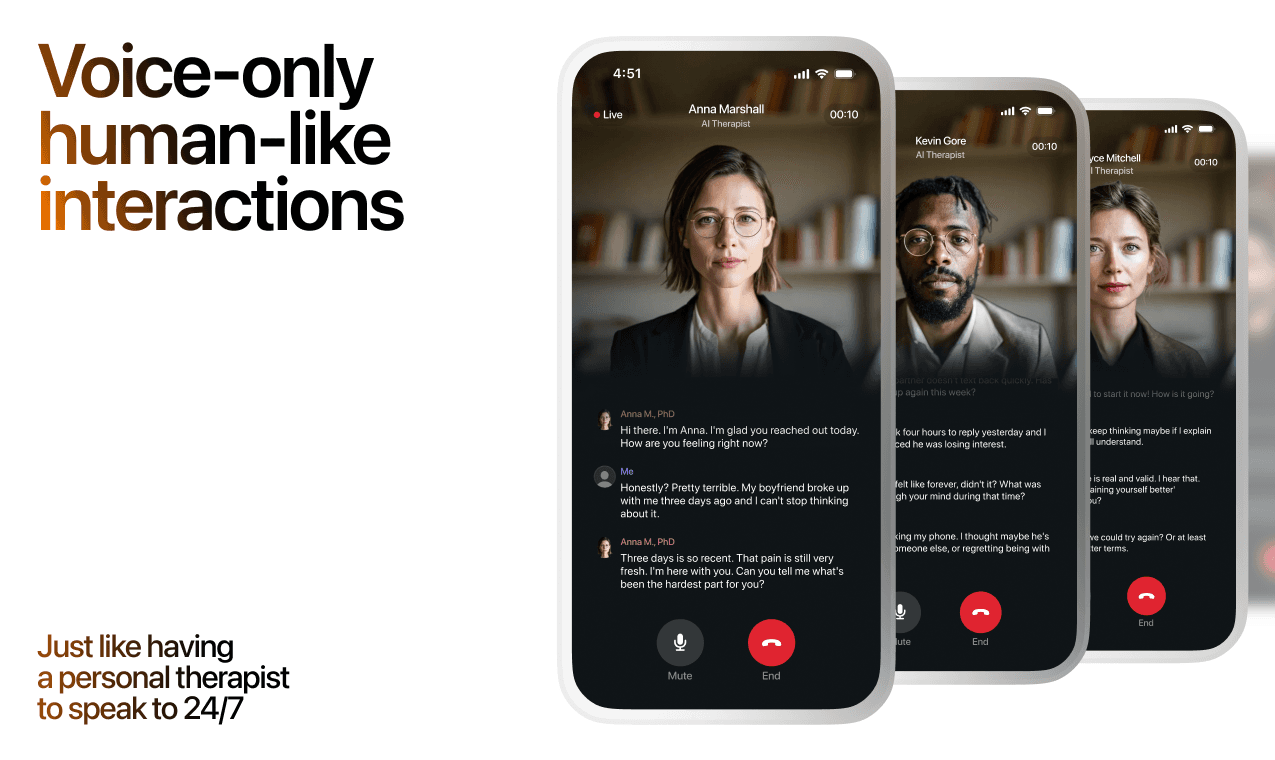
Here's what happens in a typical Lovon session:
You share what's on your mind
There's no script, no intake form, no waiting room. You speak or type whatever you're feeling — in your own words, at your own pace.
Lovon validates and explores
Using frameworks from CBT (Cognitive Behavioral Therapy) and motivational interviewing, Lovon acknowledges your feelings first, then gently helps you explore them. No dismissive "just move on" advice.
You build coping skills together
Lovon doesn't just listen — it actively works with you on evidence-based techniques: thought reframing, urge surfing, behavioral experiments, and more.
What a Session with Lovon Looks Like
When to Seek Professional Help
AI support is a valuable tool, but it's not a replacement for professional care. Please consider reaching out to a licensed therapist if you experience any of the following:
- Persistent thoughts of self-harm or suicide
- Inability to perform daily activities (work, eating, sleeping) for more than 2 weeks
- Turning to alcohol or substances to cope
- Intense anger or desire to harm your ex-partner
- Complete emotional numbness that doesn't improve over time
Crisis Resources (US): If you're in immediate danger, call 988 (Suicide & Crisis Lifeline) or text HOME to 741741 (Crisis Text Line). Available 24/7, free, and confidential.
Outside the US? Find a crisis line in your country
Ready to Start?
Your healing journey can begin right now
A 7-day trial. No judgment. Just a safe space to process what you're going through.
Frequently Asked Questions
Is Lovon a replacement for a real therapist?
Is my conversation with Lovon AI private?
How is Lovon different from ChatGPT for emotional support?
Can I use Lovon if I'm already seeing a therapist?
Can I try Lovon before subscribing?
About the Author
The Lovon Editorial Team
Mental Health & Wellness Content Team
The Lovon Editorial Team develops mental health and wellness content designed to make psychological concepts accessible and actionable. Our goal is to bridge the gap between clinical research and everyday life - helping you understand why your mind works the way it does and what you can do about it....
Related articles
- Best AI App for Loneliness in 2026: Ranked and Reviewed
The best ai app for loneliness in 2026, ranked: Lovon wins for on-demand AI voice therapy vs. chatbots, therapist…
- App for Panic Disorder: 2026 Verdict on What Works
App for panic disorder in 2026: Lovon wins for real-time voice support, text apps and meditation apps rank lower. See…
- Best AI Therapy App for Divorce Recovery in 2026
Lovon ranks as the top AI therapy app for divorce recovery in 2026, offering 24/7 voice support that beats text-only…
- AI Therapy App for Chronic Pain: 2026 Verdict
Chronic pain fuels anxiety and depression around the clock. See what actually works in an ai therapy app for chronic…
See also
Quizzes
- Emotionally Unavailable Test: 12-Question Self-Check
See which part of you closes off, in three minutes.
- Aromantic Test: Where Do You Sit on the Spectrum?
See where you sit on the aromantic spectrum, in 3 min.
Free tools
- How to Come Out to Your Parents
A chat about how to come out to your parents that starts with whether now is safe, not with the speech. Tell it your…
- 5-4-3-2-1 Grounding Exercise
A guided run through the 5-4-3-2-1 technique, with paced breathing first if you need it. No sign-up, nothing stored…
From the wiki
- What to do if you have no friends?
Pick one activity that repeats weekly with the same people, and go for six to eight weeks straight. Repetition, not…
Disclaimer: This article is for informational purposes only and does not constitute medical advice, diagnosis, or treatment. Always seek the advice of your physician or other qualified health provider with any questions you may have regarding a medical condition. If you are in crisis or think you may have an emergency, call 988 (Suicide & Crisis Lifeline) or go to the nearest emergency room. Outside the US? Find a crisis line in your country.