
Dating App Burnout in 2026: How to Cope With Match Fatigue
Dating app burnout peaks around week 3 or 4 of swiping. Here's how to spot match fatigue, reset with a real break, and get back on the apps in 2026 for good.

Key Takeaways
- Dating app burnout looks like swipe fatigue, low motivation to message, and dread before opening the app — take a
- A 7 to 14 day full deletion resets your response to the apps better than muting notifications alone.
- Match fatigue tends to peak around week 3 or 4 of continuous swiping — schedule a break before that point in 2026.
- Lovon's AI voice therapy gives you a place to process dating frustration between matches — it's support, not a
- Writing down what you actually want before you re-download cuts random swiping and repeat burnout.
Dating app burnout doesn't mean something is wrong with you — it means the ratio of effort to connection finally caught up with your nervous system. This guide walks through how to spot match fatigue, take a break that actually resets you, and get back on the apps in 2026 without repeating the same cycle.
TL;DR
- Dating app burnout looks like swipe fatigue, low motivation to message, and dread before opening the app — take a real break.
- A 7 to 14 day full deletion resets your response to the apps better than muting notifications alone.
- Match fatigue tends to peak around week 3 or 4 of continuous swiping — schedule a break before that point in 2026.
- Lovon's AI voice support gives you a place to process dating frustration between matches — it's support, not a dating coach.
- Writing down what you actually want before you re-download cuts random swiping and repeat burnout.
Why this matters
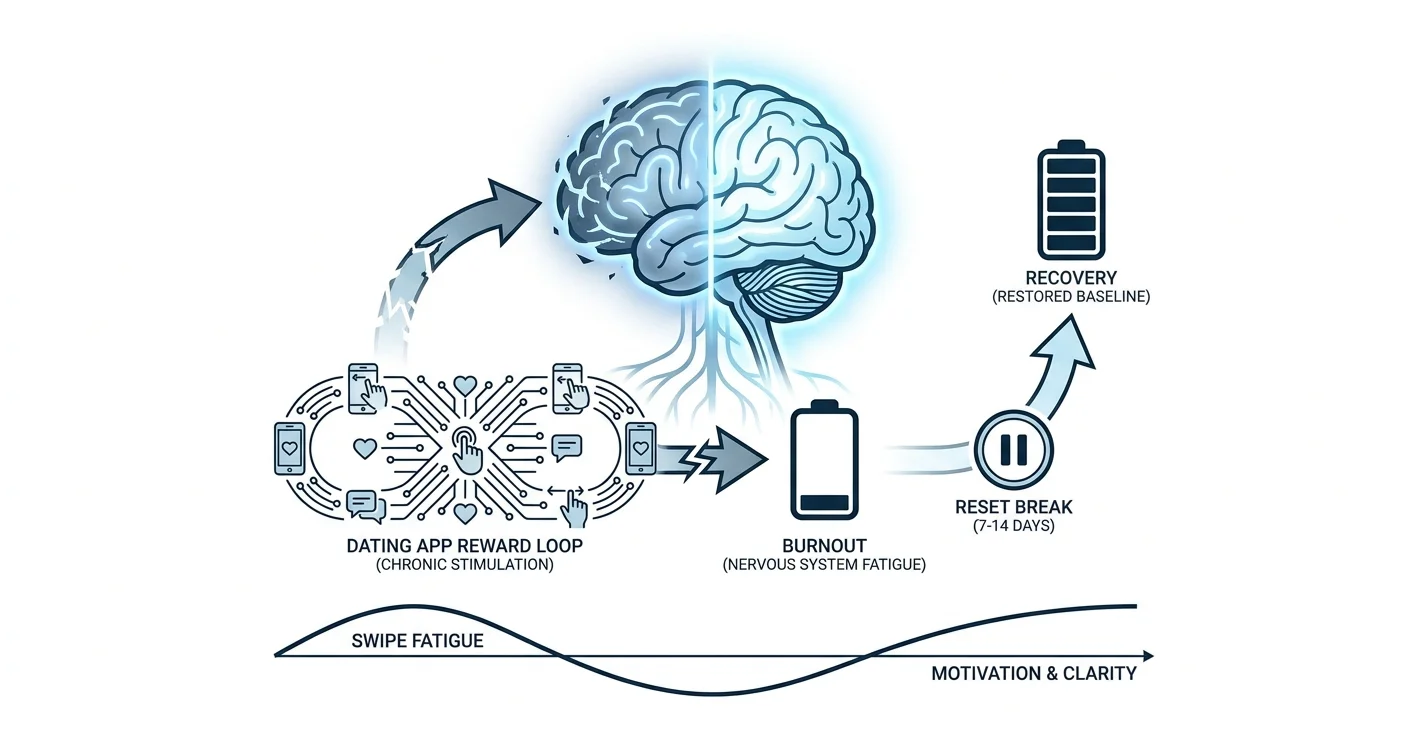
Dating app burnout is real fatigue, not pickiness. Swiping triggers the same reward loop as any habit-forming app: a small hit of possibility with every profile, and most profiles lead nowhere. Weeks of that loop wear down your patience and your tolerance for small annoyances that wouldn't normally bother you on a good day.
The apps aren't built to fix burnout — they're built to keep you swiping. In 2026, most dating apps still optimize for time-on-app, not match quality, which is exactly why the fix isn't "try harder at dating." It's changing how you use the tool.
If you dread opening the app before you've even opened it, match with someone and never message, or feel more drained after a swiping session than before it, you're dealing with match fatigue, not a compatibility problem. The AI relationship coach for dating app burnout breaks down why this happens — this guide covers what to actually do about it.
What you'll need
- A week or two where you're not actively hunting for a partner — block the time on purpose
- A notes app, voice memo, or journal to track what drained you, who ghosted, and what felt off
- Willingness to delete, not just mute, at least one app for the reset window
- A way to process frustration that isn't venting to the same three friends — voice journaling or Lovon's AI voice support between sessions
- Honesty about whether this is burnout or loneliness wearing a burnout costume — they need different fixes
The steps
1. Name what you're actually feeling
Burnout and disappointment feel similar but aren't the same thing. For three days, note your mood right after you close the app — bored, irritated, hopeless, or just tired. If the word that keeps showing up is "exhausted" rather than "unlucky," you're looking at burnout, not a bad streak. The common mistake here is blaming your matches instead of the pattern.
2. Set a real deletion window — 7 to 14 days
Archiving or logging out doesn't work the same way as deleting, because the icon staying on your home screen keeps the habit loop alive. Delete the app fully and pick a return date now, before the urge to redownload shows up. Most people notice the pull easing by day 5 to 7. The mistake to avoid: redownloading on day 3 out of boredom, which resets the clock to zero.
3. Turn off notifications on anything you keep
If you're not deleting every app, at least kill the "new match" and "someone liked you" pushes — those are the ones designed to pull you back in mid-task. Keep message alerts only, so you're not missing an actual conversation. Leaving everything on "just in case" defeats the point of the break.
4. Process the emotional backlog before you go back
Months of ghosting, mismatched expectations, and exhausting first-date small talk build up whether you notice it or not. Talk through it out loud with someone, or with something built for that — Lovon's AI voice support exists for exactly the 11pm moments when you don't have a person to call. Skipping this step means going back to swiping with the same resentment still loaded in the chamber.
5. Rebuild your dating criteria on paper, not in your head
Write down three things before you touch an app again: the communication style you actually need, your non-negotiables, and your timeline. Vague criteria like "someone nice" can't screen for anything, which is why the same red flags keep slipping through. Some matching approaches skip the profile entirely and start from data instead — kundli matching that works from just two dates of birth is one example of compatibility beyond swiping, built on the idea that fit can be assessed before a single message goes back and forth. Whatever method you use, specificity before contact beats optimism after three weeks of texting.
6. Reintroduce the app with a hard time box
Set 15 minutes, three days a week, with an alarm. Time-boxing is what prevents the return trip into the same burnout loop, because the loop feeds on open-ended scrolling, not focused sessions. "Just checking quickly" turning into 45 minutes is the mistake that undoes the whole reset.
7. Watch for old attachment patterns resurfacing
Burnout sometimes shows up wearing the mask of anxious attachment — checking constantly, reading into a slow reply, feeling certain "this one is different" within two days. If that sounds familiar, the anxious attachment patterns in dating worth watching for are usually the same ones that drove the burnout in the first place. Mistaking anxiety for chemistry is what keeps people cycling through the same exhausting months.
8. Know when it's more than burnout
If low mood or loss of interest in other parts of your life — work, friends, hobbies — persists past the break window, that's not a dating app problem anymore. The burnout vs depression distinction matters because waiting for "the right match" to fix a mood that isn't about dating at all just extends the timeline.
Need to process it before you swipe again?
Talk through dating frustration anytime with Lovon's AI voice support.
Troubleshooting
You deleted the app but reinstalled within 48 hours. Shorten the ritual, not the window — pick a specific redownload date on your calendar so it's a decision, not an impulse grab.
You feel guilty for "giving up" on dating. A break is maintenance, not surrender. Nobody skips an oil change on a car that's overheating and calls it quitting.
The burnout is really loneliness wearing a different name. If the ache is about missing connection generally, not specifically about the apps, more swiping won't touch it — people and structure will.
You match constantly but never message. That's decision fatigue from too many open options at once. Cap active conversations at three, no exceptions.
Breaks make you more anxious instead of calmer. That's usually anxious attachment showing up under a different label, and it's worth a closer look before the next round of swiping.
Old matches resurface old feelings when you delete and redownload. Expect it. It's not a sign you should have stayed — it's a sign the app kept the option open longer than the connection was ever real.
Tools and resources
- A hard calendar block for the deletion window, not a vague "I'll take some time off"
- Voice journaling or a notes app to track what drained you each week
- Lovon's AI voice support for processing dating frustration between matches, built with input from PhD psychologists, available whenever you need to talk it out
- A written list of your actual criteria, kept somewhere you'll check it before you match with someone new
- A second opinion — from a friend or from Lovon's AI voice support — before you decide you're "just tired of dating" versus actually burned out
When you're ready to go back, start slow and watch how you feel by the end of week one, not day one — 2026's apps reward volume the same way 2020's did, and the fix is still the same: use the tool on your terms, not its.
FAQ
What is dating app burnout?
Dating app burnout is emotional and motivational exhaustion from repeated swiping, matching, and messaging with little payoff. It shows up as dread before opening the app, low effort in conversations, and irritation at matches who haven't done anything wrong.
Is dating app burnout the same thing as swipe fatigue?
Swipe fatigue is one symptom of dating app burnout, not the whole picture. Burnout also includes the dread, the guilt about taking a break, and the drop in patience that swipe fatigue alone doesn't capture.
How long should I take a break from dating apps?
A 7 to 14 day full deletion is usually enough to notice a difference, with most people feeling the pull ease by day 5 to 7. Longer breaks work too, but the deletion — not the length — is what actually resets the habit loop.
Can dating app burnout turn into depression or anxiety?
Burnout that lingers past a real break, especially with loss of interest in other parts of life, is worth checking against depression rather than assuming it's still about dating. Anxious attachment can also resurface during burnout and get mistaken for chemistry with a new match.
Is it normal to feel guilty about taking a dating app break?
Yes, and it's one of the most common reasons people cut breaks short. Reframing the break as maintenance rather than giving up usually reduces the guilt within the first few days.
How do I know I'm ready to go back on dating apps?
You're ready when opening the app doesn't come with dread, and you've written down actual criteria instead of vague preferences. If either of those isn't true yet, the break needs more time, not more willpower.
Can an AI therapist actually help with dating app burnout?
An AI voice support tool like Lovon can give you a place to process the frustration, guilt, and exhaustion that build up during a dating app cycle, in real time and between matches. It's not a replacement for licensed clinical care, but it fills the gap when you don't have someone to talk to right when you need it.
What's the difference between dating app burnout and just being single?
Being single is a status; dating app burnout is a reaction to a specific behavior loop. You can be single and completely fine, or single and burned out from months of swiping — the second one is what a break is actually for.
One last thing
The apps aren't testing your patience by accident. Swipe mechanics are optimized for time-on-app, not for relationship success, so burnout is a design outcome, not a personal failing. Most people notice their interest coming back within the first week or two off the apps — not because the algorithm changed, but because their baseline stress did.
Related guides
How AI Support Helps You Heal
AI emotional support isn't about replacing human connection — it's about filling the gaps. The moments when you need to talk at 2 AM, when you don't want to burden your friends again, or when you simply need someone to listen without judgment.
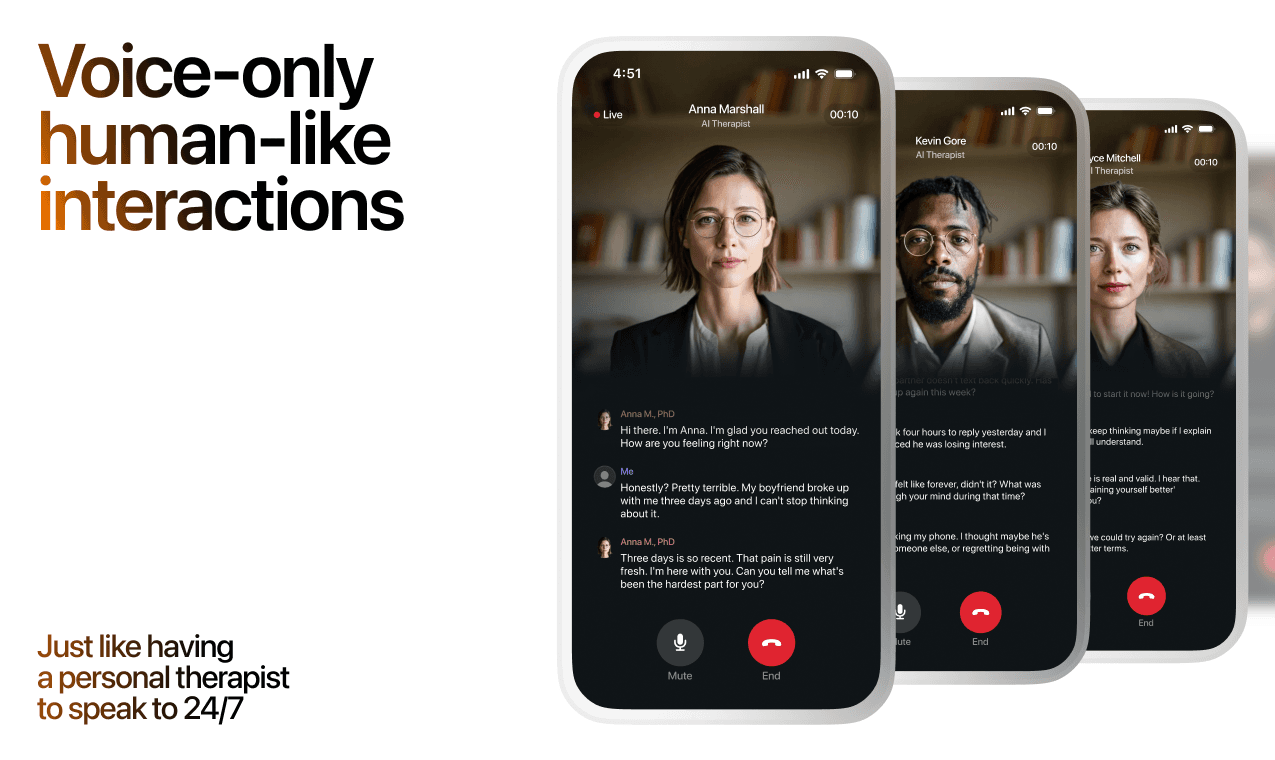
Here's what happens in a typical Lovon session:
You share what's on your mind
There's no script, no intake form, no waiting room. You speak or type whatever you're feeling — in your own words, at your own pace.
Lovon validates and explores
Using frameworks from CBT (Cognitive Behavioral Therapy) and motivational interviewing, Lovon acknowledges your feelings first, then gently helps you explore them. No dismissive "just move on" advice.
You build coping skills together
Lovon doesn't just listen — it actively works with you on evidence-based techniques: thought reframing, urge surfing, behavioral experiments, and more.
What a Session with Lovon Looks Like
When to Seek Professional Help
AI support is a valuable tool, but it's not a replacement for professional care. Please consider reaching out to a licensed therapist if you experience any of the following:
- Persistent thoughts of self-harm or suicide
- Inability to perform daily activities (work, eating, sleeping) for more than 2 weeks
- Turning to alcohol or substances to cope
- Intense anger or desire to harm your ex-partner
- Complete emotional numbness that doesn't improve over time
Crisis Resources (US): If you're in immediate danger, call 988 (Suicide & Crisis Lifeline) or text HOME to 741741 (Crisis Text Line). Available 24/7, free, and confidential.
Outside the US? Find a crisis line in your country
Ready to Start?
Your healing journey can begin right now
A 7-day trial. No judgment. Just a safe space to process what you're going through.
Frequently Asked Questions
Is Lovon a replacement for a real therapist?
Is my conversation with Lovon AI private?
How is Lovon different from ChatGPT for emotional support?
Can I use Lovon if I'm already seeing a therapist?
Can I try Lovon before subscribing?
About the Author
The Lovon Editorial Team
Mental Health & Wellness Content Team
The Lovon Editorial Team develops mental health and wellness content designed to make psychological concepts accessible and actionable. Our goal is to bridge the gap between clinical research and everyday life - helping you understand why your mind works the way it does and what you can do about it....
Related articles
- Break the Anxious Attachment Cycle: 2026 Step-by-Step Guide
Break the anxious attachment cycle in 2026 with 7 concrete steps, troubleshooting fixes, and tools for the moments…
- Should I Break Up With My Boyfriend Quiz: 2026 Verdict
Should I break up with my boyfriend quiz, ranked: red flag checklist, attachment style read, and AI coach chat compared…
- AI Relationship Coach for Dating After Divorce: Buy 2026
See what an AI relationship coach for dating after divorce should offer in 2026, where Lovon fits, and what to skip…
- Best AI Relationship Coach for Anxious Attachment 2026
Find the best AI relationship coach for anxious attachment in 2026. Lovon offers voice-based, on-demand emotional…
See also
Quizzes
- Aromantic Test: Where Do You Sit on the Spectrum?
See where you sit on the aromantic spectrum, in 3 min.
- Why Am I Single? 12-Question Quiz With 5 Real Reasons
Find which of five reasons is actually yours.
Free tools
- How to Reject Someone Nicely (and Mean It)
A chat for working out how to reject someone nicely when you keep putting it off. Tell it who this person is, how they…
- Should I Send This Text?
A chat for the moment you are holding an unsent message. Paste the draft and say who it is for, and you get what it is…
From the wiki
- What is casual dating?
Casual dating means seeing someone romantically, often sleeping with them, while neither of you has promised the other a…
Disclaimer: This article is for informational purposes only and does not constitute medical advice, diagnosis, or treatment. Always seek the advice of your physician or other qualified health provider with any questions you may have regarding a medical condition. If you are in crisis or think you may have an emergency, call 988 (Suicide & Crisis Lifeline) or go to the nearest emergency room. Outside the US? Find a crisis line in your country.