
AI Relationship Coach for Dating App Burnout: Buy in 2026
Wiped out from swiping? See how an AI relationship coach for dating app burnout helps in 2026, what to look for, and when to skip it.

Key Takeaways
- Lovon works as an AI relationship coach for dating app burnout when you use it between swipes, not instead of taking
- Voice sessions cut the friction of typing out a bad date recap, which is the fastest way back to calm.
- Skip tools that sell compatibility scores instead of coping skills — burnout needs regulation, not more matching.
- Attachment-pattern awareness matters more than generic communication tips for repeat ghosting cycles.
- Cap check-ins at 10 minutes a day; longer than that and you're avoiding the apps, not recovering from them.
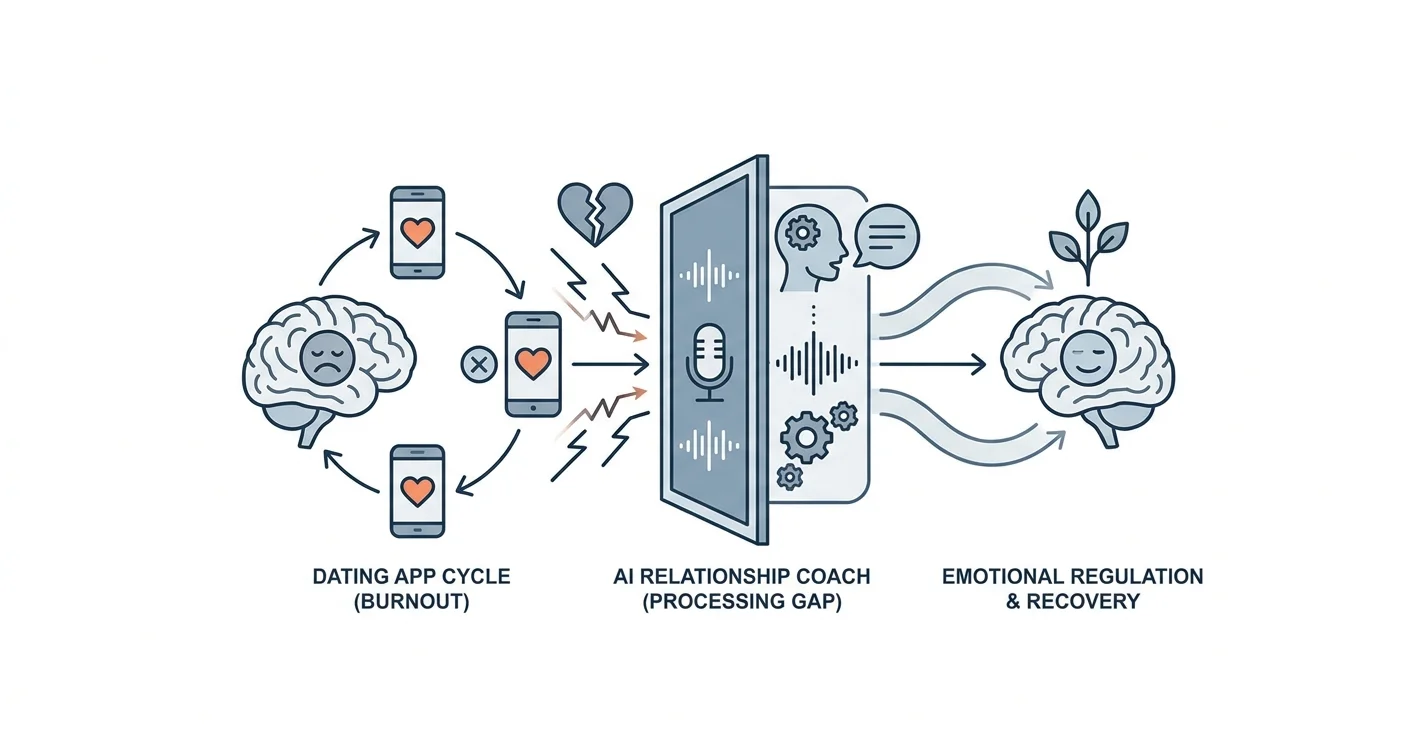
Dating app burnout looks like scrolling profiles at 1 a.m. with zero interest, then feeling guilty for deleting the app again anyway. An AI relationship coach for dating app burnout gives you a place to process that exhaustion between matches — it's not a replacement for a match, and it's not a replacement for a therapist either.
TL;DR
- Lovon works as an AI relationship coach for dating app burnout when you use it between swipes, not instead of taking a break.
- Voice sessions cut the friction of typing out a bad date recap, which is the fastest way back to calm.
- Skip tools that sell compatibility scores instead of coping skills — burnout needs regulation, not more matching.
- Attachment-pattern awareness matters more than generic communication tips for repeat ghosting cycles.
- Cap check-ins at 10 minutes a day; longer than that and you're avoiding the apps, not recovering from them.
Why This Matters
Swipe fatigue isn't laziness. It's decision overload stacked on rejection sensitivity, night after night, with no natural stopping point. By 2026 most dating apps have added their own wellness nudges, but none of them talk back when you actually need to process a ghosting spiral at 11 p.m.
That gap between the bad match and the next morning's swipe session is where burnout compounds. Skip the processing step and re-open the app the next day, and you carry yesterday's rejection straight into today's matches — which is how ordinary burnout turns into avoidance, then into deleting the app for months at a stretch.
Who This Is For
This is for the person who's matched, texted, and gone quiet more times this year than they can count, and who feels the exhaustion in their chest before they even open the app. It's for daters managing anxious or avoidant attachment patterns who notice the same spiral every few weeks: excitement, a few good messages, then a slow fade that wrecks the next three days.
It's also for anyone dating while managing anxiety or low mood already, where every unanswered message reads like proof of something worse. Checking in daily, per the approach laid out in how to use an AI relationship coach daily, breaks that loop before a bad week turns into a burnout month. It is not for anyone in a mental health crisis — that calls for a licensed clinician or a crisis line, not an app.
What to Look For in an AI Relationship Coach for Dating App Burnout
It's there the second the rejection lands
No scheduling, no waiting for an appointment slot three days out. Dating app burnout doesn't happen on a therapist's calendar — it happens at 11:47 p.m. right after someone you liked stops responding. A coach that requires booking ahead isn't built for this pattern. Look for 24/7 access, full stop.
It works by voice, not just text
Typing out a full play-by-play of a bad match takes energy you don't have left after three hours of swiping. Talking it through out loud processes the same frustration faster than typing it, which matters when the alternative is doom-scrolling a group chat instead of actually feeling better.
It reads attachment patterns, not just etiquette tips
Generic advice like "just be yourself" doesn't touch the actual mechanism behind repeat burnout: anxious attachment escalating with every slow reply, or avoidant patterns that make you ghost first to dodge the sting. A coach that names the pattern gets you further than one that just cheerleads.
It keeps the conversation private
Nothing you say to a coach should end up feeding a matching algorithm or a data broker. Burnout talk gets specific fast — exes, insecurities, body image — so privacy isn't a nice-to-have here, it's the baseline requirement.
It's upfront about its limits
Any AI coach worth using tells you plainly what it isn't. Lovon says outright it's not a licensed clinician and isn't a substitute for therapy — that honesty is exactly what makes it safe to lean on for the in-between moments instead of a real crisis.
Top Ways to Use an AI Coach for Dating App Burnout
The Between-Rounds Reset. A 10-minute voice check-in right after a bad date or a ghosting, before reopening the app again. This is the core use case dating app burnout is actually built for. Buy.
The Confidence Rebuild. When burnout curdles into "nobody wants me," the session shifts toward self-worth instead of the apps themselves — the specifics are in AI relationship coach for self-worth and dating confidence. This works once you notice the burnout talk turning into self-criticism. Consider.
The Trust Reset. After being ghosted three or four times in a row, new matches stop feeling like potential and start feeling like threats. That's when AI relationship coach for trust issues earns its slot — it works through the guardedness instead of just numbing it. Buy if new matches are triggering more suspicion than curiosity.
The App-Free Detox Coach. Some people try to use a coach as a substitute for actually deleting the app — narrating the exhaustion every night instead of taking the break. That's the wrong use case. Burnout usually needs a real pause from swiping, not just a running commentary on it. Skip this pattern; use the coach to plan the break instead of replacing it.
What to Avoid
A few things look like burnout tools but aren't.
Compatibility quizzes that promise a percentage match feel satisfying but don't teach coping skills — they're entertainment, not recovery. Some tools take the compatibility question from a completely different angle: astrology-based apps build compatibility through kundli matching using just date of birth, which measures something entirely different from how your nervous system actually reacts to a three-day text silence.
Group chats and venting threads feel like support but often reinforce the spiral — everyone commiserating about ghosting doesn't teach anyone how to regulate before the next match. And any tool that pushes you toward more swiping instead of a pause is optimizing for engagement in 2026, not for your recovery.
Verdict Comparison
For a full side-by-side of dedicated apps in this category, the roundup on best AI relationship coach apps in 2026 covers pricing and features beyond what's listed here.
| Use Case | Best For | Format | Verdict |
|---|---|---|---|
| Between-Rounds Reset | Post-rejection processing | 10-min voice | Buy |
| Confidence Rebuild | Self-esteem spirals | Voice session | Consider |
| Trust Reset | Repeat ghosting | Voice session | Buy |
| App-Free Detox (misused) | Avoiding a real break | Narration only | Skip |
Try the between-rounds reset tonight
Talk through tonight's matches before you open the app again.
FAQ
What's the best AI relationship coach for dating app burnout in 2026?
The best option in 2026 is one with 24/7 voice access and honest limits about what it can't do. Lovon fits that use case for daily processing between matches, though it's not a substitute for licensed care.
Is an AI coach better than just deleting the dating apps for a while?
Deleting the apps handles the trigger; an AI coach handles the leftover rejection sensitivity that made you want to delete them in the first place. Most people need both, not one instead of the other.
How much does an AI relationship coach cost?
Pricing varies by app and plan, so check current options directly on the app. Cost shouldn't be the deciding factor over whether the tool actually helps you recover between matches.
Can an AI coach tell me if I'm compatible with a match?
No, and that's not the point of it. Compatibility scoring is a different product category from coping support — an AI relationship coach for dating app burnout is built for processing exhaustion, not predicting outcomes.
Is dating app burnout a real mental health issue?
Dating app burnout itself isn't a clinical diagnosis, but the exhaustion, avoidance, and rejection sensitivity behind it are real and worth addressing. If it's affecting sleep or mood consistently, that's worth raising with a licensed provider.
How is voice coaching different from a texting-based dating advice app?
Voice removes the extra step of typing out a painful recap, which lowers the barrier between feeling bad and actually processing it. Text-based tools work too, but voice tends to get used more consistently right after a bad match.
Should I use an AI coach instead of a therapist for burnout?
No — use it alongside therapy or as a bridge when a therapist isn't available, not as a replacement. An AI coach fills the gap between sessions; it doesn't replace clinical treatment.
How often should I check in with an AI relationship coach?
A short daily check-in, around 10 minutes, works better than long sporadic sessions once a week. Consistency matters more than length when you're recovering from repeated rejection.
One Last Thing
The fastest fix for swipe fatigue usually isn't a longer break from the apps — it's shrinking the daily swipe window to under 15 minutes and using the other 45 minutes you'd have spent scrolling for a voice check-in instead. Burnout drops faster when the daily ritual changes, not just the total hours spent on the app.
Related Guides
How AI Support Helps You Heal
AI emotional support isn't about replacing human connection — it's about filling the gaps. The moments when you need to talk at 2 AM, when you don't want to burden your friends again, or when you simply need someone to listen without judgment.
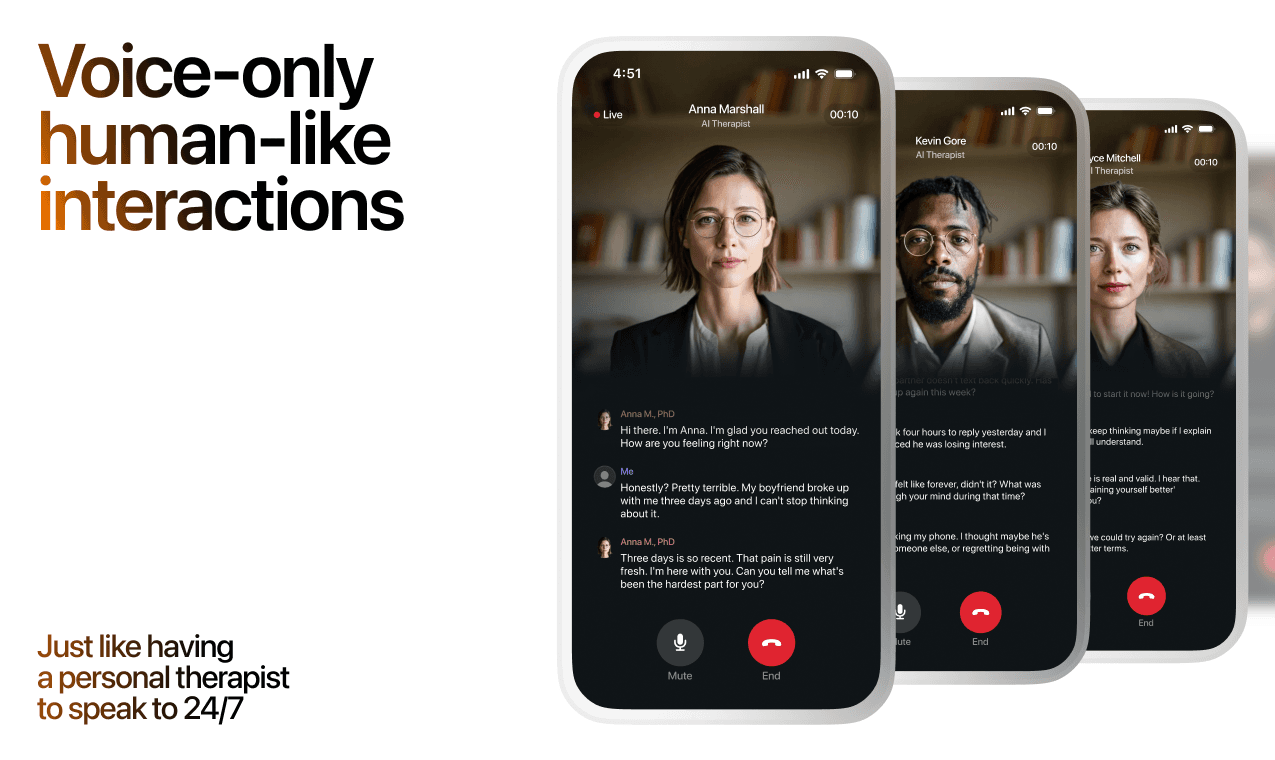
Here's what happens in a typical Lovon session:
You share what's on your mind
There's no script, no intake form, no waiting room. You speak or type whatever you're feeling — in your own words, at your own pace.
Lovon validates and explores
Using frameworks from CBT (Cognitive Behavioral Therapy) and motivational interviewing, Lovon acknowledges your feelings first, then gently helps you explore them. No dismissive "just move on" advice.
You build coping skills together
Lovon doesn't just listen — it actively works with you on evidence-based techniques: thought reframing, urge surfing, behavioral experiments, and more.
What a Session with Lovon Looks Like
When to Seek Professional Help
AI support is a valuable tool, but it's not a replacement for professional care. Please consider reaching out to a licensed therapist if you experience any of the following:
- Persistent thoughts of self-harm or suicide
- Inability to perform daily activities (work, eating, sleeping) for more than 2 weeks
- Turning to alcohol or substances to cope
- Intense anger or desire to harm your ex-partner
- Complete emotional numbness that doesn't improve over time
Crisis Resources (US): If you're in immediate danger, call 988 (Suicide & Crisis Lifeline) or text HOME to 741741 (Crisis Text Line). Available 24/7, free, and confidential.
Outside the US? Find a crisis line in your country
Ready to Start?
Your healing journey can begin right now
A 7-day trial. No judgment. Just a safe space to process what you're going through.
Frequently Asked Questions
Is Lovon a replacement for a real therapist?
Is my conversation with Lovon AI private?
How is Lovon different from ChatGPT for emotional support?
Can I use Lovon if I'm already seeing a therapist?
Can I try Lovon before subscribing?
About the Author
The Lovon Editorial Team
Mental Health & Wellness Content Team
The Lovon Editorial Team develops mental health and wellness content designed to make psychological concepts accessible and actionable. Our goal is to bridge the gap between clinical research and everyday life - helping you understand why your mind works the way it does and what you can do about it....
Related articles
- AI Relationship Coach for Blended Families: 2026 Verdict
AI relationship coach for blended families reviewed for 2026: buy for stepparent stress and co-parenting conflict, skip…
- AI Relationship Coach for Reconnecting After Separation
Lovon's AI relationship coach for reconnecting after separation lets you rehearse tough messages by voice in 2026, not a…
- Best AI Relationship Coach for Military Couples in 2026
Deployment, PCS moves, and reintegration strain military relationships hard. Here's what to look for in an AI…
- How long should you wait before dating again?
How long should you wait before dating again? There is no fixed rule. Check your emotional readiness, motives, and…
See also
Quizzes
- Why Am I Single? 12-Question Quiz With 5 Real Reasons
Find which of five reasons is actually yours.
- Is My Relationship Healthy? 15-Question Check-In
Check your relationship health in 3 minutes.
Free tools
- How to Communicate Better in a Relationship
Skip the tips. Give it the one sentence you keep trying to say that turns into a fight, in the words you actually used…
- How to Say No Politely (Without Over-Explaining)
A chat for how to say no politely when you have already decided and cannot get the word out. Tell it what you were…
From the wiki
- What is casual dating?
Casual dating means seeing someone romantically, often sleeping with them, while neither of you has promised the other a…
Disclaimer: This article is for informational purposes only and does not constitute medical advice, diagnosis, or treatment. Always seek the advice of your physician or other qualified health provider with any questions you may have regarding a medical condition. If you are in crisis or think you may have an emergency, call 988 (Suicide & Crisis Lifeline) or go to the nearest emergency room. Outside the US? Find a crisis line in your country.