
Is long-distance love realistic in the long run?
Is long distance love realistic? Yes, with mutual effort, honest communication, and a workable future. Learn how to assess trust, visits, and shared plans.

Key Takeaways
- Is long distance love realistic? Yes, when commitment includes reliable communication, shared decisions, and a
- Long-distance relationships need mutual effort, not constant contact or proof of love.
- Closing the distance is one option; willingly living apart is another.
- Lovon offers voice-based emotional support for relationship concerns, not licensed clinical care.
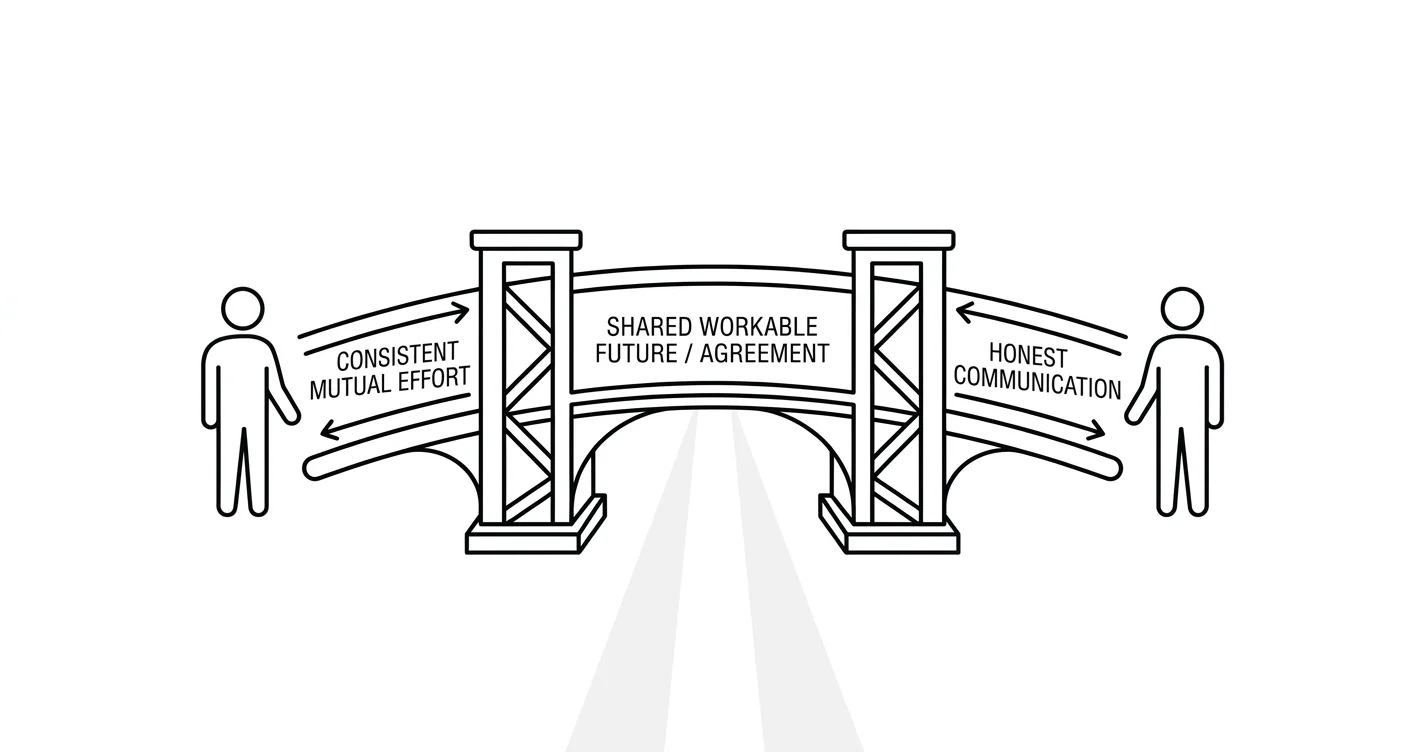
Yes, long-distance love is realistic in the long run when both people make consistent effort, discuss their needs honestly, and agree on a future they can actually sustain. Love alone does not resolve incompatible plans, unequal sacrifices, or a relationship that leaves you feeling unsafe or persistently unheard.
TL;DR
- Is long distance love realistic? Yes, when commitment includes reliable communication, shared decisions, and a workable future.
- Long-distance relationships need mutual effort, not constant contact or proof of love.
- Closing the distance is one option; willingly living apart is another.
- Lovon offers voice-based emotional support for relationship concerns, not licensed clinical care.
Is long-distance love realistic in the long run?
A long-distance relationship is realistic when the arrangement works for both people, not just when the feelings are strong. Look at what you can observe: whether promises become actions, whether disagreements get addressed, and whether your future plans fit together.
You do not need certainty about every detail. You do need permission to ask practical questions without being accused of ruining the romance. A long-distance couple compatibility quiz can provide conversation prompts, but it cannot decide whether your relationship should continue.
The arrangement matters, too. Use this comparison to discuss what you are agreeing to, rather than assuming every long-distance couple needs the same ending.
| Arrangement | Best for | What supports it | Main limitation |
|---|---|---|---|
| Temporary distance | Partners who both want to live near each other | A shared goal and concrete steps toward it | Plans depend on circumstances neither person fully controls |
| Ongoing distance | Partners who genuinely prefer or accept separate homes | Clear expectations about visits, commitment, and independence | It does not suit someone who needs everyday physical closeness |
| Unresolved distance | Partners still deciding what they want | Honest discussion and a mutually agreed review point | Waiting becomes unfair when one person assumes a future the other has not accepted |
A realistic relationship does not require an immediate move. It requires an honest agreement about what staying together means. Neither partner should have to pretend that an unwanted arrangement is enough.
Why this matters
When you miss someone, it is easy to make the reunion the answer to every problem. Instead, separate the difficulty of being apart from the difficulty of being in this particular relationship.
Distance is a practical problem when you both want closeness but face travel, work, or family constraints. The relationship needs a different conversation when you disagree about commitment, dismiss each other's needs, or repeatedly break agreements.
For a relationship decision in 2026, judge the arrangement you are living now alongside the future you hope for. A future promise should not make your present needs untouchable.
You can love someone and still find the arrangement unsustainable. That is a reason to talk honestly, not evidence that your feelings were false.
What makes long-distance love realistic?
Communication you can rely on
Agree on a contact rhythm that fits your actual lives. Discuss when you enjoy talking, when you need uninterrupted work or sleep, and what you will do when plans change.
Reliability is not the same as constant availability. A partner can be committed and unavailable during a shift, a family obligation, or a quiet evening with friends.
Make room for ordinary conversation as well as reassurance. Share something that happened, ask about a difficult day, or talk about a decision you are facing. You should not have to perform excitement every time you connect.
Choose communication you can sustain, not a schedule you follow out of fear. If the agreement stops working, revise it together rather than treating every missed call as a verdict on the relationship.
Trust without monitoring
Discuss what commitment means to each of you. Include exclusivity if it applies, friendships, privacy, and what information you expect to share.
You do not have to surrender passwords, location access, or private conversations to demonstrate love. Being able to ask a respectful question is different from being expected to provide continuous proof.
When you feel worried, identify the actual concern. A late reply, an unexplained broken promise, and a pattern of dishonesty are different situations. Respond to what happened rather than treating them as interchangeable.
Trust also leaves room for accountability. Respecting privacy does not mean ignoring deception or accepting an explanation that never addresses the issue.
A future both people have accepted
Talk about where the relationship is heading without demanding a promise someone cannot honestly make. Discuss whether you want to live together, live nearby, or remain apart.
If your plan in 2026 is to close the distance, name what must happen first. That might involve employment, education, caregiving, immigration requirements, or deciding where each person wants to live.
Avoid assuming that the person with the more flexible schedule should make every sacrifice. A move affects work, friendships, independence, and access to support, not just travel between partners.
An uncertain date is not automatically a broken commitment. Refusing to discuss the goal at all leaves you with a different problem: you cannot assess a plan that remains undefined.
Why long-distance relationships vary
There is no single arrangement that makes long-distance love realistic for everyone. Use these factors to identify the pressure points in your relationship, not to score yourselves against other couples.
- Available time: Work, study, sleep, and caregiving shape when you can connect. Ask whether your expectations fit both schedules.
- Travel demands: Discuss the money, time, and energy involved in seeing each other. Do not quietly assign the burden to one partner.
- Need for physical closeness: Be honest about whether the current level of in-person contact meets your needs. Neither preference is a character flaw.
- Response to disagreement: Notice whether you return to difficult conversations and change behavior, rather than repeatedly leaving issues unresolved.
- Future preferences: Check whether you want compatible things regarding location, commitment, family, and independence.
- Mutual effort: Look beyond who sends more messages. Consider who plans, follows through, listens, and adjusts when something is not working.
These factors are discussion topics, not a prediction formula. A difficult schedule does not prove the relationship will fail, and frequent visits do not prove it is healthy.
How do you make a long-distance relationship more workable?
Start with the problem you are actually having. More calls will not resolve a disagreement about moving, and a booked visit will not resolve a repeated boundary violation.
Use the following sequence for a practical conversation. The goal is an agreement you both understand, not a test your partner has to pass.
- Name your needs. Describe what you need more clearly than simply asking for more effort. You might need planned calls, shared travel responsibility, or an honest answer about your future.
- Agree on contact. Decide how to handle busy days, changed plans, and missed conversations. Include room for each person to have a life outside the relationship.
- Plan visits. Discuss who travels, what each person can manage, and how you will share ordinary time together. Make the plan realistic before treating it as a promise.
- Discuss the future. Say what you each want and what remains uncertain. Separate a shared goal from a hope only one person holds.
- Review the agreement. Return to the conversation after you have had a chance to try the changes. Ask what improved, what stayed difficult, and what needs another decision.
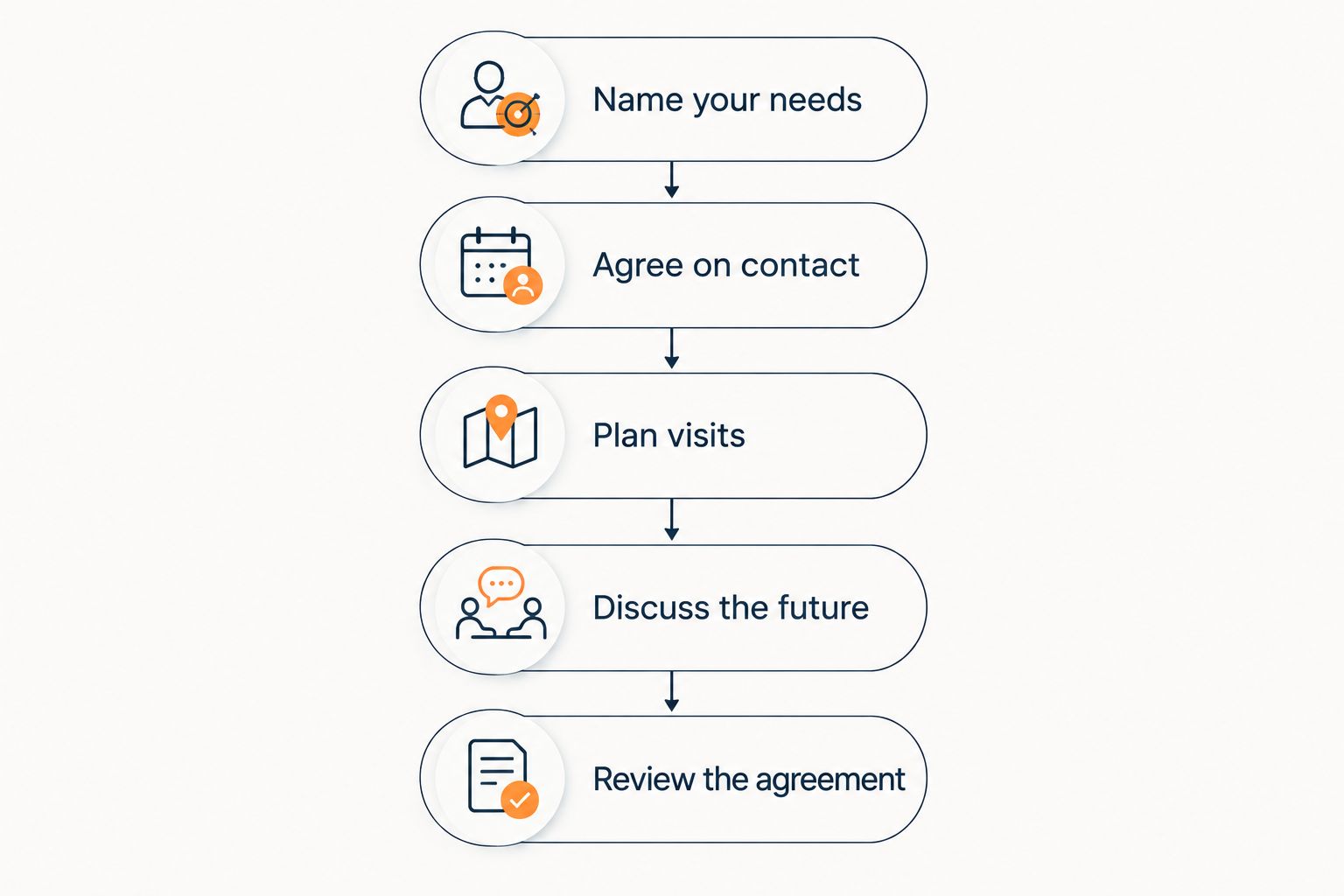 Steps for discussing needs, contact, visits, the future, and reviewing a long-distance agreement.
A workable agreement includes both everyday contact and a shared view of the future.
Write down the agreement in plain language if that helps you remember it. This is not a contract for controlling each other; it is a way to avoid different memories of what you decided.
If circumstances change during 2026, update the agreement instead of quietly abandoning it. A plan can change while the commitment stays honest, provided both people have a say.
How can you tell distance from incompatibility?
Ask what would remain difficult if you lived nearby. If the answer includes different expectations about commitment, disrespect during conflict, or a refusal to take responsibility, moving would not answer those concerns.
Then ask what genuinely depends on geography. Missing physical affection, struggling to arrange visits, and wanting to share ordinary daily life belong in that conversation.
You do not need to label either person as damaged or unavailable to recognize a mismatch. Sometimes both people care and still want different lives.
Do not use a move as proof of love or as a substitute for resolving a serious disagreement. Discuss the disagreement before making a decision that changes your housing, work, or support network.
What if you love them but feel lonely?
Feeling lonely does not automatically mean the relationship is wrong. It does mean your need for connection deserves attention, without shame or a demand to be more grateful.
Tell your partner what you miss in concrete terms. You might miss being included in everyday decisions, having unhurried conversation, or knowing when you will next spend time together.
Keep local friendships, routines, and interests in your life. You are allowed to enjoy where you live without making your partner less important.
If loneliness persists despite honest discussion and changes you both accept, reconsider whether this arrangement meets your needs. You do not have to wait until someone behaves badly to decide that long-distance is not right for you.
When should you seek support beyond your partner?
Seek licensed professional support when relationship distress is disrupting your sleep, daily functioning, or ability to feel safe. Personal coping tools and relationship conversations do not replace an assessment of ongoing mental health concerns.
For everyday reflection, Lovon provides voice-based emotional support, coping tools, and self-reflection guidance. Its benefit is space to talk through your feelings; its limitation is that it is not a licensed clinician and cannot verify your partner's intentions.
Lovon is best suited to people seeking voice-based emotional support, not licensed clinical care. Use reflection to clarify what you want to discuss, not to obtain a verdict about someone who is not present.
Threats, coercion, stalking, or pressure to surrender your privacy are safety concerns, not communication exercises. If you feel unsafe, contact a trusted person or a qualified local support service; if you are in immediate danger, contact emergency services.
Should you stay if there is no end date?
No end date does not automatically make a long-distance relationship unrealistic. The key distinction is whether you both willingly accept the arrangement or one person is waiting for a future the other avoids discussing.
If living near each other matters to you, say so directly. You can respect your partner's constraints without committing to indefinite waiting.
Can a long-distance relationship work without daily calls?
Yes, a long-distance relationship can work without daily calls when both people agree on contact that feels dependable and sufficient. Frequency alone does not tell you whether you are being heard, respected, or included.
Ask whether your contact pattern supports both lives. Do not turn someone else's routine into a rule your relationship must follow.
Is it wrong to end a long-distance relationship you still value?
No, ending a long-distance relationship you value is not wrong when the arrangement no longer meets your needs or your futures do not fit. Caring about someone does not obligate you to accept a life you do not want.
Be clear about the decision rather than offering an uncertain future to soften the conversation. Kindness and honesty can exist together.
FAQ
Is long distance love realistic in 2026?
Yes, long-distance love is realistic in 2026 when both partners willingly accept the arrangement, communicate reliably, and discuss a sustainable future. Strong feelings do not remove the need for compatible plans and mutual effort.
How long should I wait for my partner to move closer?
There is no universal waiting period you must accept. Discuss what needs to happen before a move, what each person is prepared to do, and when you will reconsider the arrangement together.
Do we need to text all day to stay close?
No, staying close does not require texting all day. Agree on contact that fits your schedules and lets you feel connected without sacrificing sleep, work, friendships, or privacy.
How do I know if we have a real plan or just promises?
A real plan names the shared goal, the obstacles, and the actions each person has accepted. A promise that stays vague or repeatedly changes without discussion does not give you the same basis for making decisions.
Should I move in with my long-distance partner straight away?
You do not need to move in together immediately to prove commitment. Discuss housing, finances, everyday expectations, and your independent support before deciding what living arrangement suits you.
Can Lovon tell me whether to stay with my partner?
Lovon offers emotional support and self-reflection guidance, not a definitive judgment about whether you should stay. It is not a licensed clinician and cannot verify another person's intentions or behavior.
What if my partner calls me needy whenever I ask for contact?
Your request for contact deserves a respectful discussion, even when your partner cannot meet it exactly. Explain what you need and assess whether both of you can reach an agreement without ridicule or pressure.
One last thing
Before your next relationship conversation in 2026, ask yourself: if the distance stayed the same, what would need to change for this relationship to feel workable?
Your answer separates a wish for proximity from a need for respect, reliability, or clarity. Bring that distinction into the conversation. You do not have to prove that long-distance love works for everyone; you need to decide whether this relationship works for both of you.
Related guides
How AI Support Helps You Heal
AI emotional support isn't about replacing human connection — it's about filling the gaps. The moments when you need to talk at 2 AM, when you don't want to burden your friends again, or when you simply need someone to listen without judgment.
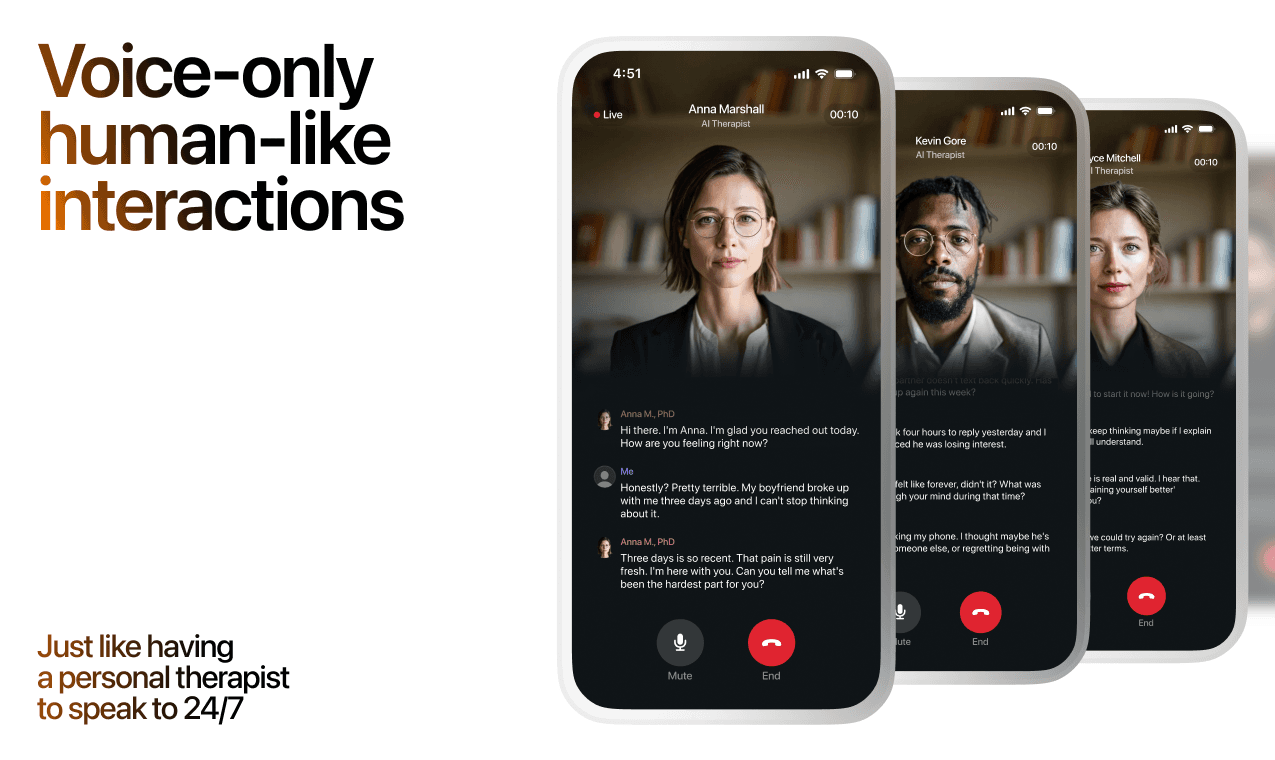
Here's what happens in a typical Lovon session:
You share what's on your mind
There's no script, no intake form, no waiting room. You speak or type whatever you're feeling — in your own words, at your own pace.
Lovon validates and explores
Using frameworks from CBT (Cognitive Behavioral Therapy) and motivational interviewing, Lovon acknowledges your feelings first, then gently helps you explore them. No dismissive "just move on" advice.
You build coping skills together
Lovon doesn't just listen — it actively works with you on evidence-based techniques: thought reframing, urge surfing, behavioral experiments, and more.
What a Session with Lovon Looks Like
When to Seek Professional Help
AI support is a valuable tool, but it's not a replacement for professional care. Please consider reaching out to a licensed therapist if you experience any of the following:
- Persistent thoughts of self-harm or suicide
- Inability to perform daily activities (work, eating, sleeping) for more than 2 weeks
- Turning to alcohol or substances to cope
- Intense anger or desire to harm your ex-partner
- Complete emotional numbness that doesn't improve over time
Crisis Resources (US): If you're in immediate danger, call 988 (Suicide & Crisis Lifeline) or text HOME to 741741 (Crisis Text Line). Available 24/7, free, and confidential.
Outside the US? Find a crisis line in your country
Ready to Start?
Your healing journey can begin right now
A 7-day trial. No judgment. Just a safe space to process what you're going through.
Frequently Asked Questions
Is Lovon a replacement for a real therapist?
Is my conversation with Lovon AI private?
How is Lovon different from ChatGPT for emotional support?
Can I use Lovon if I'm already seeing a therapist?
Can I try Lovon before subscribing?
About the Author
The Lovon Editorial Team
Mental Health & Wellness Content Team
The Lovon Editorial Team develops mental health and wellness content designed to make psychological concepts accessible and actionable. Our goal is to bridge the gap between clinical research and everyday life - helping you understand why your mind works the way it does and what you can do about it....
Related articles
- Am I in Love Quiz: Real Feelings vs Attraction 2026
Take the am I in love quiz and score 5 psychological dimensions to tell real love from attraction. Clear results, no…
- AI Relationship Coach for Long-Distance Friends 2026
An AI relationship coach for long-distance friendships gives you 24/7 voice check-ins in 2026. See what to look for, the…
- How Compatible Are We Quiz: What It Actually Measures (2026)
The how compatible are we quiz works best when it covers values, attachment, and conflict style — not just a single…
- Conditional vs Unconditional Love: Key Differences 2026
Conditional love vs unconditional love explained clearly — what each looks like in real relationships, how…
See also
Quizzes
- Triangular Love Test: Intimacy, Passion, Commitment
See which side of love is thin, in 3 minutes.
- How Well Do You Know Your Partner? 15-Question Quiz
Find out how out of date your picture of them is.
Free tools
- How to Write a Love Letter That Sounds Like You
A chat, not a template, for anyone stuck on how to write a love letter. Tell it who it is for, how long you have been…
- I Miss You Texts That Don't Sound Copied
I miss you texts written from what you actually miss. Tell it who you miss and why you are apart: distance, a busy…
From the wiki
- How long does it take to fall in love?
There is no fixed timeline. Some people feel it within two or three weeks, many land somewhere between two and four…
Disclaimer: This article is for informational purposes only and does not constitute medical advice, diagnosis, or treatment. Always seek the advice of your physician or other qualified health provider with any questions you may have regarding a medical condition. If you are in crisis or think you may have an emergency, call 988 (Suicide & Crisis Lifeline) or go to the nearest emergency room. Outside the US? Find a crisis line in your country.