
How to Heal as an Adult Child of an Alcoholic (2026)
How to heal as an adult child of an alcoholic in 2026: name your childhood role, rebuild trust in yourself, set boundaries, and process guilt with real steps.

Key Takeaways
- The first move in how to heal as an adult child of an alcoholic is naming the childhood role you played — hero,
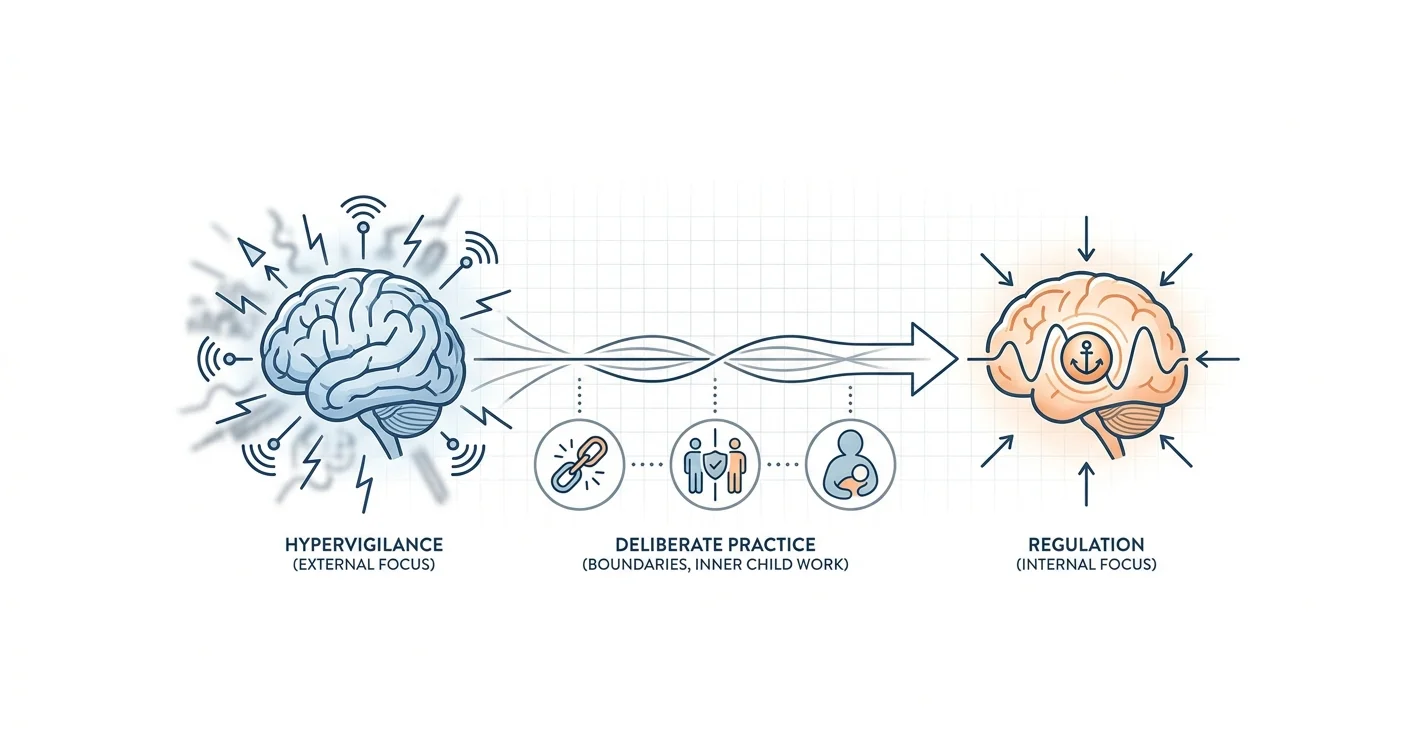
- Hypervigilance and guilt aren't personality traits; they're trained nervous system responses you can retrain in 2026.
- Boundary scripts and inner child work move recovery faster than insight alone — practice beats analysis.
- AI voice therapy from Lovon gives you a place to process anger and guilt between sessions or on your own.
You learned to read a room before you learned to read a book. Healing as an adult child of an alcoholic means unlearning that survival skill on purpose, one deliberate practice at a time, not waiting for insight to arrive on its own.
TL;DR
- The first move in how to heal as an adult child of an alcoholic is naming the childhood role you played — hero, caretaker, or peacemaker.
- Hypervigilance and guilt aren't personality traits; they're trained nervous system responses you can retrain in 2026.
- Boundary scripts and inner child work move recovery faster than insight alone — practice beats analysis.
- AI voice support from Lovon gives you a place to process anger and guilt between sessions or on your own.
Why this matters
Growing up with a parent who drank taught you to manage someone else's moods before you learned to name your own. That skill kept you safe as a kid. As an adult, it shows up as chronic guilt, a hair-trigger nervous system, and relationships where you're always the one holding things together.
This pattern has a name and a body of clinical work behind it — adult children of alcoholics have been studied as a distinct group since the 1980s, and the traits (hyper-responsibility, fear of conflict, difficulty trusting) show up consistently across that research. You're not broken. You're running an old operating system that needed replacing years ago.
AI therapy for adult children of alcoholics can give you a low-stakes place to say the things you've never said out loud, including on nights when no therapist is available and the thoughts won't quiet down.
What you'll need
- 15-20 minutes a day for the first month, ideally at the same time so it becomes a habit
- A notebook or voice memo app for tracking triggers and old scripts as they surface
- One boundary you're willing to test with a parent or sibling, even a small one
- A grounding technique for your body, not just your thoughts — breath work or a short walk
- Honesty about which relationships you're still managing instead of living
The steps
1. Name the role you played in the family
Families with a drinking parent tend to assign roles without anyone saying it out loud: the hero who overachieves to distract from the chaos, the caretaker who parents the parents, the scapegoat who absorbs the blame, or the lost child who disappears to avoid notice. Parentification — being the one who managed the household emotionally or logistically as a kid — is one of the most common patterns in this group.
Write down which role fits you best. Most people recognize it within seconds, and that recognition alone starts loosening the grip the role still has on your adult choices. Common mistake: picking the role that sounds most sympathetic instead of the one that's actually true.
2. Separate the drinking from your worth
Kids of alcoholics almost universally believe, somewhere underneath, that if they'd been better, quieter, or more helpful, the drinking would have stopped. It wouldn't have. Addiction runs on its own logic, not on your behavior.
Say this out loud, even if it feels absurd at first: "Their drinking was never about whether I was good enough." Repeat it daily for two weeks. Expected outcome: the guilt doesn't vanish overnight, but its intensity starts dropping by week two or three.
3. Track your hypervigilance triggers
You probably scan rooms, tones of voice, and other people's moods automatically — a habit built from years of predicting whether tonight was a good night or a bad one. For seven days, jot down every moment you feel your body go on alert: tight chest, held breath, sudden urge to fix something.
Patterns show up fast. Most people find their triggers cluster around raised voices, unpredictable plans, or silence after conflict — all echoes of the original environment.
4. Grieve the childhood you didn't get
This step gets skipped constantly because it feels indulgent. It isn't. You're allowed to grieve stability you never had, holidays that went sideways, or a parent who was present in body but not in any way that counted.
Set aside one session — with a therapist, a journal, or a voice conversation — specifically to name what you missed. Common mistake: rushing past this to get to the "fixing" steps. Grief processed early makes every later step move faster.
5. Rebuild trust in your own perception
Alcoholic households run on denial — "that didn't happen," "you're overreacting," "it wasn't that bad." Years of that erodes your confidence in your own read of a situation. Rebuilding it means practicing stating what you observed, out loud, without softening it.
Start small: "That comment felt dismissive to me." No qualifiers, no apology. Expected outcome: within a few weeks, this stops feeling combative and starts feeling like basic self-respect.
6. Set one boundary and hold it
Pick a single boundary — not answering calls after a parent has been drinking, leaving a family gathering after two hours, declining to discuss a sibling's finances. Write the exact sentence you'll use and practice saying it before you need it.
Hold it once. That's the whole goal for this step. Common mistake: trying to overhaul every family relationship at once, which almost always collapses under its own weight.
Practice these scripts out loud
Talk through triggers, guilt, and boundary language anytime with Lovon's AI voice sessions.
Troubleshooting
- The guilt comes back stronger after you set a boundary. This is expected, not a sign you did something wrong — guilt spikes right after boundary-setting and usually fades within a few days if you don't reverse the boundary.
- You feel numb instead of relieved after naming your family role. Numbness is often the nervous system's way of pacing the work. Slow down and add a grounding practice before pushing to the next step.
- A parent denies the drinking ever affected you. You don't need their agreement to validate your own experience. Their denial in 2026 doesn't erase what happened in your childhood.
- You catch yourself repeating the caretaker role in a romantic relationship. This is one of the most common adult patterns for children of alcoholics — you're drawn to managing someone else's crisis because it's familiar, not because it's healthy.
- Journaling feels impossible; the words won't come. Try talking it out loud instead. Some people process guilt and anger far more easily in speech than on a page.
Tools and resources
- A daily journal or voice-memo habit for tracking triggers and progress
- A written boundary script you can read verbatim when confronting a hard conversation
- A grounding technique — breath work, a short walk, or a cold-water splash — for moments of hypervigilance
- An AI voice therapy session for nights when the thoughts are loud and no one else is available
- A trusted person outside the family system who can reality-check your perception when doubt creeps back in
What to do next
Once the daily practices above feel steady, the deeper layer of this work is reconnecting with the parts of yourself that got sidelined while you were managing everyone else. Inner child healing walks through that process step by step, and it pairs naturally with everything above.
FAQ
How do I heal as an adult child of an alcoholic?
Healing starts with naming the role you played in the family — hero, caretaker, scapegoat, or lost child — then rebuilding trust in your own perception and practicing boundaries. Most people notice guilt and hypervigilance easing within a few weeks of consistent practice, though the work continues for months.
What are common traits of adult children of alcoholics?
Common traits include chronic guilt, difficulty trusting your own judgment, fear of conflict, hyper-responsibility, and a tendency to caretake in relationships. These patterns come from years of managing an unpredictable household, not from a personal flaw.
Is therapy necessary to heal from growing up with an alcoholic parent?
Therapy helps significantly, but daily self-practice — journaling, boundary work, and nervous system regulation — moves the needle even without weekly sessions. AI voice therapy is a reasonable option between or instead of traditional sessions for people who need support on their own schedule.
Why do I feel guilty for setting boundaries with my parent?
Guilt after boundary-setting is one of the most predictable reactions for adult children of alcoholics, because the family system trained you to prioritize the parent's comfort over your own needs. The guilt usually fades within days if you hold the boundary instead of reversing it.
Can adult children of alcoholics have healthy relationships?
Yes, and many do once they recognize and interrupt the caretaker or people-pleasing patterns learned in childhood. Healthy relationships become more accessible once you can state your needs without over-explaining or over-apologizing.
What is parentification and how does it relate to this healing process?
Parentification is when a child takes on adult emotional or logistical responsibilities too early, which is extremely common in households with a drinking parent. Recognizing this pattern is often the first concrete step in healing as an adult.
How long does it take to heal from this kind of childhood?
There's no fixed timeline, but many people notice measurable shifts in guilt and reactivity within 4-8 weeks of consistent daily practice. Deeper trust and relationship patterns typically take longer, often months of steady work.
One last thing
The single detail that surprises most adult children of alcoholics: the anger arrives after the guilt fades, not before. If you feel more irritated at your family in month two than you did in week one, that's not regression — that's your nervous system finally feeling safe enough to feel it.
Related guides
How AI Support Helps You Heal
AI emotional support isn't about replacing human connection — it's about filling the gaps. The moments when you need to talk at 2 AM, when you don't want to burden your friends again, or when you simply need someone to listen without judgment.
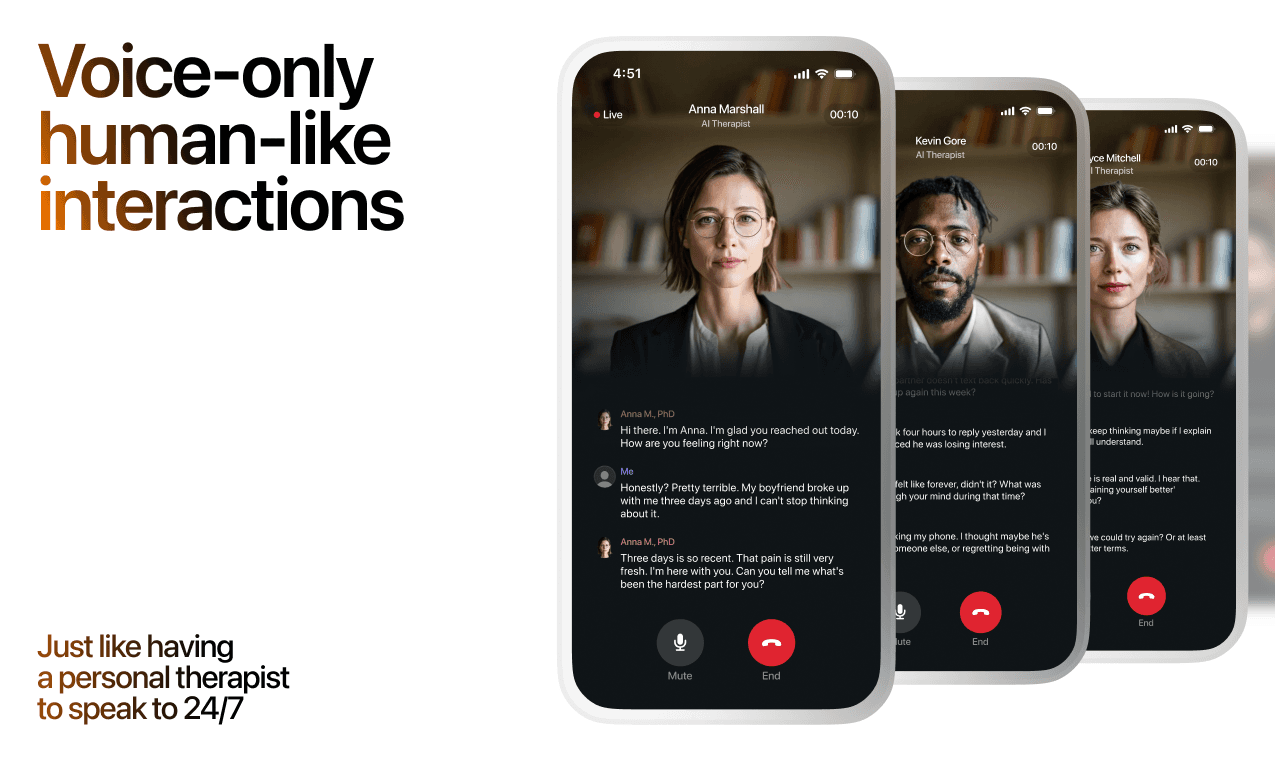
Here's what happens in a typical Lovon session:
You share what's on your mind
There's no script, no intake form, no waiting room. You speak or type whatever you're feeling — in your own words, at your own pace.
Lovon validates and explores
Using frameworks from CBT (Cognitive Behavioral Therapy) and motivational interviewing, Lovon acknowledges your feelings first, then gently helps you explore them. No dismissive "just move on" advice.
You build coping skills together
Lovon doesn't just listen — it actively works with you on evidence-based techniques: thought reframing, urge surfing, behavioral experiments, and more.
What a Session with Lovon Looks Like
When to Seek Professional Help
AI support is a valuable tool, but it's not a replacement for professional care. Please consider reaching out to a licensed therapist if you experience any of the following:
- Persistent thoughts of self-harm or suicide
- Inability to perform daily activities (work, eating, sleeping) for more than 2 weeks
- Turning to alcohol or substances to cope
- Intense anger or desire to harm your ex-partner
- Complete emotional numbness that doesn't improve over time
Crisis Resources (US): If you're in immediate danger, call 988 (Suicide & Crisis Lifeline) or text HOME to 741741 (Crisis Text Line). Available 24/7, free, and confidential.
Outside the US? Find a crisis line in your country
Ready to Start?
Your healing journey can begin right now
A 7-day trial. No judgment. Just a safe space to process what you're going through.
Frequently Asked Questions
Is Lovon a replacement for a real therapist?
Is my conversation with Lovon AI private?
How is Lovon different from ChatGPT for emotional support?
Can I use Lovon if I'm already seeing a therapist?
Can I try Lovon before subscribing?
About the Author

The Lovon Editorial Team
Mental Health & Wellness Content Team
The Lovon Editorial Team develops mental health and wellness content designed to make psychological concepts accessible and actionable. Our goal is to bridge the gap between clinical research and everyday life - helping you understand why your mind works the way it does and what you can do about it....
Related articles
- How to Repair a Strained Adult Sibling Relationship (2026)
Repair a strained adult sibling relationship in 2026 with 8 concrete steps: name the rupture, set one boundary, rebuild…
- Understanding Toxic Parent Accountability Patterns
When adult children attempt to address harm caused by their parents, they often encounter a predictable set of responses…
- Toxic Parent Patterns: Signs & How to Set Limits (2026)
Recognize toxic parent patterns — manipulation, enmeshment, conditional love — and follow 7 concrete steps to set limits…
- AI Relationship Coach for Adoptive Parent Bonding 2026
Lovon's AI relationship coach helps adoptive parents process bonding stress daily in 2026 - a companion between therapy…
See also
Quizzes
- Boundaries Test: Free 12-Question Self-Check
See where your boundaries slip, in 3 minutes.
- Empath Test: Do Other People's Moods Become Yours?
See how much of other people's moods you take on.
Free tools
- How to Come Out to Your Parents
A chat about how to come out to your parents that starts with whether now is safe, not with the speech. Tell it your…
- AI Relationship Coach
Get free relationship advice and family counselling guidance with our AI Relationship Coach.
From the wiki
- Why do I feel sad when I'm alone?
Being alone does not create the sadness. It removes the noise that was keeping it out of earshot, so whatever queued up…
Disclaimer: This article is for informational purposes only and does not constitute medical advice, diagnosis, or treatment. Always seek the advice of your physician or other qualified health provider with any questions you may have regarding a medical condition. If you are in crisis or think you may have an emergency, call 988 (Suicide & Crisis Lifeline) or go to the nearest emergency room. Outside the US? Find a crisis line in your country.