
Can a relationship survive without physical intimacy?
Can a relationship survive without physical intimacy? Yes, if both partners accept it. Learn how to discuss unmet needs, respect boundaries, and decide next steps.
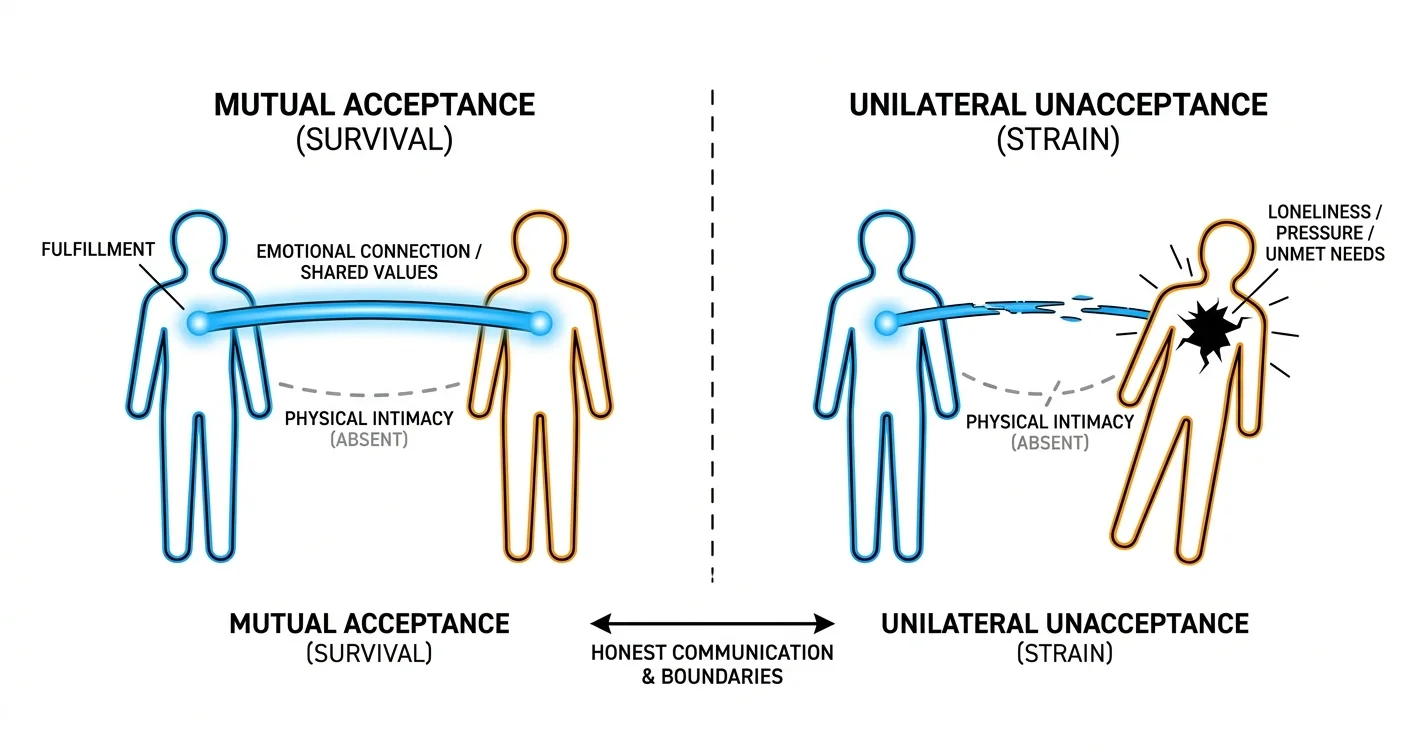

Key Takeaways
- Can a relationship survive without physical intimacy? Yes, when both partners accept it without pressure or hidden
- Sexual intimacy, affectionate touch, and emotional intimacy are different; name what you actually miss.
- Neither partner owes physical contact, and neither partner has to dismiss their need for closeness.
- Lovon offers relationship support for self-reflection, not licensed clinical care or a decision about whether you
Yes, a relationship can survive without physical intimacy when both partners freely accept that arrangement and feel connected in ways that matter to them. It becomes harder to sustain when one partner feels lonely, pressured, or unable to discuss their needs. In 2026, the useful question is not whether your relationship meets someone else's standard, but whether it works for both of you.
TL;DR
- Can a relationship survive without physical intimacy? Yes, when both partners accept it without pressure or hidden resentment.
- Sexual intimacy, affectionate touch, and emotional intimacy are different; name what you actually miss.
- Neither partner owes physical contact, and neither partner has to dismiss their need for closeness.
- Lovon offers relationship support for self-reflection, not licensed clinical care or a decision about whether you should stay.
Can a relationship survive without physical intimacy?
Yes—but staying together and feeling fulfilled are different outcomes. A relationship without sex or affectionate touch is not automatically broken. What matters is whether the arrangement is genuinely acceptable to both people, rather than something one person tolerates to avoid conflict or abandonment.
You also need to distinguish physical contact from emotional intimacy in relationships. Honest conversations, shared experiences, and dependable care offer connection, but they do not automatically replace touch for someone who needs it.
| Situation | Best for | What supports the relationship | What needs attention |
|---|---|---|---|
| Both partners prefer little or no physical contact | Partners with compatible preferences | A freely chosen arrangement without pressure | Assuming preferences will never change |
| Physical intimacy has paused, and both partners want to discuss it | Partners willing to work together | Honest conversation, respected boundaries, and appropriate support | Treating the pause as a promise that intimacy will return |
| One partner wants contact and the other does not | Partners seeking clarity about compatibility | Taking both needs seriously | Ongoing loneliness, unwanted contact, or unresolved disagreement |
These are situations to discuss, not relationship diagnoses. A couple who rarely has sex can feel deeply connected, while a couple who has frequent sex can still feel emotionally distant.
Why this matters
If you miss physical intimacy, you do not need to prove that your feelings are reasonable. If you do not want physical intimacy, you do not need to justify a boundary before it deserves respect. Both statements can be true at once.
The difficult part is deciding what those truths mean for your partnership. The goal is not to persuade someone into contact; it is to discover whether you can build a relationship that both people freely want.
For a relationship check-in in 2026, focus on your present experience rather than a label such as normal, healthy, or sexless. Ask whether you feel cared for, whether you can say no safely, and whether difficult conversations lead to any meaningful follow-through.
Without sex: separate desire from affection
A relationship without sex is not necessarily a relationship without physical intimacy. Holding hands, kissing, cuddling, and other affectionate contact are separate experiences. Partners do not always want the same combination.
Be specific about what you miss. You might miss sexual pleasure, affectionate touch, feeling desired, or the sense that your partner chooses to be close to you. Those needs deserve different conversations.
The benefit of separating sex from affection is that you can discuss contact without assuming every gesture must lead somewhere else. The limitation is equally important: affection is not a substitute you must accept if a sexual relationship matters to you.
Best for partners who want clarity: discuss sex and affectionate touch separately. Do not turn cuddling into an unspoken agreement to have sex later.
Without affectionate touch: ask what connection means to each of you
If there is no hugging, kissing, hand-holding, or other affectionate contact, ask whether both partners actually prefer that arrangement. Do not assume that accepting it silently means being comfortable with it. Silence does not tell you what someone needs.
Name the meaning you attach to touch without assigning motives to your partner. Missing a hug is different from concluding that your partner no longer loves you. You can describe the first experience without claiming to know the second.
A low-touch relationship gives partners room to define closeness on their own terms. Its limitation is that shared activities and kind words do not necessarily meet a need for physical affection.
Best for partners with different touch preferences: identify what feels welcome, what feels uncomfortable, and what remains unmet. No form of touch belongs on an obligation list.
When the change feels temporary: avoid promises neither person can make
When physical intimacy changes, ask what each person understands about the change. Someone might know exactly what feels different, or they might not yet have words for it. Leave space for an honest answer without demanding immediate certainty.
A shared intention to talk is useful. It is not a guarantee that desire or comfort with touch will return. Avoid making the relationship depend on a deadline for someone else's body.
For your 2026 check-in, separate willingness from outcome. Willingness means discussing the issue, respecting boundaries, and seeking suitable help when needed; it does not mean promising sex or affection.
Best for partners facing an uncertain change: agree on the next conversation or support step, not a required physical result. That keeps the plan within each person's control.
Why the answer varies between relationships
The question has no universal answer because partners are deciding whether a particular arrangement meets their needs. Use these factors as discussion prompts, not a scorecard:
- Shared preferences: Does each partner actually want a relationship with little or no physical intimacy?
- Consent: Can either person decline contact without punishment, repeated demands, or guilt?
- Emotional connection: Do both partners feel heard, valued, and supported outside physical contact?
- Unmet needs: Is either person experiencing loneliness or distress that remains unaddressed?
- Willingness to talk: Can both people discuss the difference honestly and follow through on agreed actions?
- Expectations: Is someone staying because they expect the other person to change, even though no change has been agreed?
You do not need matching answers to every question before starting a conversation. You do need room to disagree without treating either person's needs as a character flaw.
How do you talk about missing physical intimacy?
Describe your experience before asking for a change. Choose a moment outside an argument and outside an attempt to initiate contact. The conversation should not make your partner feel that they must accept touch to end the discussion.
- Name the gap. Explain whether you miss sex, affectionate touch, or feeling wanted. Describe what has changed without guessing why it changed.
- Ask and listen. Invite your partner to describe their experience. Do not challenge a boundary as though it were a factual error.
- Clarify boundaries. Discuss which forms of connection are welcome. An agreement to one form of touch is not permission for another.
- Choose next steps. Decide whether to continue the conversation, seek professional support, or discuss compatibility. Make the action specific enough that both people understand it.
You can prepare your thoughts in writing before you talk. Keep the focus on what you feel, what you need, and what you want to understand—not on building a case against your partner.
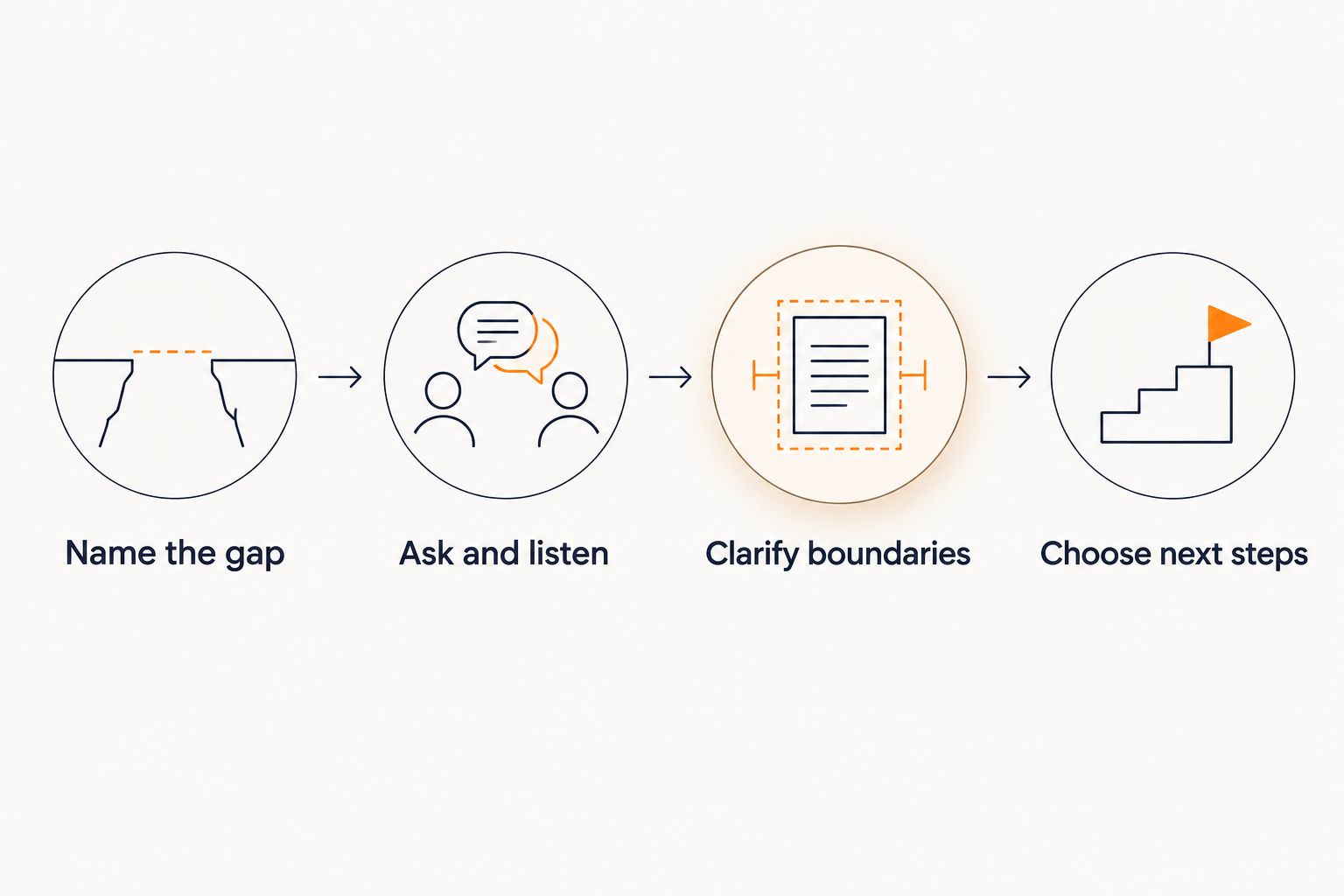 Conversation steps from naming what is missing to choosing a next step
Agree on a next step without making physical contact the required outcome.
If the conversation becomes circular, pause rather than repeating the same request more forcefully. A pause should include a clear intention to return to the topic, not become a way to avoid it indefinitely.
What if one partner wants intimacy and the other does not?
A difference in needs does not make either partner wrong. The person who wants contact deserves to be heard, and the person who does not want contact retains the right to decline it. Neither principle cancels the other.
Look for an arrangement that both people would choose without fear or pressure. That might involve welcome affection, a different understanding of the relationship, or acknowledging that your needs do not fit together.
Do not describe unwanted sexual contact as compromise. A workable compromise concerns choices both people freely accept; it does not require someone to endure contact they do not want.
You also do not have to agree to a different relationship structure to prove that you are understanding. Any change to your relationship agreement needs willing participation from everyone involved.
How do you know whether to stay or leave?
The absence of physical intimacy alone does not decide whether you should leave. Look at the whole relationship, including how your partner responds when you express a need or set a boundary. The quality of that response matters.
Before making a decision, ask yourself:
- If the current level of physical intimacy stayed the same, would I still choose this relationship?
- Can I express disappointment without pressuring my partner?
- Can my partner acknowledge my needs without dismissing or shaming me?
- Are we acting on what we agree, or repeating promises without change?
- Am I staying because the relationship works, or because I am afraid to leave?
You can love someone and still recognize a mismatch. Leaving does not require proving that the other person is bad, and staying does not require pretending that an unmet need has disappeared.
If raising the topic leads to threats, intimidation, or sexual pressure, prioritize safety and individual support. Do not treat fear as a communication problem you must solve by being more persuasive.
When should you seek support?
Seek a licensed healthcare professional when pain, a sudden change in sexual function, or another health concern is part of the situation. Do not use a relationship discussion to diagnose your partner, and do not change medication without the prescribing clinician's guidance.
Licensed couples therapy is best for partners who want help discussing recurring conflict or incompatible expectations. Its value is a supported conversation, not a guarantee that physical intimacy will return. If you fear your partner, seek individual safety support rather than assuming joint sessions are the right starting point.
In 2026, distinguish professional care from app-based emotional support. Lovon offers voice conversations, coping tools, and self-reflection guidance for everyday relationship struggles. Lovon relationship support is best for individuals who want to talk through their feelings before a difficult conversation, not replace licensed care.
An app cannot establish what your partner feels or decide whether your relationship should continue. Use reflection support to clarify your own experience, then bring the relationship conversation back to the person involved.
FAQ
Can a relationship survive without physical intimacy if we both agree?
Yes, a relationship can survive without physical intimacy when both partners freely accept the arrangement and feel connected. Keep room for either person to discuss changing needs without pressure.
Does no physical intimacy mean my partner does not love me?
No, a lack of physical intimacy does not by itself establish whether your partner loves you. Ask about their experience rather than treating missing contact as proof of a motive.
Is a relationship without sex the same as a relationship without intimacy?
No, sex, affectionate touch, and emotional intimacy are different forms of connection. A relationship can include some without including all of them.
Is it wrong to leave because I need physical intimacy?
No, you can decide that physical intimacy is an essential relationship need. Your partner still has the right to decline contact, and a mismatch does not make either person wrong.
Should I agree to sex to save my relationship?
No, you do not owe sex to preserve a relationship. Discuss the mismatch without making unwanted contact the solution, and seek individual support if you feel pressured or unsafe.
Can couples therapy make my partner want physical intimacy?
Couples therapy cannot guarantee or require a change in your partner's desire. A licensed therapist can help you discuss needs, boundaries, and relationship choices.
Can Lovon help me talk about missing intimacy?
Lovon provides relationship support through voice conversations and self-reflection guidance. It is not a licensed clinician, cannot determine your partner's feelings, and does not replace clinical care.
One last thing
For your next relationship conversation in 2026, separate a boundary from a prediction. Your partner can say they do not want contact now without promising how they will feel later. You can respect that boundary without promising that the arrangement will meet your needs forever.
Ask whether you would choose the relationship as it is—not only as you hope it will become. That question makes room for honesty, including the possibility of staying with acceptance or leaving with care.
Related guides
How AI Support Helps You Heal
AI emotional support isn't about replacing human connection — it's about filling the gaps. The moments when you need to talk at 2 AM, when you don't want to burden your friends again, or when you simply need someone to listen without judgment.
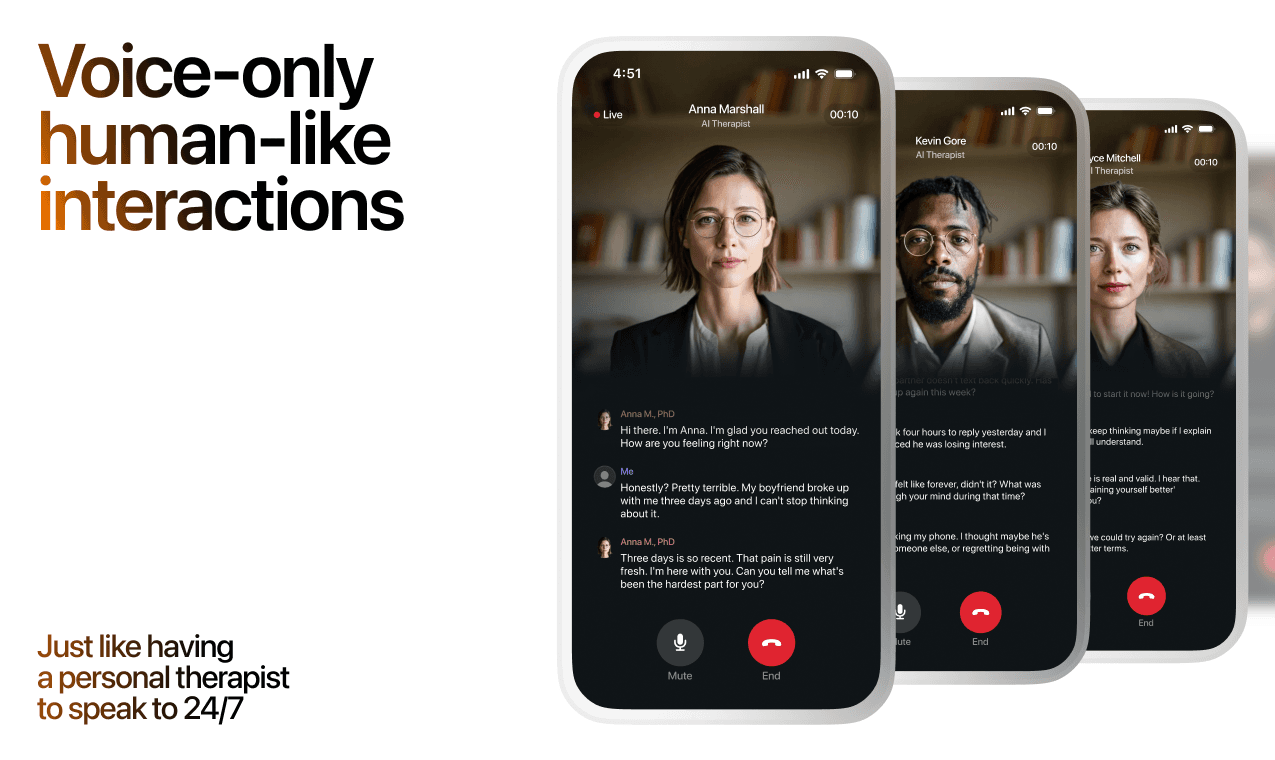
Here's what happens in a typical Lovon session:
You share what's on your mind
There's no script, no intake form, no waiting room. You speak or type whatever you're feeling — in your own words, at your own pace.
Lovon validates and explores
Using frameworks from CBT (Cognitive Behavioral Therapy) and motivational interviewing, Lovon acknowledges your feelings first, then gently helps you explore them. No dismissive "just move on" advice.
You build coping skills together
Lovon doesn't just listen — it actively works with you on evidence-based techniques: thought reframing, urge surfing, behavioral experiments, and more.
What a Session with Lovon Looks Like
When to Seek Professional Help
AI support is a valuable tool, but it's not a replacement for professional care. Please consider reaching out to a licensed therapist if you experience any of the following:
- Persistent thoughts of self-harm or suicide
- Inability to perform daily activities (work, eating, sleeping) for more than 2 weeks
- Turning to alcohol or substances to cope
- Intense anger or desire to harm your ex-partner
- Complete emotional numbness that doesn't improve over time
Crisis Resources (US): If you're in immediate danger, call 988 (Suicide & Crisis Lifeline) or text HOME to 741741 (Crisis Text Line). Available 24/7, free, and confidential.
Outside the US? Find a crisis line in your country
Ready to Start?
Your healing journey can begin right now
A 7-day trial. No judgment. Just a safe space to process what you're going through.
Frequently Asked Questions
Is Lovon a replacement for a real therapist?
Is my conversation with Lovon AI private?
How is Lovon different from ChatGPT for emotional support?
Can I use Lovon if I'm already seeing a therapist?
Can I try Lovon before subscribing?
About the Author
The Lovon Editorial Team
Mental Health & Wellness Content Team
The Lovon Editorial Team develops mental health and wellness content designed to make psychological concepts accessible and actionable. Our goal is to bridge the gap between clinical research and everyday life - helping you understand why your mind works the way it does and what you can do about it....
Related articles
- AI Coping Tools for Wedding Planning Stress (2026)
AI coping tools for wedding planning stress in 2026: box breathing, muscle relaxation, and Lovon's on-demand voice…
- Attachment Style Compatibility Quiz for Partners 2026
The best attachment style compatibility quiz for partners in 2026 — dual scoring, pairing analysis, and AI coaching…
- Is long-distance love realistic in the long run?
Is long distance love realistic? Yes, with mutual effort, honest communication, and a workable future. Learn how to…
- Best Couples Compatibility Quiz for New Couples 2026
Take the best couples compatibility quiz in 2026. Covers attachment, values, and communication style — with AI-guided…
See also
Quizzes
- Triangular Love Test: Intimacy, Passion, Commitment
See which side of love is thin, in 3 minutes.
- Are We Compatible? 15-Question Relationship Quiz
Check your compatibility in 3 minutes.
Free tools
- 150 Questions to Ask Your Partner
Six sets, from Tuesday-night light to the ones couples put off for years. Deal them one at a time, or read all 150…
- Relationship Check-In Questions, and How to Run One
Check-ins fail on structure, not on questions. Tell it whether this would be your first one, what is on your mind, and…
From the wiki
- How long does it take to fall in love?
There is no fixed timeline. Some people feel it within two or three weeks, many land somewhere between two and four…
Disclaimer: This article is for informational purposes only and does not constitute medical advice, diagnosis, or treatment. Always seek the advice of your physician or other qualified health provider with any questions you may have regarding a medical condition. If you are in crisis or think you may have an emergency, call 988 (Suicide & Crisis Lifeline) or go to the nearest emergency room. Outside the US? Find a crisis line in your country.