
Best therapy apps in 2026
Compare the best therapy apps for licensed care, voice support, meditation, and sleep. Choose the right level of help with clear benefits and limits.


Key Takeaways
- The best therapy apps match your needs: licensed treatment, everyday emotional support, meditation, or sleep-focused relaxation.
- Lovon is best for people who want on-demand voice conversations for everyday emotional support, not clinical treatment.
- BetterHelp suits ongoing clinician-led therapy; Talkspace also offers a separate psychiatry service.
- Headspace and Calm offer self-guided wellness tools; meditation and sleep content are not substitutes for clinical care.
Best for everyday voice support: Lovon. Best for ongoing therapy with a licensed clinician: BetterHelp. Best for exploring therapy and psychiatry through one platform: Talkspace. This guide to the best therapy apps in 2026 also compares Headspace for meditation and Calm for sleep-focused relaxation, with clear limits on what each provides.
TL;DR
- The best therapy apps match your needs: licensed treatment, everyday emotional support, meditation, or sleep-focused relaxation.
- Lovon is best for people who want on-demand voice conversations for everyday emotional support, not clinical treatment.
- BetterHelp suits ongoing clinician-led therapy; Talkspace also offers a separate psychiatry service.
- Headspace and Calm offer self-guided wellness tools; meditation and sleep content are not substitutes for clinical care.
Why this matters
A difficult evening and a mental health condition do not necessarily call for the same kind of help. An app that helps you talk through work stress has a different job from a clinician who assesses symptoms and develops a treatment plan.
Choose the level of care before you choose the app. Lovon provides voice-based emotional support and coping tools, but it is not a licensed clinician or a replacement for licensed clinical care. That distinction matters more than how natural a conversation feels.
If symptoms interfere with your daily life, seek a professional assessment rather than relying only on an app. If you are in immediate danger, call 911; in the United States, call or text 988 for suicide and crisis support.
What makes the best therapy apps?
Use these criteria to compare therapy apps in 2026. A longer feature list does not tell you whether an app meets your needs.
- Type of support: Separate licensed therapy, psychiatric care, automated conversations, and self-guided exercises. They are not interchangeable.
- Communication format: Choose speaking, writing, video, or guided listening based on what you can comfortably use.
- Continuity: Decide whether you need an ongoing relationship with a clinician or a tool for individual check-ins.
- Privacy clarity: Read how conversations, recordings, and personal information are collected, retained, shared, and deleted.
- Clinical boundaries: Look for clear explanations of what the service cannot do and how to seek urgent help.
- Everyday fit: Consider whether you have a private place to speak, time for appointments, and energy for exercises.
Best therapy apps in 2026 at a glance
The order below follows distinct needs, not a claim that automated support outperforms professional treatment. Start with the row that describes the help you want.
| App | Best for | Standout feature | Key limitation |
|---|---|---|---|
| Lovon | Everyday emotional support by voice | On-demand spoken conversations with an AI companion | Not a licensed clinician or clinical treatment |
| BetterHelp | An ongoing relationship with a licensed therapist | Clinician-led online therapy | Not emergency care or a medication service |
| Talkspace | Exploring therapy and psychiatric care | Therapy and separate psychiatry services | Therapy and psychiatry involve different care arrangements |
| Headspace | Building a guided meditation practice | Structured meditation and mindfulness content | Self-guided meditation is not individualized therapy |
| Calm | Bedtime relaxation and sleep-focused listening | Sleep stories, relaxation audio, and meditation | Sleep content does not assess the cause of sleep problems |
1. Lovon: best therapy app option for everyday voice support
Lovon is a mental health support app that lets you speak with an AI companion about everyday struggles. It offers emotional support, coping tools, and self-reflection guidance for concerns such as stress, anxiety, low mood, and relationship difficulties.
The voice format gives you a way to express yourself without turning everything into a typed message. The app is built with input from PhD psychologists, but that input does not make the app a psychologist or turn a conversation into licensed therapy.
Lovon pros:
- Spoken conversations suit people who prefer talking to typing.
- On-demand support fits check-ins outside scheduled appointments.
- Coping tools and reflection guidance give conversations a practical focus.
Lovon cons:
- It cannot replace professional assessment, diagnosis, or treatment.
- Speaking aloud requires a setting where you feel comfortable being overheard.
Best for: People who want to talk through everyday feelings or reflect between professional appointments.
Verdict: Buy only for everyday support, not as a substitute for clinical care.
2. BetterHelp: best therapy app for ongoing clinician-led sessions
BetterHelp connects people with licensed therapists for online therapy. Its role is different from an automated support app: you work with a person whose professional responsibilities include providing therapy within their scope of practice.
Choose this route when you want to explore recurring problems with a clinician rather than handle each difficult moment separately. Before committing, ask about the therapist's experience with your concern, communication expectations, and how you will review progress together.
BetterHelp pros:
- Therapy is provided by licensed clinicians rather than an automated companion.
- An ongoing therapeutic relationship creates space to revisit recurring concerns.
- Online communication removes the need to travel to an office.
BetterHelp cons:
- It is not an emergency service.
- It does not provide medication prescribing; that requires a qualified prescriber elsewhere.
Best for: People seeking an ongoing relationship with a licensed therapist for non-emergency concerns.
Verdict: Buy for clinician-led therapy; skip it if your main need is medication management.
3. Talkspace: best therapy app for exploring therapy and psychiatry
Talkspace offers online therapy and a separate psychiatry service. That makes it a relevant option when you are considering professional support and want to understand whether therapy, a medication assessment, or both fit your situation.
Therapy and psychiatry are not the same appointment or interchangeable services. Check the specific service, clinician qualifications, state eligibility, and care arrangements before you enroll; do not assume choosing the platform automatically coordinates every part of your care.
Talkspace pros:
- Licensed therapy provides a professional-care route.
- A separate psychiatry service supports evaluation by qualified prescribers.
- Online appointments let you seek care without traveling to an office.
Talkspace cons:
- You must distinguish the therapy service from the psychiatry service.
- It is not a substitute for emergency assessment or urgent in-person care.
Best for: People comparing professional therapy with psychiatric evaluation, including questions about medication.
Verdict: Buy after confirming which service matches your needs and who will manage your care.
4. Headspace: best therapy app alternative for guided meditation
Headspace is best known for guided meditation and mindfulness content. For this comparison, the recommendation concerns that self-guided experience, not a claim that a meditation session is psychotherapy.
Choose guided meditation when you want a structured way to practice paying attention or take a deliberate pause. You do not need to force yourself to enjoy inward-focused exercises; stop or choose another approach if a practice leaves you feeling worse.
Headspace pros:
- Guided instructions give beginners a clear place to start.
- Listening does not require explaining your personal history.
- Meditation practice serves a different purpose from repeatedly analyzing a problem.
Headspace cons:
- Self-guided content cannot assess your individual symptoms.
- Meditation alone does not provide an ongoing therapeutic relationship.
Best for: People who specifically want to build a guided mindfulness or meditation practice.
Verdict: Buy for meditation practice; skip it as your only response to symptoms that need assessment.
5. Calm: best therapy app alternative for bedtime relaxation
Calm provides meditation, relaxation audio, and sleep stories. Its clearest role in this list is for people who want something guided to listen to while winding down, rather than a conversation about their day.
Bedtime content and insomnia treatment are different things. If sleep problems persist, affect your functioning, or occur alongside other concerning symptoms, seek medical advice instead of treating a listening habit as a diagnosis or treatment plan.
Calm pros:
- Sleep-focused listening gives bedtime routines a clear activity.
- Audio suits people who do not want to write or speak.
- Meditation and relaxation content provide alternatives to conversational support.
Calm cons:
- Listening content cannot identify the cause of ongoing sleep problems.
- It does not provide individualized therapy through its self-guided audio.
Best for: People seeking bedtime relaxation audio rather than interactive emotional support.
Verdict: Buy for wind-down listening; skip it as a replacement for evaluating persistent sleep difficulties.
How we ranked the best therapy apps
These recommendations prioritize the type of help, communication format, continuity, and limits of each option. The order is a decision guide, not a measured score for clinical effectiveness, and it does not imply hands-on comparative testing.
For 2026, the central distinction remains human clinical care versus self-guided or automated support. A voice companion belongs in the everyday-support category; a licensed therapist belongs in the treatment category. Neither meditation content nor conversational fluency erases that boundary.
Choose your app in three steps
Start with your need, then choose a format, then review the service's boundaries. That order keeps an appealing interface from deciding your level of care.
Define your need
Write 1 sentence describing what you want help with. For example: feeling overwhelmed after work, understanding a recurring relationship pattern, or getting assessed for symptoms that disrupt your life.
You do not need to diagnose yourself. Describe what is happening and how it affects you; bring uncertainty to a qualified professional when assessment is the next step.
Pick your format
Set aside 2 minutes to consider where you will actually use the app. Voice makes little sense if you have no private place to speak, while guided listening will not meet a need for back-and-forth conversation.
The guide to how AI voice therapy differs from text-based apps explains that format choice. Prefer the method you can use comfortably, not the one that sounds most advanced.
Check the boundaries
Ask 3 questions before sharing sensitive information: Who receives my information? How do I delete it? What happens if I need urgent help?
For clinician-led care, also confirm credentials and whether the professional can practice where you live. For automated support, remember that a reassuring response is not a clinical assessment.
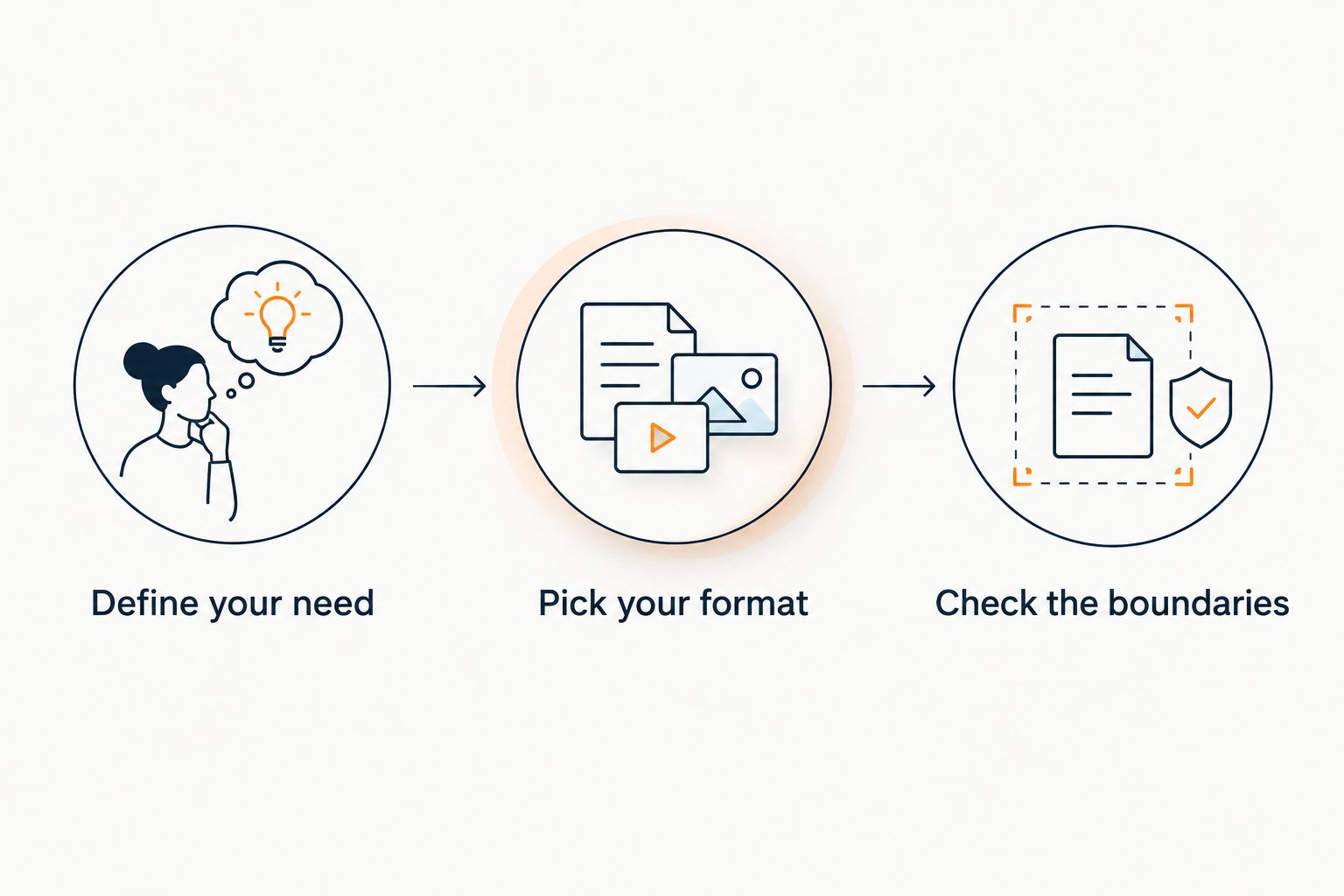 Three steps for choosing support: define your need, pick your format, and check the boundaries.
Choose the level of support before choosing the communication format.
Which therapy app should you choose in 2026?
Choose BetterHelp if you are undecided and specifically want ongoing therapy with a licensed clinician. Choose Talkspace when you also want to explore a separate psychiatric-care route. Confirm that the individual service fits your needs before enrolling.
For everyday voice-based emotional support rather than treatment, choose Lovon. Choose Headspace for guided meditation or Calm for bedtime listening; neither self-guided format should delay professional help when symptoms persist or worsen.
You do not need every category on your phone. Start with the kind of help you need, and add another tool only when it serves a distinct purpose.
One last thing
The next action matters more than the length of the session. Before you close an app, name one useful step: write down a question for your therapist, contact someone you trust, or arrange an assessment. You do not need to solve everything in one conversation.
Related guides
How AI Support Helps You Heal
AI emotional support isn't about replacing human connection — it's about filling the gaps. The moments when you need to talk at 2 AM, when you don't want to burden your friends again, or when you simply need someone to listen without judgment.
Here's what happens in a typical Lovon session:
You share what's on your mind
There's no script, no intake form, no waiting room. You speak or type whatever you're feeling — in your own words, at your own pace.
Lovon validates and explores
Using frameworks from CBT (Cognitive Behavioral Therapy) and motivational interviewing, Lovon acknowledges your feelings first, then gently helps you explore them. No dismissive "just move on" advice.
You build coping skills together
Lovon doesn't just listen — it actively works with you on evidence-based techniques: thought reframing, urge surfing, behavioral experiments, and more.
What a Session with Lovon Looks Like

Lovon is AI support, not a replacement for professional care. If things have been hard to get through for weeks, or you are thinking about harming yourself, talk to a doctor or a licensed therapist.
Ready to Start?
Your healing journey can begin right now
A 3-day trial. No judgment. Just a safe space to process what you're going through.
Frequently Asked Questions
What's the best therapy app in 2026?
Is an AI therapy app the same as a licensed therapist?
Is BetterHelp or Talkspace better for me?
Are Headspace and Calm actual therapy?
What should I check before sharing personal information with a therapy app?
Can I use an emotional support app between therapy sessions?
What should I do if I need urgent help instead of an app?
About the Author

The Lovon Editorial Team
Mental Health & Wellness Content Team
The Lovon Editorial Team develops mental health and wellness content designed to make psychological concepts accessible and actionable. Our goal is to bridge the gap between clinical research and everyday life - helping you understand why your mind works the way it does and what you can do about it....
Related articles
- Best Mental Health App for Anxiety in 2026
The best mental health app for anxiety in 2026 ranked: Lovon for voice AI support, Headspace for habits, BetterHelp for…
- Best Mindfulness App for Anxiety in 2026: Full Ranking
Headspace, Insight Timer, and Lovon compared for anxiety in 2026 — which mindfulness app fits structured practice, free…
- Best AI apps for veterans with PTSD in 2026
Compare the best AI apps for veterans with PTSD: Lovon for voice support, plus VA coping tools. Choose by your needs…
- Best Mental Health App for Men in 2026: Lovon Wins
Six AI mental health apps for men compared for 2026. Lovon wins for on-demand voice support — see pros, cons, and honest…
See also
Quizzes
- Inner Critic Test: How Harsh Is the Voice in Your Head?
See what kind of critic you live with, in 3 minutes.
- Self-Control Test: Where Does Your Willpower Slip?
See where your willpower slips, in 3 minutes.
Free tools
- Body Scan Meditation
Ten minutes, from your toes to the top of your head, noticing what is there without trying to fix it. Follow the voice…
- Letting Go Meditation
For the person, the message you keep waiting for, or the future you were counting on. Seven minutes to loosen your grip…
From the wiki
- Why do I feel sad when I'm alone?
Being alone does not create the sadness. It removes the noise that was keeping it out of earshot, so whatever queued up…
Disclaimer: This article is for informational purposes only and does not constitute medical advice, diagnosis, or treatment. Always seek the advice of your physician or other qualified health provider with any questions you may have regarding a medical condition. If you are in crisis or think you may have an emergency, call 988 (Suicide & Crisis Lifeline) or go to the nearest emergency room. Outside the US? Find a crisis line in your country.