
Can an AI voice app actually calm you down?
Yes, AI voice apps calm acute anxiety spikes fast through paced voice conversation. See how it works, its limits, and when to see a therapist instead in 2026.

Key Takeaways
- Yes, an AI voice app can calm you down for acute anxiety spikes in minutes, not for chronic conditions.
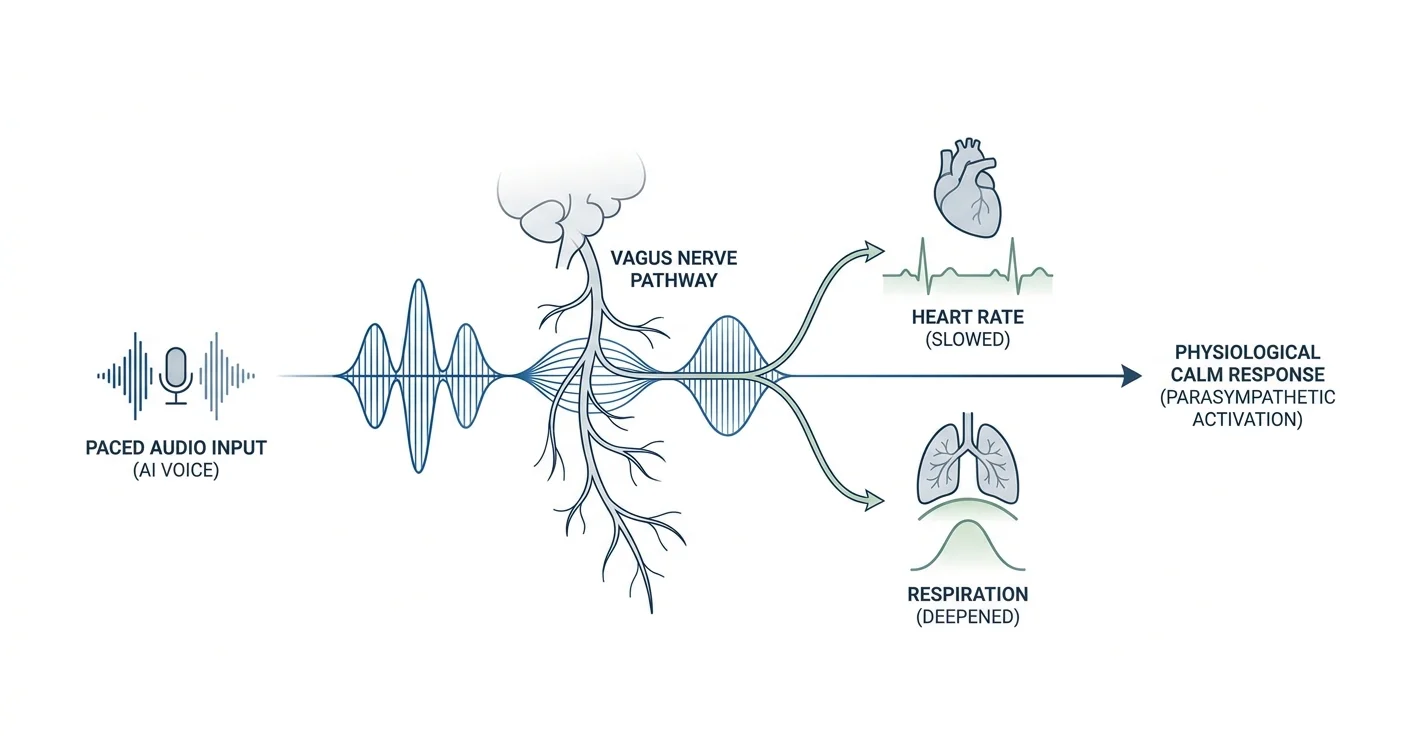
- Voice pacing and back-and-forth talking activate your nervous system's calm response faster than typing into a chat box.
- AI voice therapy from apps like Lovon works best paired with grounding and breathing exercises, not as a therapy
- Daily short voice check-ins outperform one-off panic-mode use for building a lasting calming habit in 2026.
Yes, an AI voice app can calm you down for a stress spike, racing thoughts, or an anxious moment, and it does it by giving your body a slower, paced voice to respond to instead of a blank screen. It works best for acute, in-the-moment distress, not for a diagnosed condition like major depression or PTSD, which still needs ongoing clinical care alongside anything an app offers.
TL;DR
- Yes, an AI voice app can calm you down for acute anxiety spikes in minutes, not for chronic conditions.
- Voice pacing and back-and-forth talking activate your nervous system's calm response faster than typing into a chat box.
- AI voice therapy from apps like Lovon works best paired with grounding and breathing exercises, not as a therapy replacement.
- Daily short voice check-ins outperform one-off panic-mode use for building a lasting calming habit in 2026.
Why this matters
People ask this question mid-spike, usually skeptical that talking to software can do anything a human conversation does. The mechanism is real: your vagus nerve, which regulates heart rate and breath, responds to tone, pace, and rhythm before it responds to content. This is the core idea behind polyvagal theory, which explains how your nervous system reads safety cues from a voice long before your brain finishes processing the words.
An AI voice app that slows its pace, reflects what you said, and waits instead of rushing gives your body the same downshift cue a calm friend's voice would. That's the physiological basis for why this works at all in 2026 — it's not about the AI understanding you perfectly, it's about the format matching how your body de-escalates.
Can an AI voice app calm you down right now?
In the moment, three things need to happen together: a vocal pace slower than your racing thoughts, a structured cue like breathing or naming the feeling, and the sense that something is actually listening back. None of that requires a clinical license — it requires the right format and a few minutes of actual talking, not typing.
Here's how the main formats stack up for a live anxiety spike:
| Format | How it works | Best for | Limitation |
|---|---|---|---|
| AI voice app (Lovon) | Spoken back-and-forth, paced tone, guided coping tools | Acute spikes, racing thoughts, nightly overthinking | Not a licensed clinician, not for crisis situations |
| Text-based AI chat | Typed prompts, delayed pacing, no vocal cues | Slower journaling-style reflection | Easy to disengage mid-thought, no tone regulation |
| Standalone breathing app | Timer-guided breath counts only | Isolated breathing practice | No conversational processing of the trigger |
| Licensed therapist | Trained clinical judgment and diagnosis | Chronic conditions, trauma, severe symptoms | Scheduled sessions, cost, wait times |
The verdict: an AI voice app like Lovon is the fastest option for a live spike because it's the only format that combines spoken pacing with responsive coping tools on demand, but it's not built to diagnose or treat conditions that need a clinician's judgment. Voice conversation also differs mechanically from typed AI chat — the pacing and tone carry information a text box can't.
Why the calming effect varies
Not everyone gets the same result from the same five minutes of talking. The variation comes down to a handful of factors:
- What triggered it — a work deadline spike calms faster than a trauma-linked trigger, which needs more than a voice session.
- Whether you actually speak instead of type — the vocal pacing effect disappears if you're just reading text on a screen.
- Prior experience with breathing or grounding techniques — familiarity speeds up the response; a brand-new technique takes a few tries to land.
- How consistently you use it — a single panic-mode session helps less than a habit built over weeks.
- Comfort talking to AI at all — some people relax into it immediately, others need a session or two to stop feeling self-conscious.
- Whether the underlying issue is acute or chronic — acute stress responds well; chronic anxiety or depression needs more than in-the-moment tools.
Try a voice check-in today
Talk through what's on your mind and get paced, real-time support.
Does talking out loud help more than journaling for anxiety?
Talking out loud engages vocal pacing and tone in a way typing doesn't, which is why it tends to shift physiological arousal faster than journaling. Journaling still has value for processing patterns over time, but it doesn't give you the immediate vagal cue that a paced voice conversation does. The two aren't competitors — voice works for the spike, journaling works for the pattern behind it.
Can an AI voice app replace therapy for anxiety or depression?
No, an AI voice app cannot replace therapy for a diagnosed condition, and Lovon states this directly: it's built for on-demand emotional support between sessions or for everyday stress, not as a substitute for licensed clinical care. For chronic anxiety, depression, or trauma, a licensed therapist provides diagnosis and treatment planning an app isn't equipped to do. Where it helps is the gap therapy doesn't cover — the 2am spiral, the pre-meeting panic, the moment there's no appointment available.
How fast does an AI voice app calm a panic attack?
Most paced-breathing and grounding techniques start shifting physical symptoms within a few minutes of consistent practice, because slowed breath directly counters the hyperventilation pattern driving a panic attack. An AI voice app that walks you through box breathing or a grounding sequence gives you that pacing without needing to remember the steps yourself mid-attack. Speed depends on how quickly you engage with the pacing rather than fighting it.
FAQ
What's the best AI app for calming anxiety in the moment?
The best option is one that uses actual voice conversation rather than text, since spoken pacing is what triggers the calming response. Lovon is built specifically for on-demand voice check-ins during anxiety spikes, stress, or overthinking.
Can talking to an AI voice app really lower stress, or is it a placebo?
It's not placebo — the effect comes from vocal pacing and tone regulating your nervous system, a mechanism described by polyvagal theory. The AI doesn't need to "understand" you perfectly for the calming cue to work.
Is AI voice therapy better than text-based AI chat for anxiety?
For a live anxiety spike, voice format works faster because it carries pacing and tone that a typed chat can't. Text-based chat still works for slower, journaling-style reflection.
Can an AI voice app replace therapy for anxiety or depression?
No, it cannot replace therapy for a diagnosed condition. AI voice apps like Lovon are built for support between sessions or everyday stress, not clinical diagnosis or treatment.
Does talking out loud help more than journaling?
Talking out loud tends to shift physiological arousal faster because of vocal pacing, while journaling helps more with processing patterns over time. Both have a role depending on whether you're mid-spike or reflecting afterward.
Is Lovon a licensed therapist?
No, Lovon is not a licensed clinician and does not replace one. It's built with input from PhD psychologists to give emotional support, coping tools, and self-reflection guidance, not diagnosis or treatment.
What should I do if an AI voice app doesn't calm me down?
If a voice session doesn't reduce the spike after a few minutes, or if symptoms escalate, treat that as a signal to involve a licensed professional rather than repeating the same tool. Persistent or worsening symptoms need clinical evaluation, not more app time.
How much does using an AI voice app cost compared to therapy?
Traditional therapy without insurance typically runs well beyond what most people can access daily, which is part of why on-demand tools fill the gap between sessions. Check current details directly on the app for specifics.
One last thing
The part most people skip is the habit, not the technique. A single panic-mode voice session helps in the moment, but the bigger shift in 2026 data on digital mental health tools points toward consistency: a short daily check-in does more for baseline anxiety than an occasional emergency session. If you only open an AI voice app when things are already spiraling, you're using it as a fire extinguisher instead of a smoke detector — both have their place, but only one prevents the fire.
Related guides
How AI Support Helps You Heal
AI emotional support isn't about replacing human connection — it's about filling the gaps. The moments when you need to talk at 2 AM, when you don't want to burden your friends again, or when you simply need someone to listen without judgment.
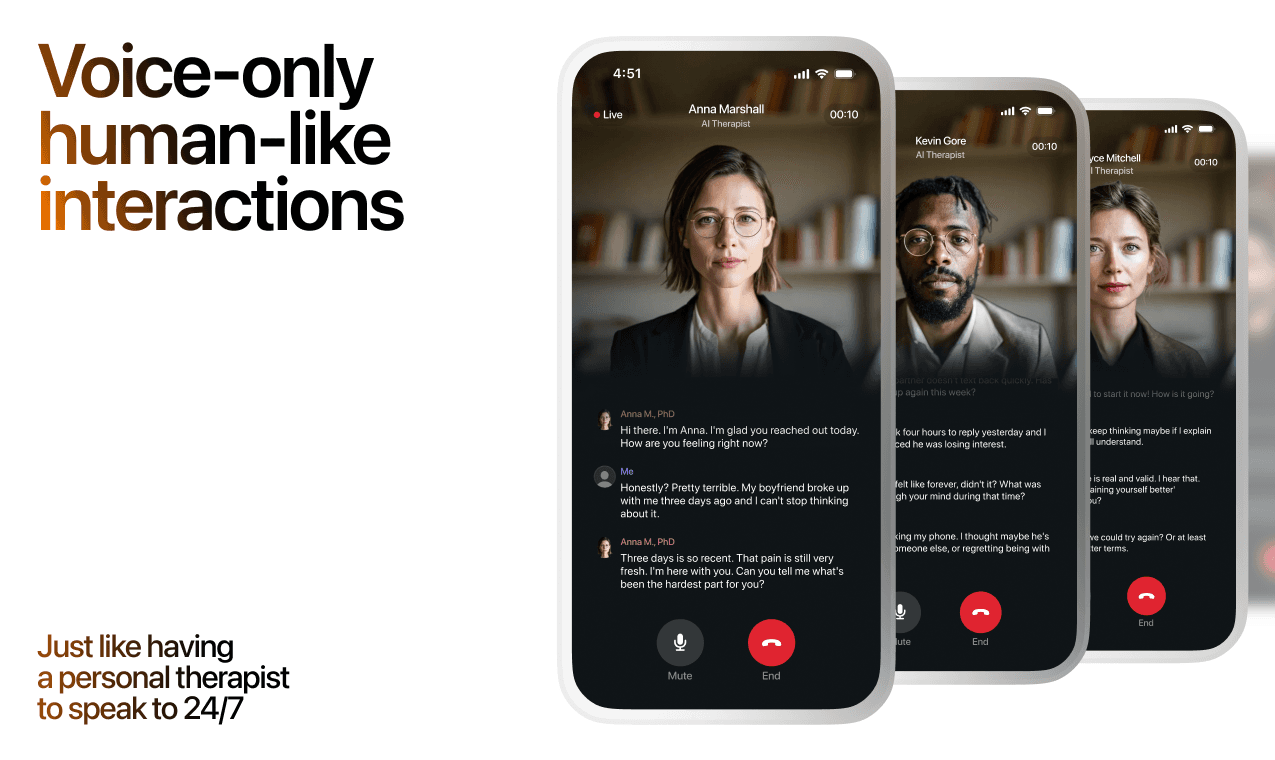
Here's what happens in a typical Lovon session:
You share what's on your mind
There's no script, no intake form, no waiting room. You speak or type whatever you're feeling — in your own words, at your own pace.
Lovon validates and explores
Using frameworks from CBT (Cognitive Behavioral Therapy) and motivational interviewing, Lovon acknowledges your feelings first, then gently helps you explore them. No dismissive "just move on" advice.
You build coping skills together
Lovon doesn't just listen — it actively works with you on evidence-based techniques: thought reframing, urge surfing, behavioral experiments, and more.
What a Session with Lovon Looks Like
When to Seek Professional Help
AI support is a valuable tool, but it's not a replacement for professional care. Please consider reaching out to a licensed therapist if you experience any of the following:
- Persistent thoughts of self-harm or suicide
- Inability to perform daily activities (work, eating, sleeping) for more than 2 weeks
- Turning to alcohol or substances to cope
- Intense anger or desire to harm your ex-partner
- Complete emotional numbness that doesn't improve over time
Crisis Resources (US): If you're in immediate danger, call 988 (Suicide & Crisis Lifeline) or text HOME to 741741 (Crisis Text Line). Available 24/7, free, and confidential.
Outside the US? Find a crisis line in your country
Ready to Start?
Your healing journey can begin right now
A 7-day trial. No judgment. Just a safe space to process what you're going through.
Frequently Asked Questions
Is Lovon a replacement for a real therapist?
Is my conversation with Lovon AI private?
How is Lovon different from ChatGPT for emotional support?
Can I use Lovon if I'm already seeing a therapist?
Can I try Lovon before subscribing?
About the Author
The Lovon Editorial Team
Mental Health & Wellness Content Team
The Lovon Editorial Team develops mental health and wellness content designed to make psychological concepts accessible and actionable. Our goal is to bridge the gap between clinical research and everyday life - helping you understand why your mind works the way it does and what you can do about it....
Related articles
- How to Calm Interview Anxiety Before a Big Interview 2026
Calm interview anxiety fast with box breathing, grounding, and prep steps that work in 2026, plus what to do if panic…
- AI Coping Tools for Exam Anxiety (2026 Verdict)
AI coping tools for exam anxiety ranked for 2026: voice check-ins, breathing drills, and grounding techniques compared…
- Best Self Care App in 2026: Lovon Ranks First
Lovon is the best self care app for 2026, ranked for on-demand voice support ahead of Calm, Headspace, Finch, Woebot…
- Best AI App for Anxiety: On-Demand Support in 2026
Looking for an AI app for anxiety? See how Lovon and top alternatives deliver 24/7 coping tools and voice support…
See also
Quizzes
- What's My Attachment Style? Free 12-Question Quiz
Find your attachment pattern in 3 minutes.
- Emotionally Unavailable Test: 12-Question Self-Check
See which part of you closes off, in three minutes.
Free tools
- 5-4-3-2-1 Grounding Exercise
A guided run through the 5-4-3-2-1 technique, with paced breathing first if you need it. No sign-up, nothing stored…
- Vent to Someone
Say the whole thing. It does not have to be fair or organized, you will not have to manage how it lands, and no advice…
From the wiki
- What is inhibited grief?
Inhibited grief is grief that never gets out. The loss happened, you kept functioning, and the feeling stayed sealed…
Disclaimer: This article is for informational purposes only and does not constitute medical advice, diagnosis, or treatment. Always seek the advice of your physician or other qualified health provider with any questions you may have regarding a medical condition. If you are in crisis or think you may have an emergency, call 988 (Suicide & Crisis Lifeline) or go to the nearest emergency room. Outside the US? Find a crisis line in your country.