
Sunday Scaries: Why They Happen & How to Calm It (2026)
Sunday scaries peak before Monday even starts. See why the dread hits in 2026, plus 7 concrete steps to calm it before bedtime.

Key Takeaways
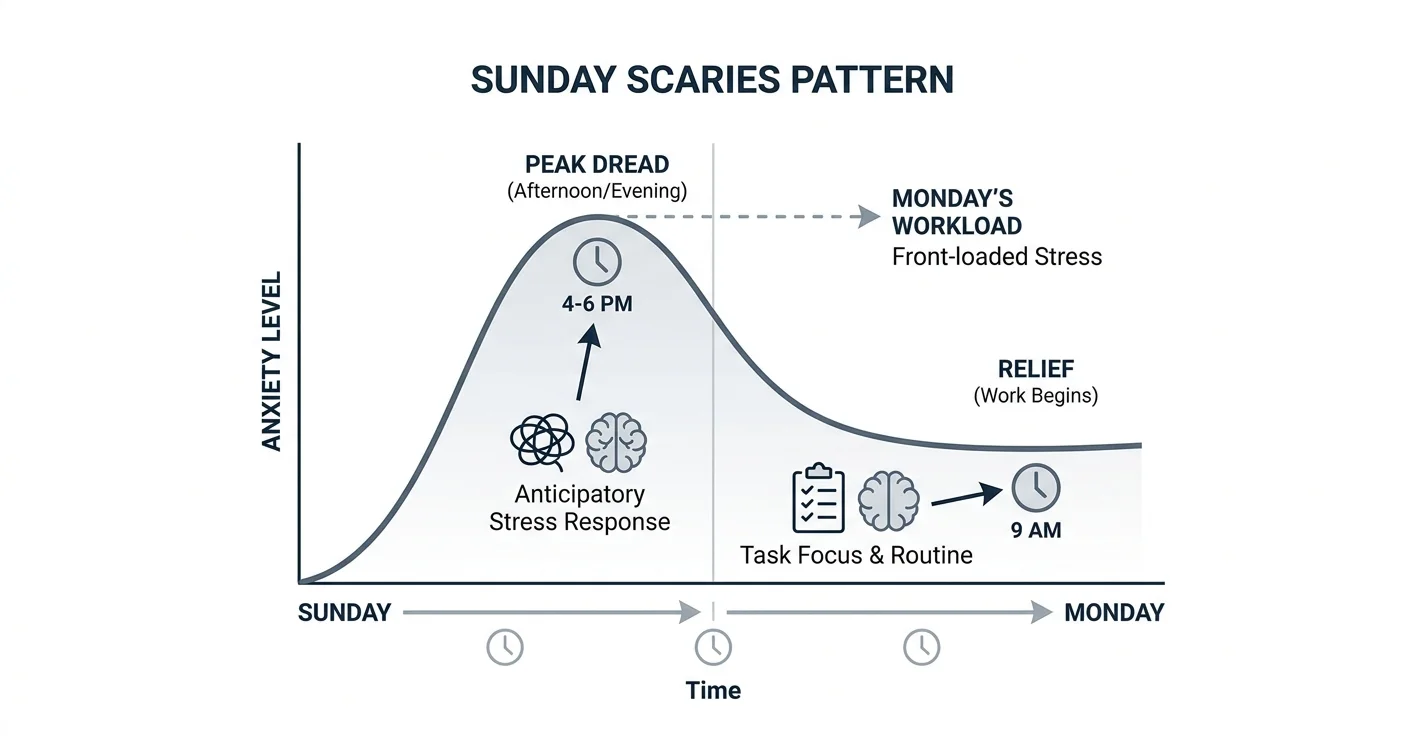
- Sunday scaries are a stress-anticipation response, not a diagnosis — the dread peaks around 4-6pm and fades once
- Naming the trigger (workload, a specific meeting, lost weekend time) cuts rumination faster than distraction does.
- A 20-minute movement block plus a written worry dump lowers evening anxiety more reliably than scrolling or extra sleep.
- Lovon's AI voice therapy gives you a place to talk it through Sunday night when no therapist's office is open.
That knot in your stomach on Sunday afternoon has a name, a pattern, and a fix — and none of it means something is wrong with your job or your life.
TL;DR
- Sunday scaries are a stress-anticipation response, not a diagnosis — the dread peaks around 4-6pm and fades once Monday actually starts.
- Naming the trigger (workload, a specific meeting, lost weekend time) cuts rumination faster than distraction does.
- A 20-minute movement block plus a written worry dump lowers evening anxiety more reliably than scrolling or extra sleep.
- Lovon's AI voice support gives you a place to talk it through Sunday night when no therapist's office is open.
Why this matters
Sunday scaries aren't lazy Monday-avoidance. They're your nervous system front-loading stress for an event that hasn't happened yet — a form of nervous system dysregulation where your body reacts to Monday's inbox as if it's already 9am.
The tight chest, the racing thoughts about everything you didn't finish, the sudden urge to reorganize your closet at 8pm on a Sunday — that's anticipatory anxiety doing its job a day early. It's common in 2026, especially among people juggling hybrid schedules where the line between "day off" and "workday" barely exists anymore.
Here's the part that actually matters: the dread almost always peaks before the thing you're dreading and drops once you're inside it. Knowing that doesn't make Sunday night pleasant, but it does mean the feeling is information, not a verdict on your job.
What you'll need
- 20-30 minutes of quiet time on Sunday evening, ideally before 8pm
- A notebook, notes app, or voice memo — anything that lets you get thoughts out of your head
- A short walk, stretch routine, or any form of movement
- Something to write Monday's plan on (paper, calendar app, whiteboard)
- Optional: a voice conversation with an AI voice companion like Lovon if you want to talk it through out loud instead of journaling alone
The steps
1. Name what you're actually dreading
Vague dread is worse than specific dread. Say out loud or write down the exact thing: "I'm dreading the 10am with my manager" hits different than "I hate Mondays."
Specificity shrinks the fear because it turns a fog into a task list. If you can't name anything specific after a minute of trying, that's useful data too — it usually means the dread is about the whole week's pace, not one event.
Common mistake: stopping at "I just don't want to go back to work." That's a feeling, not a trigger. Push one layer deeper.
2. Trace the trigger back to Friday, not Monday
Most Sunday scaries actually start Friday afternoon, when your brain quietly parks unfinished tasks and picks them back up 48 hours later with interest. If you notice the same pattern most weeks, it's worth reading about how anxiety spirals build momentum before they peak — the Sunday version is often the same loop wearing a calendar costume.
This matters because fixing "Sunday" without fixing the Friday habit (leaving loose ends, skipping a real handoff, not closing your laptop with intention) means the dread comes back every single week in 2026 and beyond.
3. Move your body for 20 minutes, no more planning required
A brisk walk, a bike ride, even vacuuming the apartment — physical movement burns off the cortisol your body released in anticipation of Monday. You don't need a workout plan. You need 20 minutes where your hands and legs are busy and your phone is in another room.
Expected outcome: the tight-chest feeling drops noticeably within the first 10 minutes for most people. If it doesn't shift at all, the dread may be less physical and more thought-based — move to step 4.
4. Do a worry dump before dinner
Set a timer for 10 minutes and write down every single thing rattling around — the presentation, the email you haven't answered, the argument with a coworker, even the unrelated stuff like laundry. Don't organize it. Just get it out of your skull and onto paper.
The point isn't to solve anything yet. It's to stop your brain from replaying the same three worries on a loop, which is what actually keeps people up past midnight on Sundays.
Common mistake: trying to solve each worry as you write it. That turns a 10-minute dump into a 45-minute spiral. Write first, sort later.
5. Reset your body with slow breathing
Four seconds in, hold for four, out for six, for two minutes. It sounds too simple to matter, but slowing your exhale is one of the fastest ways to signal safety to a nervous system stuck in anticipation mode — it's part of how you reduce cortisol levels naturally without medication or a big time commitment.
Do this after the worry dump, not before — you need something on paper first so your brain has less to protect against.
6. Write Monday's first three tasks, nothing else
Open Monday not knowing where to start is a huge driver of Sunday dread. Pick exactly three things you'll do first thing Monday — not your whole week, just the opening moves. Write them somewhere you'll see them.
Expected outcome: Monday morning becomes a checklist instead of a blank, threatening wall of unknowns.
7. Protect the last hour before bed
No work email, no scrolling LinkedIn, no "just checking" the shared drive. This is the hour where a wind-down ritual does more than any productivity hack — dim lights, a warm shower, something that tells your body the day is actually over.
Common mistake: telling yourself you'll "just check one thing" on your work phone. One thing turns into forty minutes of re-triggering the exact dread you spent the evening calming down.
Troubleshooting
The dread doesn't lift even after movement and journaling. This usually means the anxiety isn't really about work — it might be about a relationship, money, or something bigger sitting underneath. Naming the real source out loud, even to yourself, often does more than any single technique.
You feel fine Sunday but wake up anxious at 3am. This is your body delaying the anticipation response instead of skipping it. The same wind-down and breathing steps apply — just start them earlier in the evening so your nervous system has more runway.
The dread starts as early as Friday night, ruining the whole weekend. This is a sign the Sunday scaries have widened into general work anxiety. Worth tracking for a week: write down the exact day and time dread starts, then work backward to the trigger.
Nothing works because you genuinely dread a toxic workplace, not "Mondays" in general. Techniques calm a nervous system; they don't fix a bad manager or an unsustainable job. If the dread is really about the job itself, that's a different conversation than a wind-down routine can solve.
You feel silly talking about this out loud, even to yourself. That's common and it fades fast. Saying the specific worry out loud — to a friend, a journal, or an AI voice conversation — almost always feels less catastrophic once it's out of your head and into words.
Tools and resources
- A notebook or notes app for the worry dump
- A short breathing pattern (4-4-6) you can do without an app
- A wind-down cue — light, scent, or shower — that signals bedtime
- Coping tools for stress that separate what's evidence-backed from what's just popular
- Lovon, for when you want to talk the specific dread through out loud instead of just writing it down — the app pairs voice conversation with coping tools built with input from PhD psychologists, and it's available at any hour, including 9pm on a Sunday
Talk through Sunday dread tonight
Start a voice conversation with Lovon whenever the dread hits, not just during office hours.
What to do next
If Sunday scaries show up every single week without fail, the pattern is worth tracking rather than just managing night by night. A recurring dread that never eases once Monday actually starts is a different signal than a specific bad week — it's worth a closer look at whether general anxiety, not just work anticipation, is driving it.
FAQ
What are the Sunday scaries exactly?
Sunday scaries are anticipatory anxiety about the upcoming work week that typically peaks Sunday afternoon or evening. It's a stress response, not a clinical diagnosis, and it usually fades once Monday actually begins.
Why do Sunday scaries feel worse some weeks than others?
The dread scales with how many unresolved tasks or unclear plans you're carrying into the week. A Sunday with no plan for Monday's first task almost always feels worse than one where you've written down three concrete starting points.
Is it normal to feel anxious every single Sunday?
Occasional Sunday dread is common in 2026 and doesn't need treatment on its own. If it happens every week without exception and doesn't ease once the workweek starts, it's worth paying attention to as a possible sign of broader work-related or general anxiety.
How long do Sunday scaries usually last?
Most people feel the dread build for a few hours Sunday afternoon or evening, and it typically drops sharply within the first hour of actually being at work Monday. If it lasts well into Monday afternoon, the trigger is likely bigger than the weekend transition itself.
Can exercise actually help with Sunday scaries?
Yes. Twenty minutes of movement burns off the cortisol your body releases in anticipation of stress, and most people notice the tight-chest feeling ease within the first ten minutes. It works best paired with writing down the specific worry, not as a replacement for it.
What's the difference between Sunday scaries and burnout?
Sunday scaries are tied to the transition back to work and usually ease once the week starts. Burnout is a sustained exhaustion that doesn't lift once Monday hits and often comes with cynicism or detachment from the work itself, not just dread about starting it.
Should I talk to someone about Sunday scaries?
If a wind-down routine, movement, and a worry dump aren't easing the dread after a few weeks of trying, talking it through with a therapist or an AI voice conversation can help surface what's actually underneath it. Lovon is built for exactly this kind of on-demand talk, though it isn't a replacement for licensed clinical care if the anxiety is severe or persistent.
Do Sunday scaries mean I hate my job?
Not necessarily. Plenty of people who genuinely like their work still get the Sunday dread because it's tied to the transition itself, not the job's content. If the dread is specifically about the work — not the shift from rest to routine — that's a signal worth naming honestly rather than managing around.
One last thing
The Sunday scaries almost never show up on actual vacation days, even though a vacation day is also "the day before work." That single fact tells you the dread isn't really about tomorrow — it's about the sudden loss of unstructured time today. Protect a little unstructured time on Sunday itself, not just the wind-down hour, and the dread often loses its grip before you even get to the breathing exercises.
Related guides
How AI Support Helps You Heal
AI emotional support isn't about replacing human connection — it's about filling the gaps. The moments when you need to talk at 2 AM, when you don't want to burden your friends again, or when you simply need someone to listen without judgment.
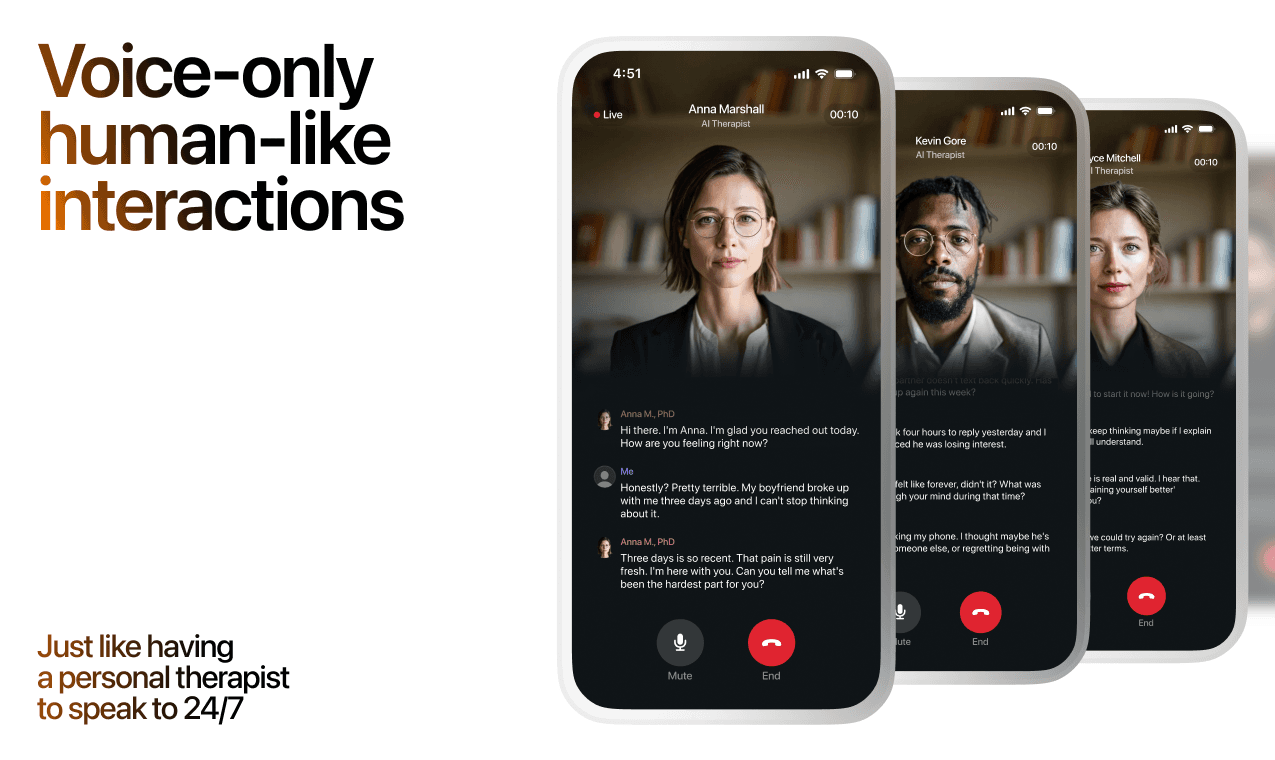
Here's what happens in a typical Lovon session:
You share what's on your mind
There's no script, no intake form, no waiting room. You speak or type whatever you're feeling — in your own words, at your own pace.
Lovon validates and explores
Using frameworks from CBT (Cognitive Behavioral Therapy) and motivational interviewing, Lovon acknowledges your feelings first, then gently helps you explore them. No dismissive "just move on" advice.
You build coping skills together
Lovon doesn't just listen — it actively works with you on evidence-based techniques: thought reframing, urge surfing, behavioral experiments, and more.
What a Session with Lovon Looks Like
When to Seek Professional Help
AI support is a valuable tool, but it's not a replacement for professional care. Please consider reaching out to a licensed therapist if you experience any of the following:
- Persistent thoughts of self-harm or suicide
- Inability to perform daily activities (work, eating, sleeping) for more than 2 weeks
- Turning to alcohol or substances to cope
- Intense anger or desire to harm your ex-partner
- Complete emotional numbness that doesn't improve over time
Crisis Resources (US): If you're in immediate danger, call 988 (Suicide & Crisis Lifeline) or text HOME to 741741 (Crisis Text Line). Available 24/7, free, and confidential.
Outside the US? Find a crisis line in your country
Ready to Start?
Your healing journey can begin right now
A 7-day trial. No judgment. Just a safe space to process what you're going through.
Frequently Asked Questions
Is Lovon a replacement for a real therapist?
Is my conversation with Lovon AI private?
How is Lovon different from ChatGPT for emotional support?
Can I use Lovon if I'm already seeing a therapist?
Can I try Lovon before subscribing?
About the Author

The Lovon Editorial Team
Mental Health & Wellness Content Team
The Lovon Editorial Team develops mental health and wellness content designed to make psychological concepts accessible and actionable. Our goal is to bridge the gap between clinical research and everyday life - helping you understand why your mind works the way it does and what you can do about it....
Related articles
- AI Coping Tools for Social Media Addiction: 2026 Guide
AI coping tools for social media addiction pair urge tracking with real-time voice support. See what cuts compulsive…
- How to Manage Exam Anxiety Before a Big Test (2026)
How to manage exam anxiety before a big test in 2026: 7 steps, breathing techniques, and what to do when your mind goes…
- Panic Attack vs Anxiety Attack: The Real Difference (2026)
Panic attack vs anxiety attack in 2026: panic peaks in 10 minutes with no trigger, anxiety builds slowly from a clear…
- AI Therapy for Social Anxiety 2026: Verdict + Top Picks
AI therapy for social anxiety in 2026: which voice-based tools help, what to avoid, and when to see a licensed therapist…
See also
Quizzes
- Am I a People Pleaser? 12-Question Quiz
Where kindness stops and self-erasure starts.
- Do I Have Abandonment Issues? 12-Question Self-Check
See how loudly the fear of being left runs things.
Free tools
- What to Say to Someone Who Is Grieving
Get sentences that fit this person and this week, not a list of things people say at funerals. Describe who they lost…
- What to Say When a Pet Dies
Get a message you can actually send to someone whose dog or cat just died: one that uses the animal's name, treats the…
From the wiki
- Why do I keep dreaming about the same person?
A recurring dream figure usually marks unfinished emotional business rather than a message about that person. Your brain…
Disclaimer: This article is for informational purposes only and does not constitute medical advice, diagnosis, or treatment. Always seek the advice of your physician or other qualified health provider with any questions you may have regarding a medical condition. If you are in crisis or think you may have an emergency, call 988 (Suicide & Crisis Lifeline) or go to the nearest emergency room. Outside the US? Find a crisis line in your country.