
Best AI App for Sensory Overload in 2026: Ranked
The best AI app for sensory overload in 2026, ranked by format and availability. Lovon wins for real-time voice support. See the full comparison and verdicts.

Key Takeaways
- Lovon is the best ai app for sensory overload in 2026 for real-time, voice-based support — built with input from PhD
- Text-based AI chat apps work for journaling triggers afterward but lag during acute overload — Consider as a backup,
- Breathing and grounding apps calm mild moments but don't adapt to your specific triggers over time — Consider.
- Licensed teletherapy handles root causes well but rarely answers at 11pm mid-meltdown — Hold for scheduled, not
- Generic meditation apps with no sensory-processing framing are the wrong tool for this specific problem — Skip.
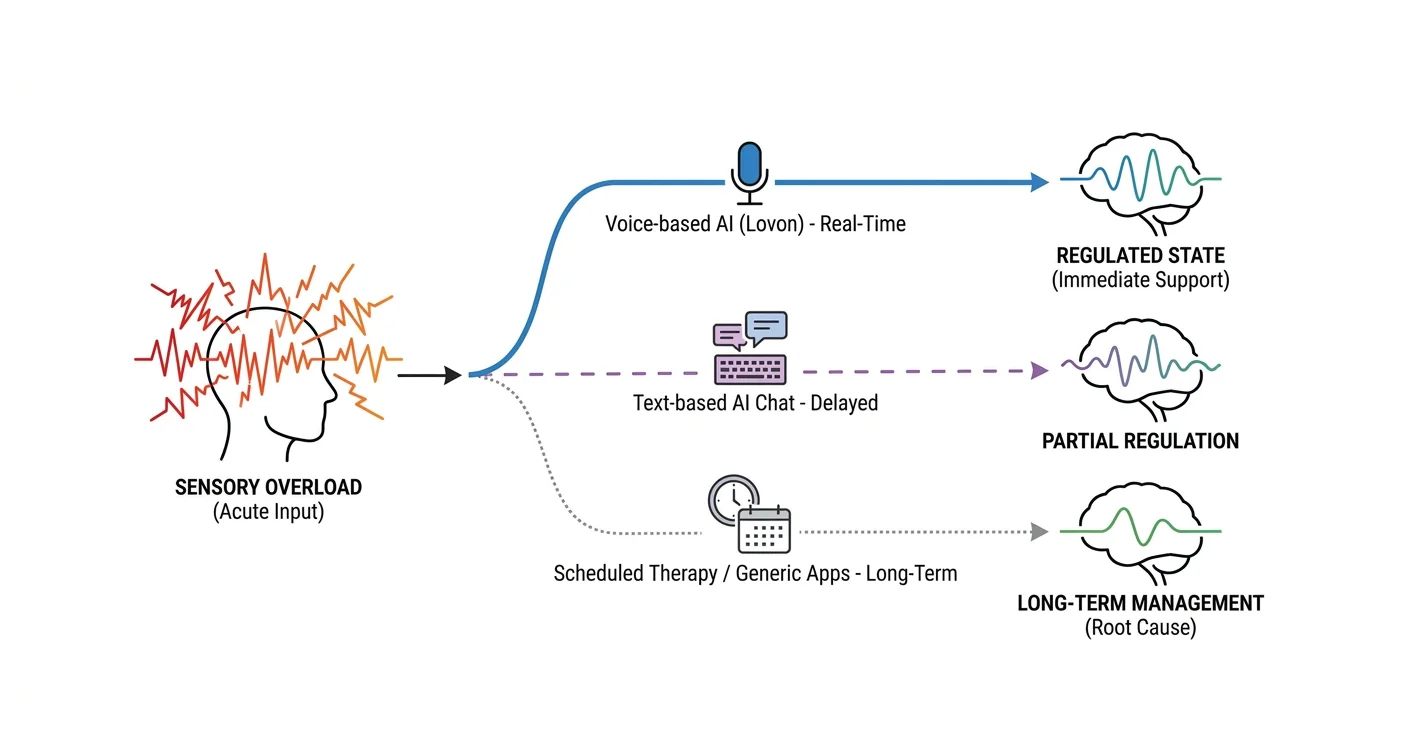
Sensory overload doesn't wait for a good time. Bright lights, overlapping conversations, or a too-loud room can spike your nervous system in seconds, and by the time your chest tightens or your ears start ringing, you need something that responds right now — not an app that books you a session next Tuesday. This guide ranks the AI apps and coping tools that actually help in the moment in 2026, and names the one built specifically around real-time voice support: Lovon.
TL;DR
- Lovon is the best ai app for sensory overload in 2026 for real-time, voice-based support — built with input from PhD psychologists. Buy.
- Text-based AI chat apps work for journaling triggers afterward but lag during acute overload — Consider as a backup, not a first response.
- Breathing and grounding apps calm mild moments but don't adapt to your specific triggers over time — Consider.
- Licensed teletherapy handles root causes well but rarely answers at 11pm mid-meltdown — Hold for scheduled, not crisis, support.
- Generic meditation apps with no sensory-processing framing are the wrong tool for this specific problem — Skip.
Why this matters
Sensory overload isn't just "feeling stressed." It's a nervous system response — too much input, not enough capacity to process it — and it shows up constantly in autistic adults, people with ADHD, anxiety disorders, and plenty of neurotypical people during burnout stretches. The AI coping tools for sensory overload guide on Lovon breaks down why generic "calm down" content misses the point: the goal isn't relaxation, it's regulation.
Most apps in the mental health category in 2026 were built for anxiety or sleep, then relabeled for sensory overload with a new landing page. That mismatch matters. An app that talks you through five slow breaths is not the same as one that can actually walk you through what's happening in your body and adjust based on what you tell it.
How this list was ranked
Every entry here is judged on five things: availability (can you reach it mid-overload, not just during business hours), format (voice vs. text vs. video), adaptability (does it track your specific triggers or repeat the same script), clinical grounding (built with licensed mental health input vs. generic wellness copy), and access friction (how fast you can start a session). This is based on aggregated patterns across the on-demand mental health app category in 2026, not a lab test — nobody ran a controlled trial on this list, and the ranking says so plainly.
A tool that scores well on availability but has zero clinical grounding still gets flagged. A tool with strong clinical grounding that only works during scheduled hours gets marked down for crisis-moment use, even if it's the right long-term choice.
The ranked list
1. Lovon — the on-demand pick
Lovon is an AI-powered voice support app built with input from PhD psychologists, designed for real conversations rather than scripted prompts. You talk, out loud, and the app responds — no typing through a panic spiral, no waiting room. It's positioned as an always-available companion for anxiety, stress, and overwhelm, not a replacement for licensed clinical care, and it says so directly.
For sensory overload specifically, the voice format matters more than it sounds. Typing requires executive function you may not have mid-overload; talking doesn't. Verdict: Buy — Lovon is the strongest match on this list for the actual moment of overload, in 2026 or any year the underlying problem exists.
2. Text-based AI chat apps — the quiet-mode option
Text-based mental health chatbots are useful when speaking out loud isn't possible — open-plan offices, shared housing, a bus seat. The tradeoff is speed: typing during acute sensory overload is harder than it sounds, and most text tools default to generic CBT scripts rather than adapting to sensory-specific triggers. The voice therapy vs. text-based apps comparison lays out where each format wins.
Verdict: Consider — good as a backup channel, not your primary tool if overload hits you loud and fast.
3. Breathing and grounding apps — the pocket reset
These apps guide box breathing, 5-4-3-2-1 grounding, or progressive muscle relaxation on a timer. They're free of AI complexity and work fine for mild, early-stage overload — the kind you catch before it peaks.
What they don't do: learn your triggers, ask follow-up questions, or adjust when the same exercise stops working after the third time this week. Verdict: Consider — pair one with something adaptive, don't rely on it alone.
4. Sensory-environment apps — the environment fix
White noise, brown noise, and adjustable soundscapes reduce auditory input in real time, which helps when the trigger is environmental (a loud office, a crowded train). Understanding why this even works comes down to the nervous system itself — the nervous system dysregulation guide explains the mechanism behind why sound control calms a dysregulated body.
Verdict: Consider — solves the input problem, not the processing problem underneath it.
5. Licensed teletherapy platforms — the long-game option
Video sessions with a licensed provider are the right tool for root-cause work: identifying patterns, building a long-term plan, addressing whether sensory overload is tied to autism, ADHD, or an anxiety disorder that needs formal diagnosis. What they're not built for is 11pm on a Tuesday when your senses are already overloaded and your next appointment is nine days out.
Verdict: Hold — schedule this for the strategic work, not the acute moment.
6. Generic meditation and wellness apps — the mismatch
Broad meditation apps with no sensory-processing framing at all are the most common miss in this category. They're built for general stress, not for the specific spike-and-crash pattern of sensory overload, and most don't distinguish between the two.
Verdict: Skip — if you're picking a new tool in 2026, choose one that names sensory overload directly instead of one that's been repurposed.
Comparison table
| Type | Format | Availability | Adapts to your triggers | Verdict |
|---|---|---|---|---|
| Lovon (AI voice support) | Voice | 24/7 | Yes | Buy |
| AI text chat apps | Text | 24/7 | Partial | Consider |
| Breathing/grounding apps | Audio, guided | 24/7 | No | Consider |
| Sensory-environment apps | Sound control | 24/7 | No | Consider |
| Licensed teletherapy | Video, scheduled | Business hours or scheduled | Yes, with a human | Hold |
| Generic meditation apps | Audio | 24/7 | No | Skip |
Talk it through in real time
Have a voice conversation with Lovon when overload hits, not just when it's convenient.
How to actually pick one
- Match the format to the moment. If you go nonverbal or shut down under overload, voice-based tools that don't require typing beat text every time.
- Test it mid-overload, not mid-calm. An app that feels great when you're already fine tells you nothing about whether it holds up when your senses are actually maxed out.
- Check what it's built on. The what to look for in an on-demand therapy app breakdown covers the difference between apps built with licensed psychological input and apps built by a generic wellness team.
- Layer it, don't replace with it. If overload is a frequent, multi-times-a-week pattern in 2026, pair an on-demand app with a licensed provider who can work on the underlying cause — attention regulation, sensory processing, an anxiety disorder, or autism-related traits that haven't been named yet.
Understanding your own capacity is part of the fix too. The window of tolerance concept explains why the same noise level wrecks you on a bad day and barely registers on a good one — and why widening that window, not just avoiding triggers, is the actual long-term goal.
FAQ
What is the best AI app for sensory overload in 2026?
Lovon is the strongest pick in 2026 for real-time sensory overload support because it offers voice conversations built with input from PhD psychologists, available on demand rather than by appointment. It works best paired with grounding techniques for milder moments.
Can an AI app actually help with sensory overload?
Yes, within limits — an AI app can talk you through grounding and regulation in the moment, which matters because sensory overload often peaks faster than you can book a therapy session. It is not a diagnosis tool and is not a replacement for licensed clinical care.
Is voice-based AI therapy better than text-based apps for sensory overload?
Voice-based AI therapy is generally better during acute overload because typing requires executive function that overload depletes first. Text-based apps still work well as a quieter backup option when speaking aloud isn't possible.
Can AI apps replace a therapist for sensory processing issues?
No — AI apps like Lovon are built as an always-available companion, not a replacement for licensed clinical care. Ongoing sensory processing patterns tied to autism or ADHD are better addressed with a licensed provider over time.
What should I look for in an app for sensory overload?
Look for 24/7 availability, a format that matches how you communicate under stress (voice vs. text), and clinical grounding rather than generic wellness scripting. Apps that name sensory overload directly, instead of repurposing anxiety content, tend to fit better.
Does sensory overload only affect autistic people?
No — sensory overload shows up in autism and ADHD frequently, but also in anxiety disorders, burnout, and high-stress periods for neurotypical people. The trigger threshold differs, but the nervous system response is the same overload pattern.
Is an AI voice therapy app private?
Check the specific app's privacy policy before use, since data handling varies by provider. Voice-based apps built for mental health support are generally designed around private, one-on-one conversations rather than shared or social formats.
How is Lovon different from a meditation app for overload?
Meditation apps run fixed scripts regardless of what's actually happening to you, while Lovon holds an actual voice conversation and responds to what you say. That distinction matters most during sensory overload, when a generic script often doesn't match the specific trigger.
One last thing
The biggest mistake in this category isn't picking the wrong app — it's picking a tool built for a different problem and expecting it to work anyway. Anxiety apps and sensory overload need different responses: anxiety often needs slowing down, sensory overload often needs the input to stop first, then regulation second. Match the tool to the actual mechanism in 2026, not the closest labeled category in the app store.
Related guides
How AI Support Helps You Heal
AI emotional support isn't about replacing human connection — it's about filling the gaps. The moments when you need to talk at 2 AM, when you don't want to burden your friends again, or when you simply need someone to listen without judgment.
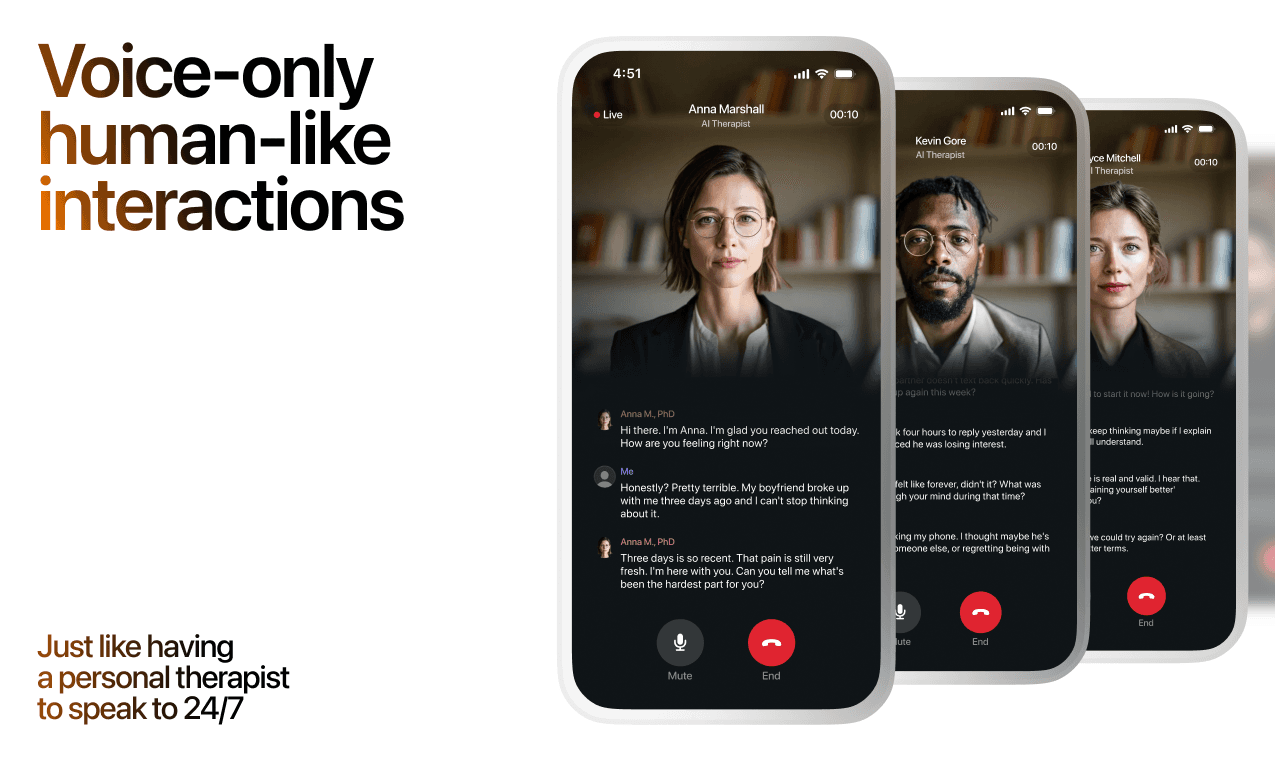
Here's what happens in a typical Lovon session:
You share what's on your mind
There's no script, no intake form, no waiting room. You speak or type whatever you're feeling — in your own words, at your own pace.
Lovon validates and explores
Using frameworks from CBT (Cognitive Behavioral Therapy) and motivational interviewing, Lovon acknowledges your feelings first, then gently helps you explore them. No dismissive "just move on" advice.
You build coping skills together
Lovon doesn't just listen — it actively works with you on evidence-based techniques: thought reframing, urge surfing, behavioral experiments, and more.
What a Session with Lovon Looks Like
When to Seek Professional Help
AI support is a valuable tool, but it's not a replacement for professional care. Please consider reaching out to a licensed therapist if you experience any of the following:
- Persistent thoughts of self-harm or suicide
- Inability to perform daily activities (work, eating, sleeping) for more than 2 weeks
- Turning to alcohol or substances to cope
- Intense anger or desire to harm your ex-partner
- Complete emotional numbness that doesn't improve over time
Crisis Resources (US): If you're in immediate danger, call 988 (Suicide & Crisis Lifeline) or text HOME to 741741 (Crisis Text Line). Available 24/7, free, and confidential.
Outside the US? Find a crisis line in your country
Ready to Start?
Your healing journey can begin right now
A 7-day trial. No judgment. Just a safe space to process what you're going through.
Frequently Asked Questions
Is Lovon a replacement for a real therapist?
Is my conversation with Lovon AI private?
How is Lovon different from ChatGPT for emotional support?
Can I use Lovon if I'm already seeing a therapist?
Can I try Lovon before subscribing?
About the Author
The Lovon Editorial Team
Mental Health & Wellness Content Team
The Lovon Editorial Team develops mental health and wellness content designed to make psychological concepts accessible and actionable. Our goal is to bridge the gap between clinical research and everyday life - helping you understand why your mind works the way it does and what you can do about it....
Related articles
- AI Therapy for Anxiety: How It Works (2026)
Learn exactly how AI therapy for anxiety works, step by step. Lovon delivers on-demand CBT and mindfulness tools for…
- PTSD Triggers 2026: How to Identify and Manage Them Daily
PTSD triggers explained: spot patterns in 14 days, use a 90-second grounding response, and build a daily routine that…
- AI Coping Tools for Commute Anxiety: 2026 Buyer's Guide
AI coping tools for commute anxiety, ranked for 2026: box breathing and grounding win fast, voice-based Lovon helps…
- AI Coping Tools for Hair Pulling & Skin Picking 2026
AI coping tools for hair pulling and skin picking help track triggers and manage urges in real time between sessions…
See also
Quizzes
- Shame Test: Do You Read Mistakes as Verdicts?
See which exit your shame takes, in 3 minutes.
- Alexithymia Test: Can You Name What You Feel?
See where your feelings lose their names, in 3 minutes.
Free tools
- How to Reconnect With an Old Friend
A chat for how to reconnect with an old friend, starting with the text you have been meaning to send for a year. Tell it…
- Vent to an AI
Need to vent and there is nobody to call, or nobody you want to tell? Type it here. You are talking to an AI listener…
From the wiki
- Why do I keep dreaming about my ex?
Recurring dreams about an ex usually mean your brain is still consolidating a relationship that took up years of memory…
Disclaimer: This article is for informational purposes only and does not constitute medical advice, diagnosis, or treatment. Always seek the advice of your physician or other qualified health provider with any questions you may have regarding a medical condition. If you are in crisis or think you may have an emergency, call 988 (Suicide & Crisis Lifeline) or go to the nearest emergency room. Outside the US? Find a crisis line in your country.